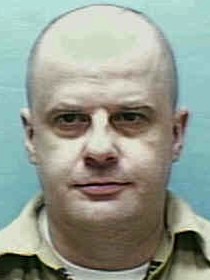
Scott Mink
Murderer Russell Ellwood
Murderer · USA · 1991
Russell Ellwood was a former taxi driver. Authorities suspected him of killing…
20 victims
Russell Ellwood
Murderer · USA · 1991
Russell Ellwood was a former taxi driver. Authorities suspected him of killing…
20 victims
 Robert Martines Perez
Murderer · USA · 1994
Name: Robert Martines Perez · Other name used in proceedings: Robert Martinez P…
15 victims
Robert Martines Perez
Murderer · USA · 1994
Name: Robert Martines Perez · Other name used in proceedings: Robert Martinez P…
15 victims
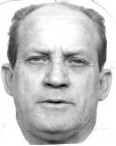 Billy Frank Vickers
Murderer · USA · 1993
Billy Frank Vickers Vickers was executed by lethal injection in Texas on Januar…
14 victims
Billy Frank Vickers
Murderer · USA · 1993
Billy Frank Vickers Vickers was executed by lethal injection in Texas on Januar…
14 victims
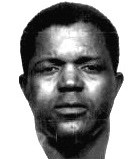 Caruthers Alexander
Murderer · USA · 1981
Caruthers Alexander was convicted of capital murder and was executed by lethal…
1 victim
Caruthers Alexander
Murderer · USA · 1981
Caruthers Alexander was convicted of capital murder and was executed by lethal…
1 victim
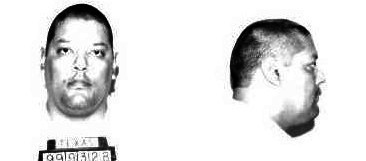 Louis Castro Perez
Murderer · USA · 1998
Louis Castro Perez was listed as a condemned killer with TDCJ Number 999328. He…
3 victims
Louis Castro Perez
Murderer · USA · 1998
Louis Castro Perez was listed as a condemned killer with TDCJ Number 999328. He…
3 victims
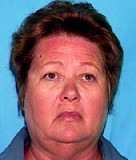 Linda Jones
Murderer · USA · 1995
Linda Jones and Jack Jones had been married for nearly 30 years. They had two d…
1 victim
Linda Jones
Murderer · USA · 1995
Linda Jones and Jack Jones had been married for nearly 30 years. They had two d…
1 victim
 Betty Smithey
Murderer · USA · 1963
Betty Smithey was a live-in babysitter who murdered a 15-month-old child, Sandy…
1 victim
Betty Smithey
Murderer · USA · 1963
Betty Smithey was a live-in babysitter who murdered a 15-month-old child, Sandy…
1 victim
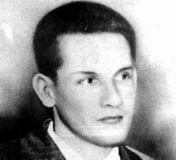 Griselio Torresola
Murderer · USA · 1950
Griselio Torresola (1925 – November 1, 1950) was one of two Puerto Rican Nation…
1 victim
Griselio Torresola
Murderer · USA · 1950
Griselio Torresola (1925 – November 1, 1950) was one of two Puerto Rican Nation…
1 victim
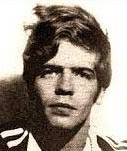 Robin Gecht
Serial killer · USA · 1981
Robin Gecht was associated with the group known as the Ripper Crew or Chicago R…
18 victims
Robin Gecht
Serial killer · USA · 1981
Robin Gecht was associated with the group known as the Ripper Crew or Chicago R…
18 victims
- Gender
- male
- Country
- USA
- Location
- Montgomery County, Ohio, USA
- Date of birth
- October 13, 1963
- Age at first offence
- 37
- Characteristics
- parricide, drug addict, alcohol, rape
- Victim profile
- William Minks, 79, and Sheila Minks, 72 (his parents)
- Method of murder
- Beating with a claw hammer / St abbing with knife
- Date(s) of murder
- September 19, 2000
- Years active
- 2000
- Date of arrest
- 4 days after
- Status
-
Executed
Executed by lethal injection in Ohio on July 20, 2004
Case record — Scott Andrew Mink
Background
Scott Andrew Mink (October 13, 1963 - July 20, 2004) lived with his elderly parents, 79-year-old William Mink and 72-year-old Sheila Mink, in Union, Ohio, about 10 miles from Dayton. He used illegal drugs while living with his parents, and his parents set restrictions, including curfew limits and restrictions on the use of his truck. Mink’s parents hid his car keys in the past to prevent him from leaving the house to purchase drugs and alcohol.
Mink was a drug addict and alcoholic. He had a history of depression and suicide attempts, and he had a history of repeated hospitalization. He made several suicide attempts in the months preceding the murders, and those attempts were described as being related to his addiction to crack cocaine.
The offence
On the evening of September 19, 2000, Mink became angry after discovering that his parents had hidden his car keys. They had hidden the keys to prevent him from leaving the house to purchase drugs and alcohol. Mink went to his parents’ bedroom and beat both of them with a claw hammer until the hammer broke. He then beat them with cutting boards until they broke, and he repeatedly stabbed his parents with kitchen knives and strangled his mother with an electrical cord.
After the attack, Mink stole his parents’ credit cards and sold their belongings to purchase crack cocaine. Police found the bodies four days after they were slain, when their daughters drove to the apartment to check on them and then called police.
The autopsies described the injuries as follows:
- William was stabbed 13 times, suffered at least 13 blunt-force impacts to the head, and endured four blunt-force impacts on the rest of his body. The injuries on William’s hand, wrist, and lower leg were defensive injuries. The cause of death for William was recorded as “multiple trauma, which consisted of blunt force trauma and multiple stab wounds.”
- Sheila suffered nine blunt-force impacts to the head, four stab wounds to her chest and back, and 33 superficial stab wounds. The knife protruding into her chest extended four to four-and-one-half inches into her right lung. Her blunt-force injuries were consistent with blows caused by the cutting board and hammer found at the scene. She suffered fractured bones in her neck due to strangulation, and she “was alive when all those injuries were inflicted.” The cause of death for Sheila was recorded as “multiple traumatic injuries, which include blunt force injuries, stab wounds and strangulation.”
Investigation
After the sisters notified police, at 12:41 p.m. on September 21, 2000, Officer Darrin Goudy, a Union police officer, was dispatched to the Minks’ apartment to check on the welfare of the residents. After talking to the three sisters outside, Officer Goudy entered the apartment and found the bodies of William and Sheila lying between the beds. Police secured the crime scene, obtained a search warrant, and began collecting evidence.
Police evidence included:
- William’s body was found lying on top of Sheila’s body.
- Their clothing and the surrounding floor were covered in blood.
- A kitchen knife was sticking out of Sheila’s chest, and a cord was wrapped around her neck.
- The head of a broken hammer, a knife blade, and a wooden cutting board were on the floor near the bodies.
- The hammer handle and the knife handle were under the blankets and sheets on a bed.
- Blood spatters were found on a roll of carpet padding underneath the bed, suggesting the victims were also attacked while on the floor.
- A bloody wood-cutting board on the kitchen counter had been broken into three pieces and reassembled.
- An empty microwave stand in the kitchen and an open space near a loose TV cable in the living room suggested that property had been taken from the apartment.
- A pair of bloody sneakers and a bloody teeshirt in Mink’s separate bedroom.
On September 22, 2000 police contacted James Ornduff after phone records showed Mink had talked with Ornduff several times after the murders. Police seized the television, recliner, microwave, two pictures, and a wall clock that Mink had transferred to Ornduff. Police also learned that Mink had used or attempted to use his father’s BP card seven or eight times after the murders. Police located and seized William Mink’s Ford Escort, which Mink had exchanged for drugs.
Subsequent laboratory testing confirmed the presence of blood on the driver’s side seat belt and the driver’s side door.
Arrest and confession
After leaving his sisters at the apartment on September 21, 2000, Mink stayed on a farm near Tipp City. Around 8:00 p.m. on September 24, 2000, Mink turned himself in at the Tipp City Police Department. He stated that he had “done something awful and had woke up in a field somewhere west of Tipp City.”
Mink was arrested and taken into police custody. Around 11:00 p.m. on September 24, 2000, Detective Rick Bergman and Detective Thomas Peed interviewed Mink about William’s and Sheila’s murders. Mink was advised of his Miranda rights and waived them. Mink provided detailed oral and written accounts of the murders reflecting the facts already described. He also gave a videotaped interview admitting his guilt.
Trial
Charges and indictment
Mink was indicted on four counts of aggravated murder for the deaths of his parents.
- Count 3: aggravated murder of William with prior calculation and design.
- Count 4: aggravated murder of William during commission of a robbery.
- Count 5: aggravated murder of Sheila with prior calculation and design.
- Count 6: aggravated murder of Sheila during commission of a robbery.
Mink was also charged with:
- Count 1: aggravated robbery of William.
- Count 2: aggravated robbery of Sheila.
Each of the four aggravated murder counts contained three identical death penalty specifications:
- Murder to escape detection or apprehension (R.C. 2929.04(A)(3)).
- Committing or attempting aggravated robbery (R.C. 2929.04(A)(7)).
- Murder as a “course of conduct” involving killing two or more people (RC. 2929.04(A)(5)).
Plea and competency
At trial Mink waived counsel and pled guilty. Before the three-judge panel, Mink entered pleas of guilty and the State presented evidence of his guilt.
The court reviewed competency evaluations and questioned Mink about his decisions. The court ruled that Mink was competent to stand trial, competent to waive counsel and represent himself, and competent to waive a jury trial. His counsel were ordered to remain as his legal advisors.
During the proceedings:
- The panel found Mink guilty of Counts 1 through 6 and Specifications 2 and 3 of Counts 3 through 6.
- The panel found Mink not guilty of Specification 1 of Counts 3 through 6.
During the penalty phase, Mink waived the presentation of mitigating evidence and requested the death penalty. After finding that Mink was competent to waive mitigation, the court sentenced Mink to death for the murders and to prison terms for the remaining offenses.
Sentencing
Mink was sentenced to death for the murders. In the clemency materials the sentence is reflected as death and prison terms for the remaining offenses, and it is further described as:
- Sentence: Death, 9 years imprisonment.
Appeals
Under Ohio law, all death sentences were automatically reviewed by an appellate court regardless of the inmate’s desire to appeal. After his conviction was upheld by the Ohio Supreme Court on direct appeal in April 2004, Mink dropped his efforts to fight his sentence.
There were 18 allegations of legal and/or procedural error raised by appellate counsel in the Supreme Court of Ohio, including arguments relating to competency evaluation and the voluntariness and understanding underlying Mink’s guilty plea and waiver of mitigation. The Supreme Court of Ohio unanimously affirmed the conviction and sentence, including findings that the psychologists evaluating Mink were qualified and that reliable and credible evidence supported the conclusion that Mink was competent. The Supreme Court also held that the aggravating circumstances outweighed the mitigating evidence beyond a reasonable doubt.
The Supreme Court’s balancing statement included:
“Mink’s course of conduct and the robbery-murder of his elderly parents are grave circumstances. Moreover, the mitigating evidence pales in comparison to the aggravating circumstances of these murders. Mink’s history and background and his lack of a significant criminal record, as well as other mitigation, are easily outweighed by these serious aggravating circumstances.”
Outcome
Mink’s conviction and death sentence were affirmed. Mink waived further legal action and did not pursue appeals that would have postponed his execution.
Clemency proceedings
A death penalty clemency review hearing was held on July 9, 2004, at a meeting location listed as 1030 Alum Creek Drive, Columbus, Ohio 43205.
Hearing participants and representation
- The clemency was initiated pursuant to Ohio Revised Code section 2967.03 and Parole Board Policy 105-PBD-01 by the Honorable Bob Taft and the Ohio Parole Board.
- Attorney Gary Crimm represented Scott Mink.
- Assistant Montgomery County Prosecutors Dan Brandt and Carley Ingram represented the State of Ohio.
- Seven members of the Ohio Parole Board participated.
- The Parole Board voted unanimously.
Clemency arguments
Proponents to clemency:
- The Ohio Parole Board received no written application for clemency on Mink’s behalf.
- Mink elected not to be interviewed by a member of the Board.
- Attorney Gary Crimm indicated that Mink had always admitted killing his parents and that Mink offered no mitigation at trial and did not wish clemency to be granted. No mitigation was offered, and no closing remarks were provided.
Opponents to clemency:
- The State argued there was no doubt Mink committed the crimes for which he received the death penalty, emphasizing that he turned himself in and confessed four days after the killings.
- The State argued that Mink wanted to plead guilty and did not want to offer evidence in mitigation, and that examinations found him competent to make the decision.
- The State argued that a three-judge panel found Mink guilty of the charges and most specifications, and that the panel sentenced him to death.
- The State argued the Ohio Supreme Court unanimously affirmed conviction and sentence.
- The State argued the aggravating circumstances outweighed mitigating evidence beyond a reasonable doubt using the Supreme Court’s quoted language.
- The State argued there was no manifest injustice.
- The State argued that Mink had not asked for clemency and declined to be interviewed.
Letters seeking clemency commutation:
- The Ohio Parole Board received two letters from residents of Pittsburgh, Pennsylvania and the United Kingdom requesting commutation to life imprisonment. The letters cited Mink’s admission to the crimes, waiver of counsel and mitigation, and referenced medical history of depression and suicide attempts and addiction.
Parole Board decision and recommendation
The Parole Board found insufficient mitigating factors to outweigh the aggravating factors and concluded that the exercise of clemency was not warranted. The recommendation was:
- Executive clemency be denied.
- The Parole Board vote was seven (7) to zero (0).
Execution
Mink was executed by lethal injection in Ohio on July 20, 2004.
Final statements
Mink’s final words were:
“I just thank you for giving me the chance to make a final statement. I have made peace with my family and God.”
Final meal and pre-execution activities
Mink requested a special meal consisting of:
- T-bone steak
- Baked potato with sour cream and butter
- Steamed broccoli and cauliflower
- A hamburger with cheese, onion, lettuce, tomato, ketchup and mustard
- French fries with extra salt and Pepsi
He finished everything except the broccoli. On the morning before his 10:26 a.m. execution, he smoked cigarettes and drank coffee but did not eat.
Mink was pronounced dead at 10:27 a.m. The execution is described as unusually lengthy due to difficulty installing intravenous receptacles, and at one point he mouthed “Hi” and mouthed what appeared to be “I'm all right.”
A clergyman requested by the family, Monty Stevens, read Romans 8:38-39:
“I am convinced that neither life, nor death ... will be able to separate us from the love of Christ Jesus.”
The book referenced during the reading was titled, “If Grace Is True: Why God Will Save Every Person,” and the book bore an inscription: “Scott — Blessings.”
Prior record
Juvenile
No juvenile record was listed.
Adult
A prior entry listed as “Adult: 7/20/00 Theft Dayton, Ohio” also included:
- Received date: 7/10/01: 6 months (2000CR2162), concurrent with 2000CR2900.
- Details: He was an employee of Ferrell Gas and on 7/13/00 took power washer, vacuum, microwave oven, computer, monitor, and printer without permission. He sold the computer, monitor, and printer for $20.00 crack cocaine. He later sold the power washer, vacuum, and microwave oven for another $20.00 crack cocaine.
Institutional adjustment
For the offense of Breaking & Entering 2000CR2162, Scott Mink was initially referred for Diversion. He was rejected for Diversion on 8/31/00 because of an admitted crack cocaine problem for which he was receiving inpatient treatment at Good Samaritan Hospital Mental Unit. The case was referred to the grand jury. Since his 7/11/01 admission to prison, his adjustment was described as unremarkable, with no serious conduct reports and no program achievement.
Other details
Family and events prior to discovery
Mink had three sisters and a brother who lived in the Dayton area and frequently visited and talked with their parents on the phone. The sisters became concerned after they were unable to contact their parents on September 20. Around noon on September 21, the sisters drove to their parents’ apartment and saw Mink entering the apartment. They pounded on the front door and shouted for Mink to come out. When Mink answered, he would not let the sisters inside and said that he did not know the whereabouts of their parents. One sister asked, “Scott, did you hurt Mom and Dad? And he said no. Mink then gave them the keys and drove away.
The sisters entered the front door of the apartment, which opened into their parents’ darkened bedroom. They did not recognize that their parents’ bodies were under blankets between the beds, but they knew something was wrong because their father’s glasses and billfold were on the dresser even though the car was gone. They left and called the police.
Property and drug purchases described in the narrative
The accounts described Mink taking $7 and a British Petroleum (“BP”) credit card from his father’s wallet and taking his mother’s Bank One card. Mink withdrew $10 from his parents’ account, purchased what he thought was crack for $20, and later learned the crack was not real. He then took five or six of his mother’s tranquilizers and went to sleep. Later, he traded his father’s Ford Escort to a drug dealer for $50 to $100 worth of rock cocaine. He used his father’s BP credit card to purchase cigarettes, beer, and a gallon of milk. He also exchanged the parents’ television for $30 worth of crack and requested help selling other items including a recliner, a microwave, pictures, a clock, and a watch.
At some point after leaving the apartment, Mink stayed on a farm near Tipp City before turning himself in to police.
Competency-related legal issues raised on appeal
Among the arguments raised in the Supreme Court of Ohio were claims that Mink did not receive a valid competency evaluation because he was taking prescription psychotropic drugs at the time, that psychologists performing the evaluation were not physicians qualified to judge the effects of that medication, and that the psychologists did not review medical records including prior suicide attempts and treatment for severe depression. Another claim was that Mink’s guilty plea and waiver of mitigation testimony were not “voluntary and knowing” because he did not understand what kinds of mitigation evidence could be presented or that mitigation testimony could be offered without claiming it constituted an “excuse” for his actions.
The state responded that the competency examination went beyond requirements because Mink had already stipulated he was competent and because there was no claim or evidence that he was unable to understand charges or assist with his defense. The state also responded that the psychologists were fully informed about Mink’s medical history and considered it in evaluating him, and that psychologists were held competent to determine whether the effects of such medication impaired awareness and reasoning abilities related to competence.
Execution-related witnesses
Expected witnesses to the execution included Mink’s siblings Cheryl Williams, Christine Martinson and William Mink; his niece Kristen Williams; and Monty Stevens, a clergyman requested by the family. During the process, family members watched on a television monitor and Mink communicated through gestures and mouthed statements.
Indictment and court details in clemency materials
Clemency materials listed:
- Case number: 00CR2900.
- County: Montgomery.
- Date and place of crime: September 19, 2000, Union, Ohio.
- Victims: William Mink, Shelia Mink.
- Indictment: Aggravated Robbery (serious harm) 2 counts; Aggravated Murder -2 counts (with prior calculation/design); Aggravated Murder – 2 counts (while committing robbery).
- Death penalty specifications listed to each murder count: 1. Escape detection or apprehension. 2. Committing or attempting Aggravated Robbery. 3. Conduct killing two or more people.
- Plea: Guilty (3 judge panel).
- Verdict: Guilty to indictment (3 judge panel).
- Time served: 37 months.
Presiding judge names listed in the clemency materials were Honorable David Sunderland, Honorable Gregory L. Frost, and Honorable Gregory A. Godown. Prosecuting attorneys listed were Matthias H. Heck, Jr. and the clemency hearing participants also included Assistant Montgomery County Prosecutors Dan Brandt and Carley Ingram. Acccomplice: None.
Inmate and institutional details listed
Inmate number listed as 413511 and received at DOC on 07/11/01. The institution listed was Mansfield Correctional Institution. The clemency materials listed parole eligibility as N/A and parole board policy reference included Parole Board Policy 105-PBD-01.

Spotted an error, or have more information about this case?