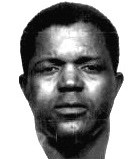
Caruthers Alexander
Murderer Ervil LeBaron
Murderer · USA · 1972
Ervil Morrell LeBaron (1925 to August 16, 1981) was the leader of a polygamous…
35 victims
Ervil LeBaron
Murderer · USA · 1972
Ervil Morrell LeBaron (1925 to August 16, 1981) was the leader of a polygamous…
35 victims
 Brian Kevin Rosenfeld
Murderer · USA · 1985
Brian Kevin Rosenfeld Brian Kevin Rosenfeld was sentenced to three concurrent l…
23 victims
Brian Kevin Rosenfeld
Murderer · USA · 1985
Brian Kevin Rosenfeld Brian Kevin Rosenfeld was sentenced to three concurrent l…
23 victims
 Marvin Gray
Murderer · USA · 1975
Marvin Gray was convicted killer who claimed responsibility for 23 slayings and…
23 victims
Marvin Gray
Murderer · USA · 1975
Marvin Gray was convicted killer who claimed responsibility for 23 slayings and…
23 victims
 Yahweh ben Yahweh
Murderer · USA · 1980
Yahweh ben Yahweh was born and legally named Hulon Mitchell Jr. (October 27, 19…
23 victims
Yahweh ben Yahweh
Murderer · USA · 1980
Yahweh ben Yahweh was born and legally named Hulon Mitchell Jr. (October 27, 19…
23 victims
 Russell Ellwood
Murderer · USA · 1991
Russell Ellwood was a former taxi driver. Authorities suspected him of killing…
20 victims
Russell Ellwood
Murderer · USA · 1991
Russell Ellwood was a former taxi driver. Authorities suspected him of killing…
20 victims
 Tyler Peterson
Mass murderer · USA · 2007
Tyler Peterson committed suicide by shooting himself the same day victims. Tyle…
6 victims
Tyler Peterson
Mass murderer · USA · 2007
Tyler Peterson committed suicide by shooting himself the same day victims. Tyle…
6 victims
 James Barney Hubbard
Murderer · USA · 1957
James Barney Hubbard was executed by lethal injection in Alabama on August 5, 2…
2 victims
James Barney Hubbard
Murderer · USA · 1957
James Barney Hubbard was executed by lethal injection in Alabama on August 5, 2…
2 victims
 Joshua Jenkins
Homicide · USA · 1996
Joshua Jenkins was a 15-year-old American killer who killed five members of his…
5 victims
Joshua Jenkins
Homicide · USA · 1996
Joshua Jenkins was a 15-year-old American killer who killed five members of his…
5 victims
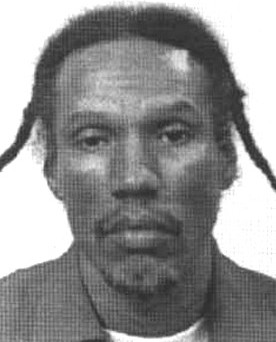 Gregory Resnover
Murderer · USA · 1980
Gregory Resnover was convicted of conspiracy to commit murder and murder in Ind…
1 victim
Gregory Resnover
Murderer · USA · 1980
Gregory Resnover was convicted of conspiracy to commit murder and murder in Ind…
1 victim
 Terence Andrus
Murderer · USA · 2008
Terence Andrus was a Black man. He was male, with black hair, brown eyes, a hei…
2 victims
Terence Andrus
Murderer · USA · 2008
Terence Andrus was a Black man. He was male, with black hair, brown eyes, a hei…
2 victims
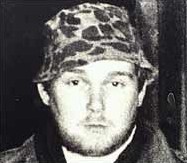 Michael Robert Ryan
Spree killer · United Kingdom · 1987
Michael Robert Ryan was an unemployed local labourer. He lived in Hungerford, B…
16 victims
Michael Robert Ryan
Spree killer · United Kingdom · 1987
Michael Robert Ryan was an unemployed local labourer. He lived in Hungerford, B…
16 victims
- Gender
- male
- Country
- USA
- Location
- Bexar County, Texas, USA
- Date of birth
- September 7, 1948
- Age at first offence
- 33
- Characteristics
- rape, kidnapping
- Victim profile
- Lori Bruch (female, 19)
- Method of murder
- Ligature strangulation
- Date(s) of murder
- April 23, 1981
- Years active
- 1981
- Date of arrest
- 2 days after
- Status
-
Executed
Executed by lethal injection in Texas on January 29, 2001
Overview
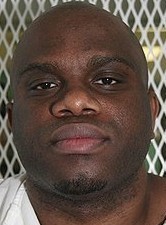
Caruthers Alexander was convicted of capital murder and was executed by lethal injection in Texas on January 29, 2001, for the rape and murder of nightclub waitress Lori Bruch.
The offence
On the evening of April 22, 1981, Lori Bruch, a 19-year-old married mother of a two-year-old child, went to her job as a waitress at a nightclub in San Antonio. After the nightclub closed, Bruch and several other employees ate at a nearby restaurant. Bruch left the restaurant alone at approximately 4 a.m.
Approximately 20 minutes later, Bruch’s damaged vehicle was found abandoned in a rain-swollen, low water crossing, with her handbag still in the front seat. The right rear bumper and tail light of her vehicle had been damaged, and despite the heavy rains, the windows of the vehicle were open. There appeared to be white paint on the back of her vehicle where it had been damaged.
At approximately 6:30 a.m. that same morning, two witnesses noticed a large white van parked on a street in San Antonio. The writing on the van appeared to consist of two lines of blue letters; the first line started with an “A” or “AB” and the second line began with either “medic” or “medical.” Approximately 15 minutes later, two elementary school children arriving for class saw Bruch’s nude, lifeless body laying in the street, a short distance from where the two witnesses had spotted the white van just moments before.
Bruch’s wrists and ankles were secured by rope, a gag was stuffed into her mouth, and a piece of cloth was wrapped around her head to secure the gag. Another piece of rope was wound tightly around her neck. Bruch’s jewelry, including her wedding and engagement rings, another gold ring, and one earring, remained on her body. An autopsy revealed that Bruch had a superficial stab wound to the right side of her neck, an abrasion to her right cheek and a scratch near her right eye, rope burns to her wrists, ankles, and neck, and bruising to the back of her neck. The autopsy also concluded that Bruch had recently engaged in sexual intercourse, probably within two to three hours prior to her death, and that she died within 30 to 90 minutes after finishing her last meal. The autopsy concluded that Bruch died of ligature strangulation. A foreign hair fragment was found on her body.
Investigation
Law enforcement officers located a white delivery van owned by Abbey Medical that matched the description given by the two witnesses. There was evidence of a recent collision on the front bumper of the van, including paint on the bumper that matched the paint on Bruch’s vehicle. The van was assigned to Caruthers Alexander.
Alexander told his employer and police officers that he had taken the van home with him on the night of Bruch’s murder. Under questioning by his employer and the police, Alexander stated that he did not know how the van had been damaged but insisted that no one else could have had access to the van on the night of Bruch’s murder. When confronted by homicide detectives at his place of employment just days after Bruch’s murder, Alexander appeared to those present to be either “shocked,” “startled,” or “anguished.”
Attempts in 1988 to conduct analysis of DNA from the semen stains on the moving pad found inside the van were fruitless because there was insufficient DNA from those stains to permit comparison with known sources. In July 2000, the state trial court ordered, by agreement of the parties, that DNA testing be conducted on the foreign hair fragment recovered from Bruch’s pubic region. On December 27, 2000, the Department of Defense Armed Forces Institute of Pathology issued a report concluding that the DNA sequence of the recovered hair fragment was consistent with the DNA sequence of Alexander.
Arrest and detention
Alexander was assigned the white Abbey Medical van that matched the description given by the witnesses and was identified as its assigned driver. Alexander admitted taking the van home for the night. Caruthers Alexander was arrested two days after Lori Bruch’s killing.
Trial
Charging and first trial
In June 1981, Alexander was charged by indictment in the 186th District Court of Bexar County, Texas, with the capital murder of Lori Bruch in the course of committing and attempting to commit aggravated rape.
After Alexander had been found guilty of capital murder by a jury and sentenced to death, Alexander’s conviction and sentence were reversed by the Texas Court of Criminal Appeals and a new trial was ordered. The reversal was based on evidentiary error during the State’s questioning of Alexander when he testified at his first trial.
Second trial and punishment
On April 26, 1989, the second jury found him guilty of the capital offense. Following a separate punishment hearing, the jury answered affirmatively the two special sentencing issues submitted pursuant to state law. In accordance with state law, the trial court assessed Alexander’s punishment as death.
At the punishment phase of trial, the state introduced evidence that Alexander had been convicted and sentenced to prison for two felony convictions: arson and involuntary manslaughter.
Sentencing
After the second trial in April 1989, the trial court assessed Alexander’s punishment as death.
Appeals
Alexander’s conviction and sentence were appealed to the Court of Criminal Appeals, which affirmed on April 28, 1993, and denied rehearing on September 29, 1993. The United States Supreme Court denied Alexander’s petition for writ of certiorari on May 16, 1994.
Alexander filed an application for state writ of habeas corpus, which was denied by the Court of Criminal Appeals on November 26, 1997.
Alexander filed a federal petition for writ of habeas corpus in the United States District Court for the Western District of Texas, San Antonio Division, on July 1, 1998. On November 30, 1990, the district court entered final judgment denying Alexander’s federal habeas petition and denied Alexander permission to appeal.
On May 5, 2000, the United States Court of Appeals for the Fifth Circuit denied permission to appeal. Alexander filed another application for state writ of habeas corpus, which was dismissed by the Court of Criminal Appeals as an abuse of the writ on September 13, 2000.
On October 2, 2000, the United States Supreme Court denied Alexander permission to file an out-of-time petition for writ of certiorari regarding his federal habeas petition.
Outcome
No litigation was pending as of January 26, 2001, and Alexander was scheduled to be executed after 6 p.m. on Monday, January 29.
On January 29, 2001, Alexander was executed by lethal injection in Texas.
Other details
DNA testing and defendant’s statements
Alexander maintained his innocence during death row interviews. Alexander called his conviction and the DNA test “bunk.” Alexander said:
“There’s a lot of stuff in the conviction that was bunk,”
“I’ll say that straight off the bat: Bunk! The test shouldn’t have come back positive. If anything, this last test should have come back inconclusive or not mine.”
At his execution, he declined to make a final statement.
Victim family statement
After the execution, Lori’s family said in a statement:
“Our family and friends, as well as who knows how many countless other lives she would have touched, have lost so much. Today marks the end of a very long and tragic chapter in our lives and we are relieved it is over. Today is finally the day for this victim. Justice for Lori. We loved her then, we love her now and we will love and miss her forever.”
Prosecutor and sentencing-issue-related testimony
A former assistant district attorney who prosecuted Alexander, Lyndee Bordini, said:
“It’s every woman’s worst nightmare to be driving on the street and be abducted and it’s every husband’s nightmare that your wife would be out and not come home.”
Mark Luitjen said:
“It was a terrible, terrible crime, very brutal. It was a ligature strangulation and the ligature was on so tight you could see bruising from his knuckles imbedded on the back of her neck.”
Mark Luitjen also said:
“There’s nothing here to suggest the man did not commit this murder.”
When asked about the killing, Alexander said:
“I don’t hurt women,”
“I’ve been known to bump heads with a knucklehead if he gets at odds with me, but I’ve never hurt a woman, not like that. That’s bunk.”
Prior convictions and imprisonment history
At the punishment phase of trial, Alexander’s prior felony convictions included arson and involuntary manslaughter.
Alexander previously served seven months of a two-year term for arson in 1972, and he was paroled in 1975 for involuntary manslaughter after serving 10 months of a three-year sentence.
Jury and sentencing context
A portion of the appeals-related publication described that the jury foreman sent the judge a note asking what “recourse” they might have if deliberations did not produce 1) a unanimous verdict for the death penalty or 2) a 10-2 vote against death.
The publication also described the judge declining to tell the jurors that they had a third, critical option to return a “blank” verdict.
Execution details
Alexander was pronounced dead at 6:18 p.m., and after the lethal drugs were administered he gave a loud cough and gasped several times as a single tear streamed down his left cheek.
Timeline
- April 22, 1981 — Lori Bruch worked at a nightclub in San Antonio; after the nightclub closed, she ate with other employees and left the restaurant alone at approximately 4 a.m.
- April 23, 1981 — Bruch’s damaged vehicle was found abandoned in a rain-swollen, low water crossing; her nude body was found near an elementary school by children arriving for class.
- June 1981 — Alexander was charged by indictment in the 186th District Court of Bexar County, Texas, with the capital murder of Lori Bruch in the course of committing and attempting to commit aggravated rape.
- October 7, 1987 — Alexander’s conviction and death sentence were reversed by the Texas Court of Criminal Appeals and a new trial was ordered.
- April 26, 1989 — A second jury found Alexander guilty of the capital offense; the trial court assessed his punishment as death.
- April 28, 1993 — The Court of Criminal Appeals affirmed Alexander’s conviction and sentence.
- September 29, 1993 — The Court of Criminal Appeals denied rehearing.
- May 16, 1994 — The United States Supreme Court denied Alexander’s petition for writ of certiorari.
- November 26, 1997 — The Court of Criminal Appeals denied Alexander’s application for state writ of habeas corpus.
- July 1, 1998 — Alexander filed a federal petition for writ of habeas corpus in the United States District Court for the Western District of Texas, San Antonio Division.
- November 30, 1990 — The district court entered final judgment denying Alexander’s federal habeas petition and denied permission to appeal.
- May 5, 2000 — The United States Court of Appeals for the Fifth Circuit denied permission to appeal.
- September 13, 2000 — The Court of Criminal Appeals dismissed Alexander’s state writ of habeas corpus application as an abuse of the writ.
- October 2, 2000 — The United States Supreme Court denied permission to file an out-of-time petition for writ of certiorari regarding the federal habeas petition.
- January 26, 2001 — No litigation was pending as of this publication.
- January 29, 2001 — Alexander was executed by lethal injection in Texas.

Spotted an error, or have more information about this case?