
Betty Smithey
Murderer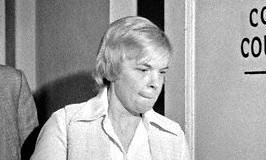 Marybeth Tinning
Murderer · USA · 1972
Marybeth Tinning (née Roe, born on September 11, 1942) was an American prisoner…
9 victims
Marybeth Tinning
Murderer · USA · 1972
Marybeth Tinning (née Roe, born on September 11, 1942) was an American prisoner…
9 victims
 Debbie Fornuto
Murderer · USA · 1972
Deborah Fornuto was the mother of six children whose deaths were initially rule…
7 victims
Debbie Fornuto
Murderer · USA · 1972
Deborah Fornuto was the mother of six children whose deaths were initially rule…
7 victims
 Waneta Ethel Hoyt
Murderer · USA · 1965
Waneta Ethel (Nixon) Hoyt was born in Richford, New York, and died in prison on…
5 victims
Waneta Ethel Hoyt
Murderer · USA · 1965
Waneta Ethel (Nixon) Hoyt was born in Richford, New York, and died in prison on…
5 victims
 Alicia Crimmins
Murderer · USA · 1965
Name: Alicia Crimmins On her first trial in 1968 was charged only with the deat…
2 victims
Alicia Crimmins
Murderer · USA · 1965
Name: Alicia Crimmins On her first trial in 1968 was charged only with the deat…
2 victims
 Marie Dean Arrington
Murderer · USA · 1964
Marie Dean Arrington (born August 8, 1933) was an American criminal. She was al…
2 victims
Marie Dean Arrington
Murderer · USA · 1964
Marie Dean Arrington (born August 8, 1933) was an American criminal. She was al…
2 victims
 Samuel Herbert Dougal
Murderer · United Kingdom · 1898
Samuel Herbert Dougal was tried for the murder of Camille Cecile Holland, a qui…
1 victim
Samuel Herbert Dougal
Murderer · United Kingdom · 1898
Samuel Herbert Dougal was tried for the murder of Camille Cecile Holland, a qui…
1 victim
 Ashleigh & Holly Robinson
Murderers · United Kingdom · 2010
Antoni Robinson was a 61-year-old retired antiques dealer and French polisher.…
1 victim
Ashleigh & Holly Robinson
Murderers · United Kingdom · 2010
Antoni Robinson was a 61-year-old retired antiques dealer and French polisher.…
1 victim
 Jesse de la Rosa
Murderer · USA · 1979
Name: Jesse de la Rosa Jesse de la Rosa was executed by lethal injection in Tex…
1 victim
Jesse de la Rosa
Murderer · USA · 1979
Name: Jesse de la Rosa Jesse de la Rosa was executed by lethal injection in Tex…
1 victim
 William Clyde Gibson
Serial killer · USA · 2002
October 26, 2013 — A jury in New Albany found William Clyde Gibson guilty of th…
3 victims
William Clyde Gibson
Serial killer · USA · 2002
October 26, 2013 — A jury in New Albany found William Clyde Gibson guilty of th…
3 victims
 Mark Brandon Read
Murderer? · Australia · 1979
Mark Brandon “Chopper” Read (born 17 November 1954) was an Australian ex-convic…
19 victims
Mark Brandon Read
Murderer? · Australia · 1979
Mark Brandon “Chopper” Read (born 17 November 1954) was an Australian ex-convic…
19 victims
- Gender
- female
- Country
- USA
- Location
- Phoenix, Maricopa County, Arizona, USA
- Date of birth
- October 16, 1942
- Age at first offence
- 21
- Characteristics
- mentally ill, hitchhiking, kidnapping, escape attempt
- Victim profile
- Sandy Gerberick, 15-month-old
- Method of murder
- Strangulation
- Date(s) of murder
- January 1, 1963
- Years active
- 1963
- Date of arrest
- Next day
- Status
-
Life imprisonment
Released after spending 49 years behind bars on August 14, 2012; Sentenced to life in prison without the possibility of parole on July 29, 1963; granted clemency in June 2012 by Gov. Jan Brewer
Background
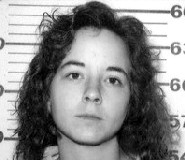
Betty Smithey was a live-in babysitter who murdered a 15-month-old child, Sandy Gerberick, in 1963. She had a history of mental illness. The case involved clemency and parole-eligibility decisions affecting an “old-code lifer.”
Smithey’s family background included a childhood in which her father died when she was four and her poverty-stricken mother was declared incapable of caring for her seven daughters by the state. Her siblings and she became wards of the state, and the girls were separated, with most of them never seeing one another again.
At eight, Smithey was adopted by a family that physically abused her. She later moved among foster homes and institutions, and she began suffering ill health and psychological trauma. She was returned to an Oklahoma orphanage after being physically abused and was then sent to Girl’s Town in Tecumseh, Okla. She survived polio and rickets, and she struggled with a speech disorder; her eyesight was so poor that she was legally blind without her glasses. After arriving in Tecumseh, she was sent to live with her older sister, Patricia Holder, in Phoenix.
During her upbringing, she was physically abused and she had been sexually assaulted. A psychologist’s assessment described her coping by developing “a tough, disrespectful, rebellious attitude” and by running away.
The offence
Smithey was convicted in the 1963 New Year’s Day murder of toddler Sandy Gerberick, whom she strangled while babysitting. The child had been strangled.
On New Year’s Day, 1963, Erma Gerberick was making breakfast when her six-year-old son ran in shouting, “Mama, Sandy’s dead!” Sandy Gerberick was 15 months old, and she was strangled. Smithey was arrested the next day while hitchhiking on a highway.
The patrolman who found Smithey said she told him, “I think I hurt the baby... I may have used a stocking,” according to a news report.
Investigation
After the murder, Smithey was arrested the next day while hitchhiking on a highway between Tucson and Nogales. That night, she tried to kill herself at a Pima County jail. Her accounts were described as confused. She said the baby had been crying.
At trial, the prosecutor read an interview transcript in which Smithey said she had fallen asleep next to Sandy and found her dead when she woke up. Smithey said:
“When I seen the stocking in my hand ... I don't remember doing it, but I must have,” she said.
“Then, when I couldn't find any pulse, I kind of knew she was dead.”
Arrest
Smithey was arrested the next day while hitchhiking on a highway between Tucson and Nogales.
Trial
At trial, Smithey’s lawyer tried to argue that she was mentally ill. A defense psychiatrist described Smithey as having only “limited and borderline” awareness of right and wrong. A state psychiatrist countered that although she was emotionally unstable, she was legally sane.
On July 10, 1963, jurors found Smithey guilty of first-degree murder. The case included the quotation in which Smithey shouted during proceedings:
“I'm not going to prison. I'll kill myself, you watch!”
Sentencing
Nineteen days later, Superior Court Judge Henry Stevens sentenced Smithey to life without parole. She was transferred to the women’s prison at Florence.
The sentencing timeline also included that she was sentenced to life in prison without the possibility of parole on July 29, 1963.
Appeals
Repeated appeals went unfulfilled for decades under an Arizona law that stipulated only an acting governor could grant clemency to an inmate.
Outcome
Smithey was granted clemency in June 2012 by Gov. Jan Brewer. Brewer agreed to reduce Smithey’s sentence to 48 years to life, and the Arizona Board of Executive Clemency held a parole hearing for Smithey on Aug. 13.
On Monday, the board members voted 4-1 to free her from prison and any community supervision. Parole Board Chairman Jesse Hernandez told Smithey:
“I really see no value in keeping you in prison any longer. I really see no value in keeping strings on you any longer,”
After the parole board’s decision, Smithey traveled to her niece’s home, where she would live. She told the Arizona Republic, “It's wonderful driving down the road and not seeing any barbed wire,” and she also said, “I am lucky, so very lucky.”
Smithey was released after spending 49 years behind bars on August 14, 2012. She walked out of the gates of Perryville state prison in Goodyear, Arizona with the help of a cane.
She appeared at the parole hearing shortly before her release and was described as 69 during the proceedings.
Smithey was to live with her niece in Mesa.
Aftermath
Smithey told the Arizona Board of Executive Clemency that a letter of forgiveness from her victim’s mother, Emma Simmons, sent 19 years after the murder, inspired her to turn her life around. At the clemency hearing, Smithey said:
“If she could do that, it was my responsibility to try and become a better person than I was and ever since I received that letter, I started slowly turning things around,” she said.
A letter from Erma (Gerberick) Simmons to Betty Smithey was included verbatim. It said:
“Dear Betty,
It has been almost twenty-one years since my baby daughter died. I have thought of you often in these years. Not with hate, as you may think, but with sadness, for I forgave you many years ago. Since I have come to know the Lord I felt I should write and tell you that I forgive you. ... I'm sending you this Bible in the hope that it will bring you peace and hope. ... May the Lord bless you and give you peace and the strength to know that Jesus loves you very much and is always there when you need Him.
Erma (Gerberick) Simmons”
Smithey described receiving that letter and said:
“I don't know if I could forgive someone for taking my baby's life,” she said. softly.
“I was ... I was shocked. She sent me a Bible; she even sent me a beautiful necklace, back when we could have things like that.”
She also described her self-forgiveness:
“For the longest time, and this ain't no lie, I couldn't look myself in the mirror,” Smithey said.
But after Gerberick's letter, “that's when I started to forgive myself.”
Smithey also said she did not understand why she committed the murder:
“I don't make excuses for what I did,” she said.
She has thought endlessly about the murder but can't explain why she did it because she doesn't really understand it herself.
“I don't know what was in my mind, I really don't,” she said.
“I had a lot of emotional problems back then.”
Her reflections on the offence were quoted:
“I am very sorry for what happened. It sounds so bland and flat -- everybody says they're sorry. ... I can't bring back the life that I took. It doesn't alter the fact of what I did. The only thing I can do is try to make myself a better person.”
Smithey told reporters that she had tried to rehabilitate herself:
“I can't undo what I did,” Smithey said before the governor's decision.
“But I've tried my best to rehabilitate myself.
”Over the years, I met a lot of staff members who've helped me. ... People showed me they cared. I've got my education. I never, ever let myself become institutionalized. ... I've reconnected with my family, my nieces and nephews. All I ask is a chance to prove myself.”
Smithey’s attorney, Andy Silverman, said: “absolutely not a threat to society” and reported that she had battled breast cancer and had “a myriad of other health issues.” Silverman also said, “She's almost 70 years old now,” and later: “She's done a lot of reflection. Forty-nine years in prison, you think a lot about what you've been through.”
During the sentencing and later clemency discussions, a psychiatrist evaluation was quoted in substance, attributing the murder to Smithey projecting her own childhood suffering onto Sandy Gerberick, leading her to believe she was stopping the baby’s pain by stopping it from crying. The clemency recommendation also quoted a psychiatric evaluation: “she felt she was stopping the baby's pain by stopping it from crying.”
A psychiatrist, Elizabeth Kohlhepp, concluded Smithey had no signs of psychosis and wrote that Smithey “had no signs of psychosis,” and that “she easily formed rapport, was warm, albeit modest ... and showed a range of appropriate emotions.” Kohlhepp added:
“My opinion, to a reasonable degree of medical certainty, is that Ms. Smithey does not presently pose a significant threat of violence to others should her sentence be commuted to parole-eligible, as long as she is provided with adequate supports,”
The clemency recommendations also referenced supportive family input. Smithey’s older sister, DeAnna Lee Harris, wrote in a letter that she was lucky as a child to have been adopted by a loving family and wondered how Smithey’s life might have turned out if she had that same luck.
A stepdaughter of Erma Gerberick, who passed away in 2002, responded to a query about Betty by writing: “She has done enough time.”
Other details
Smithey was described as having been convicted of kidnapping earlier in her life. During a previous posting as a baby-sitter in New Mexico, Smithey ran away with her employer’s 18-month-old son and served four years in a juvenile prison, convicted of kidnapping. Later, after being paroled in 1962 at age 20, she found work as a live-in babysitter.
Before the 1963 murder, Smithey met a psychologist at a reformatory north of Albuquerque who decided she could be “reformed” and took her into her home as a baby-sitter. Soon after being told that her mother had died of tuberculosis, Smithey ran away again taking the psychologist’s 18-month-old son. She hitchhiked with the toddler from Albuquerque to Woodward, Okla., posed as an abandoned wife, and talked a trucker into giving her $14 to take a bus to Dallas. A police manhunt caught up with her in a Dallas pharmacy. She left the boy in the store and fled but was arrested less than an hour later while buying food with the last of her money.
Smithey also described running away as part of her childhood pattern:
“I wasn't settled; I ran away a lot,” she said.
Smithey was described as being rebellious in early prison, and she managed to escape four times from three different prisons between 1974 and 1981. Specific escape events included an escape in 1974 from a state prison in Missouri that involved making her way to Indianapolis before being recaptured. In June 1975, she escaped while on a work assignment in Coolidge, then made her way to Indiana before being captured 19 days later. In October of the same year, she escaped by forcing the lock on the main door of her dormitory, cutting through a fence, and scaling a 6-foot-high masonry wall topped by 4 feet of fencing and razor wire; she was recaptured four days later in a cotton field about 6 miles from the prison. After a women’s prison move to 32nd and Van Buren streets in Phoenix, she escaped again in November 1981 and was caught after being spotted on Interstate 17 a few hours later.
Smithey’s disciplinary record began improving after her later self-change attempts, and she stopped trying to escape. She enrolled in self-improvement classes, read the Bible, earned her GED, and completed 52 hours of college credit before the Department of Corrections canceled the program. She published several poems as part of a 1993 prison-writing workshop, which was later discontinued. She gradually weaned herself from anti-psychotic medications she had been taking since entering the prison system.
Clemency and parole-eligibility history included a sequence of denials and recommendations:
- In 1994, boards recommended clemency for Smithey, but Gov. Fife Symington refused to approve it.
- In 2003, boards recommended clemency for Smithey, but Gov. Janet Napolitano refused to approve it.
- Nine years later, on April 10, the clemency board sent a letter to Brewer recommending that her sentence be commuted to 48 years, calling it one of those “extraordinary cases where mercy is justified.”
The case also included description of how “old-code lifers” were affected by Arizona law: Smithey was described as an “old-code lifer,” sentenced between 1912 and August 1973, with parole eligibility requiring a governor’s commutation. The material described changes to life-sentence parole laws and the political context of clemency decisions.
Supporters included Smithey’s niece, Rebecca Henderson, offering her home should she receive parole; Andy Silverman, an attorney; and Donna Hamm, a prison-reform advocate and wife of James Hamm, a convicted murderer who was granted clemency by Gov. Rose Mofford in 1991.
A political-science professor, P.S. Ruckman Jr., was quoted describing clemency decisions and misconceptions. Mona Lynch, a professor of criminology, law and society at the University of California-Irvine, was quoted about public attitudes. Smithey’s comments were included as well.
Medical and financial discussion included that the elderly prison population climbed 1,300 percent since 1980 and that higher healthcare costs made prisoners age 50 and older cost approximately $68,000 a year to incarcerate, twice as much as the average inmate, according to a report by the American Civil Liberties Union.
Spotted an error, or have more information about this case?