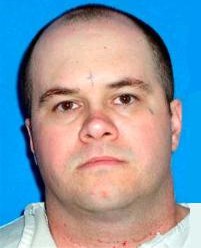
William Alfred Murray
Murderer Russell Ellwood
Murderer · USA · 1991
Russell Ellwood was a former taxi driver. Authorities suspected him of killing…
20 victims
Russell Ellwood
Murderer · USA · 1991
Russell Ellwood was a former taxi driver. Authorities suspected him of killing…
20 victims
 Robert Martines Perez
Murderer · USA · 1994
Name: Robert Martines Perez · Other name used in proceedings: Robert Martinez P…
15 victims
Robert Martines Perez
Murderer · USA · 1994
Name: Robert Martines Perez · Other name used in proceedings: Robert Martinez P…
15 victims
 Billy Frank Vickers
Murderer · USA · 1993
Billy Frank Vickers Vickers was executed by lethal injection in Texas on Januar…
14 victims
Billy Frank Vickers
Murderer · USA · 1993
Billy Frank Vickers Vickers was executed by lethal injection in Texas on Januar…
14 victims
 Mark Anthony Gill
Murderer · USA · 2002
Mark Anthony Gill — defendant · Ralph Lee Lape, Jr. — victim · Justin Brown — a…
1 victim
Mark Anthony Gill
Murderer · USA · 2002
Mark Anthony Gill — defendant · Ralph Lee Lape, Jr. — victim · Justin Brown — a…
1 victim
 Stephen Stanko
Murderer · USA · 2005
Stephen Stanko was born in 1968. He had previously been incarcerated for Assaul…
2 victims
Stephen Stanko
Murderer · USA · 2005
Stephen Stanko was born in 1968. He had previously been incarcerated for Assaul…
2 victims
 Ashley Humphrey
Murderer · USA · 2003
Ashley Humphrey was the wife of Timothy "Tracey" Humphrey. She was born Oct. 13…
1 victim
Ashley Humphrey
Murderer · USA · 2003
Ashley Humphrey was the wife of Timothy "Tracey" Humphrey. She was born Oct. 13…
1 victim
 Dennis Edgecomb
Murderer · USA · 2010
Dennis Edgecomb pleaded guilty to murder at the beginning of the sentencing hea…
1 victim
Dennis Edgecomb
Murderer · USA · 2010
Dennis Edgecomb pleaded guilty to murder at the beginning of the sentencing hea…
1 victim
 Darrell Glenn Carr
Murderer · 1991
Darrell Glenn Carr was sentenced to death on March 10, 1993.
1 victim
Darrell Glenn Carr
Murderer · 1991
Darrell Glenn Carr was sentenced to death on March 10, 1993.
1 victim
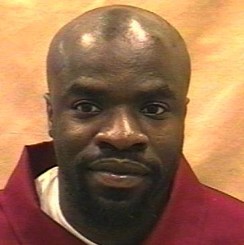 Marcus Robinson
Murderer · USA · 1991
Name: Marcus Reymond Robinson · Also known as: Marcus Robinson · Court proceedi…
1 victim
Marcus Robinson
Murderer · USA · 1991
Name: Marcus Reymond Robinson · Also known as: Marcus Robinson · Court proceedi…
1 victim
- Gender
- male
- Country
- USA
- Location
- Kaufman County, Texas, USA
- Date of birth
- February 13, 1969
- Age at first offence
- 29
- Characteristics
- rape, robbery
- Victim profile
- Rena Ratcliff (female, 93)
- Method of murder
- Strangulation
- Date(s) of murder
- February 10, 1998
- Years active
- 1998
- Date of arrest
- —
- Status
-
Executed
Executed by lethal injection in Texas on September 17, 2008
Case overview
William Alfred Murray was executed by lethal injection in Texas on September 17, 2008.
He was convicted of capital murder and sentenced to death. The conviction arose from the rape and murder of a woman while burglarizing her home.
People
- William Alfred Murray — defendant; executed prisoner
- Rena Ratcliff — victim; 93-year-old woman
- Two nephews of Rena Ratcliff — witnesses to the execution from a viewing room adjoining the death chamber
- Murray’s mother and two brothers — witnesses to the execution from another viewing room
Timeline
- November 12, 1997 — Murray received shock probation after being sentenced to a ten-year prison sentence for one count of Burglary of a Habitation.
- February 10, 1998 — Murray entered the home of 93-year-old Rena Ratcliff in Kaufman, Texas during the nighttime hours, beat and strangled her, and raped her while rummaging through the bedroom looking for things to steal.
- June 1999 — A jury convicted Murray of capital murder and sentenced him to death.
- January 20, 2000 — The Texas Court of Criminal Appeals affirmed the conviction and death sentence in an unpublished opinion delivered on January 20, 2000.
- March 29, 2000 — Murray’s motion for rehearing to reinstate his appeal was denied.
- January 30, 2000 — The Texas Court of Criminal Appeals affirmed the conviction and death sentence in an unpublished opinion delivered on January 20, 2000.
- October 16, 2000 — A petition for writ of certiorari was denied by the Supreme Court of the United States.
- September 5, 2001 — The state trial court issued Findings of Fact and Conclusions of Law recommending that habeas relief be denied.
- October 3, 2001 — The Texas Court of Criminal Appeals denied habeas relief.
- April 24, 2002 — Murray filed his original § 2254 petition.
- September 13, 2002 — Murray filed his first amended petition.
- January 30, 2003 — United States Magistrate Judge William F. Sanderson, Jr. recommended the petition be denied.
- February 10, 2003 — Murray filed objections.
- January 30, 2004 — The Court authorized Murray to file his second amended petition to add a claim based on Atkins v. Virginia.
- October 18, 2004 — Murray filed a Trial Brief in support of his petition and objections.
- November 30, 2004 — Respondent filed an Advisory asserting the case was ripe for decision.
- 2006 — Murray’s federal habeas proceedings culminated in Murray v. Quarterman, Slip Copy, 2006 WL 2691151 (N.D.Tex. 2006) (Habeas).
- 2007 — Murray v. Quarterman, S243 Fed.Appx. 51 (5th Cir. 2007) (Habeas).
- September 17, 2008 — Murray was executed by lethal injection in Texas in Huntsville, Texas and was pronounced dead at 6:20 p.m.
Background
Murray had previously been sentenced to a ten-year prison sentence for one count of Burglary of a Habitation in Kaufman County. He received shock probation on November 12, 1997.
In the period before trial, evidence was presented that Murray was linked to at least a dozen burglaries in Kaufman County, including the burglary involving Rena Ratcliff on February 10, 1998.
Murray had a 1992 conviction for marijuana possession. While in jail awaiting trial, Murray sexually assaulted two other inmates and also escaped. He was also seen smoking marijuana in jail.
Murray had prior prison record indicating TDCJ-ID #798525 and a ten-year sentence from Kaufman County for one count of Burglary of a Habitation, with receipt of shock probation on 11/12/97.
Murray was described as being 5' 3" tall and was on death row with the nickname “Scooter.” In a death row interview, Murray said his height earned him the nickname “Scooter.”
The offence
On February 10, 1998, in Kaufman, Texas, during the nighttime hours, Murray entered the home of 93-year-old victim Rena Ratcliff and rummaged through her bedroom looking for things to steal.
Ratcliff woke up while Murray was in her room and confronted him. Ratcliff struck Murray on the back of his head with her cane or walker. Murray then began beating Ratcliff on her head. He pulled her clothing down, tied an Ace bandage around her neck, and stuffed the ends into her mouth. He also physically and sexually assaulted her and raped her.
When law enforcement officers arrived, they found the residence to be in disarray and appeared to have been ransacked. The victim was found in the bedroom nude from the waist down with wounds and bruising on and about her head area. The victim also had an Ace bandage tied around her neck and into her mouth, soaked with blood. It was stated that the victim’s death was caused by strangulation and blunt force injuries.
Murray admitted that he removed change from a jar—about $10—and a small knife. He left after taking those items.
Investigation and confession
Law enforcement officers responded to a call concerning the victim at her residence. Officers found the residence ransacked and the victim in the bedroom.
Murray was being questioned about another burglary in the area when he told the officer that he wanted to confess another crime. Murray then admitted to Ratcliff’s murder.
Murray confessed to entering Ratcliff’s residence and ransacking it. He admitted he wrapped an Ace bandage around the victim’s face and mouth and that he physically and sexually assaulted her.
Murray also admitted he removed some change from a jar and a small knife, which he later traded for drugs.
Arrest
Police acting on a warrant that tied Murray to an earlier burglary arrested him when they found evidence linking him to the slaying.
Trial
Evidence at Murray’s trial showed he was responsible for at least a dozen burglaries in Kaufman County. He had been convicted for one of them and given a 10-year prison sentence, but he was released four months later on “shock probation” in November 1997.
A jury convicted Murray of capital murder and sentenced him to death in June 1999.
In subsequent habeas proceedings, the district court’s background and procedural history described automatic appeal to the Texas Court of Criminal Appeals after the death sentence.
Sentencing
Murray was sentenced to death after being convicted of capital murder.
Appeals
State proceedings
- The Texas Court of Criminal Appeals affirmed the conviction and death sentence in an unpublished opinion delivered on January 20, 2000.
- Murray filed a motion for rehearing to reinstate his appeal on February 7, 2000, and it was denied on March 29, 2000.
- A petition for writ of certiorari was filed with the Supreme Court of the United States on June 30, 2000, and denied on October 16, 2000.
- An Application for Writ of Habeas Corpus was filed with the state trial court on March 27, 2001; relief was recommended to be denied on September 5, 2001, and denied by the Texas Court of Criminal Appeals on October 3, 2001.
Federal habeas corpus
Murray filed a § 2254 habeas corpus petition that was addressed in Murray v. Quarterman. The proceedings included:
- 2006: *Murray v. 2006) (Habeas), where the district court denied habeas relief but granted a certificate of appealability (COA).
- 2007: Murray v. Quarterman, S243 Fed.Appx. 51 (5th Cir. 2007) (Habeas), where the Court of Appeals affirmed.
During the federal appellate review, the Court of Appeals addressed multiple holdings, including:
- Murray’s depression and suicidal ideation were insufficient to raise a bona fide issue of competence to waive appeal.
- The Texas Court of Criminal Appeals’ use of a postcard to inform Murray of denial of request for rehearing on waiver of right to appeal did not violate due process.
- Murray was not entitled to federal habeas review of claims of ineffective assistance of counsel that were not exhausted in state court.
- Murray did not have due process right to present parole eligibility information to jury.
The federal proceedings quoted the Antiterrorism and Effective Death Penalty Act of 1996 standard and included multiple citations and internal quotes and case-law quotations in its analysis.
“Under [the Antiterrorism and Effective Death Penalty Act of 1996], a federal court may not issue a writ of habeas corpus for a defendant convicted in state court unless the state court's adjudication ‘(1) resulted in a decision that was contrary to, or involved an unreasonable application of, clearly established Federal law, as determined by the Supreme Court; or (2) resulted in a decision that was based on an unreasonable determination of the facts in light of the evidence presented in the State court proceeding.’ ”
Parr v. Quarterman, 472 F.3d 245, 252 (5th Cir.2006) (quoting 28 U.S.C. § 2254(d)(1)-(2)).
“[W]e review the district court's findings of facts for clear error and its conclusions of law de novo, applying the same standards to the state court's decision as did the district court.”
Busby v. Dretke, 359 F.3d 708, 713 (5th Cir.2004) (citing Martinez v. Johnson, 255 F.3d 229, 237 (5th Cir.2001)).
“A decision is contrary to clearly established Federal law ‘if the state court arrives at a conclusion opposite to that reached by [the Supreme Court] on a question of law or if the state court decides a case differently than [the] Court has on a set of materially indistinguishable facts.’ ”
Hill v. Johnson, 210 F.3d 481, 485 (5th Cir.2000) (quoting Williams v. Taylor, 529 U.S. 362, 413, 120 S.Ct. 1495, 146 L.Ed.2d 389 (2000)).
“Factual determinations by state courts are presumed correct absent clear and convincing evidence to the contrary.”
Miller-El v. Cockrell, 537 U.S. 322, 324, 123 S.Ct. 1029, 154 L.Ed.2d 931 (2003) (citing 28 U.S.C. § 2254(e)(1)).
The federal analysis also included:
“Murray claims his own testimony should have alerted the trial court to the need for an examination.”
“He said he wanted to ‘get it over’ for the victim's family's sake, even though he knew it was a ‘mistake.’ ”
“Moreover, he claims that his major depression and suicidal ideation should have caused the court to order a psychological examination.”
It further included:
“FN1 FN1. 28 U.S.C. § 2254(b)(1) states:An application for a writ of habeas corpus on behalf of a person in custody pursuant to the judgment of a State court shall not be granted unless it appears that-(A) the applicant has exhausted the remedies available in the courts of the State; or(B)(i) there is an absence of available State corrective process; or(ii) circumstances exist that render such process ineffective to protect the rights of the applicant.”
and:
“FN2 “To qualify for an exception under § 2254(b)(1)(B), a prisoners must ‘demonstrate cause for the default and actual prejudice as a result of the alleged violation of federal law, or demonstrate that failure to consider the claims will result in a fundamental miscarriage of justice.’ ” FN2 “To prove ‘cause’ [Murray] must establish that some ‘external force’ impeded the defense's efforts to comply with the procedural rule.” Id. at 756 (citing Coleman, 501 U.S. at 753, 111 S.Ct. 2546).”
and:
“To meet the ‘miscarriage of justice’ test, [Murray] needed to supplement his constitutional claim with a colorable showing of factual innocence, i.e., ‘a fair probability that, in light of all the evidence, including that ... evidence tenably claimed to have been wrongly excluded or to have become available only after the trial, the trier of the facts would have entertained a reasonable doubt of his guilt.’ ”
and:
“FN4. Simmons v. South Carolina is inapplicable. ‘ Simmons requires that a jury be informed about a defendant's parole ineligibility only when (1) the state argues that a defendant represents a future danger to society, and (2) the defendant is legally ineligible for parole.’ Miller v. Johnson, 200 F.3d 274, 290 (5th Cir.2000).”
The federal proceedings concluded with:
“AFFIRMED.”
Additionally, the district court’s memorandum opinion and order denied Murray’s second amended petition for habeas corpus and granted a certificate of appealability.
“Because Petitioner has failed to assert valid grounds for relief under 28 U.S.C. § 2254, the Court hereby DENIES the Petitioner's Second Amended Petition for Habeas Corpus. A Certificate of Appealability is GRANTED.”
Outcome
The federal court proceedings affirmed the denial of habeas relief, and Murray remained convicted and sentenced to death.
Murray was executed by lethal injection on September 17, 2008 in Huntsville, Texas, and was pronounced dead at 6:20 p.m.
Aftermath
Before his execution, Murray told two nephews of his victim who watched him through a window in the death chamber:
“I'm sorry for what I did,” he told two nephews of his victim who watched him through a window in the death chamber. “I hope you can find it in your heart to forgive me. The Lord has forgiven me.”
He then looked through an adjacent window where his mother and two brothers were among the witnesses:
“I'll be there waiting for y'all, all right?” he told them. “God Bless.”
Murray also gave statements in an interview from death row a few days before his execution, including:
“I've been praying every day that the good Lord will let me out,” he said. “They don't have to worry about me messing up any more.”
He stated:
“I messed up. Somebody hit me from behind, and I went off ... the next thing, I did what I did. I tripped out. It was crazy.”
He stated:
“Yes, I did do this,” Murray said in the interview. “I'm not trying to blame this on somebody else. I want people to know I'm sorry for the crime. I pray to the Lord to forgive me and I'm asking them to forgive me. That's all I can do.”
In that same context, Murray said he was high on PCP and crack cocaine and had drunk 18 beers when he broke into Ratcliff’s house, and he said he intended to steal a television set but it was too heavy to carry. He also said he did not know the victim was in the bedroom when he went in to look for items to steal.
Evidence and accounts also described that Murray blamed drug problems for committing at least a dozen burglaries.
During the execution, officials said power outages in Huntsville caused by Hurricane Ike had no effect on the execution, because the procedure does not require electricity. The Huntsville Unit was described as having normal electric service.
Other details
Pre-execution items
Final/Special Meal: 10 chili cheese enchiladas, a cheese pizza, one cheeseburger and sweet tea.
Names and ages recorded
- Murray’s age at execution was stated as 40 and 39 in different descriptions.
- Murray’s date of birth was recorded as 02/13/1969.
- Murray’s date received was 06/10/1999 with age (when received) recorded as 30 and education level recorded as 7.
- Murray’s date of offense was 02/10/1998, with age at the offense recorded as 28.
- The county recorded for the offence was Kaufman.
Other recorded background details
- Prior occupation: Dallas Texas Auto Mechanic, Laborer.
- Hair color: Brown; eye color: Brown; race and gender recorded as White male.
- Height and weight recorded as 5' 3" and 158.
- Native county and native state recorded as Native.
- Co-defendants: None.
- Victim’s race and gender: White female.
- It was stated that the mother of the elderly woman had once cared for the elderly woman as a home nursing aide.
Case citations referenced
- Murray v. Quarterman, S243 Fed.Appx. 51 (5th Cir. 2007) (Habeas).
- *Murray v. 2006) (Habeas).
- Texas v. Murray, No. 19071 (86th Dist. Ct., Kaufman County, Tex. Dec. 6, 1999).
- William A. Murray v. Texas, No. 73,454 (Tex.Crim.App. Nov. 1, 1999).

Spotted an error, or have more information about this case?