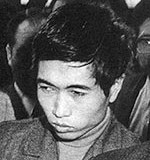
Norio Nagayama
Spree killer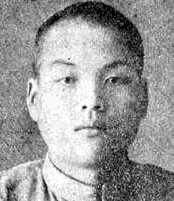 Mutsuo Toy
Spree killer · Japan · 1938
Mutsuo Toi (都井 睦雄; Toi Mutsuo) was a Japanese spree killer. Mutsuo Toi was born…
30 victims
Mutsuo Toy
Spree killer · Japan · 1938
Mutsuo Toi (都井 睦雄; Toi Mutsuo) was a Japanese spree killer. Mutsuo Toi was born…
30 victims
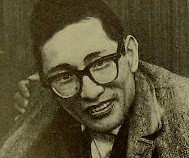 Akira Nishiguchi
Spree killer · Japan · 1963
Akira Nishiguchi (西口 彰, Nishiguchi Akira) was a Japanese serial killer and frau…
5 victims
Akira Nishiguchi
Spree killer · Japan · 1963
Akira Nishiguchi (西口 彰, Nishiguchi Akira) was a Japanese serial killer and frau…
5 victims
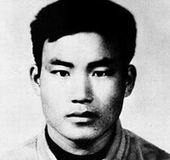 Woo Bun-Kon
Spree killer · South Korea · 1982
Woo Bun-Kon, also known as Woo “Power” Bum-Kon (February 24, 1955–April 27, 198…
57 victims
Woo Bun-Kon
Spree killer · South Korea · 1982
Woo Bun-Kon, also known as Woo “Power” Bum-Kon (February 24, 1955–April 27, 198…
57 victims
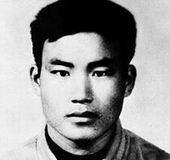 Woo Bun-Kon
Spree killer · South Korea · 1982
Woo Bun-Kon carried out a spree killing in Sang-Namdo, South Korea, and killed…
57 victims
Woo Bun-Kon
Spree killer · South Korea · 1982
Woo Bun-Kon carried out a spree killing in Sang-Namdo, South Korea, and killed…
57 victims
 Martin Bryant
Spree killer · Australia · 1996
Martin Bryant was born May 7, 1967, and was the elder of two children of Mauric…
35 victims
Martin Bryant
Spree killer · Australia · 1996
Martin Bryant was born May 7, 1967, and was the elder of two children of Mauric…
35 victims
 Amber Torrez
Homicide · USA · 2004
Amber Lee Torrez was found not guilty by reason of insanity in connection with…
2 victims
Amber Torrez
Homicide · USA · 2004
Amber Lee Torrez was found not guilty by reason of insanity in connection with…
2 victims
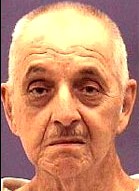 William Pierce
Serial killer · USA · 1970
William Pierce was paroled from the Georgia state prison at Reidsville in May 1…
9 victims
William Pierce
Serial killer · USA · 1970
William Pierce was paroled from the Georgia state prison at Reidsville in May 1…
9 victims
 Justin Lee May
Spree killer · USA · 1978
Justin Lee May was executed by lethal injection in Texas on May 7, 1992. His la…
5 victims
Justin Lee May
Spree killer · USA · 1978
Justin Lee May was executed by lethal injection in Texas on May 7, 1992. His la…
5 victims
 Judith Hawkey
Murderer · USA · 2003
Judith Hawkey was convicted for orchestrating the death of her former husband,…
1 victim
Judith Hawkey
Murderer · USA · 2003
Judith Hawkey was convicted for orchestrating the death of her former husband,…
1 victim
 Eduardo Santiago
Murderer · USA · 2000
Eduardo Santiago was sentenced to death on January 31, 2005 after a jury convic…
1 victim
Eduardo Santiago
Murderer · USA · 2000
Eduardo Santiago was sentenced to death on January 31, 2005 after a jury convic…
1 victim
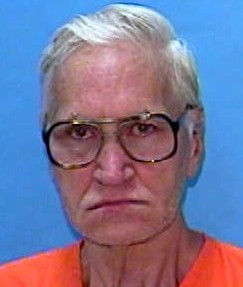 Jerry Michael Wickham
Murderer · USA · 1986
Jerry Michael Wickham was sentenced to death for the 1986 murder of Morris “Ric…
1 victim
Jerry Michael Wickham
Murderer · USA · 1986
Jerry Michael Wickham was sentenced to death for the 1986 murder of Morris “Ric…
1 victim
- Gender
- male
- Country
- Japan
- Location
- Tokyo/Hokkaido/Nagoya, Japan
- Date of birth
- J une 27, 1949
- Characteristics
- serial rapist, robbery, armed robbery
- Victim profile
- Men ( 2 security guards and 2 taxi drivers )
- Method of murder
- Shooting (.22-caliber pistol)
- Date(s) of murder
- October 11/November 5, 1 968
- Years active
- —
- Date of arrest
- April 7, 1969
- Status
-
Executed
Executed by hanging on August 1, 1997
Case record: Norio Nagayama
Norio Nagayama (永山 則夫, Nagayama Norio, June 27, 1949 - August 1, 1997) was a Japanese serial killer and novelist.
Background
Nagayama was born in Abashiri, Hokkaidō. He came to Tokyo in 1965 and saw a shooting rampage by a Japanese youth while working in Shibuya.
While awaiting a verdict in prison, he wrote his first book, the autobiographical “Tears of Ignorance,” which became a best seller in 1971. He gave the royalties to the survivors of his victims. His second book, the semi-autobiographical novel “Wooden Bridge,” won the Japan Literature Award in 1983. He wrote many novels in prison and became a rather public figure.
Nagayama wrote his last novel “Hana” between March 1995 and June of that year. “Hana” was an autobiographic novel about a homeless man. He sent excerpts of the novel to a woman in Gifu Prefecture who acted as a parent for the convicted killer; the chapters kept arriving until that spring. The novel “Hana” was listed among his works.
The offence
Nagayama killed four people with a handgun between October 11, 1968 and November 5, 1968.
He robbed the last two victims of 16,420 yen.
Nagayama broke into a home on a United States Navy base just south of Tokyo in October 1968 and stole a .22-caliber pistol and 50 bullets. Over the next month, he killed four people in four different cities. He was caught in April 1969 while trying to break into an English school in Tokyo.
His victims were described as a hotel guard in Tokyo, a guard at a shrine in Kyoto, a taxi driver in Hokkaido, and another cab driver in Nagoya.
Investigation and arrest
Nagayama was arrested on April 7, 1969.
Trial
The District Court sentenced him to death in 1979, triggering a national debate on capital punishment, in part because in Japan, 19 was still considered to be the age of a minor.
He was found guilty as an adult and sentenced to die in 1979.
Sentencing
The high court then sentenced him to life imprisonment in 1981. The Supreme Court reversed the trials to the high court in 1983. The high court sentenced him to death in 1987. The Supreme Court sentenced him to death in 1990. His appeal process was exhausted in 1990.
Appeals
In 1990, the Supreme Court upheld his death sentence, and his appeal process was exhausted.
Outcome
Nagayama was executed by hanging on August 1, 1997.
It was described that he was hanged on Friday, and that it was leaked to newspapers rather than formally confirmed.
“Executions in Japan are extremely cruel - they are carried out in secret, without the knowledge of families and appear to be inflicted in an arbitrary fashion,” said the London-based human rights group Amnesty International.
“The government wants to keep the information away from the public so that it can't be subjected to criticism,” said Yoshihiro Yasuda, a defense lawyer and civil rights activist.
“His execution was completely unfair,” Makoto Endo, Nagayama’s lawyer, told The Associated Press.
“I didn't even know about it until I read the news in the papers,” Makoto Endo said.
A Justice Ministry official, who spoke on condition of anonymity, said the government refrained from comment out of deference for the survivors of the crimes and to the families of those put to death.
“The Government wants to keep the information away from the public so that it can't be subjected to criticism,” said Yoshihiro Yasuda, a defense lawyer.
It was stated that Nagayama’s execution occurred 34 days after Sakakibara was arrested on June 28, 1997.
Other details
Nagayama was aged 19 at the time of the crimes.
He married the next year and won an appeal in 1981 commuting his sentence to life imprisonment. He was divorced in 1986 and in 1987 was again sentenced to die.
His former wife asked for some of his ashes. Their marriage lasted for about six years. Their ashes were to be handled as follows: some of the ashes would be placed in Nagayama’s family tomb in Aomori Prefecture; other ashes would be kept by the former wife and Endo; the remainder would be scattered in the Sea of Okhotsk in northern Hokkaidō, as requested in Nagayama’s will.
Officers of the detention house in Tokyo’s Katsushika Ward handed Nagayama’s ashes, bones, and his belongings to Endo. They also told Endo of Nagayama’s last words.
When he was asked by executioners for any last words, Makoto Endo said Nagayama wanted the royalties of “Hana” to be distributed to poor children in Japan and overseas, particularly Peru.
It was stated that the eldest son of one man killed by Nagayama said his hanging had succeeded in one way.
“I feel it is finally over,” said Toichi Katsumi, whose father was shot to death at a shrine in the western Japanese city of Kyoto.
Victims
Victims named were:
- Masanori Nakamura (中村公紀, Nakamura Masanori)
- Tomejiro Katsumi (勝見留次郎, Katsumi Rujiro)
- Tetsuhiko Saito (斎藤哲彦, Saito Tetsuhiko)
- Masaaki Ito (伊藤正明, Ito Masaaki)
Timeline
- October 11, 1968 — Nagayama began killing four people with a handgun.
- November 5, 1968 — The killing spree ended.
- April 7, 1969 — Nagayama was arrested.
- 1979 — The District Court sentenced him to death.
- 1981 — The high court sentenced him to life imprisonment.
- 1983 — The Supreme Court reversed the trials to the high court.
- 1987 — The high court sentenced him to death.
- 1990 — The Supreme Court sentenced him to death; his appeal process was exhausted.
- March 1995 — Nagayama began writing “Hana.”
- June 1997 — Nagayama finished writing “Hana.”
- August 1, 1997 — Nagayama was executed by hanging.
Works
- Kibashi (1984)
- Sooren no Tabigeinin (1986)
- Sutego Gokko (1987)
- Shikei no Namida (1988)
- Nazeka Umi (1989)
- Isui (1990)
- Hana (1997)
- In Secrecy, Japan Hangs a Best-Selling Author, a Killer of 4 (New York Times, August 7, 1997)
- “Tears of Ignorance” (autobiographical; best seller in 1971)
- “Wooden Bridge” (semi-autobiographical; Japan Literature Award in 1983)

Spotted an error, or have more information about this case?