
Robert Anthony Murray
Murderer Brian Kevin Rosenfeld
Murderer · USA · 1985
Brian Kevin Rosenfeld Brian Kevin Rosenfeld was sentenced to three concurrent l…
23 victims
Brian Kevin Rosenfeld
Murderer · USA · 1985
Brian Kevin Rosenfeld Brian Kevin Rosenfeld was sentenced to three concurrent l…
23 victims
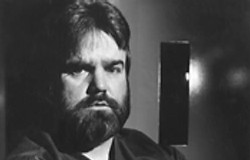 Marvin Gray
Murderer · USA · 1975
Marvin Gray was convicted killer who claimed responsibility for 23 slayings and…
23 victims
Marvin Gray
Murderer · USA · 1975
Marvin Gray was convicted killer who claimed responsibility for 23 slayings and…
23 victims
 Yahweh ben Yahweh
Murderer · USA · 1980
Yahweh ben Yahweh was born and legally named Hulon Mitchell Jr. (October 27, 19…
23 victims
Yahweh ben Yahweh
Murderer · USA · 1980
Yahweh ben Yahweh was born and legally named Hulon Mitchell Jr. (October 27, 19…
23 victims
 Russell Ellwood
Murderer · USA · 1991
Russell Ellwood was a former taxi driver. Authorities suspected him of killing…
20 victims
Russell Ellwood
Murderer · USA · 1991
Russell Ellwood was a former taxi driver. Authorities suspected him of killing…
20 victims
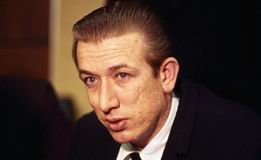 Richard Speck
Mass murderer · USA · 1966
Richard Speck (December 6, 1941–December 5, 1991) was a mass murderer who syste…
8 victims
Richard Speck
Mass murderer · USA · 1966
Richard Speck (December 6, 1941–December 5, 1991) was a mass murderer who syste…
8 victims
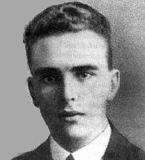 Frederick Bywaters
Murderer · United Kingdom · 1922
Frederick Edward Francis Bywaters (27 June 1902 – 9 January 1923) and Edith Jes…
1 victim
Frederick Bywaters
Murderer · United Kingdom · 1922
Frederick Edward Francis Bywaters (27 June 1902 – 9 January 1923) and Edith Jes…
1 victim
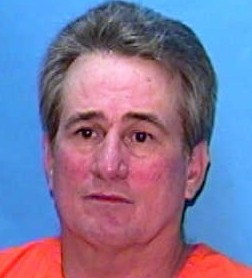 Ken Eldon Lott
Murderer · USA · 1994
Defendant: Ken Eldon Lott Date of birth: 02/14/53 Jurisdiction: Ninth Judicial…
1 victim
Ken Eldon Lott
Murderer · USA · 1994
Defendant: Ken Eldon Lott Date of birth: 02/14/53 Jurisdiction: Ninth Judicial…
1 victim
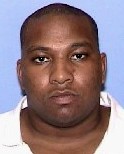 Marcus Druery
Murderer · USA · 2002
Marcus Druery (Marcus Ray Tyrone Druery) was assigned TDCJ Number 999464. His d…
1 victim
Marcus Druery
Murderer · USA · 2002
Marcus Druery (Marcus Ray Tyrone Druery) was assigned TDCJ Number 999464. His d…
1 victim
 Dmitry Vinogradov
Mass murderer · Russia · 2012
Dmitry Vinogradov was held in prison awaiting trial. · 7 November 2012 — A gunm…
6 victims
Dmitry Vinogradov
Mass murderer · Russia · 2012
Dmitry Vinogradov was held in prison awaiting trial. · 7 November 2012 — A gunm…
6 victims
- Gender
- male
- Country
- USA
- Location
- St. Louis, Missouri, USA
- Date of birth
- March 30, 1963
- Age at first offence
- 22
- Characteristics
- rape, robbery
- Victim profile
- Jeffry Jackson, 27, and Craig Stewart , 26
- Method of murder
- Shooting
- Date(s) of murder
- December 6, 1985
- Years active
- 1985
- Date of arrest
- Next day
- Status
-
Executed
Executed by lethal injection in Missouri on July 26, 1995; Robert Murray was executed on July 26, 1995
Case details
Robert Anthony Murray was convicted of two counts of first-degree murder and sentenced to death for both killings arising from a robbery in St. Louis, Missouri.
Background
On December 6, 1985, Jeff Jackson and Craig Stewart were killed in a St. Louis City apartment.
Claudia Hennings and Gladys Nutall were present in the apartment on December 6, 1985, and both women later gave accounts to police and testified at trial.
The offence
Sometime after 11:00 p.m. on December 5, 1985, Claudia Hennings and Gladys Nutall went to Jeffrey Jackson's St. Louis apartment. Jackson's friend, Craig Stewart, was also present.
Hennings, Nutall, Jackson, and Stewart drank alcohol, smoked marijuana, and took cocaine while watching television.
William Murray, an older brother of the defendant, arrived at the apartment, talked with Jackson in a bedroom, and then left. William Murray returned about a half hour later and pulled a gun. He told everyone that this was a holdup and to get on the floor.
While the victims lowered themselves to the floor, Robert Murray and a third person entered the apartment. Robert Murray held a gun and wore a ski mask.
Hennings had known William Murray for eight years and considered him to be her best friend; she had also known the defendant for eight years. When she heard Robert Murray speak, she recognized his voice and told him to remove the mask. William asked Jackson what he had in the house, and Jackson told him to look in the dresser in the bedroom. William Murray and the third participant searched the entire apartment, constantly asking the victims for money or guns, while Robert Murray held a gun on the four victims. William Murray took Nutall's purse and Stewart's wallet, and Robert took Hennings's purse and Jackson's wallet. The contents were dumped into a pillowcase, and the perpetrators told the victims that the money was insufficient. They demanded more money and asked whether anyone else would be coming to the apartment.
Jackson told William Murray that Tracy Adams would be coming around 3:15 a.m. to take him to work. William asked whether Adams would have any money or guns with him, and Jackson said he did not know. William and the others decided to wait for Adams and kept the victims on the floor.
After several hours had passed, William kicked Nutall in the side. He took her into the kitchen, raped her, and sent her back into the living room. During the rape, Nutall saw the defendant looking in from the living room at her and William. The defendant also sexually assaulted Hennings by rubbing her genital area.
The Murrays tied Jackson's and Stewart's hands behind their backs, gagged and blindfolded them. Robert Murray went into the kitchen and found a butcher knife and some steak knives. The assailants took Jackson and Stewart into the kitchen, placed them on their knees, and began hitting them. During the beating, the Murrays repeatedly said that the money they had found was not enough and demanded more.
Then, the Murrays picked up the knives and began stabbing them into the floor around Jackson and Stewart. Hennings, watching the assaults from the living room, got up off the floor and attempted to jump out a window. The defendant caught her, told her not to try it again or he would cut her throat, and ordered her back to the floor.
Hennings ran into the bedroom and slammed the door closed. She then threw herself through the closed second-floor window, landing on the grass outside, where she heard gunshots. Hennings ran down the street screaming and called the police from a neighbor's house.
Meanwhile, one of the assailants discovered that Hennings was gone and returned to the kitchen to inform the others. Nutall then looked into the kitchen and saw Robert Murray hold Stewart up and shoot him in the back. Nutall ran out of the apartment to a nearby grocery store and told a security guard that a man had been shot in the apartment.
During Nutall's escape, the police responded to Hennings's phone call. Hennings told them that Robert and William Murray were two of the assailants and provided descriptions. The police also responded to the call from the security guard. Both women returned to the apartment with the police and discovered that Jackson and Stewart were dead in the kitchen.
Each man had been shot twice in the back. Three bullets were recovered from the bodies, and analysis indicated that all three were fired from the same gun. An autopsy report confirmed the observation of the police officers.
Investigation and arrest
The day after the incident, the police went to Robert Murray's home and arrested him. After being given Miranda rights, he denied being present at the apartment.
Later that night, Nutall identified the defendant in a lineup and told the police that he was the man she saw shoot Stewart. After the police informed him that he had been identified, he admitted that he had been in the apartment, but said he left before the shooting began. After being read his rights again, he told the police that he did not bind, gag, shoot, or kill anyone.
Police stated that he made this statement before being told any details about the victims' treatment.
Robert Murray was later arrested on December 7, 1985 and identified in a lineup as one of the perpetrators.
In a statement to the police, Murray offered information about the crime scene that had not been revealed to him by the police, further implicating him.
Timeline
- December 6, 1985 — Jeff Jackson and Craig Stewart were killed in a St. Louis City apartment; the bodies were later discovered in the apartment.
- December 7, 1985 — Robert Murray was arrested and identified in a lineup as one of the perpetrators.
- January 9, 1986 — An indictment was filed in the Circuit Court of St. Louis City charging Robert Murray and his brother William Murray with the first degree murders of Jeffrey Jackson and Craig Stewart and two counts each of robbery and armed criminal action.
- July 16, 1986 — The first degree murder charges against Robert Murray were severed from the robbery and armed criminal action charges at Robert Murray’s request.
- December 4, 1986 — Robert Murray was convicted of two counts of first degree murder and the jury recommended a sentence of death for each murder.
- December 8, 1986 — Robert Murray’s trial on two counts of first degree murder began in St. Louis City, Missouri, the Honorable Brendan J. Ryan presiding.
- February 6, 1987 — A motion for new trial was denied, and Robert Murray was sentenced to death for both killings.
- February 11, 1987 — Notice of Appeal was filed with the Missouri Supreme Court.
- May 15, 1988 — Pro se post-conviction motion under Missouri Supreme Court Rule 29.15 was filed in the Circuit Court of St. Louis City.
- August 8, 1988 — Amended Rule 29.15 post-conviction motion was filed.
- September 8, 1988 — The Supreme Court of Missouri affirmed the denial of petitioner’s motion for post-conviction relief.
- September 26, 1988 — The amended Rule 29.15 motion was denied by the Circuit Court of St. Louis City following an evidentiary hearing.
- October 3, 1988 — United States Supreme Court denied certiorari in the direct 29.15 appeal.
- August 1, 1989 — The Missouri Supreme Court affirmed the denial of the Rule 29.15 motion.
- February 20, 1990 — United States Supreme Court denied certiorari on petitioner’s appeal of the denial of his Rule 29.15 motion.
- March 1, 1990 — Petition for writ of habeas corpus was filed in the United States District Court for the Eastern District of Missouri.
- April 2, 1990 — Amended petition for the writ of habeas corpus was filed.
- July 31, 1990 — Second amended petition for the writ of habeas corpus was filed.
- April 8, 1991 — Second amended petition for habeas corpus was denied.
- June 3, 1991 — Motion to alter or amend judgment was denied.
- July 8, 1991 — Notice of Appeal to the Eighth Circuit Court of Appeals was filed.
- November 13, 1991 — New counsel was appointed and the case was remanded to the Federal District Court by the Eighth Circuit Court of Appeals for filing of third amended petition in the District court to allow new counsel to present additional claims.
- March 13, 1992 — Third amended petition for habeas corpus was filed.
- August 23, 1992 — Third amended petition for the writ of habeas corpus was denied.
- September 6, 1994 — The Eighth Circuit affirmed the denial of his petition for federal habeas corpus relief.
- November 25, 1994 — Rehearings and Suggestions for Rehearing En Banc were denied.
- September 22, 1992 — The Supreme Court of Missouri denied the habeas corpus petition and rejected the motion to recall the mandate.
- September 6, 1994 — The United States Court of Appeals, Eighth Circuit decided the case.
- June 12, 1995 — The United States Supreme Court denied certiorari on petitioner’s habeas corpus action.
- June 30, 1995 — The Eighth Circuit Court of Appeals issued its mandate.
- July 5, 1995 — The Missouri Supreme Court set July 26, 1995 as Murray’s execution date.
- July 26, 1995 — Robert Murray was executed by lethal injection in Missouri.
Trial
Robert Murray’s trial on two counts of first degree murder began in St. Ryan presiding.
A jury convicted Murray of two counts of first-degree murder under Mo. Rev. Stat. Sec. 565.020 (1986) for the killing of two robbery victims, Jeffrey Jackson and Craig Stewart, and sentenced him to death on both counts.
The jury recommended a sentence of death for each murder.
Sentencing
After the jury recommended death for each murder, Robert Murray was sentenced to death for both killings.
Appeals and post-conviction proceedings
After trial, the Missouri Supreme Court affirmed Murray's convictions and sentence on direct appeal in State v. Murray, 744 S.W.2d 762 (Mo.).
Murray filed a state-court motion to set aside or vacate judgment and sentence pursuant to Mo. Sup. Ct. R. 29.15, which was denied after an evidentiary hearing. The Missouri Supreme Court affirmed the denial of post-conviction relief in Murray v. State, 775 S.W.2d 89 (Mo. 1989).
Murray then filed a pro se petition for a writ of habeas corpus in the United States District Court for the Eastern District of Missouri. The District Court appointed counsel and denied the writ on the merits, issuing an order denying the writ on the merits in Murray v. Delo, 767 F. Supp. 975 (E.D. Mo. 1991).
Before briefing, Murray filed pro se motions to discharge court-appointed counsel, for appointment of new counsel, to remand to the District Court, and for leave to file an amended petition. On November 13, 1991, the Eighth Circuit granted the motions and appointed new counsel. A third amended petition was filed, and after review the District Court denied it in Murray v. Delo, No. 90-370C(8) (E.D. Mo., August 23, 1993).
Meanwhile, on August 20, 1992, Murray filed a petition for writ of habeas corpus under Mo. Sup. Ct. R. 91 and a motion to recall the mandate. On September 22, 1992, the Supreme Court of Missouri denied the habeas corpus petition and rejected the motion to recall the mandate.
The Eighth Circuit affirmed the District Court’s denial of his federal habeas petition, holding that each issue was either procedurally barred or without merit.
The United States Supreme Court denied certiorari on his direct appeal in 1988 and denied certiorari on his habeas corpus action on June 12, 1995.
On June 30, 1995, the Eighth Circuit issued its mandate.
Outcome
Robert Murray was executed by lethal injection in Missouri on July 26, 1995.
Other details
Robert Murray was listed as a petitioner in a federal appeal as Robert Anthony Murray, Appellant, v. Paul K. Delo, Appellee (United States Court of Appeals, Eighth Circuit, No. 91-2542). The case was submitted April 13, 1994 and decided September 6, 1994. Rehearings and Suggestions for Rehearing En Banc were denied November 25, 1994.
The court described the murder as occurring nine years ago on December 6, 1985 in Missouri.
Testimony at trial included that Hennings and Nutall observed the assault and shooting, that Hennings escaped by jumping from a second-floor window, and that Nutall reported seeing Robert Murray hold Stewart up and shoot him in the back.
The court described the relevant physical findings as each victim having been shot twice in the back, with analysis indicating three bullets fired from the same gun.
The Eighth Circuit addressed procedural matters in the habeas litigation, including the abuse-of-the-writ doctrine and procedural-bar doctrine, and discussed claims relating to perjured testimony, prosecutorial misconduct, proportionality of the death sentence, juror bias at sentencing, ineffective assistance of trial counsel, jury instructions on mitigating circumstances unanimity, and jury instructions defining reasonable doubt and aggravating-circumstance instructions.
Spotted an error, or have more information about this case?