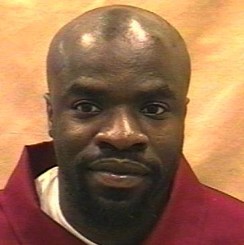
Marcus Robinson
Murderer Brian Kevin Rosenfeld
Murderer · USA · 1985
Brian Kevin Rosenfeld Brian Kevin Rosenfeld was sentenced to three concurrent l…
23 victims
Brian Kevin Rosenfeld
Murderer · USA · 1985
Brian Kevin Rosenfeld Brian Kevin Rosenfeld was sentenced to three concurrent l…
23 victims
 Russell Ellwood
Murderer · USA · 1991
Russell Ellwood was a former taxi driver. Authorities suspected him of killing…
20 victims
Russell Ellwood
Murderer · USA · 1991
Russell Ellwood was a former taxi driver. Authorities suspected him of killing…
20 victims
 Robert Martines Perez
Murderer · USA · 1994
Name: Robert Martines Perez · Other name used in proceedings: Robert Martinez P…
15 victims
Robert Martines Perez
Murderer · USA · 1994
Name: Robert Martines Perez · Other name used in proceedings: Robert Martinez P…
15 victims
 Billy Frank Vickers
Murderer · USA · 1993
Billy Frank Vickers Vickers was executed by lethal injection in Texas on Januar…
14 victims
Billy Frank Vickers
Murderer · USA · 1993
Billy Frank Vickers Vickers was executed by lethal injection in Texas on Januar…
14 victims
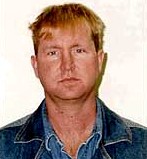 Martin Allen Johnson
Murderer · USA · 1998
Martin Allen Johnson (defendant) · Heather Fay Fraser, 15 (victim) · 1997 — Pol…
1 victim
Martin Allen Johnson
Murderer · USA · 1998
Martin Allen Johnson (defendant) · Heather Fay Fraser, 15 (victim) · 1997 — Pol…
1 victim
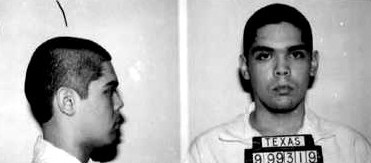 Richard Vasquez
Murderer · USA · 1998
Richard Vasquez was a Texas death row inmate. He stated: "Not Giving Up" My nam…
1 victim
Richard Vasquez
Murderer · USA · 1998
Richard Vasquez was a Texas death row inmate. He stated: "Not Giving Up" My nam…
1 victim
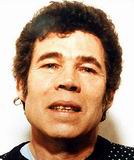 Frederick West
Serial killer · United Kingdom · 1967
Frederick West (29 September 1941 – 1 January 1995) was an English serial kille…
13 victims
Frederick West
Serial killer · United Kingdom · 1967
Frederick West (29 September 1941 – 1 January 1995) was an English serial kille…
13 victims
 Martha Place
Murderer · USA · 1899
Martha Place was born in New Jersey. Her brother said she was struck in the hea…
1 victim
Martha Place
Murderer · USA · 1899
Martha Place was born in New Jersey. Her brother said she was struck in the hea…
1 victim
 Bobby Marion Francis
Murderer · USA · 1975
Bobby Marion Francis (also referred to as Bobby Marion Francis) · August 16, 19…
1 victim
Bobby Marion Francis
Murderer · USA · 1975
Bobby Marion Francis (also referred to as Bobby Marion Francis) · August 16, 19…
1 victim
- Gender
- male
- Country
- USA
- Location
- Cumberland County, North Carolina, USA
- Date of birth
- April 2, 1973
- Age at first offence
- 18
- Characteristics
- robbery
- Victim profile
- Erik Tornblom, 17
- Method of murder
- Shooting (shotgun)
- Date(s) of murder
- July 21, 1991
- Years active
- 1991
- Date of arrest
- —
- Status
-
Sentenced to death
Sentenced to death on August 5, 1994
Case identifiers
- Name: Marcus Reymond Robinson
- Also known as: Marcus Robinson
- Court proceedings referenced: United States Court of Appeals, Fourth Circuit; North Carolina Supreme Court; United States Supreme Court
Timeline
- July 21, 1991 — Seventeen-year-old Erik Tornblom did not return home from Chi Chi’s restaurant, where he was employed.
- July 13, 1994 — Robinson’s trial began.
- August 5, 1991 — Robinson and Roderick Williams were indicted by a North Carolina jury and charged with one count of first-degree murder, one count of first-degree kidnapping, one count of robbery with a dangerous weapon, one count of possession of a weapon of mass destruction, one count of felonious larceny, and one count of possession of a stolen vehicle.
- August 5, 1994 — Robinson, 33, was sentenced to death in Cumberland County Superior Court for first-degree murder of Eric Tornblom.
- November 1, 1996 — Robinson filed his MAR.
- February 28, 2000 — Robinson filed the instant § 2254 petition in the United States District Court for the Eastern District of North Carolina raising thirteen claims of constitutional error.
- September 7, 2004 — The district court denied Robinson’s request for an evidentiary hearing and granted the State’s motion for summary judgment.
- February 28, 2005 — The district court entered an order denying Robinson a certificate of appealability on all of his claims.
- October 30, 2006 — The Supreme Court of the United States denied Robinson’s petition to review the decision of the Fourth Circuit of Appeals, dismissing his appeal.
- December 12, 2006 — The execution date was set for Marcus Reymond Robinson.
- January 25, 2007 — Execution was delayed by Wake County Senior Resident Superior Court Judge Donald W. Stephens, ruling that the Council of State must approve changes to execution procedures.
- March 1, 1995 — The North Carolina Supreme Court affirmed Robinson’s conviction and sentence of death.
- November 3, 1995 — The North Carolina Supreme Court affirmed Robinson’s conviction and sentence of death.
- April 14, 2006 — The Fourth Circuit affirmed by published opinion.
- February 14, 2006 — The Fourth Circuit decided the appeal.
Background
Marcus Reymond Robinson was sentenced to death for the shotgun murder of 17-year-old Erik Tornblom (also referenced as Eric Tornblom). Robinson was taken into custody after the murder and properly advised of his Miranda rights, which he waived.
At the time of these events, Robinson had just turned eighteen years old and only eleven days earlier had been released from prison.
The offence
On the morning of July 21, 1991, seventeen-year-old Erik Tornblom did not return home from Chi Chi’s restaurant, where he was employed. Erik was a rising senior at Douglas Byrd High School and worked at Chi Chi’s from approximately 6:00 pm until midnight.
His body was discovered later that day, having been shot in the face with a shotgun.
A witness testified at trial that he observed a black male drive Erik’s car to the location where it was later recovered, get out of the vehicle, and wipe off the steering wheel and door handle. The black male was identified as Roderick Williams and was thereafter arrested and named Marcus Robinson as the person involved with him in the murder of Erik Tornblom.
Investigation
After initially denying any involvement in the murder, Robinson admitted that he and Williams had watched Erik Tornblom enter a store.
While Tornblom was in the store, Robinson pulled out a sawed-off shotgun, which had been concealed in his clothes, and gave it to Williams. As Erik left the store, Robinson and Williams asked for a ride. As soon as they entered the car, Williams put the gun to the back of Erik Tornblom’s neck and forced him to drive to a location that Robinson and Williams ordered.
Robinson stated in his confession:
"The boy kept begging and pleading for us not to hurt him, because he didn't have any money."
After ordering Tornblom out of the car, he was made to lie down. According to Robinson, Williams then shot Tornblom in the face with the shotgun.
Robinson then took Tornblom’s wallet and split the money with Williams. Robinson led police to where he had hidden the shotgun and also showed them where the spent shotgun shell was ejected. Both the gun and the spent shell were recovered by the police.
Other evidence tended to show, two days prior to the murder, that Robinson told Williams’ aunt that:
"he was going to burn him a whitey"
On the morning of the murder, Robinson obtained the shotgun from a friend, who heard Robinson tell Williams that he wanted to rob a QuikStop or "do" a white boy.
After the murder, Robinson told a friend that he had robbed a guy the night before and shot him in the head.
Arrest
Robinson and Williams were thereafter arrested and named as the person involved with the murder of Erik Tornblom. Robinson was taken into custody and properly advised of his Miranda rights, which he waived.
Trial
Robinson’s trial began on July 13, 1994.
Robinson pleaded guilty to all of the offenses except for the first degree murder charge.
The first degree murder charge was tried to the jury on two different theories: felony murder and murder with malice, deliberation, and premeditation (premeditated murder). The jury convicted Robinson, by special verdict, of first-degree murder under each theory.
During the sentencing phase, the jury heard evidence relating to circumstances that both aggravated and mitigated the extent of Robinson’s culpability in the crime. The trial court emphasized to the jury:
"It is absolutely necessary that you understand and apply the law as I give it to you and not as you think it is or might like it to be."
To guide the jury's consideration, the trial court provided the jury with a form entitled "Issues and Recommendation as to Punishment," consisting of a written list of two possible aggravating circumstances and twenty possible mitigating circumstances, and instructed the jury how to apply the law to each of these circumstances.
The jury completed the form, finding both of the aggravating circumstances but only six of the mitigating circumstances.
The jury found as aggravating circumstances that the murder was committed while Robinson was robbing Tornblom and that the murder was "especially heinous, atrocious or cruel."
The jury found mitigating circumstances in Robinson’s lack of criminal history, age, history of childhood abuse, childhood head injury, and behavioral or mental problems.
The jury unanimously found that the mitigating circumstances were insufficient to outweigh the aggravating circumstances and that the aggravating circumstances were sufficiently substantial to warrant the death penalty.
The Fourth Circuit appeal record referenced a question about jury instructions during the guilt phase under the Eighth Amendment and a Bible reading during sentencing deliberations under the Sixth Amendment.
Sentencing
On August 5, 1994, Robinson, 33, was sentenced to death in Cumberland County Superior Court for first-degree murder of Eric Tornblom.
He also received a concurrent sentence of 40 years for robbery with a dangerous weapon, 10 years for larceny, and five years for possession of a weapon of mass destruction.
Appeals
Robinson’s conviction and sentence were affirmed on direct appeal by a unanimous North Carolina Supreme Court. State v. Robinson, 342 N.C. 74, 463 S.E.2d 218 (1995).
The United States Supreme Court denied certiorari review. Robinson v. North Carolina, 517 U.S. 1197, 116 S.Ct. 1693, 134 L.Ed.2d 793 (1996).
Robinson filed his MAR on November 1, 1996. Following an evidentiary hearing on some of his claims, the MAR court denied Robinson relief on all of his claims. The North Carolina Supreme Court denied discretionary review. State v. Robinson, 350 N.C. 847, 539 S.E.2d 646 (1999).
Robinson filed a § 2254 petition on February 28, 2000 in the United States District Court for the Eastern District of North Carolina raising thirteen claims of constitutional error. The district court denied Robinson’s request for an evidentiary hearing and granted summary judgment to the State on September 7, 2004. The district court denied a certificate of appealability on all claims on February 28, 2005.
The Fourth Circuit appeal addressed two claims:
- that trial court jury instructions during the guilt phase violated the Eighth Amendment, and
- that a juror’s recitation of a Biblical passage during sentencing deliberations violated the Sixth Amendment.
The Fourth Circuit denied Robinson’s petition and his request for an evidentiary hearing on his Bible claim and affirmed the district court’s decision.
The Supreme Court of the United States denied Robinson’s petition on October 30, 2006, dismissing his appeal.
Bible claim and evidentiary hearing issue (Sixth Amendment)
Robinson presented affidavits of two law students summarizing their conversations with two of the jurors. The affidavits stated:
The [first] juror revealed that [a second] juror had asked for a bailiff to bring in a bible during deliberation on sentencing. He recalled that the bailiff provided a bible, and the second juror read a passage concerning an "eye for an eye." The one who requested the bible was citing to the scripture passage to attempt to convince other jurors, including the one we interviewed ... that they should change their position from one favoring a life sentence to one favoring a death sentence. The bible passage was read to the other jurors before the final vote for a death sentence.... [A third] juror corroborated the first juror's statement, and confirmed the fact that the [second] juror had a bible during deliberations on sentencing, however the third juror could not recall whether the bailiff provided the bible, or whether the [second] juror had brought it into the deliberations. The third juror... remembered the [second] juror quoting scriptures during sentencing, but did not remember the specific passage quoted. (J.A. at 283-84.)
Robinson also argued he could produce four jurors willing to testify at an evidentiary hearing.
The MAR court denied the Bible claim without an evidentiary hearing, stating:
"there is insufficient evidence to require an evidentiary hearing on the issue, even taking the submitted materials in the light most favorable to [ Robinson ]." (J.A. at 428.)
The MAR court held that:
"that the alleged Bible reading, if it occurred, [was] not extraneous, prejudicial information" (J.A. at 428 (internal quotation marks omitted).)
Robinson conceded in his habeas petition that the MAR court denied his Sixth Amendment claim on the merits, stating:
"the [MAR] court denied [his Sixth Amendment] claim on the merits," (J.A. at 437).
The Fourth Circuit denied relief on this Sixth Amendment claim and denied remand for an evidentiary hearing, affirming denial of a § 2254 petition.
A dissenting opinion in part argued Robinson should receive an evidentiary hearing on the improper influence issue and described the allegations as an external influence, stating that the “serious potential” standard supported a hearing.
Other details
Jury instructions referenced in the appeal
The trial court charged that for premeditated murder the State had to prove that Robinson:
- intentionally and with malice killed Tornblom with a deadly weapon,
- his act was a proximate cause of Tornblom’s death,
- he intended to kill Tornblom,
- he acted after premeditation, and
- he acted with deliberation.
The Fourth Circuit opinion included the felony murder acting-in-concert instruction:
"Ladies and gentlemen of the jury, for a person to be guilty of a crime, it is not necessary that he himself do all of the acts necessary to constitute the crime. If two or more persons act together with a common purpose to commit robbery with a firearm and are actually or constructively present at the time the crime is committed, each of them is held responsible for the acts of the others done in the commission of robbery with a firearm." (J.A. at 118.)
The Fourth Circuit opinion reproduced the trial court’s summation contrasting premeditated murder and felony murder and linking acting-in-concert language to felony murder.
Parties and procedural posture referenced
- The Fourth Circuit case caption referenced: Marcus Reymond Robinson, Petitioner-appellant, v. Marvin L. Polk, Warden, Central Prison, Raleigh, North Carolina, Respondent-appellee.
- The Fourth Circuit panel included Judges WILLIAMS, KING, and SHEDD.
- Oral argument date: September 22, 2005.
- The Fourth Circuit decision date: February 14, 2006.
- The district court decision denied a request for an evidentiary hearing and granted the State’s motion for summary judgment.
Execution procedure stay
On January 25, 2007, execution was delayed by Wake County Senior Resident Superior Court Judge Donald W.
Spotted an error, or have more information about this case?