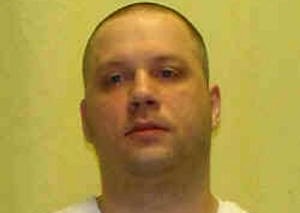
Tyrone Noling
Murderer Brian Kevin Rosenfeld
Murderer · USA · 1985
Brian Kevin Rosenfeld Brian Kevin Rosenfeld was sentenced to three concurrent l…
23 victims
Brian Kevin Rosenfeld
Murderer · USA · 1985
Brian Kevin Rosenfeld Brian Kevin Rosenfeld was sentenced to three concurrent l…
23 victims
 Yahweh ben Yahweh
Murderer · USA · 1980
Yahweh ben Yahweh was born and legally named Hulon Mitchell Jr. (October 27, 19…
23 victims
Yahweh ben Yahweh
Murderer · USA · 1980
Yahweh ben Yahweh was born and legally named Hulon Mitchell Jr. (October 27, 19…
23 victims
 Russell Ellwood
Murderer · USA · 1991
Russell Ellwood was a former taxi driver. Authorities suspected him of killing…
20 victims
Russell Ellwood
Murderer · USA · 1991
Russell Ellwood was a former taxi driver. Authorities suspected him of killing…
20 victims
 Robert Martines Perez
Murderer · USA · 1994
Name: Robert Martines Perez · Other name used in proceedings: Robert Martinez P…
15 victims
Robert Martines Perez
Murderer · USA · 1994
Name: Robert Martines Perez · Other name used in proceedings: Robert Martinez P…
15 victims
 John O'Shaughnessy
Murderer · United Kingdom · 1996
John O'Shaughnessy was born in 1965 in Chester, England. He was 31 at the time…
1 victim
John O'Shaughnessy
Murderer · United Kingdom · 1996
John O'Shaughnessy was born in 1965 in Chester, England. He was 31 at the time…
1 victim
 Erbie Bowser
Mass murderer · USA · 2013
Erbie Bowser was 44 years old and was described as a former special education t…
4 victims
Erbie Bowser
Mass murderer · USA · 2013
Erbie Bowser was 44 years old and was described as a former special education t…
4 victims
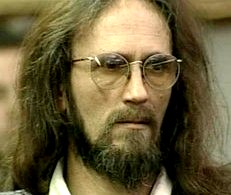 Jules Mikus
Murderer · New Zealand
Jules Pierre Nicholas Mikus (born September 28, 1958) was convicted of the abdu…
1 victim
Jules Mikus
Murderer · New Zealand
Jules Pierre Nicholas Mikus (born September 28, 1958) was convicted of the abdu…
1 victim
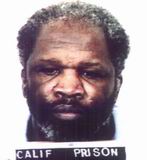 Morris Solomon
Serial killer · USA · 1986
Morris Solomon was an Oak Park handyman and serial killer. He was convicted of…
7 victims
Morris Solomon
Serial killer · USA · 1986
Morris Solomon was an Oak Park handyman and serial killer. He was convicted of…
7 victims
 Pascal Payet
Murderer · France · 1997
Pascal Payet was born 7 July 1963. He was a French criminal. Payet spent his ch…
1 victim
Pascal Payet
Murderer · France · 1997
Pascal Payet was born 7 July 1963. He was a French criminal. Payet spent his ch…
1 victim
- Gender
- male
- Country
- USA
- Location
- Portage County, Ohio, USA
- Date of birth
- 1971
- Age at first offence
- 19
- Characteristics
- robbery
- Victim profile
- Bearnhardt and Cora Hartig, both 81
- Method of murder
- Shooting
- Date(s) of murder
- April 5, 1990
- Years active
- 1990
- Date of arrest
- —
- Status
-
Sentenced to death
Sentenced to death on February 20, 1996
Case overview
Tyrone Noling was sentenced to death for the murders of Bearnhardt Hartig and Cora Hartig, both 81. The murders occurred in Atwater Township, Portage County, Ohio, on April 5, 1990.
Background
Noling was described as having been involved in robberies of two other elderly couples. His defense asserted that he was an amateur robber who had fled from a robbery “like a scared rabbit” when his gun accidentally discharged into a victim’s hardwood floor. The defense stated that the robberies occurred in Noling’s neighborhood, while the Hartig murders occurred in a secluded area 15 miles away. The defense also asserted that no physical evidence connected Noling and that nothing was stolen from the Hartigs.
Noling was 18 at the time of the offences referred to in the case narrative.
Noling later stated that he did not kill the Hartigs and sought relief through legal efforts connected to the Ohio Innocence Project.
The offence
The Hartigs were killed on April 5, 1990, inside the kitchen of their three-bedroom home on Moff Road, in Portage County, Ohio.
Bearnhardt Hartig suffered three gunshot wounds: two to his chest and one to his shoulder.
Cora Hartig was shot five times in her face, chest, back, and arm.
Authorities pegged the time of death as late afternoon on April 5, 1990.
Investigation
Ten .25-caliber shell casings formed a crude outline of the couple’s bodies.
Five slugs had torn open Cora, and three had pierced her husband.
The home bore signs of a search. Business papers were strewn across the living room, while kitchen cabinets and dresser drawers stood open.
The narrative stated that nothing appeared stolen, and that the killer ignored the rings worn by Bearnhardt Hartig and the wallet in Bearnhardt’s pants. It also listed watches and jewelry, cash, TVs, and assorted electronics as remaining in the home. It stated that the only things the killer failed to leave behind seemed to be fingerprints and forensic clues.
The gun described as a .25-caliber handgun stolen in a robbery days before in Alliance was proved not to be the murder weapon, and the murder weapon was never recovered.
A section of the narrative described that no physical evidence linked Noling to the crime, and that prosecutors relied on statements of three others who said they were with Noling the day of the shootings.
Authorities later reopened the investigation. The narrative stated that Prosecutor David Norris reopened the investigation five years later.
Arrest
The narrative described that Noling’s three friends implicated him, but all three recanted their confessions.
One of those friends, Gary St. Clair, reversed his story during Noling’s trial. The narrative stated that St. Clair pleaded guilty to the slayings in 1993 and was serving a 20-year to life prison sentence.
Trial
Noling was found guilty of two counts of aggravated murder and aggravated robbery and one count of aggravated burglary in January 1996.
A jury sentenced Noling to death in 1996.
One co-defendant described as a teenager named Butch Wolcott said he had seen Noling running from the house with a smoking gun in his hand.
A year after Wolcott and the two others who placed Noling at the crime scene signed affidavits saying their confessions were false, the narrative stated that Wolcott and the others said their confessions were the result of pressure from prosecutors.
Noling’s legal challenge discussed the co-defendants’ recantations. In the narrative, the district judge dismissed recantations as not credible because they had “obvious interest in Noling’s exoneration.”
Noling’s counsel in the narrative was identified as Kelly Culshaw, and the judge referred to a standard that Noling “must show that he is probably innocent” but had fallen short of that standard.
Sentencing
Noling was sentenced to death, and the judge affirmed the sentence two weeks later, according to the narrative.
During the sentencing phase, Noling’s mother and sister spoke about his father abusing him with words and fists as a youngster.
A psychologist testified that his tattered youth had saddled him with “the inner controls of a 2-year-old child.”
Noling spoke last, saying:
“Life don't work out sometimes like everybody thinks it's going to . . . and I just beg from the bottom of my heart that you spare my life.”
A jury voted for the death penalty, and the judge affirmed the sentence two weeks later.
After being escorted from the courtroom, Noling spotted Ron Craig and said:
“You're a piece of shit,”
“You have no right to take my life away from me.”
Appeals
A federal judge, Donald Nugent, denied an appeal by Ohio death row inmate Tyrone Noling and issued an order stating Noling could not take his case to a higher federal court.
The narrative stated that Nugent wrote that it was too late to argue the lack of physical evidence because Noling’s lawyers should have made that argument 10 years earlier on direct appeal.
Nugent dismissed the co-defendants’ recantations, stating the statements were not credible because they had “obvious interest in Noling's exoneration.”
The narrative also stated that the judge did not deal with the statements of Wolcott, who won immunity from prosecutors for his testimony against Noling during the original trial.
Noling still had an appeal pending in state court.
The narrative also stated that, a Portage County judge would later rule on whether evidence raised in Noling’s appeals warranted voiding his sentence.
Noling was described as having lost several court appeals and being on death row at the Ohio State Penitentiary near Columbus.
Other proceedings and related claims
The narrative described legal efforts aiming at exoneration and release. It stated that attorneys from Weil, Gotshal and Manges LLP published ads offering a $1,000 reward for information resulting in Noling’s exoneration and release.
It stated that there was no physical evidence linking Noling or three other young men to the crime and that they were dropped as suspects early in the investigation.
The narrative said prosecutors relied on the statements of three others, but those accounts changed and contained discrepancies.
The narrative described claims that investigators coerced witness testimony, including assertions in affidavits and sworn statements that Craig and assistant prosecutor Robert Durst threatened to “put me in jail for life” and told Wolcott that he would receive immunity if he cooperated.
It also stated that, in affidavits, Dalesandro and St. Clair accused Craig of similar tactics in coercing them to plead guilty to a crime they denied committing.
The narrative described quotes attributed to Dalesandro and Wolcott about investigators wanting “the triggerman,” and about Craig using an interrogation approach likened by Wolcott to NYPD Blue’s Andy Sipowicz.
It included a quotation attributed to Dr. Alfred Grzegorek during a taped interview:
“People remember in different ways, Butch . . .”
“That is one of the reasons for coming out here and trying to help your memory a bit. We were a little concerned when we were talking [earlier] that you weren't remembering everything you needed to remember.”
The narrative also included Wolcott’s comment during the discussion of the correct date:
“Like I said, I'm not totally certain, but the way the facts are pointing now . . . that's what it is. As far as you helped my memory.”
It also included Wolcott’s 1992 statement:
“ . . .Other times that we have talked, I've been pretty scared, to be honest with you,”
And it included Wolcott’s comment about the gun:
“Tyrone didn't have a gun until he got the .25. I think that's the way it read in the question, the way the question was.”
An exchange attributed to Craig and St. Clair in a March 1993 interview was presented as:
“Were Mr. and Mrs. Hartig screaming in the house?”
“I think they might have been,”
“They were pleading for their life, weren't they?”
“I think.”
“They were pretty scared people, weren't they? They were pleading to live, weren't they?”
“I think they were.”
The narrative described that Noling’s defence argued that the robbery and murder accounts were inconsistent and that evidence should have included or disclosed other matters not presented at trial.
Timeline
- April 5, 1990 — The Hartigs were killed in Atwater Township, Portage County, Ohio, inside their kitchen on Moff Road.
- April 5, 1990 — Authorities pegged the time of death as late afternoon.
- January 1996 — A jury found Noling guilty of two counts of aggravated murder and aggravated robbery and one count of aggravated burglary.
- 1996 — Noling was sentenced to death.
- February 20, 1996 — Noling was sentenced to death.
- February 02, 2008 — A U.S. District Judge Donald Nugent denied an appeal by Ohio death row inmate Tyrone Noling and issued an order barring a move to a higher federal court.
- August 9, 2009 — Attorneys associated with the Ohio Innocence Project published ads offering a $1,000 reward for information leading to Noling’s exoneration and release.
- September 10, 2003 — A narrative described Noling and the surrounding case details, including claims about witness testimony and trial strategy.
Other details
Noling was described as residing at Mansfield Correctional Institution.
A portion of the narrative stated that Noling had lost several court appeals and was on death row at the Ohio State Penitentiary near Columbus.
The narrative described related events involving other alleged crimes connected to the wider case narrative, including a robbery in Alliance involving Suzanne and Fred Murphy, and it described victims including James Hughes and Rose Hughes, and a robbery involving a .25-caliber handgun.
The narrative also described individuals connected to the investigation and legal proceedings, including:
- Suzanne and Fred Murphy
- James and Rose Hughes
- Gary St. Clair
- Joey Dalesandro
- Butch Wolcott
- Robert Durst
- Ron Craig
- Prosecutor David Norris
- Prosecutor Victor Vigluicci
- Eugene Muldowney
- Ohio public defenders
- U.S. District Judge Donald Nugent
- Appellate attorney John Gideon
- Attorney Peter Cahoon
- Co-counsel George Keith
- Investigator Vicky Buckwalter
- Attorney Kelly Culshaw
- Dr. Daniel Cannone
- Dr. Alfred Grzegorek
- Ralph Miller
- Stephen Gibbons
- Jennifer Wine
The narrative stated that St.
The narrative stated that Dalesandro received 5 to 15 years and had already started a 3- to 15-year term for an unrelated drug conviction, and it described that Dalesandro was paroled after serving 11 years.
The narrative described that St. Clair faced at least 10 more years behind bars and that Norris had sought a longer sentence after St. Clair refused to testify against Noling.
The narrative described that Wolcott lived in Hawaii and worked construction.
The narrative stated that Noling had been in the “honor pod” of death row, with more time out of his cell and other meager privileges.
Spotted an error, or have more information about this case?