
Jules Mikus
Murderer David Tamihere
Murderer · New Zealand · 1972
David Tamihere was sentenced to life imprisonment with a 10-year non-parole per…
3 victims
David Tamihere
Murderer · New Zealand · 1972
David Tamihere was sentenced to life imprisonment with a 10-year non-parole per…
3 victims
 William Dwane Bell
Murderer · New Zealand · 2001
William Dwane Bell (born 1978) was a convicted murderer in New Zealand. Bell wa…
3 victims
William Dwane Bell
Murderer · New Zealand · 2001
William Dwane Bell (born 1978) was a convicted murderer in New Zealand. Bell wa…
3 victims
 Bruce Howse
Murderer · New Zealand · 2001
Bruce Howse was the partner of Charlene Aplin and the stepfather of Saliel Apli…
2 victims
Bruce Howse
Murderer · New Zealand · 2001
Bruce Howse was the partner of Charlene Aplin and the stepfather of Saliel Apli…
2 victims
 John Barlow
Murderer · New Zealand · 1994
16 February 1994 — Financial dealers Eugene and Gene Thomas, father and son, we…
2 victims
John Barlow
Murderer · New Zealand · 1994
16 February 1994 — Financial dealers Eugene and Gene Thomas, father and son, we…
2 victims
 Mark Edward Lundy
Murderer · New Zealand · 2000
Mark Edward Lundy was the husband and father of the victims Christine Marie Lun…
2 victims
Mark Edward Lundy
Murderer · New Zealand · 2000
Mark Edward Lundy was the husband and father of the victims Christine Marie Lun…
2 victims
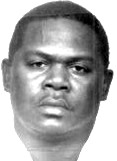 Tony Lee Walker
Murderer · USA · 1978
Tony Lee Walker was convicted of capital murder for the killing of Virginia Sim…
3 victims
Tony Lee Walker
Murderer · USA · 1978
Tony Lee Walker was convicted of capital murder for the killing of Virginia Sim…
3 victims
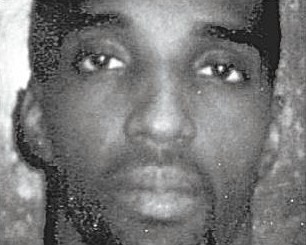 Johnile DuBois
Murderer · USA · 1991
Johnile DuBois was executed by lethal injection in Virginia on August 31, 1998.…
1 victim
Johnile DuBois
Murderer · USA · 1991
Johnile DuBois was executed by lethal injection in Virginia on August 31, 1998.…
1 victim
 Russell Lee Smith
Murderer · USA · 1975
February 6, 1947 — Russell Lee Smith was born in Bessemer, Alabama, United Stat…
2 victims
Russell Lee Smith
Murderer · USA · 1975
February 6, 1947 — Russell Lee Smith was born in Bessemer, Alabama, United Stat…
2 victims
 Shane Ragland
Murderer · USA · 1994
Shane Ragland was convicted of murder for the sniper-style shooting death of Un…
1 victim
Shane Ragland
Murderer · USA · 1994
Shane Ragland was convicted of murder for the sniper-style shooting death of Un…
1 victim
 Charles Hedlund
Murderer · USA · 1991
Charles Hedlund was convicted in connection with the murders of 40-year-old Chr…
2 victims
Charles Hedlund
Murderer · USA · 1991
Charles Hedlund was convicted in connection with the murders of 40-year-old Chr…
2 victims
- Gender
- male
- Country
- New Zealand
- Location
- Napier, Hawke's Bay, New Zealand
- Date of birth
- September 28, 1958
- Characteristics
- kidnapping, rape
- Victim profile
- Teresa Maida Cormack, 6
- Method of murder
- Suffocation
- Date(s) of murder
- June 19, 1 987
- Years active
- —
- Date of arrest
- February 26, 2002 (15 years later)
- Status
-
Life imprisonment
Sentenced to life in prison on October 8, 2002
Case identification
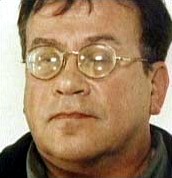
Jules Pierre Nicholas Mikus (born September 28, 1958) was convicted of the abduction, rape, sexual assault and murder of six-year-old Teresa Cormack.
Background
Teresa Maida Cormack was born June 18, 1981, and she died June 19, 1987.
Teresa was described as walking to school. Her family included Kelly and Ross as her parents, and Hannah and Sara as sisters.
Jules Mikus was described as a Lower Hutt sickness beneficiary and as father of at least seven children. He was also described as having been involved in other sex crimes when he was a teenager, including an attempted rape of a young Naenae girl. A resident psychologist, Nigel Latta, described Mikus as a career paedophile and repeat sex offender.
The offence
Teresa Cormack disappeared while walking to school on June 19, 1987. She left her home wearing an oversized red raincoat and walked the short distance to Richmond School, but she never made it to school.
Her body was found eight days later in a shallow shingel grave by a woman walking her dog on Whiraniki Beach, 16 km from Napier. Another account stated her partially clothed body was found face-down in a shallow grave on Whirinaki Beach after an eight-day search.
Teresa was described as being sexually assaulted and suffocated. Pubic hairs and semen were found on her body.
A jury found Mikus guilty of kidnapping, rape, sexual assault and murder.
Investigation
The case was initially handled in 1987. DNA testing was described as not advanced enough to find the girl’s killer at the time, and the semen and pubic hairs taken from Teresa were not enough to identify her killer through DNA testing then.
Police questioned Mikus and he gave samples of his saliva and blood. He also provided an alibi for the time of Teresa’s abduction and he was excluded as a possible suspect in the murder.
The case was re-opened in 1998. New DNA testing was done at a crime lab in the United States. The hairs found on Teresa’s body matched the samples Mikus had given to police.
Detective Sergeant Brian Schaab made a vow to Teresa as he guarded her body on the beach to find her killer. In 1993, Schaab was put in charge of the case that remained a mystery for over six years.
During trial reporting, it was stated that the semen was forensically linked to Mikus and that the semen was 60 million times more likely to belong to Mikus than any other man in New Zealand.
Arrest
Mikus was arrested in February 2002. Another account stated he was arrested on February 26, 2002.
Trial
The court trial started on September 30, 2002.
During the trial, Mikus remained calm and his only supporter was his partner, Shirley Te Kooti, who sat behind him from the start of the trial to its finish. A witness described his eyes as “evil”.
The Crown’s case was that Mikus went to a primary school at playtime to find a child, found Teresa, and enticed her into his red Vauxhall Viva stationwagon with a pink jube lolly. It was stated that he drove for 20 minutes to a remote part of Whirinaki Beach, where a witness saw him playing in the sand and picking Teresa up. The Crown case stated he violated her, then smothered her by putting his hand across her nose and mouth.
Crown prosecutor Russell Collins told the jury:
“He handled it.”
The closing Crown argument included:
Russell Collins also compared the forensic evidence to a steam roller:
“It couldn’t be stopped, and the defence couldn’t get out of the way.”
Closing the defence case, lawyer Steve Gill told the court Mikus was not the right man. The defence argument included that he was investigated fully in 1987, his house and car were searched, and he gave blood for comparison to semen on Teresa’s body. The defence said:
“That is as valid today as it was in 1987.”
During verdict reading, the jury took a little over two hours to reach its verdict, and it was reported that the jury took less than two hours to find Mikus guilty on her abduction, rape, sexual assault and murder.
A reporting account recorded jury foreman reading:
“guilty, guilty, guilty, guilty”.
Sentencing
On October 8, 2002, the High Court in Wellington sentenced Mikus.
Justice Warwick Gendall sentenced Mikus to:
- life for murder,
- preventive detention for rape,
- 14 years for sexual violation,
- 14 years for abduction.
The judge stressed that the safety of the community required that Mikus serve a sentence that had no set release date.
Justice Gendall told Mikus:
“Female children must never be at risk from you again... preventive detention is the proper sentence for you,”
The judge described preventive detention as:
“an indeterminate sentence and has no statutory release date, it remains for your life.”
Because of the current law and the fact that the crimes occurred in 1987, Justice Gendall imposed a minimum non-parole period of only seven years.
In the summing up at sentencing, Justice Gendall said there were no redeeming features about Mikus’ offending, including the statement:
“A much loved innocent and vibrant daughter, granddaughter and sister was taken without warning by your atrocities.”
The judge also stated:
“You have given to them their own emotional life sentences which will remain forever.”
Justice Gendall said:
“If you have any sense of decency or compassion you had better reflect on the dignity and courage of those two parents when you serve what will be a sentence that will be for the rest of your life.”
The judge added:
“Their courage is in direct contrast to your cowardice.”
Teresa Cormack’s parents were present at sentencing and expressed relief that the trial was finally over. It was reported that her father Ross Cormack said he could not really put his feelings into words. Her mother Kelly Pigott accepted the minimum non-parole period of seven years that Gendall was forced to impose, under 1987 law.
Kelly Pigott said:
“It’s a just a law, life is still life. “
Kelly Pigott also said:
“It’s still preventive detention, that’s what the sentence really boils down to and the odds of him coming out are very very slim.”
Outcome
A jury convicted Mikus of kidnapping, rape, sexual assault and murder.
The imposed sentence was life imprisonment for murder and preventive detention for rape, together with 14 years for sexual violation and 14 years for abduction.
Aftermath
It was reported that the case took 15 years to bring him to justice because of errors in the police investigation, and that DNA technology advances allowed the pubic hairs found at the scene of the crime to be tested.
Nigel Latta said Mikus had a “predilection for deviant sexual offending” and that Mikus claimed he was sexually abused by his father from a young age.
Mikus was described as unlikely to ever be released, and the reporting included that preventive detention had no statutory release date.
Other details
Teresa Cormack was last seen leaving home in an oversized red raincoat at 8.25am on the morning of June 19, 1987.
A reporting account described Teresa’s mother Kelly Pigott telling Hannah:
“Soon.”
Another quote attributed to Hannah was:
“Are we going now?”
A quote from Kelly Pigott was:
“Tears of joy,” she answered.
Another quote from Hannah was:
“Mummy are you crying?”
It was also described that Teresa’s sister Sara was two when Teresa went missing.
The trial remand decision included that Justice Warwick Gendall remanded Mikus in custody for sentencing early the next month and requested psychology and psychiatry reports because Mikus was eligible for preventive detention.
The reporting described an extended Cormack family pacing the courthouse and chatting with reporters and police after the jury retired.
A reporting account described Teresa’s disappearance as shocking the nation and changing the way many parents took their children to school.
Nigel Latta described Mikus as:
“predilection for deviant sexual offending”
and also said: “was never going to stop”.
A police officer was quoted describing Mikus as:
“insipid slime ball”.
Mikus was described as eligible for preventive detention and the sentence was described as having no set release date and an indeterminate term.

Spotted an error, or have more information about this case?