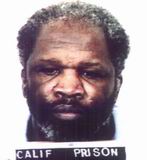
Morris Solomon
Serial killer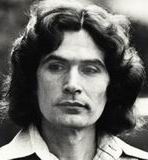 Rodney Alcala
Serial killer · USA · 1977
Rodney James Alcala (born August 23, 1943) was also known as Rodrigo Jacques Al…
100 victims
Rodney Alcala
Serial killer · USA · 1977
Rodney James Alcala (born August 23, 1943) was also known as Rodrigo Jacques Al…
100 victims
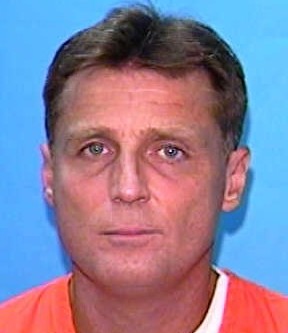 Glen Edward Rogers
Serial killer · USA · 1993
Glen Edward Rogers was a spree killer whose cross-country rampage in 1994-95 le…
70 victims
Glen Edward Rogers
Serial killer · USA · 1993
Glen Edward Rogers was a spree killer whose cross-country rampage in 1994-95 le…
70 victims
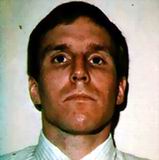 Michael Swango
Serial killer · USA · 1981
Michael Swango (Joseph Michael Swango) was a physician and American serial kill…
60 victims
Michael Swango
Serial killer · USA · 1981
Michael Swango (Joseph Michael Swango) was a physician and American serial kill…
60 victims
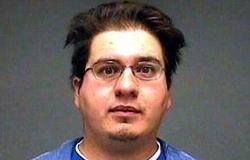 Efren Saldivar
Serial killer · USA · 1989
Efren Saldivar (born 30 September 1969) was an American serial killer who murde…
50 victims
Efren Saldivar
Serial killer · USA · 1989
Efren Saldivar (born 30 September 1969) was an American serial killer who murde…
50 victims
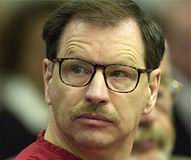 Gary Ridgway
Serial killer · USA · 1982
Gary Leon Ridgway Ridgway was born 18-February-1949 in Salt Lake City, UT. He w…
49 victims
Gary Ridgway
Serial killer · USA · 1982
Gary Leon Ridgway Ridgway was born 18-February-1949 in Salt Lake City, UT. He w…
49 victims
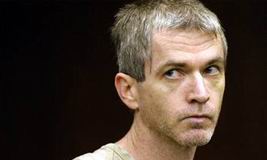 Charles Cullen
Serial killer · USA · 1984
Charles Cullen (born February 22, 1960) was a former nurse and the most prolifi…
45 victims
Charles Cullen
Serial killer · USA · 1984
Charles Cullen (born February 22, 1960) was a former nurse and the most prolifi…
45 victims
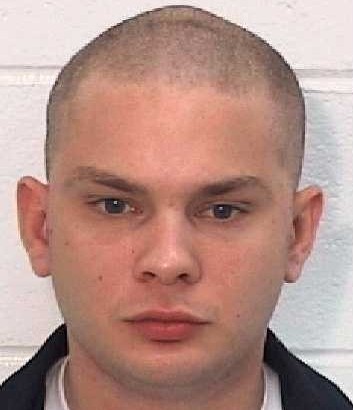 John Anthony Esposito
Murderer · USA · 1996
John Anthony Esposito was convicted in Georgia of murdering Lola Davis and rela…
3 victims
John Anthony Esposito
Murderer · USA · 1996
John Anthony Esposito was convicted in Georgia of murdering Lola Davis and rela…
3 victims
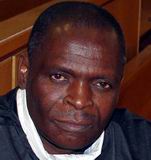 David Simelane
Serial killer · Swaziland · 2000
David Simelane — accused; serial killer convicted of murder. · Judge Jacobus An…
28 victims
David Simelane
Serial killer · Swaziland · 2000
David Simelane — accused; serial killer convicted of murder. · Judge Jacobus An…
28 victims
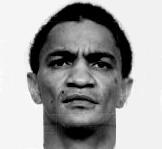 Dwight Adanandus
Murderer · USA · 1988
Dwight Adanandus (offender #940) was executed by lethal injection in Texas on O…
1 victim
Dwight Adanandus
Murderer · USA · 1988
Dwight Adanandus (offender #940) was executed by lethal injection in Texas on O…
1 victim
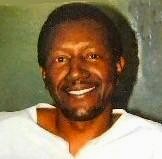 Darrell Grayson
Murderer · USA · 1980
Darrell Grayson was executed by lethal injection in Alabama on July 26, 2007. ·…
1 victim
Darrell Grayson
Murderer · USA · 1980
Darrell Grayson was executed by lethal injection in Alabama on July 26, 2007. ·…
1 victim
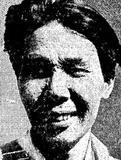 Leung Ying
Mass murderer · USA · 1928
Leung Ying (also known as Loy Yeung, Wong Gay, and Lim Onn) pleaded guilty to k…
11 victims
Leung Ying
Mass murderer · USA · 1928
Leung Ying (also known as Loy Yeung, Wong Gay, and Lim Onn) pleaded guilty to k…
11 victims
- Gender
- male
- Country
- USA
- Location
- Sacramento, California, USA
- Date of birth
- 1944
- Age at first offence
- 42
- Characteristics
- rape, serial rapist
- Victim profile
- Yolanda Johnson, 22 / Angela Polidori, 25 / Maria Apodaca, 18 / Cherie Washington, 16 / Linda Vitela, 24 / Sheila Jacox, 17 / Sharon Massey, 29 (prostitutes)
- Method of murder
- Due to the bodies advanced state of decomposition, determining the cause of death proved to be difficult
- Date(s) of murder
- 1986 - 1987
- Years active
- 1986–1987
- Date of arrest
- April 22 1987
- Status
-
Sentenced to death
Sentenced to death on September 16, 1992
Background
Morris Solomon was an Oak Park handyman and serial killer. He was convicted of four counts of first-degree murder, two counts of second-degree murder, and five sexual assaults over the course of a year starting in 1986.
Morris Solomon maintained for years that he was not guilty of killing anyone.
Solomon was born in 1944. One account stated that he was born March 15, 1944 in Albany, Georgia. Relatives and friends described Solomon’s upbringing in rural Georgia as abusive. He was raised primarily by his grandmother, Bertha, who beat him and his brother daily for infractions such as bedwetting, mispronouncing words, or crying during a beating. Bertha sometimes hit them for no apparent reason. When Solomon was very young, Bertha beat him by laying him over her lap and hitting him repeatedly. She made him remove all his clothing and stand on a stool in the corner, where she beat his bare body, including his genitalia, with an electrical cord or switches she made him bring to her. Bertha sometimes beat him until he bled. Once, she tied his hands around the pole of a bed with an extension cord to keep him from backing away during a beating.
Solomon had little contact with his parents for the first 13 years of his life. He was reunited with his parents when Bertha and the family moved to Isleton, a small farming town 40 miles from Sacramento. They were among a handful of black families living in a poor, rundown section of the town known as “Cannery Row” or “Tinpan Alley.” Solomon’s parents frequently beat and sexually assaulted one another in front of him. His mother and grandmother often beat him and verbally abused him in public. Friends and relatives would later describe his mother as a “loose woman” who regularly “entertained” different men.
After high school, Solomon attended community college and worked at various jobs, including carpentry, car repair, and bus driving. He served in Vietnam for one year starting in the summer of 1966. He returned to Isleton after his tour of duty ended in the summer of 1967. During this time, he became engaged to a woman he had known before going to Vietnam. When she broke off the engagement, he relocated to the San Francisco Bay Area, got married, and fathered a daughter. After he and his wife divorced, he moved back to Sacramento.
In April 1977, Solomon was convicted of sexually assaulting Darlene G. While at San Quentin State Prison, where he worked as a forklift operator, he was described as an ex-convict with a history of sexual assaults and violence, leading to his 1971 committal as a mentally disordered sex offender. Upon release from the state hospital as “cured,” Solomon adopted the life-style of an itinerant handyman, repairing old homes around Sacramento, California, in exchange for free room and board.
The offence
Solomon was convicted of killing six of the seven women. Five of the victims were found buried outside homes where Solomon had lived or worked, while a sixth was “discovered” by Solomon in a closet at a house where he had been working.
Solomon was held without bond and faced seven counts of first-degree murder. Because of the bodies’ advanced state of decomposition, determining the cause of death proved to be difficult.
Investigation
Investigators procured a military helicopter with infra-red scanners to canvas the neighborhood for graves. The search was called off a week later, after excavation of three other “hot spots” proved fruitless.
Solomon’s case failed to gain national attention due to a second, more controversial case of serial murder in Sacramento involving serial killer Dorothea Puente. Seven bodies were found in the backyard of Puente’s boardinghouse in the downtown Sacramento neighborhood of Alkali Flat on Nov. 11, 1988. Between Solomon and Puente, Sacramento had two serial killers working the city around the same time.
Arrest
Solomon was taken into custody on April 22 after two more victims were discovered at his current residence.
Trial
During the trial, defense attorneys Peter P. Vlautin III and Constance Gutowsky presented an extensive case in mitigation; 18 witnesses testified over the course of seven days. The defense case largely attempted to show that defendant’s crimes stemmed from psychopathology born of the abuse he suffered as a child, compounded by his tour of duty in Vietnam and his cocaine use. Clinical forensic psychologist Brad Fisher and clinical psychologist John P. Wilson both testified that the abuse Solomon suffered as a child led to mental, emotional, and behavioral problems that were strongly linked to his crimes.
Solomon’s first death penalty phase was declared a mistrial. A second jury voted unanimous to put him to death on September 16, 1992. Another account stated that the second jury voted unanimous to put him to death in July 1992.
Sentencing
Morris Solomon was sentenced to death on September 16, 1992. A Sacramento Superior Court judge, Peter Mering, added on a sentence of 95 years to life to make certain Solomon could never win release if his death sentence was overturned. Judge Peter Mering said:
“I can imagine no one whose release would be more terrifying to the community of Sacramento than Mr. Solomon,”
Solomon was described as the 342nd person to receive the death sentence in California. He was on death row in San Quentin, California.
Appeals
Solomon’s conviction was affirmed by the California Supreme Court on July 15, 2010.
Outcome
Solomon was sentenced to death on September 16, 1992 for six murders. His conviction included four counts of first-degree murder, two counts of second-degree murder, and five sexual assaults.
Solomon still denied any of the killings.
Timeline
- June 18, 1986 — Yolanda Johnson, 22, was found inside a closet of one of Solomon’s previous residences on Fourth Avenue in Sacramento.
- March 19, 1987 — The body of teenage prostitute Marie Apodoca was uncovered in the yard of a home in Sacramento’s Oak Park neighborhood.
- April 20, 1987 — Cherie Washington, 26, was found in a shallow grave in the same neighborhood.
- April 22, 1987 — Solomon was taken into custody after two more victims were discovered at his current residence.
- April 29, 1987 — Sharon Massey, 29, was found in the same yard where Marie Apodoca was found.
- August 29, 1991 — Solomon was convicted of killing six of the seven women.
- Sept. 16, 1992 — Solomon was sentenced to death.
- Nov. 11, 1988 — Seven bodies were found in the backyard of Dorothea Puente’s boardinghouse in the downtown Sacramento neighborhood of Alkali Flat.
- July 15, 2010 — Solomon’s conviction was affirmed by the California Supreme Court.
Other details
Solomon had four outstanding misdemeanor warrants when authorities allowed him to go free, including one of solicitation of prostitution.
In earlier cases, Solomon was a suspect in Yolanda Johnson’s death and Angela Polidore’s death, but walked away when authorities failed to come up with evidence sufficient enough to get an indictment.
Solomon had stayed at the house where Marie Apodoca’s body was found until November 1986.
Two additional victims found at Solomon’s current residence were identified as Linda Vitela and Sheila Jacox.
Defense testimony included clinical psychologist Brad Fisher and clinical psychologist John P. Wilson.
A list-style entry described Solomon’s motive as “Sex” and method as “Rape-slayer of women in his neighborhood,” and listed “DISPOSITION: Condemned, 1988,” but the only sentencing outcome stated in the case status was the death sentence on September 16, 1992.
Spotted an error, or have more information about this case?