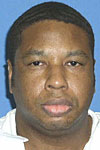
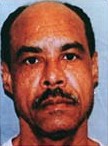
Charles Neale
Murderer Russell Ellwood
Murderer · USA · 1991
Russell Ellwood was a former taxi driver. Authorities suspected him of killing…
20 victims
Russell Ellwood
Murderer · USA · 1991
Russell Ellwood was a former taxi driver. Authorities suspected him of killing…
20 victims
 Robert Martines Perez
Murderer · USA · 1994
Name: Robert Martines Perez · Other name used in proceedings: Robert Martinez P…
15 victims
Robert Martines Perez
Murderer · USA · 1994
Name: Robert Martines Perez · Other name used in proceedings: Robert Martinez P…
15 victims
 Billy Frank Vickers
Murderer · USA · 1993
Billy Frank Vickers Vickers was executed by lethal injection in Texas on Januar…
14 victims
Billy Frank Vickers
Murderer · USA · 1993
Billy Frank Vickers Vickers was executed by lethal injection in Texas on Januar…
14 victims
 James Hutchins
Murderer · USA · 1979
Name: James W. Hutchins Full name used: James W. Hutchins; James W. Hutchins (A…
3 victims
James Hutchins
Murderer · USA · 1979
Name: James W. Hutchins Full name used: James W. Hutchins; James W. Hutchins (A…
3 victims
 Kirt Wainwright
Murderer · USA · 1988
Kirt Douglas Wainwright was convicted of killing Barbara Smith, who was an atte…
2 victims
Kirt Wainwright
Murderer · USA · 1988
Kirt Douglas Wainwright was convicted of killing Barbara Smith, who was an atte…
2 victims
 Anthony John Ponticelli
Murderer · USA · 1987
Name: Anthony John Ponticelli Date of birth: 04/19/67 Fifth Judicial Circuit: M…
2 victims
Anthony John Ponticelli
Murderer · USA · 1987
Name: Anthony John Ponticelli Date of birth: 04/19/67 Fifth Judicial Circuit: M…
2 victims
 Dovie Dean
Murderer · USA · 1952
Dovie Blanche Dean was executed by electrocution on January 15, 1954. Dovie Bla…
1 victim
Dovie Dean
Murderer · USA · 1952
Dovie Blanche Dean was executed by electrocution on January 15, 1954. Dovie Bla…
1 victim
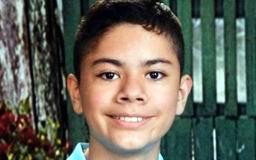 Jose Reyes
Homicide · USA · 2013
Jose Reyes was a 12-year-old seventh-grade student who carried out a school sho…
1 victim
Jose Reyes
Homicide · USA · 2013
Jose Reyes was a 12-year-old seventh-grade student who carried out a school sho…
1 victim
- Gender
- male
- Country
- USA
- Location
- Dallas County, Texas, USA
- Date of birth
- March 23, 1964
- Age at first offence
- 33
- Characteristics
- armed robbery, robbery, drugs, alcohol, escape, torture, domestic violence
- Victim profile
- Jiten Bhakta, 25 (store owner) and Vijay Patel, 17 (store employee)
- Method of murder
- Shooting
- Date(s) of murder
- August 20, 1997
- Years active
- 1997
- Date of arrest
- —
- Status
-
Executed
Executed by lethal injection in Texas on March 20, 2007
Case overview
Charles Anthony Nealy was convicted of capital murder and sentenced to death for the 1997 murder and robbery of Dallas convenience store employee Jiten Bhakta during an armed robbery of the convenience store owned by Jiten Bhakta. He was executed by lethal injection in Texas on March 20, 2007.
Timeline
- August 20, 1997 — Charles Nealy drove past the Expressway Mart in south Dallas and told his nephew, Memphis Nealy, that he was going to “come back and get” the people at that store because they would not sell him certain cigars, “Blackie Mounds.”
- August 20, 1997 (later that night) — Charles Nealy drove to the Expressway Mart with Reginald Mitchell and nephews Claude Nealy and Memphis Nealy as passengers; Mitchell went in and paid for gasoline.
- September 1, 1998 — A jury found Charles Nealey guilty of the capital murder of Jiten Bhakta.
- September 2, 1998 — Following a separate punishment hearing, the court sentenced Nealy to death.
- July 7, 2000 — Nealy filed a state application for writ of habeas corpus with the trial court.
- September 13, 2000 — The Court of Criminal Appeals affirmed his conviction and sentence.
- October 24, 2001 — The Texas Court of Criminal Appeals denied relief on Nealy’s state habeas application.
- February 20, 2001 — The U.S. Supreme Court denied Nealy’s petition for writ of certiorari.
- October 21, 2002 — Nealy filed a petition for writ of habeas corpus in a Dallas federal district court.
- May 18, 2005 — The federal district court denied relief.
- May 25, 2005 — Nealy filed a motion for certificate of appealability and notice of appeal.
- June 15, 2005 — The federal district court denied Nealy’s motion for certificate of appealability.
- June 15, 2006 — The 5th U.S. Circuit Court of Appeals affirmed the judgment of the district court.
- August 22, 2006 — Nealy filed a petition for writ of certiorari in the U.S. Supreme Court.
- October 11, 2006 — A hearing was held in the trial court at the request of the State.
- October 23, 2006 — The Texas Court of Criminal Appeals denied Nealy’s motion for stay of execution.
- November 6, 2006 — The U.S. Supreme Court denied Nealy’s petition.
- November 9, 2006 — Nealy filed an application for a subsequent state writ.
- February 7, 2007 — The Texas Court of Criminal Appeals denied Nealy’s successive state writ.
- March 20, 2007 — Charles Nealy was executed by lethal injection.
- 7:20 p.m. (March 20, 2007) — He was pronounced dead seven minutes after the lethal dose of drugs began.
- February 7, 2007 — The court order stated the application for writ of habeas corpus was denied and the stay previously entered was terminated.
Background
Evidence at the punishment phase indicated that Charles Nealy had three prior convictions for aggravated robbery. The evidence also indicated that Nealy assaulted a jail inmate following his arrest for capital murder and that he had an extensive record as a juvenile offender, including charges for shoplifting, truancy, burglary, and theft.
Nealy had a criminal record as a juvenile in the 1970s, including armed offenses. He received a 35-year sentence in 1980 for aggravated robbery when he was sixteen years old, after robbing a woman at gunpoint as she was sitting in her car with her baby in a grocery store parking lot, pointing the gun at the woman and her son and telling her to get out of the car and leave her purse or he would kill her. He was convicted again in 1994.
At age 33, about one month before the capital murder, Nealy and his nephew held up a pawn shop where Nealy had been a regular customer. Nealy grabbed the clerk by the back of the neck, put a gun to the side of the clerk’s head, and told the clerk he would kill her if she moved. Nealy’s nephew grabbed the clerk’s mother and held a gun to her head. They took money, two handguns, and a shotgun.
The day before the capital murder, Nealy and another man posed as customers in a shoe store robbery. After the owner fitted the two men with new shoes, the owner went to the cash register and Nealy held a handgun close to the owner’s head. Nealy and the other man stole about $250 from the cash register and the two pairs of shoes.
Nealy accumulated 70 disciplinary reports while in prison. While he was in jail awaiting trial for capital murder, Nealy and two other inmates assaulted another inmate, breaking his jaw. At trial, after the assaulted inmate had testified, Nealy threatened the assaulted inmate and shouted obscenities at him.
The offence
On the evening of August 20, 1997, Charles Nealy drove by the Expressway Mart in south Dallas and told his nephew, Memphis Nealy, that he was going to “come back and get” the people at that store, because they would not sell him certain cigars, “Blackie Mounds.”
Later that night, Charles Nealy drove to the Expressway Mart with Reginald Mitchell and nephew Claude Nealy as passengers. Mitchell went in the store and paid for gasoline, then went out and pumped it.
Charles Nealy entered the store armed with a shotgun. Claude Nealy entered with a handgun. Store employee Satishbhi Bhakta testified that Charles Nealy and the other robber ordered him and another store employee, Vijay Patel, to get down on the floor or they would be shot.
Satishbhi saw Charles Nealy go into the office where his brother, Jiten Bhakta, was, and heard the shotgun fired. Satishbhi then heard Claude Nealy shoot Patel in the head as Patel was lying on the floor. Charles Nealy then stated: “I got the man in the office.” Claude replied: “I got the one over here too.”
Charles Nealy took about $4,000 in cash from Jiten’s office, then turned attention to Satishbhi and ordered him to open the cash register. After Satishbhi complied, Nealy pulled the money out of the register and stuffed it in his pocket.
The Nealys took a six-pack of beer and a bottle of wine, then left the store.
Jiten Bhakta was found dead in his office. Vijay Patel died of his wounds a couple of days later.
Investigation
These events were recorded on the store’s video camera and shown to the jury.
A grainy videotape image from a security camera at the store showed a man with a shotgun and another with a pistol taking money from a cash register and then grabbing a bottle of wine and a couple of six-packs of cold beer. The video did not record either of the murders.
At trial, Mitchell testified that, as they drove away, Nealy commented in a “little old happy tone” that “this is the way the Nealy’s [sic] do it.”
Trial
At trial, Satishbhi Bhakta testified and identified Charles Nealy as the man with the shotgun.
Jiten Bhakta’s brother, Satishbhi Bhakta, testified that Jiten owned the Expressway Mart in Dallas and that when Jiten was in the office taking a nap, the two men ordered Patel and Bhakta to lie on the floor. Bhakta heard Jiten call out and then heard the shotgun discharge. Bhakta testified that Jiten died from a shotgun wound to the chest.
Bhakta testified that the man with the pistol then shot Patel in the head and Patel died a few days later.
At trial, Bhakta identified Charles Nealy as the man with the shotgun. Four video cameras recorded the robbery. Although the tape was of poor quality, it showed a man with a light-colored hat and a man wearing a dark hat carrying a shotgun.
Memphis Nealy testified that on the evening of the robbery, he was riding with Charles Nealy, who was his uncle, and that when they passed the convenience store, Charles stated, “I’m going to come back and get ‘em.” Memphis testified that Charles did not want Memphis to join because Memphis did not have a criminal record.
Memphis testified that he recognized Charles Nealy, Claude Nealy, and Reginald Mitchell on the videotape of the robbery. Memphis identified Charles Nealy as the man wearing the dark hat and carrying the shotgun and briefcase, and identified Claude as the man with the light hat and handgun. On cross-examination, Memphis admitted he was unable to identify anyone from the videotape until the police told him that his uncle and brother were on the tape.
Reginald Mitchell testified that on the night of the robbery, he joined Claude and Nealy in Nealy’s car and went to the Expressway Mart. Mitchell testified that Claude and Nealy entered the store and that Nealy had a shotgun, although Mitchell did not see it. Mitchell testified that Claude had a .38 or .32 pistol. Mitchell testified that he first heard a shotgun blast and then small arms fire. Mitchell testified that Nealy and Claude came out of the store and got into the car.
Mitchell testified that Nealy said, “This is the way the Nealys do it.” When they got back to Nealy’s house, Mitchell testified that Nealy said the crime was committed because “the bitches” wouldn’t sell him “no Blackie mounds” (referring to a type of cigar). Mitchell testified that Nealy threatened to kill him if he told anyone about the robbery.
In the later recounting of the events, Satishbhi Bhakta testified that he saw Charles Nealy go into the office and then heard a gunshot, and that Claude Nealy shot Patel in the back of the head as he lay on the floor.
Nealy’s defense argued that Satishbhi Bhakta gave conflicting testimony in identifying the men, and that the quality of the videotape was too poor to make a positive identification. The defense also argued that witnesses were led by the state into identifying Charles Nealy as the man with the shotgun.
Sentencing
Following a separate punishment hearing, the court sentenced Nealy to death.
Evidence at the punishment phase indicated prior convictions for aggravated robbery, an assault of a jail inmate following his arrest for capital murder, and an extensive juvenile record.
Appeals
Direct appeal
The Court of Criminal Appeals affirmed his conviction and sentence on September 13, 2000.
The U.S. Supreme Court denied Nealy’s petition for writ of certiorari on February 20, 2001.
State habeas corpus
Nealy filed a state application for writ of habeas corpus with the trial court on July 7, 2000.
On October 24, 2001, the Texas Court of Criminal Appeals denied relief.
A hearing was held in the trial court at the request of the State on October 11, 2006.
On October 23, 2006, the Texas Court of Criminal Appeals denied Nealy’s motion for stay of execution.
Nealy filed an application for a subsequent state writ on November 9, 2006.
On February 7, 2007, the Texas Court of Criminal Appeals denied Nealy’s successive state writ.
Federal habeas corpus
Nealy filed a petition for writ of habeas corpus in a Dallas federal district court on October 21, 2002.
On May 18, 2005, the federal district court denied relief.
On May 25, 2005, Nealy filed a motion for certificate of appealability and notice of appeal.
On June 15, 2005, the federal district court denied Nealy’s motion for certificate of appealability.
On June 15, 2006, the 5th U.S.
Nealy filed a petition for writ of certiorari in the U.S. Supreme Court on August 22, 2006, and the Supreme Court denied the petition on November 6, 2006.
Claims and findings in subsequent writ proceedings
The Texas Court of Criminal Appeals addressed a subsequent application for writ of habeas corpus filed pursuant to Texas Code of Criminal Procedure, Article 11.071, Section 5.
The court noted it had remanded to the convicting court to resolve a claim that the prosecutor suborned perjured testimony.
The court adopted findings of fact made by the convicting court. The convicting court found that “Memphis' allegations of prosecutorial misconduct and false trial testimony are untrue and were fabricated to affect a stay of execution in this case.”
The court also discussed an undisclosed deal claim regarding Reginald Mitchell, dismissing it as an abuse of the writ to the extent it was before the court.
The court described attempts to pressure Memphis Nealy to recant trial identification testimony. It stated that the plan was discovered by the Dallas County District Attorney’s office and that the district attorney’s office made contact with Memphis Nealy. The court stated that Memphis initially asserted that he testified truthfully at trial and then, a few days later, stated that a prosecutor coerced him into testifying and that he testified to what he was told by the prosecutor.
On remand, the convicting court determined Memphis attempted to recant but did not change his testimony in any material way from trial testimony and found Memphis’ testimony to be “not worthy of belief.”
The Texas Court of Criminal Appeals denied the subsequent application for writ of habeas corpus and terminated the previously entered stay. The court’s order was issued on February 7, 2007.
In Nealy v. Dretke, the U.S. Court of Appeals addressed certificate of appealability issues. The court granted a COA for the question whether the evidence was sufficient to prove beyond a reasonable doubt the essential elements of the offense of capital murder, and denied COA for other claims.
Outcome
Charles Nealy was executed by lethal injection in Texas on March 20, 2007. He was pronounced dead at 7:20 p.m., seven minutes after the lethal dose began.
In a lengthy statement before his death, Nealy wished his friends and relatives well and expressed love. He said: “I'm not crying, so y'all don't cry. Don't be sad for me. I'm going to be with God and Allah and Momma.” He asked witnesses to tell the guys on death row: “I'm not wearing a diaper.”
He also criticized the Dallas County assistant prosecutor who handled the state’s appeals, saying: “You messed up.” He added: “Now to cover it up the state is killing me. I'm not sad and bitter. I feel sad for everyone else – you have to stay here. I'm going to someplace better.”
Nealy made a request about burial: “Bury me next to Momma.” He also asked witnesses: “Don't bury me in that prison graveyard; I want to be buried next to momma.” Another statement included: “By the way, the reason it took so long was because (they) couldn't find a vein.” Nealy stated: “I used to tear up the doctor’s office. I hate needles.”
He was also reported saying: “Ya’ll know that I love all of you,” and: “I’m not crying, so y’all don’t cry for me. I’m going to be with God — Allah — and momma.” As sodium thiopental began to take effect, he said he could “feel it.”
In one report, he blamed a more than 20-minute delay in the execution on technicians’ inability to find a suitable vein to carry the lethal chemicals and said: “I used to tear up the doctor's office,” and “I hate needles.”
Aftermath
The execution occurred in the Texas death chamber. Nealy’s execution was set after his conviction and sentence for the 1997 murder and robbery of Jiten Bhakta.
The reports also stated that his nephew Claude Nealy was serving life in prison for the killing of Vijay Patel. The reports stated that Nealy denied involvement in the shootings and claimed he was in Ardmore, Okla., at the time of the slayings, picking up a relative’s truck.
In the course of late appeals, the reports stated that lawyers for Nealy alleged prosecutor misconduct and false testimony. They also stated that Nealy’s lawyers attempted to raise claims in the federal courts that Nealy was mentally retarded and therefore ineligible for execution, and that the attempt was rejected.
In the reports of final hours, the execution was delayed by trouble finding a vein in his left arm for the lethal injection, taking nearly 20 minutes, before the lethal dose began and he was pronounced dead at 7:20 p.m.
Spotted an error, or have more information about this case?