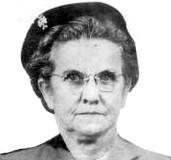
Dovie Dean
Murderer Marie Noe
Murderer · USA · 1949
Marie Noe was convicted in June 1999 of murdering eight of her children. Betwee…
8 victims
Marie Noe
Murderer · USA · 1949
Marie Noe was convicted in June 1999 of murdering eight of her children. Betwee…
8 victims
 Earle Dennison
Murderer · USA · 1952
Earle Dennison was a widow and worked as a surgical nurse. She worked at the We…
2 victims
Earle Dennison
Murderer · USA · 1952
Earle Dennison was a widow and worked as a surgical nurse. She worked at the We…
2 victims
 Barbara Graham
Murderer · USA · 1953
Barbara Graham (June 26, 1923 – June 3, 1955) was an American criminal and conv…
1 victim
Barbara Graham
Murderer · USA · 1953
Barbara Graham (June 26, 1923 – June 3, 1955) was an American criminal and conv…
1 victim
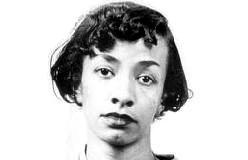 Betty Butler
Murderer · USA · 1952
Betty Butler was executed on June 11, 1954. She was 26 years old and was of the…
1 victim
Betty Butler
Murderer · USA · 1952
Betty Butler was executed on June 11, 1954. She was 26 years old and was of the…
1 victim
 Ralph Dale Armstrong
Murderer · USA · 1980
Ralph Dale Armstrong was a UW-Madison graduate student who was on parole from N…
1 victim
Ralph Dale Armstrong
Murderer · USA · 1980
Ralph Dale Armstrong was a UW-Madison graduate student who was on parole from N…
1 victim
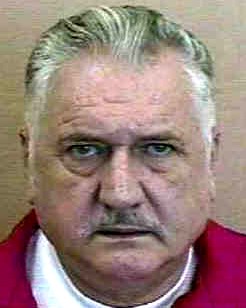 Zane Brown Hill
Murderer · USA · 1990
Zane Brown Hill was 62 years old, and he was from Buncombe County. He was execu…
1 victim
Zane Brown Hill
Murderer · USA · 1990
Zane Brown Hill was 62 years old, and he was from Buncombe County. He was execu…
1 victim
 Vernon Lamont Smith
Murderer · USA · 1993
Vernon Lamont Smith n/k/a Abdullah Sharif Kaazim Mahdi was convicted in Lucas C…
1 victim
Vernon Lamont Smith
Murderer · USA · 1993
Vernon Lamont Smith n/k/a Abdullah Sharif Kaazim Mahdi was convicted in Lucas C…
1 victim
 Floyd Ernest Hill
Murderer · USA · 1982
Floyd Ernest Hill was sentenced to death in July 1982. His death sentence was o…
1 victim
Floyd Ernest Hill
Murderer · USA · 1982
Floyd Ernest Hill was sentenced to death in July 1982. His death sentence was o…
1 victim
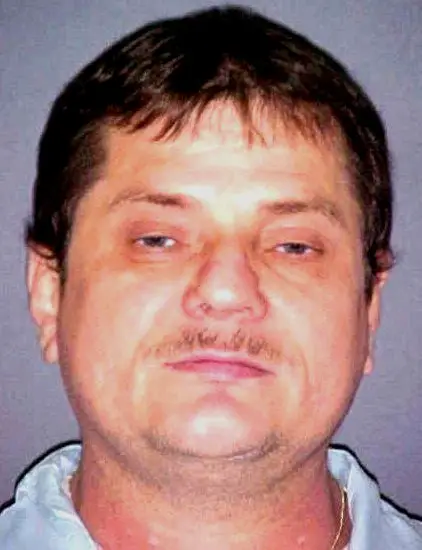 Terry Lyn Short
Murderer · USA · 1995
Terry Lyn Short was convicted in Oklahoma County of first-degree murder and fiv…
1 victim
Terry Lyn Short
Murderer · USA · 1995
Terry Lyn Short was convicted in Oklahoma County of first-degree murder and fiv…
1 victim
 Mack Ray Edwards
Serial killer · USA · 1953
Mack Ray Edwards was an American serial killer who murdered at least six childr…
6 victims
Mack Ray Edwards
Serial killer · USA · 1953
Mack Ray Edwards was an American serial killer who murdered at least six childr…
6 victims
- Gender
- female
- Country
- USA
- Location
- Clermont County, Ohio, USA
- Date of birth
- February 25, 1898
- Age at first offence
- 54
- Characteristics
- parricide, poisoner
- Victim profile
- Hawkins Dean, 69 ( her newlywed farmer husband)
- Method of murder
- Poisoning (arsenic)
- Date(s) of murder
- August 22, 1952
- Years active
- 1952
- Date of arrest
- September 12, 1952
- Status
-
Executed
Executed by electrocution on January 15, 1954
Case details
Dovie Blanche Dean was executed by electrocution on January 15, 1954.
Background
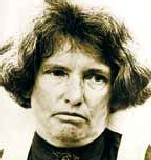
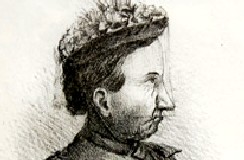
Dovie Blanche Dean was a 55-year-old Clermont County mother of six and a grandmother.
The offence
Dean was convicted of poisoning her newlywed farmer husband, Hawkins Dean, by putting arsenic-laced rat poison in his milk.
Dean and Hawkins Dean married on April 13, 1952, one day after Dean was divorced from her former husband who was in jail. Hawkins Dean died four months later on Aug. 22, 1952.
Dean confessed to poisoning her 69-year-old husband, Hawkins Dean, by putting rat poison in his milk. She said the killing took place after several violent arguments when she found her new husband (her third) could not “perform his husbandly duties.”
Dean said: “He wanted a housekeeper and I wanted a home.”
Prosecutors said Hawkins Dean “changed his will shortly after he married Dovie, making her the sole beneficiary of his $27,000 estate,” and they stated: “Dean signed his death warrant when he named her in his will.”
Dean gave Hawkins arsenic on four occasions during August 1952, dumping the powder in his milk. Once, when Hawkins came down with severe stomach pains, Dean called the ambulance that took him to the hospital; she claimed this showed she did not kill him. She admitted giving him some powder but said it was at his request for a headache.
Investigation and arrest
Dean was arrested in 1952 after her husband of five months, Hawkins Dean, died from ingesting arsenic.
Clermont County Sheriff Clyde B. Dericks obtained Dean’s statement, including:
- “I got him before he got me,”
- “He threatened to take both his life and mine.”
Dean said Hawkins Dean “could not perform his husbandly duties.” She also said Hawkins “could not satisfy her” and that led to several arguments. She said Hawkins eventually threatened to kill her.
Dericks told the press that the young man “became hysterical when told his mother had accused him of the crime.”
Dean initially blamed the murder on her son. Her interrogators, convinced of her son’s innocence, pressed her for information and she admitted she killed her husband.
Dericks asked her: “If a mother can make such a charge against her son, wouldn’t she be capable of killing?” and also asked: “Don’t you want to change your story?”
Dean responded:
- “And take the blame myself?”
- “Yes, I want to change my story,”
- “I did it.”
- “I got him before he got me.”
Dean told police that Hawkins Dean “could not satisfy her,” and she said Hawkins “could not perform his husbandly duties.”
During the investigation, Dean was interviewed by a University of Cincinnati psychiatrist.
Dr. Robert Buckley said:
- “I examined her after her arrest,”
- “I found she is not insane.”
- “She was sad and melancholy, and on the verge of tears several times, but the tears would not come.”
Dean’s defense argument in her own words was that she confessed to shield her son from an earlier marriage who actually committed the crime.
Trial
Dean’s brief trial proceeded on the basis that under Ohio law at the time, the judge was required to sentence her to death.
The jury took just 40 minutes to convict her without a recommendation for mercy.
During the trial, Dean “sat stony still and obdurate,” and she told friends: “I cannot cry.”
When the verdict came, her emotionless exterior nearly broke; she tensed briefly before leaning back in her chair. After being escorted from the courtroom, her demeanor contrasted with the cries of anguish from her family.
Sentencing
Under Ohio law at the time, the judge was required to sentence Dean to death. Dean became the second woman to be sentenced to die in the electric chair; the first was Anna Marie Hahn, another poisoner.
The record described Anna Marie Hahn’s execution as: “Hahn died screaming in terror, pleading for her life.”
Appeals
No appeals were described in the provided text.
Outcome
Dean was executed by electrocution on January 15, 1954. She went to Ohio’s electric chair at 8:00 p.m., and she was pronounced dead 7 minutes later. More than 1,900 volts coursed through her body, and at 8:07 p.m., Dean was dead.
Aftermath
Dean was taken from Marysville Reformatory to the Ohio State Pentitentiary.
Before her execution, Dean managed to gain 30 pounds and kept a pet parakeet she named “Charlie.”
On January 15, 1954, Dean sat with her spiritual advisor in the anteroom outside the death chamber, drinking coffee and taking a pass on the cookies. Shortly before execution, the top of her head was shaved to allow for better contact with the electrode.
Dean requested that someone sing “What a Friend We Have in Jesus.” The request was denied, and the Rev. C.W. Wilsher read the hymn to her.
A witness described her demeanor: “they had never seen a condemned prisoner meet final fate more placidly.”
The Rev. C.W. Wilsher passed cookies to Dean, and Dean said: “I’ll eat a couple later,” and added: “she said, a little smile on her lips.”
Dean made her final statement in the electric chair:
“When I got on the witness stands they made light of me because I couldn’t cry,” she said. “Years ago, I couldn’t have faced all of those people, but I asked God to help me. I had grief inside like knives.”
Spotted an error, or have more information about this case?