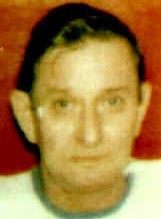
James Hutchins
Murderer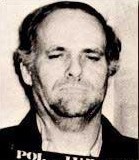 Ervil LeBaron
Murderer · USA · 1972
Ervil Morrell LeBaron (1925 to August 16, 1981) was the leader of a polygamous…
35 victims
Ervil LeBaron
Murderer · USA · 1972
Ervil Morrell LeBaron (1925 to August 16, 1981) was the leader of a polygamous…
35 victims
 Brian Kevin Rosenfeld
Murderer · USA · 1985
Brian Kevin Rosenfeld Brian Kevin Rosenfeld was sentenced to three concurrent l…
23 victims
Brian Kevin Rosenfeld
Murderer · USA · 1985
Brian Kevin Rosenfeld Brian Kevin Rosenfeld was sentenced to three concurrent l…
23 victims
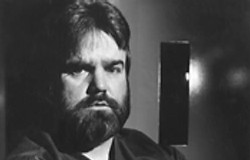 Marvin Gray
Murderer · USA · 1975
Marvin Gray was convicted killer who claimed responsibility for 23 slayings and…
23 victims
Marvin Gray
Murderer · USA · 1975
Marvin Gray was convicted killer who claimed responsibility for 23 slayings and…
23 victims
 Yahweh ben Yahweh
Murderer · USA · 1980
Yahweh ben Yahweh was born and legally named Hulon Mitchell Jr. (October 27, 19…
23 victims
Yahweh ben Yahweh
Murderer · USA · 1980
Yahweh ben Yahweh was born and legally named Hulon Mitchell Jr. (October 27, 19…
23 victims
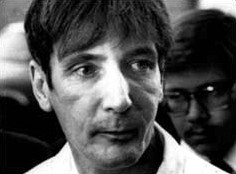 Gary Gilmore
Murderer · USA · 1976
Gary Gilmore was born on December 4, 1940. He was an American career criminal w…
2 victims
Gary Gilmore
Murderer · USA · 1976
Gary Gilmore was born on December 4, 1940. He was an American career criminal w…
2 victims
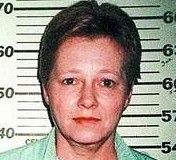 Gaile Owens
Murderer · USA · 1985
Gaile Kirksey Owens was convicted of accessory before the fact to wit: murder i…
1 victim
Gaile Owens
Murderer · USA · 1985
Gaile Kirksey Owens was convicted of accessory before the fact to wit: murder i…
1 victim
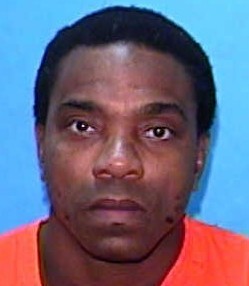 Ronnie Ferrell
Murderer · USA · 1991
Ronnie Ferrell was sentenced to death on December 17, 1993. He was indicted in…
1 victim
Ronnie Ferrell
Murderer · USA · 1991
Ronnie Ferrell was sentenced to death on December 17, 1993. He was indicted in…
1 victim
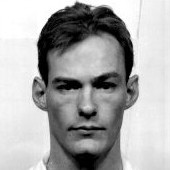 Richard Drinkard
Murderer · USA · 1985
Richard Gerry Drinkard was convicted in Texas of capital murder in the deaths o…
3 victims
Richard Drinkard
Murderer · USA · 1985
Richard Gerry Drinkard was convicted in Texas of capital murder in the deaths o…
3 victims
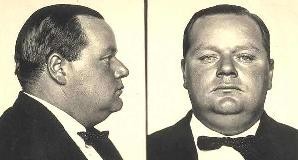 Roscoe Arbuckle
Homicide ? · USA · 1921
Roscoe Conkling Arbuckle, also known as Fatty Arbuckle (March 24, 1887 – June 2…
1 victim
Roscoe Arbuckle
Homicide ? · USA · 1921
Roscoe Conkling Arbuckle, also known as Fatty Arbuckle (March 24, 1887 – June 2…
1 victim
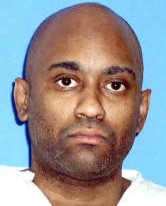 Kevin Kincy
Murderer · USA · 1993
March 26, 1993 — Jerome Harville was found fatally shot in the head and stabbed…
1 victim
Kevin Kincy
Murderer · USA · 1993
March 26, 1993 — Jerome Harville was found fatally shot in the head and stabbed…
1 victim
- Gender
- male
- Country
- USA
- Location
- Rutherford County, North Carolina, USA
- Date of birth
- March 26, 1929
- Age at first offence
- 50
- Characteristics
- abuse, to avoid arrest, police officer, murder-for-hire
- Victim profile
- Roy Huskey, Owen Messersmith, and Pete Peterson (policemen)
- Method of murder
- Shooting (rifle)
- Date(s) of murder
- May 31, 1979
- Years active
- 1979
- Date of arrest
- Next day
- Status
-
Executed
Executed by lethal injection on March 16, 1984 in North Carolina
Case information
Name: James W. Hutchins Full name used: James W. Hutchins; James W. Hutchins (Appellant); James W. Hutchins (respondent) Life dates: March 26, 1929 – March 16, 1984 Age at execution: 54
Timeline
- May 31, 1979 — James W. Hutchins shot and killed three law enforcement officers in Rutherford County, North Carolina.
- June 1, 1979 — Hutchins was arrested on the day following the killings.
- September 5–6, 1979 — A closed hearing was held in the trial judge’s chambers to consider Hutchins’ request that assigned trial counsel be discharged and counsel’s motion to withdraw.
- September 6, 1979 — Hutchins was transferred to Dorothea Dix Hospital in Raleigh, and returned from Raleigh on September 14, 1979.
- August 28, 1979 — Dr. George W. Doss was able to meet with Hutchins for evaluation.
- September 6, 1979 — The preliminary report by Dr. George W. Doss was received by Hutchins’ lawyers.
- September 14, 1979 — Hutchins was returned from Raleigh.
- September 16, 1979 — Hutchins refused to cooperate with Dr. Doss when Doss tried to examine him.
- September 17, 1979 — Hutchins’ attorneys moved for a continuance on the first day of trial; the motion was denied and the trial commenced.
- September 21, 1979 — A jury returned verdicts finding Hutchins guilty of first degree murder of two officers and second degree murder of a third officer.
- September 22, 1979 — The jury recommended punishment by death for each first degree murder.
- September 22, 1979 — The trial court entered judgments sentencing Hutchins to life imprisonment for the second degree murder and death for each of the two first degree murders.
- July 8, 1981 — The North Carolina Supreme Court filed its opinion affirming the conviction: State v. Hutchins, 303 N.C. 321, 279 S.E.2d 788 (1981).
- October 15, 1982 — A North Carolina superior court set October 15, 1982 as the time for execution of the death sentences.
- September 24, 1982 — Hutchins filed a petition for a writ of habeas corpus and an application for a stay of execution in the United States District Court for the Eastern District of North Carolina.
- September 30, 1982 — The United States District Court for the Eastern District of North Carolina stayed execution.
- December 7, 1982 — Hutchins’ cause was transferred to the United States District Court for the Western District.
- July 29, 1983 — The United States District Court for the Western District of North Carolina denied and dismissed the petition for habeas corpus and dissolved the stay.
- September 1, 1983 — The district court denied Hutchins’ applications in the Western District of North Carolina (including an application for a certificate of probable cause to appeal and a stay of execution).
- December 6, 1983 — Oral argument took place in the Fourth Circuit appeal.
- December 29, 1983 — The Fourth Circuit decision is included in the record: James W. Hutchins, Appellant, v. Sam P. Garrison, Warden Central Prison; and State of North Carolina, Appellees, 724 F.2d 1425.
- January 11, 1984 — The United States Supreme Court denied certiorari (in the description of the proceedings involving the Hutchins v. Garrison petition).
- January 12, 1984 — Hutchins filed a second petition for habeas corpus in the United States District Court for the Western District of North Carolina and also sought a stay of execution; the requested stay was denied by the Western District without reaching the merits.
- January 13, 1984 — A single Circuit Judge granted a stay of execution early in the day; that stay was vacated by the United States Supreme Court on the same day.
- March 9, 1984 — Oral argument took place in the Fourth Circuit in Hutchins v. Woodard.
- March 13, 1984 — The Fourth Circuit decided James W. Hutchins, Appellant, v. James C. Woodard, Secretary of Corrections of State of North Carolina; Nathan Rice, Warden of Central Prison, Raleigh, North Carolina; and Rufus L. Edmisten, Attorney General Of State of North Carolina, Appellees.
- March 16, 1984 — Hutchins was executed by lethal injection at Central Prison in Raleigh, North Carolina.
Background
James W. Hutchins was a North Carolina death row prisoner whose execution was scheduled after a conviction for the murders of Roy Huskey, Owen Messersmith, and Pete Peterson. He was executed at age 54 by the State of North Carolina at Central Prison in Raleigh, North Carolina, by lethal injection.
The offence
On May 31, 1979, Hutchins shot and killed three law enforcement officers in Rutherford County, North Carolina. The killings were the basis for convictions including:
- First degree murder of two law enforcement officers (sentenced to death for each of the two first degree murders).
- Second degree murder of a third law enforcement officer (sentenced to life imprisonment).
Hutchins deliberately murdered three policemen, and the record described that the offenses were committed:
- to avoid arrest,
- against law enforcement officers on duty, and
- as part of a course of conduct including violence against others.
Investigation
That Hutchins killed the three officers was stated as “not in dispute.” Hutchins was arrested on June 1, 1979, the day following the killings.
Arrest
Hutchins was arrested on June 1, 1979 and was brought before a state district court. The court found him indigent, and counsel, David K. Fox, was appointed to represent him. Ronald Blanchard served as co-counsel with Fox.
Trial
Venue and psychiatric preparation
Hutchins was indicted by a grand jury for murder with respect to each killing. Prior to trial, the motion for a change of venue was allowed, and the case was transferred for trial from Rutherford County to McDowell County, North Carolina.
Counsel’s request for the trial court to allow fees for an expert psychiatric evaluation was denied. Counsel retained psychiatrist Dr. Codgen at their own expense to examine Hutchins. Counsel later discovered that Codgen was undergoing domestic difficulties and would be unable to evaluate Hutchins. Counsel then, in early August of 1979, engaged psychiatrist Dr. George W. Doss.
The state contested counsel’s motions to obtain an order allowing Doss to examine Hutchins. There was a one-week delay in the trial court’s hearing and granting of the motions. Doss was not able to meet with Hutchins until August 28, 1979. Doss prepared a preliminary report received by Hutchins’ lawyers on September 6, 1979. In the preliminary report, Doss stated that he did not have enough information to be sure, but felt Hutchins was suffering from a “paranoid delusional system.”
Requests to discharge counsel and closed hearing
Hutchins was convinced that his lead counsel, Fox, was in collusion with the state because of Fox’s previous employment as an assistant district attorney.
On August 16, 1979, Hutchins requested that his lawyer be discharged. Fox filed a motion to withdraw on the ground that “no meaningful communication” was possible between him and Hutchins.
The trial court, with Hutchins’ consent, conducted a closed hearing on September 5–6, 1979, to consider the motion. Even though another attorney had volunteered to take the case, the trial court refused to allow counsel to withdraw.
At the September 6, 1979 hearing, counsel informed the state that it was possible Hutchins would raise an insanity defense. The state requested that Hutchins be immediately transferred to Dorothea Dix Hospital in Raleigh, 210 miles from the place of trial, for evaluation. Hutchins’ lawyers did not object to the transfer, and the request was granted that same day, September 6, 1979. Counsel Blanchard flew to Raleigh and visited Hutchins once during his stay. Hutchins was not returned from Raleigh until September 14, 1979.
Hutchins refused to cooperate with Dr. Doss when Doss tried to examine him on September 16, 1979.
Motion for continuance and denial
Counsel asked the trial court for a continuance on the first day of trial, September 17, 1979, on the contention that they were unprepared. Unpreparedness was described as stemming from:
- the inability to develop a defense based on insanity; and
- the state’s decision to change its theory in two of the killings from premeditation and deliberation to lying in wait.
The trial court questioned counsel about when the trial date of September 17, 1979 had been set. Fox stated that he knew the state was going to ask for a trial date of September 17, 1979 in early June of that year. The record did not disclose the trial judge’s reasons for denying the motion for a continuance. The trial commenced immediately after the denial of the motion.
Hutchins did not testify at trial, and counsel presented no evidence to support the only possible defense, insanity.
Verdicts and sentencing
On September 21, 1979, the jury returned verdicts finding Hutchins guilty of:
- first degree murder of two officers; and
- second degree murder of a third officer.
On September 22, 1979, after a sentencing hearing, the jury returned recommendations that Hutchins be punished by death for each first degree murder. On that same day, the trial court entered judgments sentencing Hutchins:
- to life imprisonment for the second degree murder; and
- to death for each of the two first degree murders.
Appeals
North Carolina Supreme Court
The North Carolina Supreme Court found no error in the lower court proceedings and affirmed Hutchins’ convictions and sentences in State v. Hutchins, 303 N.C. 321, 279 S.E.2d 788 (1981).
Hutchins filed a Motion for Appropriate Relief in Rutherford County Superior Court, which was denied. The North Carolina Supreme Court denied a Writ of Certiorari.
Federal habeas corpus and stays
Hutchins filed a petition for a writ of habeas corpus and an application for a stay in the United States District Court for the Eastern District of North Carolina on September 24, 1982. All claims raised in the federal habeas petition had been exhausted in North Carolina courts. On September 30, 1982, the Eastern District stayed execution.
On December 7, 1982, the cause was transferred to the United States District Court for the Western District. After an evidentiary hearing, on July 29, 1983, the Western District denied and dismissed the petition for habeas corpus and dissolved the stay.
Hutchins’ federal appeal included an application for a stay of execution and an application for a certificate of probable cause to appeal. On September 1, 1983, the district court denied these applications.
In the Fourth Circuit:
- On October 11, 1983, Hutchins filed an application for a certificate of probable cause and an application for a stay of execution.
- Oral argument took place on December 6, 1983.
- The appeal is reflected in the Fourth Circuit materials dated December 29, 1983 (724 F.2d 1425).
Hutchins’ petition was also described as having led to an application to the United States Supreme Court, with the Supreme Court voting 7 to 2 to turn down Hutchins’ appeal and delay the execution in a described procedural sequence, and later denying certiorari.
U.S. Supreme Court “application to vacate stay”
The United States Supreme Court considered an application to vacate a stay entered by Circuit Judge Phillips in Woodard, Secretary of Corrections of North Carolina, et al. v. Hutchins (No. A-557), decided January 13, 1984. The per curiam entry stated:
- “Application to vacate stay granted.”
Several separate opinions were included in the materials:
- JUSTICE POWELL, joined by THE CHIEF JUSTICE and JUSTICE BLACKMUN, JUSTICE REHNQUIST, and JUSTICE O’CONNOR, concurring discussed abuse of the writ and the handling of successive petitions.
- JUSTICE REHNQUIST, with whom JUSTICE O’CONNOR joins, concurring discussed the Witherspoon aspect and the lack of showing that jurors were less than neutral with respect to guilt.
- JUSTICE BRENNAN, dissenting argued that the Court’s decision vacating the stay was “incomprehensible” and discussed timing and jurisdictional handling.
- JUSTICE WHITE and JUSTICE STEVENS, dissenting argued that they would not vacate the stay until the District Court performed its duty to act on the habeas petition.
- JUSTICE MARSHALL, dissenting described the timing of the application to vacate the stay and stated: “I find the Court’s haste outrageous.”
Fourth Circuit decision denying certificate and stay
In James W. Hutchins, Appellant, v. James C. Edmisten, Attorney General Of State of North Carolina, Appellees, the Fourth Circuit:
- heard oral argument on March 9, 1984; and
- decided on March 13, 1984.
The Fourth Circuit denied a certificate of probable cause to appeal and denied the application for a stay of execution.
Outcome
Hutchins’ execution was carried out by lethal injection on March 16, 1984 in North Carolina at Central Prison in Raleigh, North Carolina.
The materials described that on the day of execution, “Sixteen people, eight of them law-enforcement officers, witnessed the execution,” and that it was “the 15th since the Supreme Court dropped its ban on the death penalty in 1976.”
Other details
Counsel and psychiatrists
- Appointed counsel at the state court level included David K. Fox, with Ronald Blanchard as co-counsel.
- A psychiatrist retained for initial examination was Dr. Codgen.
- The later psychiatrist engaged was Dr. George W. Doss.
- Dr. Doss testified at a habeas hearing and stated that, although the Dorothea Dix report was incomplete, he agreed with it.
- The Dorothea Dix Hospital psychological report included the statement: “at the time in question, Mr. Hutchins was aware of the nature and quality of his actions and the difference in right and wrong.”
Jury and sentencing-related issues described in the habeas materials
In the habeas discussion, counsel’s claim included that Hutchins’ right to a public trial was denied when a hearing was closed; it was also described that the closed hearing involved a question about waiving provisions requiring open and public courts. The trial judge’s final question before the hearing was transferred was:
- “With regard to a closed court, Mr. Hutchins, do you waive all the provisions of both the State and Federal Constitutions that require courts to be open and public?”
Hutchins responded:
- “Yes sir.”
Case caption and parties named in appellate materials
- The Fourth Circuit habeas appeal included: **James W. Hutchins, Appellant, v. Sam P.
- The later Fourth Circuit proceeding included: **James W. Hutchins, Appellant, v. James C.
Prior convictions mentioned in the habeas materials
The materials stated that Hutchins had been convicted of manslaughter in 1955 and of two assaults at undeterminable dates. The materials also described this as relevant to a “no significant history of prior criminal activity” issue but stated that evidence of those convictions was to be treated as irrelevant to a holding described in the materials.
Spotted an error, or have more information about this case?