
Kirt Wainwright
Murderer Brian Kevin Rosenfeld
Murderer · USA · 1985
Brian Kevin Rosenfeld Brian Kevin Rosenfeld was sentenced to three concurrent l…
23 victims
Brian Kevin Rosenfeld
Murderer · USA · 1985
Brian Kevin Rosenfeld Brian Kevin Rosenfeld was sentenced to three concurrent l…
23 victims
 Yahweh ben Yahweh
Murderer · USA · 1980
Yahweh ben Yahweh was born and legally named Hulon Mitchell Jr. (October 27, 19…
23 victims
Yahweh ben Yahweh
Murderer · USA · 1980
Yahweh ben Yahweh was born and legally named Hulon Mitchell Jr. (October 27, 19…
23 victims
 Russell Ellwood
Murderer · USA · 1991
Russell Ellwood was a former taxi driver. Authorities suspected him of killing…
20 victims
Russell Ellwood
Murderer · USA · 1991
Russell Ellwood was a former taxi driver. Authorities suspected him of killing…
20 victims
 Robert Martines Perez
Murderer · USA · 1994
Name: Robert Martines Perez · Other name used in proceedings: Robert Martinez P…
15 victims
Robert Martines Perez
Murderer · USA · 1994
Name: Robert Martines Perez · Other name used in proceedings: Robert Martinez P…
15 victims
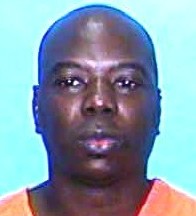 Ronald Lee Williams
Murderer · USA · 1988
Ronald Lee Williams was the leader of the “Miami Boys,” a drug-trafficking ring…
4 victims
Ronald Lee Williams
Murderer · USA · 1988
Ronald Lee Williams was the leader of the “Miami Boys,” a drug-trafficking ring…
4 victims
 Steven Benson
Murderer · USA · 1985
Steven Benson was a 33-year-old Florida businessman who was arrested and charge…
2 victims
Steven Benson
Murderer · USA · 1985
Steven Benson was a 33-year-old Florida businessman who was arrested and charge…
2 victims
 Douglas Crabbe
Mass murderer · Australia · 1983
Douglas John Edwin Crabbe (b. 1948) was sentenced to five consecutive terms of…
5 victims
Douglas Crabbe
Mass murderer · Australia · 1983
Douglas John Edwin Crabbe (b. 1948) was sentenced to five consecutive terms of…
5 victims
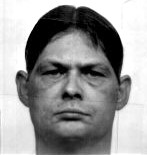 Johnny James
Murderer · USA · 1985
Johnny James was executed by lethal injection in Texas on September 3, 1993. He…
1 victim
Johnny James
Murderer · USA · 1985
Johnny James was executed by lethal injection in Texas on September 3, 1993. He…
1 victim
- Gender
- male
- Country
- USA
- Location
- Nevada County, Arkansas, USA
- Date of birth
- 1966
- Age at first offence
- 22
- Characteristics
- robbery, abuse
- Victim profile
- Karen Ross / Barbara Smith (convenience store clerks)
- Method of murder
- Shooting
- Date(s) of murder
- July 28/29, 1988
- Years active
- 1988
- Date of arrest
- J uly 29, 1988
- Status
-
Executed
Executed by lethal injection in Arkansas on January 8, 1997
Case overview
Kirt Douglas Wainwright was convicted of killing Barbara Smith, who was an attendant at the Best Stop convenience store in Prescott, Arkansas. Smith was shot during a robbery. Wainwright was sentenced to die for Smith’s murder.
The conviction and death sentence were followed by extensive federal habeas proceedings. His scheduled execution was stayed on a last-minute appeal, and the United States Supreme Court later declined to stop the execution. He was executed in Arkansas by lethal injection.
Wainwright also had a life sentence in the murder of a Hope convenience store employee, which occurred on July 29, 1988.
Timeline
- July 29, 1988 — Barbara Smith was shot during a robbery at the Best Stop convenience store in Prescott, Arkansas; Wainwright was convicted for her murder and sentenced to die.
- 1988 (date not specified) — Wainwright was in on another robbery in Hope, Arkansas, during which a convenience store clerk named Karen Ross was shot to death.
- July 1988 (date referenced as “in July 1988”) — Wainwright was convicted of shooting Barbara Smith in a robbery at the Best Stop Convenience Store in Prescott.
- 1988 (date referenced in federal opinion as “after the murder”) — Witnesses saw Wainwright run out of the Best Stop and jump into a pink Cadillac; police later stopped the pink Cadillac.
- 1989 (date not specified) — A Nevada County Circuit Court jury convicted Wainwright of shooting Barbara Smith in a robbery at the Best Stop Convenience Store in Prescott.
- 1990 (date not specified) — The Arkansas Supreme Court affirmed on direct appeal (Wainwright v. State, 302 Ark. 371, 790 S.W.2d 420).
- 1991 (date not specified) — Certiorari was denied (Wainwright v. State, 302 Ark. 371, 790 S.W.2d 420 (Wainwright I), cert. denied, 499 U.S. 913).
- 1992 (date not specified) — State postconviction relief was denied (Wainwright v. State, 307 Ark. 569, 823 S.W.2d 449 (per curiam)).
- 1994 (date not specified) — The federal district court granted relief on the “Blood handbook” issue during the penalty phase (Wainwright v. Norris, 872 F.Supp. 574).
- April 8, 1996 — Eighth Circuit appeals were heard (Federal Circuits, 8th Cir., April 8, 1996).
- April 17, 1996 — A report stated Wainwright would remain on death row (Nevada County Picayune, April 17, 1996).
- January 2, 1997 — The Eighth Circuit denied a motion for authorization to file a second habeas petition and also addressed related requests (Wainwright v. Norris, No. 96-8168 (order denying motion for authorization to file second habeas petition); Wainwright v. Norris, No. 94-3525 (order denying motion to recall mandate)).
- January 8, 1997 — The scheduled execution took place; the Eighth Circuit also submitted and decided an order on January 8, 1997 (103 F.3d 708; and related proceedings).
Background
Barbara Smith was killed during a robbery at a convenience store in Prescott, Arkansas. Wainwright was convicted by an Arkansas jury and sentenced to death for Smith’s murder.
A federal appellate panel described that although no one saw the murder, witnesses saw Wainwright run out of the store after the robbery and jump into a pink Cadillac. A short time later, police pulled over the pink Cadillac. Witnesses and forensic evidence supported the prosecution’s theory that Wainwright committed the robbery and murder while other men waited in the car.
Wainwright argued that another participant, Leeper, was the triggerman. The evidence included gunshot residue testing.
While on death row, Wainwright stabbed two guards with a makeshift knife.
Linda Taylor, identified as a friend and spiritual adviser of Wainwright, stated that Wainwright stabbed the guards because he was “a proud man who would refuse to be abused by the guards,” and that he “would not allow them to break his spirit.” Linda Taylor said Wainwright told her he was not afraid to die: “God had given him a peace and strength.”
During the execution proceedings, Wainwright had a poem and made statements shortly before the injection. He read “The Embrace,” and made a statement of “I love you Tish.” and said, “Now send me to my God.”
The offence
Best Stop convenience store robbery and murder of Barbara Smith
Barbara Smith was shot during a robbery at the Best Stop convenience store in Prescott, Arkansas. The murder occurred during a robbery where Smith gave Wainwright all the money she had access to.
Wainwright shot Smith behind the ear.
A federal appellate description stated that Ms. Smith was shot once in the top of the head at point-blank range.
Killing of Karen Ross in Hope
Wainwright also had a life sentence in the murder of a Hope convenience store employee. The federal description identified this clerk as Karen Ross. The murder occurred on July 29, 1988.
Vehicle and participants described in appellate proceedings
Witnesses saw Wainwright run out of the store after the robbery and jump into a pink Cadillac. Police pulled it over. Andrew Woods was driving the car, and Dennis Leeper was riding in the front seat. Wainwright was in the back seat with a Best Stop money bag containing cash and a gun.
The State charged all three men with capital murder.
At trial, the State presented evidence that Wainwright went into the Best Stop alone and committed the robbery and murder while Leeper and Woods waited in the car.
Wainwright argued Leeper was the triggerman.
Investigation and evidence
Eyewitness and circumstantial evidence
Multiple witnesses testified they saw one black man run out of the Best Stop.
One witness testified the man was wearing red and white flowered shorts. Another witness testified the man jumped into a pink Cadillac that sped away.
A young man who knew Wainwright through family connections testified he saw Wainwright run out of the store. The young man said he was sure the fleeing man was Kirt Wainwright because he saw Wainwright’s face. Moments later, the young man saw a pink Cadillac speed by and testified that Wainwright was in the back seat and two other people were in the car.
When police stopped the pink Cadillac soon after the murder, Leeper and Woods were in the front, and Wainwright was in the back seat with the Best Stop money bag and a gun.
Ballistics and gunshot residue
Ballistics tests revealed the gun could have been the one used to kill Ms. Smith.
Wainwright was wearing red and white flowered shorts when apprehended. The shorts were later identified as the ones the witness had seen on the man running from inside the Best Stop. Neither Leeper nor Woods was wearing red shorts.
After the murder, gunpowder residue tests were performed on Wainwright, Leeper, and Woods about three hours after the murder. No gunpowder residue was found on Woods or Wainwright. Wainwright is left-handed. Leeper, who is right-handed, tested positive for gunpowder residue on his left hand, and there was more residue on the back of his hand than on the front.
The State argued Wainwright had rubbed the gunpowder residue off his hands sometime after he shot Ms. Smith, and Leeper had handled the gun sometime after the murder.
At trial, the State’s ballistics expert, Gary Lawrence, testified that a person could get gunpowder residue on his or her hands by firing a weapon, handling a weapon that has been fired, or being near a weapon when it is fired. Lawrence also testified that vigorous activity or washing with water can remove the residue.
At the habeas hearing, Dr. Irwin Stone testified that “the most likely way to get gunpowder residue on the back of the hand is by firing a weapon” and that it was unlikely that handling a gun would put residue there. Dr. Stone also stated that gunshot residue can be easily removed by washing or rubbing, and that even normal activity may remove it within three hours.
Trial
Conviction
The Arkansas jury convicted Wainwright of capital felony murder for killing Barbara Smith. The appellate decision identified the relevant statute as Ark.Code Ann. § 5-10-101(a)(1) (Michie 1987).
A federal appellate description stated that no one saw the murder, but witnesses saw Wainwright run out of the store after the robbery and jump into a pink Cadillac.
Special verdict forms and aggravating and mitigating circumstances
At the conclusion of the penalty phase, the trial court submitted special verdict forms to the jury.
The jury unanimously found three aggravating circumstances existed at the time of the murder:
- Wainwright had previously committed another felony involving a threat of violence to another person.
- The murder was committed to avoid or prevent arrest.
- The murder was committed for pecuniary gain.
The jury also unanimously found two mitigating circumstances:
- Wainwright had no history of homicide before the murder of Ms. Smith.
- Wainwright did not resist when arrested for murdering her.
The jury unanimously found the aggravating circumstances outweighed any mitigating circumstances and justified a sentence of death.
Handling of victim family seating during trial
Before the jury entered the courtroom, a crime victims’ assistant with the prosecutor’s office asked some people seated in the front row to move so the victim’s family could sit there.
The defense objected and the trial court stated the prosecutor should not tell people where to sit and the victim’s family could sit wherever they could find seats.
The victim’s family sat in the front row near the jury during the entire trial.
The state court found there was no evidence that the jury knew the people in the front row were the victim’s family members.
In the habeas proceeding, the federal appellate court concluded Wainwright could not show the seating arrangement prejudiced him and found that any error was harmless.
Security measures during trial and penalty phase
During the guilt phase, two or three police officers sat in chairs directly behind the defense table.
When Wainwright testified during the penalty phase, the sheriff and a police officer accompanied him to the witness stand, stood next to him while he testified, and escorted him back to his chair.
The Arkansas Supreme Court found these security measures did not prejudice Wainwright. The federal district court agreed.
The appellate decision held that Wainwright did not show actual prejudice and found no inherent prejudice.
Sentencing
Wainwright was sentenced to die for the murder of Barbara Smith.
The sentence was supported by the jury’s findings that aggravating circumstances outweighed mitigating circumstances.
Wainwright also received a life sentence for the murder of Karen Ross in Hope.
Appeals and habeas corpus proceedings
Direct appeal and state postconviction
On direct appeal, the Arkansas Supreme Court affirmed Wainwright’s conviction and sentence (Wainwright v. State, 302 Ark. 371, 790 S.W.2d 420 (1990) (Wainwright I), cert. denied, 499 U.S. 913 (1991)).
State postconviction relief was denied (Wainwright v. State, 307 Ark. 569, 823 S.W.2d 449 (1992) (per curiam) (Wainwright II)).
First federal habeas proceeding: “Blood handbook” issue
Wainwright filed a habeas petition in federal district court. The district court denied Wainwright relief on all except one claim.
The district court granted relief on the ground that the State violated Wainwright’s First and Fourteenth Amendment rights by questioning him about a “Blood handbook” during the penalty phase.
The district court ordered the State to conduct a new sentencing trial or convert Wainwright’s sentence to life imprisonment without parole.
The “Blood handbook” testimony and booklet
Wainwright’s testimony included that he had studied other religions and identified the booklet as Islamic material that belonged to him.
During cross-examination, the prosecutor showed Wainwright a booklet and asked whether he had ever seen it. Wainwright identified the booklet as Islamic material.
The prosecutor asked, “[I]s this what you refer to [as] the Blood handbook?” and Wainwright responded, “No, that's some [Moorish] Science Temple of America [material] ... [from] a book called 101.”
The State next asked, “What is the Bloods?” and Wainwright responded, “That means black. Blood means black.”
The district court described the booklet as a handwritten copy of an Islamic religious booklet, “Koran Questions for Moorish Children,” consisting of 101 questions and answers about the Islamic faith.
The booklet cover included a hand-drawn picture of a dagger dripping a dark substance into a puddle. “Blood” was written in large letters next to the dagger.
The district court concluded the prosecutor’s questioning and display tended to link Wainwright to a street gang and generate fear of gangs in the jury.
Federal appellate resolution
The Eighth Circuit affirmed the district court’s partial denial of Wainwright’s habeas petition on most claims and addressed the “Bloods” issue on the cross-appeal.
The Eighth Circuit disagreed with the district court’s conclusion that the questioning led the jury to believe it was dealing with a street gang.
The Eighth Circuit concluded the prosecutor’s bigoted views and improper motive in questioning Wainwright about the booklet were not communicated to the jury. The Eighth Circuit noted that the booklet was never admitted, and that the trial court instructed the jury it should disregard “[a]ny argument, statements, or remarks of attorneys having no basis in the evidence.”
The Eighth Circuit reversed the district court’s grant of habeas relief on the “Bloods” issue and affirmed the denial of Wainwright’s other habeas claims.
Other habeas claims rejected by the Eighth Circuit
The Eighth Circuit addressed and rejected multiple claims including:
- A claim that witness Octavia Hardamon Gamble’s partial recantation and untruthfulness warranted habeas relief.
- A claim of ineffective assistance of trial counsel for failing to call ballistics expert Dr. Irwin Stone.
- Challenges to the constitutionality and sufficiency of evidence supporting aggravating circumstances, including avoid or prevent arrest and pecuniary gain.
- Challenges involving the seating of victim family near the jury.
- Challenges involving the presence and actions of security officers.
- A cumulative error argument.
Octavia Hardamon Gamble recantation
The Eighth Circuit described that during trial, Gamble testified she saw Wainwright leave the store with a gun in his hand.
During cross-examination, Wainwright’s attorneys accused Gamble of an affair and suggested she had reason to spite him, which Gamble denied.
Sheila Butler testified that Gamble had romantic encounters with Wainwright.
At the habeas evidentiary hearing, Gamble admitted she had been romantically involved with Wainwright and had lied at trial because she was newly married, embarrassed, and ashamed, while reaffirming she saw Wainwright run out with a gun.
The Eighth Circuit held evidence of Gamble’s untruthfulness about the affair would not likely produce an acquittal on retrial or a life sentence at the penalty phase, citing substantial circumstantial evidence.
Ineffective assistance for Dr. Irwin Stone
The Eighth Circuit described that Wainwright argued Stone would have shown Leeper was the triggerman, based on gunshot residue evidence.
The district court concluded the decision not to call Dr. Stone was professionally deficient. The Eighth Circuit agreed with the district court’s ultimate conclusion that the evidence did not create a reasonable probability of a different outcome.
Avoid or prevent arrest aggravator
The Eighth Circuit rejected challenges that the circumstance did not genuinely narrow the class eligible for death.
The Eighth Circuit also rejected contentions that the circumstance was vague and overbroad, facially and as applied.
It further rejected challenges that the findings were inconsistent between guilt phase and penalty phase.
Pecuniary gain aggravator
The Eighth Circuit rejected arguments that pecuniary gain duplicated an element and failed to narrow the class eligible for death.
Mitigating circumstance: lack of resistance
Wainwright argued that the jury’s special verdict forms contained inconsistent findings regarding whether Wainwright did not resist when arrested.
The Eighth Circuit stated that regardless of how the jury found the lack-of-resistance circumstance, the jury clearly considered the circumstance one way or the other, and it concluded there was no constitutional violation because the jury specifically found that aggravating circumstances outweighed mitigating circumstances.
Conviction and sentence stays, and Supreme Court proceedings before execution
Wainwright had a last-minute appeal in which United States Supreme Court Justice Clarence Thomas asked Gov. Mike Huckabee to hold off on his execution while the court reviewed Wainwright’s last claim.
The claim alleged that Huckabee was biased because he allegedly knew the victims.
The Supreme Court decided to let the execution continue.
Execution and final statements
Wainwright’s execution was carried out by lethal injection in Arkansas on January 8, 1997.
The report described that the Sodium Pentothal (lethal dosage), Pavulon (muscle relaxant), and Potassium Chloride (stops the heart) were administered into his system with a saline solution utilizing IVs.
As the injection began, Wainwright had a grin and said, “Yeah,” as he closed his eyes.
The report described that Wainwright recited a poem he penned titled “The Embrace” and made a statement of “I love you Tish.” He then said, “Now send me to my God.”
The report stated:
- Less than two minutes after the injection began, his grin was gone and his eyes were opened slightly staring.
- Twelve minutes after the injection his eyes no longer saw anything.
Wainwright’s execution occurred after being left on a gurney with needles in his arms for a period while court review occurred.
Wainwright’s attorney, Craig Lambert, met the media after the execution and said, “He's the toughest guy I've ever seen.” Lambert also described Wainwright as a “warrior.”
Lambert stated involvement in the case for the past few years and argued they “were not playing on a level field” involving the case.
Lambert stated that although Wainwright lay on the gurney for nearly an hour with the needles in his arm while the Supreme Court reviewed his last appeal, he was “cautiously optimistic” and did not think it was cruel for the length of time he had to lay and wait on death.
Lambert stated he felt they had a good appeal and it was on strong grounds of improper physical evidence toward the end of the appeal process.
Lambert said he had argued Wainwright could not have been the one to commit the murder because physical evidence from the gun was not on Wainwright’s hands.
Lambert stated Wainwright’s last appeal was based on a claim that Huckabee knew the victim’s and/or their families and could not or would not give clemency because of bias, and that this was struck down by the Supreme Court.
The governor’s office had prepared an affidavit denying the claim as totally false. The report said Huckabee’s office was prepared to send the signed papers to the Supreme Court.
Other legal proceedings related to execution stay and civil rights lawsuits
Two days before his scheduled execution, Wainwright filed two civil rights lawsuits to delay his death.
Post-prison transfer board and exhaustion of habeas remedies
Wainwright asserted his constitutional rights were violated on December 26, 1996 when the Post-Prison Transfer Board declined to recommend clemency without considering his case on the merits because Wainwright had not yet exhausted his habeas remedies.
On January 2, 1997, the Eighth Circuit decided against Wainwright in the habeas proceedings referenced by the Board.
The Eighth Circuit stated it saw nothing foreclosing consideration of the merits of Wainwright’s request for mercy now, described as truly Wainwright’s last chance.
Alleged conflicts of interest and due process regarding executive clemency
Wainwright asserted equal protection, due process, and Eighth Amendment rights were violated because the Governor of Arkansas and his executive clemency assistant had actual conflicts of interest.
Wainwright also asserted he was denied due process right to be considered for executive clemency because the Governor allegedly had decided in November that he would not commute Wainwright’s death sentence.
The Governor, according to the record described, wrote Wainwright’s attorney on December 9, declining to recuse himself and stating he would decide the case “fairly and impartially as [he was] obligated to do.”
The district court consolidated the lawsuits and dismissed them with prejudice.
The Eighth Circuit summarily affirmed, stating that under established law, Wainwright’s civil rights claims failed, and commended the district court for prompt and well-reasoned resolution.
The Eighth Circuit denied a motion for a stay of execution.
Additional appeals and orders in habeas context
Motion for authorization to file second habeas petition
Kirt Douglas Wainwright filed a motion for authorization to file a second habeas petition.
The Eighth Circuit denied the motion.
The order stated that in the first habeas action, the district court granted relief on the ground that cross-examination of Wainwright about “the Bloods” and a “Blood handbook,” described as a handwritten copy of an Islamic text, violated Wainwright’s First and Fourteenth Amendment rights under Dawson v. Delaware.
The Eighth Circuit had held that the improper cross-examination questions and display of the handbook’s cover did not fatally infect the penalty phase and rendered it fundamentally unfair.
Wainwright then sought a second habeas action to challenge the “Bloods” questioning as false evidence violative of due process.
The Eighth Circuit held that because Wainwright presented the same claim in his first habeas proceeding, the amended statute required dismissal under 28 U.S.C. § 2244(b)(1), and the amended statute precludes any claim “presented” in a prior application.
The Eighth Circuit noted that Wainwright should have pressed the district court for a ruling on any issue left unaddressed, and that Wainwright failed to raise the due process issue in his first habeas appeal.
The Eighth Circuit stated its decision did not effectively deny federal habeas review on the due process claim and said Wainwright had an opportunity to seek adjudication but did not pursue a decision on the merits.
The Eighth Circuit denied a motion for a stay of execution due to no substantial grounds for relief.
The Eighth Circuit stated the action was without prejudice to any executive clemency that Wainwright may seek from the Governor of Arkansas.
People involved
Victims
- Barbara Smith — convenience store clerk/attendant at the Best Stop convenience store in Prescott, Arkansas; was shot behind the ear during a robbery; was shot once in the top of the head at point-blank range.
- Karen Ross — convenience store employee in Hope, Arkansas; was shot to death.
- The report also referred to Angela Smith Cunningham, described as 11 on July 19, 1988, and stated she wanted to know whether Wainwright would beg for his life “like my mother did.”
Co-defendants or participants described in the federal appeal
- Andrew Woods — driving the pink Cadillac.
- Dennis Leeper — riding in the front seat; Wainwright argued Leeper was the triggerman.
- Wainwright was identified as being in the back seat with the Best Stop money bag containing cash and a gun.
Legal and court actors named in the federal proceedings and orders
- Justice Clarence Thomas — Supreme Court Justice who asked Gov. Mike Huckabee to hold off on the execution.
- Mike Huckabee — Governor of Arkansas.
- Craig Lambert — Wainwright’s attorney.
- Jim Hudson — prosecutor named in connection with questioning about the “Blood handbook.”
- Danny Rodgers — deputy prosecutor named in connection with questioning about the “Blood handbook.”
- Linda Taylor — friend and spiritual adviser of Wainwright.
- Dina Tyler — prison spokeswoman.
- Octavia Hardamon Gamble — witness whose testimony and recantation were addressed in habeas proceedings.
- Sheila Butler — friend of Gamble who testified about romantic encounters.
- Dr. Irwin Stone — ballistics expert who testified at the habeas hearing.
- Gary Lawrence — the State’s ballistics expert who testified at trial.
- Garnett T. Eisele — judge described as presiding in the referenced district court appeal.
- FAGG, MAGILL, HENLEY — circuit judges named in the federal appellate panel.
Other named individuals in the execution reporting
- Anne Jester — whose father was identified as Opal James, a 58-year-old park ranger, killed by Earl Van Denton and Paul Ruiz.
- Opal James — Anne Jester’s father, a 58-year-old park ranger.
- Earl Van Denton — named as one of the three executed on the same night in the reporting.
- Paul Ruiz — named as one of the three executed on the same night in the reporting.
- Virginia Hamilton — whose father was identified as a small-town marshal murdered by Earl Van Denton and Paul Ruiz.
- Sister Joan Pytlik — Roman Catholic nun in Little Rock; stated a quote during protest.
Verbatim quotations included
“Yeah,”
(As Sodium Pentothal, Pavulon, and Potassium Chloride were administered; Wainwright said as he closed his eyes.)
“I love you Tish.”
(Statement made before the execution.)
“Now send me to my God.”
(Defiant phrase said before the execution.)
“He's the toughest guy I've ever seen.”
(Craig Lambert said about Wainwright.)
“warrior.”
(Craig Lambert’s description of Wainwright.)
“were not playing on a level field”
(Craig Lambert’s statement regarding the case.)
“cautiously optimistic”
(Craig Lambert’s statement about appeal prospects.)
“God had given him a peace and strength,”
(Linda Taylor quoted Wainwright as saying about not being afraid to die.)
“He would not allow them to break his spirit,”
(Linda Taylor quoted about why Wainwright stabbed guards.)
“Forgive them, Father; they don't know what they are doing,”
(Sister Joan Pytlik said.)
“At the time I questioned Mr. Wainwright about this booklet, I felt in my heart that he was a member of the Bloods and that's what I was trying to get out to challenge his testimony and other evidence that he was a Christian.”
(The prosecutor stated at the habeas hearing.)
“any argument, statements, or remarks of attorneys having no basis in the evidence.”
(Trial court instruction quoted in the appellate discussion.)
“fairly and impartially as [he was] obligated to do.”
(The Governor wrote Wainwright’s attorney in declining to recuse himself.)
“That means black. Blood means black.”
(Wainwright responded about the meaning of “Blood.”)
“No, that's some [Moorish] Science Temple of America [material] ... [from] a book called 101.”
(Wainwright responded to whether it was the “Blood handbook.”)


Spotted an error, or have more information about this case?