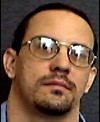
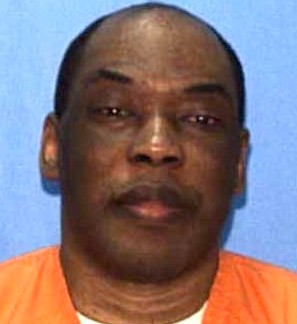
Billy Lee Oatney
Murderer Russell Ellwood
Murderer · USA · 1991
Russell Ellwood was a former taxi driver. Authorities suspected him of killing…
20 victims
Russell Ellwood
Murderer · USA · 1991
Russell Ellwood was a former taxi driver. Authorities suspected him of killing…
20 victims
 Robert Martines Perez
Murderer · USA · 1994
Name: Robert Martines Perez · Other name used in proceedings: Robert Martinez P…
15 victims
Robert Martines Perez
Murderer · USA · 1994
Name: Robert Martines Perez · Other name used in proceedings: Robert Martinez P…
15 victims
 Billy Frank Vickers
Murderer · USA · 1993
Billy Frank Vickers Vickers was executed by lethal injection in Texas on Januar…
14 victims
Billy Frank Vickers
Murderer · USA · 1993
Billy Frank Vickers Vickers was executed by lethal injection in Texas on Januar…
14 victims
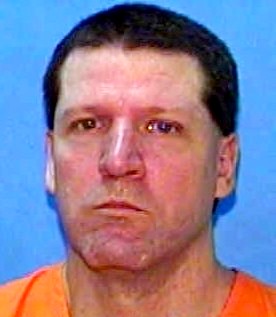 Daniel Lee Doyle
Murderer · USA · 1981
Daniel Lee Doyle was sentenced to death on May 13, 1982. He was convicted of fi…
1 victim
Daniel Lee Doyle
Murderer · USA · 1981
Daniel Lee Doyle was sentenced to death on May 13, 1982. He was convicted of fi…
1 victim
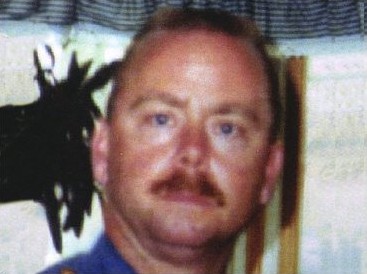 Edward Lutes
Mass murderer · USA · 2002
Edward Lutes, 42, was a police officer. Local community members described Edwar…
5 victims
Edward Lutes
Mass murderer · USA · 2002
Edward Lutes, 42, was a police officer. Local community members described Edwar…
5 victims
 Linda Jones
Murderer · USA · 1995
Linda Jones and Jack Jones had been married for nearly 30 years. They had two d…
1 victim
Linda Jones
Murderer · USA · 1995
Linda Jones and Jack Jones had been married for nearly 30 years. They had two d…
1 victim
 Reginald & Jonathan Carr
Spree killers · Kansas · 2000
The Wichita Massacre, also known as “The Wichita Horror,” was a murder/assault/…
5 victims
Reginald & Jonathan Carr
Spree killers · Kansas · 2000
The Wichita Massacre, also known as “The Wichita Horror,” was a murder/assault/…
5 victims
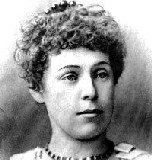 Florence Maybrick
Murderer? · United Kingdom · 1899
Florence Elizabeth Maybrick (Florence Maybrick) was an American woman convicted…
1 victim
Florence Maybrick
Murderer? · United Kingdom · 1899
Florence Elizabeth Maybrick (Florence Maybrick) was an American woman convicted…
1 victim
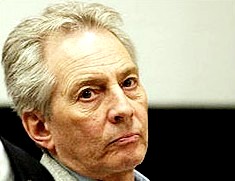 Robert Durst
Homicide · USA · 2001
Robert Alan "Bobby" Durst (born 1943) was a son of the late New York real estat…
1 victim
Robert Durst
Homicide · USA · 2001
Robert Alan "Bobby" Durst (born 1943) was a son of the late New York real estat…
1 victim
- Gender
- male
- Country
- USA
- Location
- Washington County, Oregon, USA
- Date of birth
- March 12, 1962
- Age at first offence
- 34
- Characteristics
- rape, robbery
- Victim profile
- Susi Larsen (female, 34)
- Method of murder
- Suffocation her with a plastic bag
- Date(s) of murder
- August 27, 1996
- Years active
- 1996
- Date of arrest
- —
- Status
-
Sentenced to death
Sentenced to death on September 22, 1998; judgment of conviction and sentence of death were affirmed on automatic and direct review
Case details
Defendant: Billy Lee Oatney Court: Washington County Circuit Court Judge: Alan C. Bonebrake Decision (automatic and direct review): The judgment of conviction and sentence of death were affirmed; Durham, J., dissented Participation note: Leeson, J., resigned January 31, 2003, and did not participate in the decision of this case.
Timeline
- August 27, 1996 — The victim disappeared.
- September 2, 1996 — Tualatin police interviewed Oatney; later that evening a Milwaukie police officer stopped Oatney’s van after a license plate light problem.
- September 9, 1996 — The victim’s badly decomposed body was found in Champoeg Park.
- September 22, 1998 — Oatney was sentenced to death.
- September 5, 2002 — The appeal was argued and submitted.
- 2003 (January 31) — Leeson, J., resigned and did not participate in the decision of this case.
Background
After the jury convicted Oatney, the trial court sentenced him to death following a separate sentencing proceeding. The jury had determined that Oatney acted deliberately, posed a continuing risk to society, and should receive a death sentence.
After Oatney’s conviction, the court sentenced Willford Nathaniel Johnston, III, to life without the possibility of parole.
The offence
Oatney was convicted of eight counts of aggravated murder.
Investigation
The victim disappeared on August 27, 1996. The victim’s family told police that Oatney might have information about her whereabouts because the victim had been planning to meet with Oatney to ask him to make jewelry for her upcoming wedding.
On September 9, 1996, the victim’s badly decomposed body was found in Champoeg Park.
Arrest and police activity
On September 2, 1996, the Tualatin police interviewed Oatney; he stated that he had not seen the victim for three weeks.
Later that evening, a Milwaukie police officer stopped Oatney because the license plate light on his van was not working. The officer’s license check revealed no reason to detain Oatney, but police determined that Oatney’s passenger, Johnston, had an outstanding warrant for his arrest for a parole violation. Johnston was arrested.
During the traffic stop and investigation of Johnston, one of the officers saw Oatney and Johnston moving a duffel bag inside the van as if to conceal it. The officer asked Oatney for consent to look into the bag, and Oatney consented. Police found, among other things, a replica of a Colt .45, a stun gun, a dart gun, a large knife, a lock-pick set, a pair of scissors, and a roll of duct tape. Police inventoried the items and returned them to Oatney but did not detain him further.
After the Tualatin police learned of Johnston’s September 2, 1996 arrest, the police listened to tapes of Johnston’s telephone conversations with Oatney from jail. Over the next few weeks, the Tualatin police interviewed Oatney several times, searched Oatney’s apartment, and found blood matching the victim’s blood on the carpet. The Tualatin police continued to keep Oatney under surveillance.
After obtaining a search warrant, the police searched Oatney’s van. They found, among other items, the items from the duffel bag that the Milwaukie police had found during the September 2, 1996 stop.
Charges and co-defendant disposition
As a result of the continuing investigation of the victim’s death, the state charged Johnston with one count of aggravated murder. Johnston pleaded guilty to aggravated murder. In exchange for cooperation and testimony, the state agreed not to seek the death penalty.
Oatney was ultimately charged with eight counts of aggravated murder.
Trial
Both Oatney and Johnston testified.
Johnston’s testimony
Johnston testified that while he was staying with Oatney at Oatney’s apartment, Oatney said he had a date with the victim, left the apartment, and brought the victim back later that evening.
Johnston testified that while he was on the telephone in another room, he heard Oatney’s stun gun being used. Johnston returned to the living room and saw the victim on the floor with Oatney holding the stun gun to her neck. Johnston testified that Oatney and Johnston then tied up the victim and took her to the bedroom.
Johnston testified that they cut off the victim’s clothes with scissors and that both of them raped and sodomized her.
Johnston testified that after forcing the victim to give them the personal identification number to her bank card, Oatney sent Johnston out to get money from an ATM using the victim’s card.
When Johnston returned, he saw the victim had blood on her face and was not moving. Johnston testified that Oatney told him that Oatney had hit and choked the victim because she “just wouldn’t [have sex with] me.”
Johnston testified that Oatney said he had tried to kill the victim but “the [victim] just won’t die.” Johnston testified that Oatney and Johnston held a plastic bag over the victim’s head until she stopped breathing.
Oatney’s testimony
Oatney argued at trial that Johnston had lied to avoid the death penalty. Oatney testified that Johnston had killed the victim while Oatney was away from the apartment.
Oatney testified that he had not learned of the victim’s murder until the following day. Oatney testified that he had helped Johnston cover up the murder because he had been afraid of being implicated in the murder because it had occurred in Oatney’s apartment.
Jury verdict
The jury convicted Oatney of all eight counts of aggravated murder.
Sentencing
In a separate sentencing proceeding, the jury determined that Oatney acted deliberately, posed a continuing risk to society, and should receive a death sentence. The trial judge then entered a sentence of death.
Appeals
Oatney raised 43 assignments of error. The reviewing court examined each assignment of error and rejected each one. Three assignments of error were discussed.
Accomplice-witness jury instructions
Oatney assigned error to the trial court’s “accomplice-witness” instructions, including an instruction stating that, “as a matter of law,” Johnston was “an accomplice witness in the commission of the crimes charged in this indictment.”
The trial judge’s instructions included:
- “You are instructed that as a matter of law, Willford Nathaniel Johnston, III, is an accomplice witness in the commission of the crimes charged in this indictment.”
- “You should view an accomplice witness's testimony with distrust.”
- “The testimony of an accomplice in and of itself is not sufficient to support a conviction. There must be, in addition, some other evidence, however slight or circumstantial, other than the testimony of an accomplice that tends to connect the defendant with the commission of the crime. This other evidence or corroboration need not be sufficient by itself to support a conviction, but it must tend to show something more than just that a crime was committed. It must also connect or tend to connect the defendant with the commission of the crime.”
Oatney argued:
- That the instruction, by declaring Johnston an accomplice witness “as a matter of law,” effectively directed a verdict of guilty by instructing the jury that Oatney committed the crimes along with Johnston.
- That the instruction effectively told the jury the crime was committed, depriving him of a jury trial on each element.
- That the instructions undermined his defense that Johnston alone killed the victim, and that it was reversible error to give such instructions unless requested by Oatney.
The reviewing court analyzed the “accomplice-witness-as-a-matter-of-law instruction” and held that it did not amount to a directed verdict of guilty. The reviewing court also held that the accomplice-witness instructions did not improperly tell the jury the crimes had been committed because Oatney’s testimony admitted that the victim had been killed in his apartment and that he aided Johnston in cleaning up the apartment and destroying evidence, disposing of the victim’s property, and returning her vehicle to her apartment. The reviewing court also rejected the argument that the instruction improperly undermined Oatney’s defense, concluding that when read as a whole the instructions fairly apprised the jury of its role in determining guilt and that the jury could accept either the defense theory or the state’s theory depending on its evaluation of the evidence.
Durham, J., dissented from the majority’s analysis and conclusion respecting the accomplice-witness instruction. The dissent cited ORS 10.095(4), stated that the trial court delivered the accomplice-witness-as-a-matter-of-law “addendum” despite objection, and argued that the addendum interfered with the jury’s factfinding role and undermined the policy embodied in ORS 10.095(4).
Sufficiency of the indictment / death eligibility
Oatney argued that the trial court imposed a death sentence without the indictment alleging an offense that made him eligible for death. He contended that the indictment did not allege that the conduct that caused the victim’s death was “committed deliberately,” and that deliberateness should have been pleaded and proved because it was required for eligibility for the death penalty.
The reviewing court discussed Oregon’s aggravated murder sentencing scheme, including ORS 163.105 and ORS 163.150 and the jury’s affirmative findings required to impose death, including deliberateness. The reviewing court rejected Oatney’s argument based on Apprendi v. New Jersey and Ring v. Arizona, and relied on its prior decisions rejecting the interpretation advanced by Oatney. The court also held that Ring did not require deliberateness to be charged specifically in the indictment before submission to the jury, noting that Oatney admitted a jury made the factual determination that he acted deliberately and that the trial court did not impose a punishment the jury’s special verdict did not require.
Outcome
The judgment of conviction and sentence of death were affirmed on automatic and direct review. Durham, J., dissented. Leeson, J., resigned January 31, 2003, and did not participate in the decision of this case.
Other details
Deputy Public Defender (appellant): Eric Johansen (Salem) State Public Defender (appellant brief): David E. Groom (Salem) Assistant Attorney General (respondent): Janet Klapstein (Salem) Other attorneys listed (respondent): Erika L. Hadlock (Assistant Attorney General), Hardy Myers (Attorney General), Michael D. Reynolds (Solicitor General) Justices listed: Carson, Chief Justice, and Gillette, Durham, Riggs, De Muniz, and Balmer, Justices.
Spotted an error, or have more information about this case?