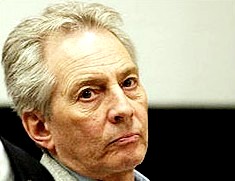
Robert Durst
Homicide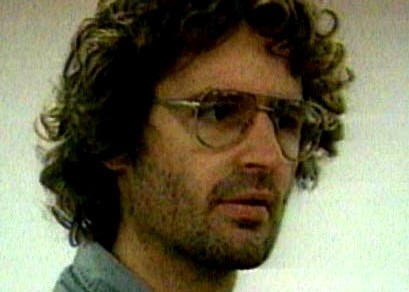 David Koresh
Homicide · USA · 1993
David Koresh (born Vernon Wayne Howell; August 17, 1959 – April 19, 1993) led t…
79 victims
David Koresh
Homicide · USA · 1993
David Koresh (born Vernon Wayne Howell; August 17, 1959 – April 19, 1993) led t…
79 victims
 Todd Hall
Homicide · USA · 1996
Todd Hall was described by neighbors as "mentally slow" and was said to have su…
9 victims
Todd Hall
Homicide · USA · 1996
Todd Hall was described by neighbors as "mentally slow" and was said to have su…
9 victims
 Joshua Jenkins
Homicide · USA · 1996
Joshua Jenkins was a 15-year-old American killer who killed five members of his…
5 victims
Joshua Jenkins
Homicide · USA · 1996
Joshua Jenkins was a 15-year-old American killer who killed five members of his…
5 victims
 Alex Baranyi
Homicide · USA · 1997
Alex Baranyi and David Anderson were 17-year-old high-school dropouts from Bell…
4 victims
Alex Baranyi
Homicide · USA · 1997
Alex Baranyi and David Anderson were 17-year-old high-school dropouts from Bell…
4 victims
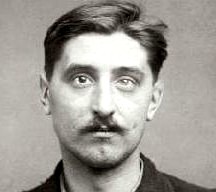 Albert Soleilland
Murderer · France · 1907
Albert Soleilland was sentenced to death on July 24, 1907 for a homicide involv…
1 victim
Albert Soleilland
Murderer · France · 1907
Albert Soleilland was sentenced to death on July 24, 1907 for a homicide involv…
1 victim
 Errol Dehaney
Murderer · USA · 1995
Errol Dehaney was sentenced to life in prison on December 8, 1999. He was charg…
3 victims
Errol Dehaney
Murderer · USA · 1995
Errol Dehaney was sentenced to life in prison on December 8, 1999. He was charg…
3 victims
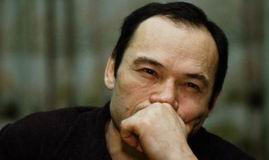 Nikolai Dzhumagaliev
Serial killer · URSS · 1979
Nikolai Dzhumagaliev (Russian: Николай Джумагалиев; born 1952) was a serial kil…
9 victims
Nikolai Dzhumagaliev
Serial killer · URSS · 1979
Nikolai Dzhumagaliev (Russian: Николай Джумагалиев; born 1952) was a serial kil…
9 victims
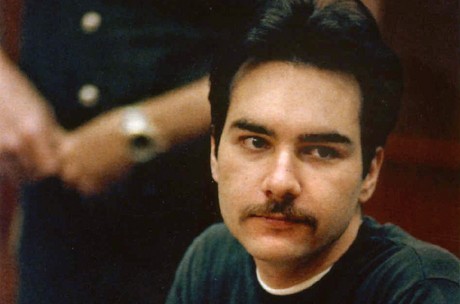 Eric Royce Leonard
Murderer · USA · 1991
Eric Royce Leonard was sentenced to death on June 13, 1996. He was convicted of…
6 victims
Eric Royce Leonard
Murderer · USA · 1991
Eric Royce Leonard was sentenced to death on June 13, 1996. He was convicted of…
6 victims
 Steven Sueppel
Mass murderer · USA · 2008
Steven Sueppel (charged former Hills Bank and Trust Company executive; resident…
5 victims
Steven Sueppel
Mass murderer · USA · 2008
Steven Sueppel (charged former Hills Bank and Trust Company executive; resident…
5 victims
- Gender
- male
- Country
- USA
- Location
- Galveston, Texas, USA
- Date of birth
- 1943
- Age at first offence
- 58
- Characteristics
- dismemberment, fugitive
- Victim profile
- Morris Black, 71 (his neighbor)
- Method of murder
- Shooting
- Date(s) of murder
- September 28, 2001
- Years active
- 2001
- Date of arrest
- October 9, 2001
- Status
-
Imprisoned
Acquitted of murder by a jury on November 12, 2003; in 2004 Durst pleaded guilty to two counts of bond jumping and one count of evidence tampering and was sentenced to 5 years in prison
Background
Robert Alan "Bobby" Durst (born 1943) was a son of the late New York real estate mogul Seymour Durst and the brother of commercial developer Douglas Durst. He grew up as one of four children in Scarsdale, New York, and attended Scarsdale High School. He completed his undergraduate degree at Lehigh University and attended graduate school at UCLA.
Durst reportedly witnessed his mother's apparent suicide at age seven; she either fell or jumped off the roof of the Scarsdale family mansion in the presence of her son. He underwent extensive counseling because of his mother's death, and doctors found that his "deep anger" could lead to psychological problems, including schizophrenia. Durst became a real-estate developer in his father's business, while Douglas was later appointed to run the family business, which was reportedly worth about $650 million. The appointment in the 1990s caused a rift between Robert and his family, and he became estranged.
Durst married Kathleen McCormack in 1973. Kathleen disappeared in 1982. Durst was questioned in both cases involving Kathleen McCormack and Susan Berman, but he was not charged in either one.
On December 24, 2000, Susan Berman was found murdered execution-style in her Benedict Canyon California house.
The offence
Durst was tried for the murder of Morris Black. Durst admitted that he used a paring knife, two saws, and an axe to dismember Black's body before dumping his remains in Galveston Bay. Durst testified that Black died from a bullet in the head as they struggled over a pistol and that he panicked after the death, cut up the body, and tossed the parts into Galveston Bay.
Investigation
Lead investigator Det. Cody Cazalas described the case as clear-cut and said there was nothing to suggest self defense; Durst did not say self defense until after defense attorneys got the case. Cazalas said Durst chopped up Black’s body instead of calling the police, loaded the parts into plastic bags, and dumped them into Galveston Bay.
Cazalas also said Durst had a long history of deceptions and described taking other people’s names and Social Security numbers. Private detective Bobbi Bacha found that Dorothy Ciner was a confirmed name; that E Dianne Wynn was used; that Durst used Kathleen Durst; and that Durst used Jezowsky. Bacha said Durst rented or bought residences in New Orleans, Dallas, and Galveston, as well as places in New York, San Francisco, and Trinidad, Calif., during the 1980s and 1990s.
Arrest
In 2001, Durst was arrested in Galveston, Texas, shortly after body parts of his senior neighbor, Morris Black, were found floating in Galveston Bay. Durst was released on bail after the arrest but missed his court hearing and was declared the nation's first billion-dollar fugitive.
Durst was caught in Bethlehem, Pennsylvania, at a Wegmans Supermarket after trying to steal a chicken sandwich and a Band-Aid even though he had $500 cash in his pocket. A police search of his rented car yielded $37,000 in cash, two guns, marijuana, and Black's driver's license.
He was arrested in Bethlehem after fleeing to Pennsylvania and was later returned to Galveston, where he was arrested again after posting bond and running again.
Trial
In 2003, Durst went on trial for the murder of Morris Black. He hired well-known defense attorney Dick DeGuerin and claimed self-defense.
During cross-examination by Galveston District Attorney Kurt Sistrunk, Durst admitted to using a paring knife, two saws, and an axe to dismember Black's body before dumping his remains in Galveston Bay.
The jury acquitted Durst of murder. Jurors deliberated for four days. The jury said there were holes in Durst's story, but that the prosecution had failed to prove that he deliberately murdered his neighbor, Morris Black. The jury deliberated over four days and returned a not-guilty verdict.
In the trial narrative, Durst testified that in November 2000 he fled New York for Galveston because he learned that Jeanine Pirro, a district attorney, had reopened an investigation into his first wife's disappearance and he feared she would indict him unfairly to further her political ambitions. Durst testified that he rented a flat and disappeared among Galveston’s drifters.
Durst testified that on September 28, 2001, he returned to his flat shortly before dawn and found Morris Black watching television. Durst said he raced into the kitchen and discovered that his .22-calibre handgun was not in its hiding place. He testified that he saw Black reaching for the weapon underneath a jacket and swinging towards him, and that he was concerned Black was going to shoot the gun, most likely at his face. Durst testified that they struggled and the gun went off in Black’s face, killing him. Durst testified that he panicked, and that in a haze of drugs and alcohol he carved up Black’s body until he was "swimming in blood." Durst testified that he wrapped the body parts in rubbish bags and dumped them in Galveston Bay, where they were found bobbing in the water, and that the head had not been recovered.
Lead investigator Det. Cody Cazalas said he believed Durst walked up behind Black and shot him in the back of the head. Cazalas said: “I believe that he probably walked up behind him and shot him in the back of the head.” Cazalas said: “There was nothing to suggest self defense … He never said self defense until after the defense attorneys got the case.”
Durst looked stunned when the verdict was read, mouth agape as he gazed upward. The narrative said he softly said, "Thank you so much."
Prosecutors said they did not plan to charge Durst with abuse of a corpse, a misdemeanour.
Sentencing
In 2004, Durst pleaded guilty to two counts of bond jumping and one count of evidence tampering. The plea bargain was accepted hours after an appellate judge removed District Judge Susan Criss from the case amid defense arguments that she was biased. Criss previously rejected a plea deal and presided over Durst’s murder trial in which he was acquitted of intentionally killing 71-year-old Morris Black.
Durst was sentenced to five years for the two bond-jumping charges and one evidence-tampering charge. Durst received credit for time served.
At the sentencing hearing, a retired Houston appellate judge, Jackson Smith Jr., said, "That 1,035 days," and Durst responded, "Yes," adding, "I've already done the arithmetic."
Durst’s attorney Dick DeGuerin said: “This is a fair resolution to this case,” and: “Bob Durst is greatly relieved to have this behind him.”
Galveston County District Attorney Kirk Sistrunk said he thought the plea agreement was best for all parties involved and that the victim’s sister agreed with it. Sistrunk said: “I know it is not a decision that everyone in the county will approve of, but we have to make tough decisions,” and: “But we have to make tough decisions,” and: “I know it is not a decision that everyone in the county will approve of, but we have to make tough decisions,” and: “I know it is not a decision that everyone in the county will approve of, but we have to make tough decisions,” and: “I know it is not a decision that everyone in the county will approve of, but we have to make tough decisions,” and: “I know it is not a decision that everyone in the county will approve of, but we have to make tough decisions,” and: “But we have to make tough decisions,” and: “But we have to make tough decisions,” and: “But we have to make tough decisions.”
Appeals
After his acquittal, Susan Criss was removed from the case after defense attorneys argued she was biased. A judge granted a defense motion to remove Criss and said he would take over the case. There was no comment in his ruling, and he declined comment afterward.
A hearing before Smith occurred in 2004 regarding Durst’s plea resolution.
Outcome
Durst was acquitted of murder by a jury on November 12, 2003.
After Durst pleaded guilty in 2004, he was sentenced to five years and received credit for time served. Durst was paroled in 2005.
The rules of his release required him to stay near his home and required permission to travel. In December 2005, Durst made an unauthorized trip to the boarding house where he had killed Black and to a nearby shopping mall. At the mall, he ran into Judge Susan Criss, the presiding judge from his murder trial. The Texas Board of Pardons and Paroles determined that Durst violated the terms of his parole and he was returned to jail. However, he was released again from custody on March 1, 2006.
Aftermath
Durst remained jailed for bail-related reasons after his acquittal, and he had been on the run for seven weeks. His bail was set at $2 billion, and in February it was raised to $3 billion after prosecutors added a new charge. The narrative said jurors acquitted him of murder but still faced the allegation of bail-jumping and tampering with evidence. Two weeks before the narrative, Durst’s lawyers persuaded an appellate court to lower his bail to $450,000.
On September 28, 2001, the narrative described the struggle and the shooting. It also said that Black’s remains, except for his head, were recovered.
Robert Durst was also described as pursuing legal action regarding the family fortune. The narrative said he sued one of his brothers and a cousin, and that he said they were trying to stop him from naming his second wife as heir to his share of the family trust fund, which was reportedly worth millions of dollars a year.
Other details
Durst’s earlier schizophrenia diagnosis was reported to be incorrect. The narrative also said he was fugitive, becoming the nation's first billion-dollar fugitive after missing his court hearing.
Susan Berman was described as a writer and as having been found dead that month in her Los Angeles home, shot in the back of the head. In the narrative, it was said she was shot just a month after newspapers reported police had re-opened their investigation into the disappearance of Kathie Durst, and that no charges had been filed in her case.
Durst’s second marriage was described as a secret second marriage in December 2000, and it said he secretly married Debrah Lee Charatan, a New York estate agent.
Statements included:
- Det. Cody Cazalas said: “I believe that he probably walked up behind him and shot him in the back of the head,” and: “There was nothing to suggest self defense … He never said self defense until after the defense attorneys got the case.”
- Cazalas said: “I think he assumed that the tide would take the bags on out to sea. But instead, the bags just stayed right there by the pier.”
- Cazalas said: “He didn’t panic. Everything he did was cold and calculating.”
- Durst’s attorney Dick DeGuerin asked: “Why did a rich guy end up in Galveston wearing a wig, masquerading as a woman, and hiding from the world,” and asked: “Well, we have an answer for that. It’s a complex answer. It has to do with a psychological disorder.”
- In the December 21, 2005 narrative, Durst’s attorney Chip Lewis said: “It was a product of irrational behavior,” and: “He was very tired. He was very suicidal. He was very confused.”
- Durst’s attorney Dick DeGuerin said: “He won't be living in Galveston.”
- Durst’s attorney Dick DeGuerin said: “Assuming he is released, and has some life, he’s gonna have to go some place where nobody knows him,” and: “And live a quiet existence. That’s all he wants to do.”
- Jeanine Pirro said: “We want to talk to Bob Durst and he won’t talk to us. There’s no one who knows more about what happened to Kathleen, and what her last actions were than Robert Durst. And he won't talk to us.”
- Marion Watlington said Kathleen Durst told friends: "If anything happens to me, don't let him get away with it,"
- Ellen Strauss said: “I think it was Susan Berman who made that call,” and: “I think that’s why Susan Berman was killed. Once the story broke about the case re-opening, I think Bob was trying to mop up all the loose ends.”
- Dr. Milton Altschuler said: “She was on the third floor and fell off,” and: “Or jumped off. She died.”
- Dr. Milton Altschuler said: “Certainly, children who are somewhat autistic, who have Asperger’s, do have a great deal of anger. Because they are really being frustrated a great deal,” and: “Emotion is very difficult to him. He doesn’t know what happy is,” and: “He can feel it, but almost as if he were feeling it as we would feel fingers through a glove. It’s very dulled, at best, to him … His whole life’s history is so compatible with a diagnosis of Asperger’s disorder.”
- Stewart Altman said: “People really have the wrong impression of Bob,” and: “He’s just a regular guy who happens to have a lot of money,” and: “I don’t see why people should hold that against him.”
- Stewart Altman said: “Socially, Bob was not a great success," and: “I always knew Bob had these problems relating to other people.”
- Dr. Lawson Bernstein said: “We’re talking about someone with Asperger’s, who nonetheless forms close human relationships.”
- Dr. Lawson Bernstein said: “If he’s capable of normal human interaction, he’s capable of feeling emotions. And if he’s capable of feeling emotions, he’s capable of doing things that human beings do – including murder.”
- Dr. Altschuler said: “No, it makes him, to me, less dangerous,” and: “Because most people commit crimes because of emotion. Not because of lack of emotion.”
- Dr. Altschuler said: “No,” and: “Because there’s nothing in his history to indicate a real dangerous past.”
- Dr. Altschuler said: “I would stake my 40 years of practice on that.”
- Dr. Altschuler said: “No, ma’am,” and: “I would stake my 40 years of practice on that.”
- Jeanine Pirro said: “I think that wherever Bob Durst goes, there’s a certain wake when he leaves,” and: “And I think that but for the currents in the Galveston Bay, Morris Black would never have appeared on the radar screen. His body would never have floated up. And he would have disappeared off the face of the earth, just like Kathleen Durst did.”
Spotted an error, or have more information about this case?