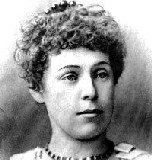
Florence Maybrick
Murderer? Adelaide Bartlett
Murderer? · United Kingdom · 1886
Adelaide Bartlett was tried for the murder of her husband, Thomas Edwin Bartlet…
1 victim
Adelaide Bartlett
Murderer? · United Kingdom · 1886
Adelaide Bartlett was tried for the murder of her husband, Thomas Edwin Bartlet…
1 victim
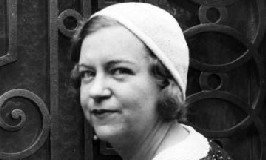 Elvira Barney
Murderer? · United Kingdom · 1932
Elvira Barney Elvira Barney was found not guilty on July 5, 1932. Michael Scott…
1 victim
Elvira Barney
Murderer? · United Kingdom · 1932
Elvira Barney Elvira Barney was found not guilty on July 5, 1932. Michael Scott…
1 victim
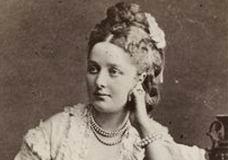 Florence Bravo
Murderer? · United Kingdom · 1876
Florence Bravo was a Victorian heiress and young widow at 26. She met and marri…
1 victim
Florence Bravo
Murderer? · United Kingdom · 1876
Florence Bravo was a Victorian heiress and young widow at 26. She met and marri…
1 victim
 Madeleine Smith
Murderer? · United Kingdom · 1857
Madeleine Smith received a verdict of "not proven" on July 9, 1857. She died on…
1 victim
Madeleine Smith
Murderer? · United Kingdom · 1857
Madeleine Smith received a verdict of "not proven" on July 9, 1857. She died on…
1 victim
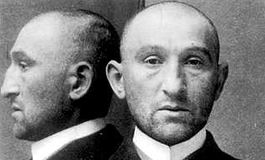 Oscar Slater
Murderer? · United Kingdom · 1908
Oscar Joseph Slater (8 January 1872 – 1948) was a victim of miscarriage of just…
1 victim
Oscar Slater
Murderer? · United Kingdom · 1908
Oscar Joseph Slater (8 January 1872 – 1948) was a victim of miscarriage of just…
1 victim
 Lizzie Borden
Murderer? · USA · 1892
Lizzie Andrew Borden (July 19, 1860 – June 1, 1927) was an American woman who w…
2 victims
Lizzie Borden
Murderer? · USA · 1892
Lizzie Andrew Borden (July 19, 1860 – June 1, 1927) was an American woman who w…
2 victims
 Wang Zhijian
Murderer · Singapore · 2008
Wang Zhijian was a Chinese national. Wang’s relationship with Zhang Meng ended…
3 victims
Wang Zhijian
Murderer · Singapore · 2008
Wang Zhijian was a Chinese national. Wang’s relationship with Zhang Meng ended…
3 victims
 Lacey Hirst-Pavek
Murderer · USA · 2009
Lacey Hirst-Pavek was convicted in 2010 of murder-for-hire in the killing of Mi…
1 victim
Lacey Hirst-Pavek
Murderer · USA · 2009
Lacey Hirst-Pavek was convicted in 2010 of murder-for-hire in the killing of Mi…
1 victim
 Mary Agnes Leider
Murderer · USA · 2012
Mary Agnes Leider was 25 years old, from Saint Xavier, on the Crow Indian Reser…
1 victim
Mary Agnes Leider
Murderer · USA · 2012
Mary Agnes Leider was 25 years old, from Saint Xavier, on the Crow Indian Reser…
1 victim
 Arturo Daniel Aranda
Murderer · USA · 1976
Arturo Daniel Aranda was sentenced to death on May 18, 1979. Aranda Arturo, a 7…
1 victim
Arturo Daniel Aranda
Murderer · USA · 1976
Arturo Daniel Aranda was sentenced to death on May 18, 1979. Aranda Arturo, a 7…
1 victim
 Eric Robert
Murderer · USA · 2011
Eric Robert Eric Robert was sentenced to death and later executed by lethal inj…
1 victim
Eric Robert
Murderer · USA · 2011
Eric Robert Eric Robert was sentenced to death and later executed by lethal inj…
1 victim
- Gender
- female
- Country
- United Kingdom
- Location
- Liverpool, Merseyside, England, United Kingdom
- Date of birth
- September 3, 1862
- Age at first offence
- 37
- Characteristics
- poisoner, parricide
- Victim profile
- James Maybrick, 60 (her husband)
- Method of murder
- Poisoning (arsenic)
- Date(s) of murder
- May 11, 1899
- Years active
- 1899
- Date of arrest
- 3 days after
- Status
-
Died in custody
Sentenced to death on August 8, 1899; commuted to life imprisonment on August 12, 1899; released on January 25, 1904; died on October 23, 1941
Case identity
Florence Elizabeth Maybrick (Florence Maybrick) was an American woman convicted in Great Britain of murdering her husband, James Maybrick. She was born Florence Elizabeth Chandler on 3 September 1862 and died on 23 October 1941.
Timeline
- 27 July 1881 — Florence Elizabeth Chandler married James Maybrick at St James's Church, Piccadilly, in London.
- 27 April 1889 — James Maybrick was taken ill after self-administering a double dose of strychnine.
- 8 May 1889 — Florence Maybrick wrote a compromising letter to Alfred Brierley.
- 9 May 1889 — A nurse reported that Mrs Maybrick had surreptitiously tampered with a meat-juice bottle which was afterwards found to contain a half-grain of arsenic.
- 11 May 1889 — James Maybrick died at his home at Battlecrease House, Aigburth.
- 11 May 1889 — An inquest was held in a nearby hotel.
- 13 May 1889 — A post mortem was carried out.
- 30 May 1889 — The body was exhumed for re-examination.
- 31 July 1889 — Florence Maybrick’s trial began at Liverpool Summer Assizes.
- 7 August 1889 — Florence Maybrick was sentenced to death.
- 22 August 1889 — Her death sentence was commuted to life imprisonment as punishment for a crime with which she was never charged.
- 8 August 1889 — A report stated that she had been found guilty and sentenced to death.
- 8 August 1899 — A report stated “Liverpool, Aug. 8” that she “has been found guilty and sentenced to death.”
- 12 August 1899 — The sentence was commuted to life imprisonment.
- 31 July 1889 — Another account stated that she was placed in the dock at Liverpool Assizes and charged with murdering her husband.
- January 25, 1904 — Florence Maybrick was released.
- 23 October 1941 — Florence Maybrick died.
Background
Early life and family
Florence Elizabeth Chandler was born in Mobile, Alabama, the daughter of William George Chandler, a partner in the banking firm of St. John Powers and Company and at one time mayor of Mobile. After William George Chandler died, Florence’s mother remarried to Baron Adolph von Roques, a cavalry officer in the Eighth Cuirassier Regiment of the German Army.
Meeting and marriage
While travelling to Britain with her mother, Florence met cotton broker James Maybrick on board ship. Other passengers were either amused or shocked by a 19-year-old girl spending so much time alone in the company of Maybrick, who was 23 years her senior. On 27 July 1881, Florence and James Maybrick married at St James's Church, Piccadilly, in London.
Life at Battlecrease House and marital breakdown
They settled in Battlecrease House, Aigburth, a suburb of Liverpool. Florence made an impression on the social scene and the Maybricks were usually found at important balls and functions as a picture of a happy, successful couple.
Maybrick had a regular use of arsenic and had a number of mistresses, one of whom bore him five children. Florence became increasingly unhappy in the marriage and entered into liaisons of her own. One was with a local businessman, Alfred Brierley, which her husband was told about. She was also suspected of having an affair with a brother-in-law, Edwin.
After Florence was forbidden to tend to her husband and was effectively placed under house arrest by the family, his condition worsened.
Children and servants
In an account of the couple’s household, they employed a cook, two maids and a nanny to look after their two children. Their housekeeping allowance was £7 a week, and Florence soon ran into debt. A nanny named Alice Yapp handled a letter meant to be posted and later delivered it to Edwin.
The offence
Florence Maybrick was charged with murdering her husband, James Maybrick. She was convicted of murder and sentenced to death.
The prosecution case involved poison. Florence bought flypaper containing arsenic from a local chemist’s shop and later soaked it in a bowl of water. At trial, she claimed this method allowed her to extract the arsenic for cosmetic use.
After James Maybrick became ill, he died at his home on 11 May 1889. The doctors treated his condition as acute dyspepsia and gastro-enteritis, and the trial included disputes about whether arsenic or other causes were responsible.
Investigation
Illness and preparations
James Maybrick was reported to have been taken ill on 27 April 1889 after self-administering a double dose of strychnine. His condition was treated as acute dyspepsia and later as a strict diet, with visits by doctors including Dr Humphreys.
Florence purchased a dozen fly-papers from a local chemist on 23 April and left them soaking in a bowl on the bedroom wash-stand, stating it was to make a cosmetic preparation. James complained of feeling sick, and his condition worsened through the following days, including vomiting and numb hands.
Letter interception and house arrest
On 8 May Florence wrote a compromising letter to Alfred Brierley, which was intercepted by Alice Yapp, the nanny. Yapp passed it to James Maybrick’s brother, Edwin, who was staying at Battlecrease. Edwin shared the letter contents with Michael Maybrick, who was effectively the head of the family. By Michael’s orders, Florence was immediately deposed as mistress of her house and held under house arrest.
A later account included a quoted letter from Florence to her lover, with the nanny claiming she read it while changing an envelope. The letter read:
"Dearest, Since my return I have been nursing M day and night - he is sick unto death!"
Florence was forbidden to tend to her husband and his condition was managed by other persons, including a trained nurse arriving shortly after 2pm.
Evidence found and medical examinations
On 9 May 1889 a nurse reported that Mrs Maybrick had surreptitiously tampered with a meat-juice bottle, which was afterwards found to contain a half-grain of arsenic. Florence later testified that her husband had begged her to administer it as a pick-me-up, but that he never drank its contents.
James Maybrick died at his home on 11 May 1889. His brothers suspected the cause and arranged that his body be examined. Slight traces of arsenic were found in his body, but not enough to be considered fatal. Another account stated that a packet marked “Arsenic: Poison” with the words “for cats” added was found in Florence’s room.
A post mortem was carried out on 13 May 1889. Doctors determined that death was due to an irritant poison. The body was buried and then exhumed for re-examination on 30 May 1889. Toxic analysis of the liver, intestines and spleen found less than half a grain of arsenic with none in the heart, lungs or stomach. Traces of strychnine, hyoscine, morphia and prussic acid were found; prussic acid and morphia were described as expected as they were in the medicines administered.
A city chemist confirmed that he had supplied Maybrick with quantities of poison over a lengthy period, and a search of Battlecrease House later turned up enough to kill at least fifty people.
Contested cause of death
Despite evidence of arsenic traces and possession of related items, there was dispute about whether the arsenic was in fact the cause of James Maybrick’s death. At her trial, medical testimony agreed Maybrick had died of gastro-enteritis, but disputed whether it was caused by a chill, arsenic, or bad food.
Arrest
Florence Maybrick was arrested and detained. One account stated she was being detained in Walton Jail hospital while her trial began.
Trial
Venue and presiding judge
Florence Maybrick stood trial at St George's Hall, Liverpool, before Justice James Fitzjames Stephen. Another account stated the trial began at Liverpool Summer Assizes on 31 July 1889.
Charge and plea
She was convicted.
Evidence and arguments at trial
Medical testimony at trial agreed that Maybrick had died of gastro-enteritis but disputed whether it had been caused by a chill, arsenic or bad food. Despite the lack of any evidence that Florence had administered any poison to her husband, the judge’s summing up took into account her affair with Brierley and her letter to him, and the jury returned a guilty verdict after retiring for 45 minutes.
A quoted judge-related question presented in a newspaper account stated:
"How horrible, the more you take the more you require, you will go on till they carry you off"
This quote was attributed to Sir James Poole in the account, who said James Maybrick had told him in conversation that he was in the habit of taking “poisonous medicines”, and Sir James replied with the quoted remark.
The trial narrative included evidence that the police found a bottle in Maybrick’s office bearing the chemist’s name and address described as “Spirits of Sol Volatile,” a white liquid. There was testimony about the use of arsenic as a cosmetic and the use of fly papers, including testimony from Sir James Poole and the chemist Edwin Garnett Heaton. Heaton identified Maybrick as a gentleman he frequently supplied with “a pick-me-up containing arsenic” for 18 months previous to 1888 and stated the dose increased from “4-7 drops and 2-5 times a day,” described as equivalent to “a third of a grain of white arsenic a day.”
A newspaper account also included that Florence’s letter to Brierley contained the phrase “he is sick unto death,” described as “terribly important” because doctors fully expected recovery at the time it was written. The judge in that account asked whether it was reasonable to believe that a loving wife would yield to her husband’s suggestion and put an unknown powder in his food. The jury was described as a “Lancashire” jury and it was alleged that the precautions for secluding the jury were neglected, with the jury mixing with other frequenters in a billiard room.
Verbatim statements from Florence and the jury
After the jury returned its verdict, the newspaper account recorded the foreman saying:
"We have agreed that the accused is guilty."
When asked whether she had anything to say before sentence of death was passed, the account recorded Florence Maybrick addressing the judge:
"My lord, evidence has been kept back from the jury which, if it had been known, would have altered the verdict, I am not guilty of this offense."
Verdict and sentencing
The jury returned a guilty verdict. Florence Maybrick was sentenced to death. The newspaper account recorded the judge sentencing her “to be hanged by the neck till dead.”
Sentencing
The death sentence was commuted to life imprisonment on 22 August 1889, and another status field records commutation on August 12, 1899. The commutation was described as punishment for a crime with which she was never charged, and that conclusion included ground for reasonable doubt about whether the arsenic so administered was in fact the cause of his death.
Appeals
No possibility of an appeal was described in the narrative, and during the 1890s new evidence was publicized by her supporters. Efforts were made for release, including by Lord Russell and Sir Charles Russell. In 1891, evidence was submitted to Home Secretary Asquith and described as including affidavits from Florence Maybrick’s mother, Baroness-de-Roques, her servant, and a solicitors clerk in Paris describing findings of Dr Bay’s of New York and a prescription for a face wash and its making up by a Parisian chemist in 1878. Another affidavit was described as by Valentine Blake.
Outcome
After the commutation, Florence Maybrick served time in detention and prison. She was released on 25 January 1904 after serving 15 years. She returned to the United States.
Aftermath
Later life and death
After detention in Woking and Aylesbury prisons, Florence Maybrick was released in January 1904. Initially she earned a living on the lecture circuit, protesting her innocence.
In later life, she spent months unsuccessfully as a housekeeper and then lived as a recluse in a squalid three-room cabin near Gaylordsville, South Kent, Connecticut with only her cats for company. She never saw her children again.
Florence Maybrick died on 23 October 1941 and was buried in the grounds of South Kent School. She had a tattered family bible. A scrap of paper pressed between its pages contained directions for the soaking of flypapers for use as a beauty treatment.
Florence Maybrick wrote a book about her experiences soon after her release. The book was titled My Fifteen Lost Years.
Additional mentioned works and references
Non-fiction books and pamphlets mentioned as related to the case included Boswell, Charles and Lewis Thompson, The Girl with the Scarlet Brand (1954), Trevor L. Christie’s Etched in Arsenic (1968), and Full Account of the Life & Trial of Mrs. Maybrick (ca. 1901). Other titles listed included Helen Densmore’s The Maybrick Case (1892), Henry B. Irving’s Trial of Mrs. Maybrick (Notable English Trials series, 1912), Henry B. Irving’s “Mrs. Maybrick” in Famous Trials III (Penguin, 1950), J.L.F.’s The Maybrick Case: A Treatise Showing Conclusive Reasons for the Continued Public Dissent from the Verdict and "Decision" (1891), L.E.X.’s Is Mrs. Maybrick guilty?: A Defence Shewing that the Verdict of Guilty is not Founded on Fact (1889), J. H. Levy’s The Necessity for Criminal Appeal (1899), Alexander MacDougall’s The Maybrick Case (1891 and 1896), Eleanor Mason’s Florie Chandler: or, The Secret to the Maybrick Poisoning Case (1890), Florence Maybrick’s Mrs. Maybrick's Own Story: My Fifteen Lost Years (1904), Nigel Morland’s This Friendless Lady (1957), Bernard Ryan Jr.’s The Poisoned Life of Mrs. Maybrick (1977), and The Maybrick Trial: A Toxicological Study (1890).


Spotted an error, or have more information about this case?