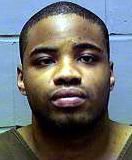
Reginald & Jonathan Carr
Spree killers Helzer brothers
Spree killers · USA · 2000
Helzer brothers were sentenced to death in California for the killings of five…
5 victims
Helzer brothers
Spree killers · USA · 2000
Helzer brothers were sentenced to death in California for the killings of five…
5 victims
 Joseph Kibweteere
Mass murderer · Uganda · 2000
Joseph Kibweteere led a breakaway sect known as the Movement for the Restoratio…
1000 victims
Joseph Kibweteere
Mass murderer · Uganda · 2000
Joseph Kibweteere led a breakaway sect known as the Movement for the Restoratio…
1000 victims
 Dr. Wouter Basson
Murderer · 1992
Wouter Basson (born July 6, 1950) was a South African cardiologist and the form…
230 victims
Dr. Wouter Basson
Murderer · 1992
Wouter Basson (born July 6, 1950) was a South African cardiologist and the form…
230 victims
 Gameel Al-Batouti
Mass murderer · USA · 1999
Gameel Al-Batouti (also rendered “Gamil ElBatouty” or “El Batouty” in U.S. offi…
216 victims
Gameel Al-Batouti
Mass murderer · USA · 1999
Gameel Al-Batouti (also rendered “Gamil ElBatouty” or “El Batouty” in U.S. offi…
216 victims
 Kim Dae-Han
Mass murderer · South Korea · 2003
Name: Kim Dae-Han · Age: 56 · Occupation/background: He was an unemployed forme…
198 victims
Kim Dae-Han
Mass murderer · South Korea · 2003
Name: Kim Dae-Han · Age: 56 · Occupation/background: He was an unemployed forme…
198 victims
 Luis Alfredo Garavito
Serial killer · Colombia/Ecuador · 1992
Luis Alfredo Garavito Cubillos, also known as "La Bestia" ("The Beast") or "Tri…
192 victims
Luis Alfredo Garavito
Serial killer · Colombia/Ecuador · 1992
Luis Alfredo Garavito Cubillos, also known as "La Bestia" ("The Beast") or "Tri…
192 victims
 Kerry Dimart Allen
Murderer · USA · 2000
Kerry Dimart Allen was convicted of capital murder and sentenced to death. He a…
1 victim
Kerry Dimart Allen
Murderer · USA · 2000
Kerry Dimart Allen was convicted of capital murder and sentenced to death. He a…
1 victim
 James Tenner
Murderer · USA · 1987
James Tenner was convicted of the hanging and murders of Alvin Smith and Donna…
2 victims
James Tenner
Murderer · USA · 1987
James Tenner was convicted of the hanging and murders of Alvin Smith and Donna…
2 victims
 Carroll Joe Parr
Murderer · USA · 2001
Carroll Joe Parr was convicted of capital murder and sentenced to death for the…
2 victims
Carroll Joe Parr
Murderer · USA · 2001
Carroll Joe Parr was convicted of capital murder and sentenced to death for the…
2 victims
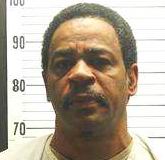 Farris Morris
Murderer · USA · 1994
Farris Genner Morris Jr. was the defendant in State of Tennessee v. Farris Genn…
2 victims
Farris Morris
Murderer · USA · 1994
Farris Genner Morris Jr. was the defendant in State of Tennessee v. Farris Genn…
2 victims
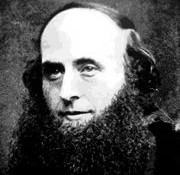 Edward Pritchard
Murderer · United Kingdom · 1865
Edward Pritchard was a Scottish doctor who was convicted of poisoning his wife…
2 victims
Edward Pritchard
Murderer · United Kingdom · 1865
Edward Pritchard was a Scottish doctor who was convicted of poisoning his wife…
2 victims
- Gender
- male
- Country
- Kansas
- Location
- Wichita, Sedgwick County, Kansas
- Date of birth
- Reginald: 1978 / Jonathan: 1980
- Age at first offence
- 22
- Characteristics
- rape, robbery, abduction
- Victim profile
- Ann Walenta, 55 / Jason Befort, 26; Brad Heyka, 27; Heather Muller, 25; and Aaron Sander, 29
- Method of murder
- Shooting
- Date(s) of murder
- December 11-15, 2000
- Years active
- 2000
- Date of arrest
- December 15, 2000
- Status
-
Sentenced to death
Sentenced to death on November 14, 2002
Case record: Wichita Massacre (also known as “The Wichita Horror”)
Background
The Wichita Massacre, also known as “The Wichita Horror,” was a murder/assault/rape/robbery spree perpetrated by brothers Reginald Carr and Jonathan Carr against several people in the city of Wichita, Kansas in the winter of 2000.
The Carrs killed five people and a dog. The crimes shocked Wichita residents. The purchases of guns, locks, and home security systems subsequently skyrocketed in the city.
The brothers were tried, convicted and sentenced to death in October 2002.
Although a 2004 decision by the Kansas Supreme Court overturned the state death penalty law, the decision was appealed to the U.S. Supreme Court, which upheld the death penalty law and returned the Carrs and other condemned killers back to death row.
Timeline
- December 8, 2000 — Reginald Carr and Jonathan Carr, having recently arrived in Wichita, committed armed robbery against 23-year-old assistant baseball coach Andrew Schreiber.
- December 11, 2000 (three days later) — The Carrs shot and mortally wounded 55-year-old cellist and librarian Ann Walenta as she tried to escape from them in her car; she died three days later.
- December 14, 2000 — The Carrs invaded a home and subjected five young men and women to robbery, sexual abuse, and murder.
- January 2, 2001 — Ann Walenta died of her wounds three weeks after being shot on December 11, 2000.
- November 14, 2002 — Reginald Carr and Jonathan Carr were sentenced to death.
- October 2002 — The brothers were tried and convicted and sentenced to death.
- April 8, 2002 — Judge Paul Clark ruled Jonathan Carr competent to stand trial after reviewing reports from two mental health experts.
- June 13 (year not specified) — Judge Paul Clark denied a motion to move the trial out of Sedgwick County.
- December 21, 2000 — Jason Befort’s service was held.
- Heather Muller’s funeral (date not specified) — Heather Muller’s funeral took place, with Rev. Matthew McGinness speaking.
The offence
Armed robbery of Andrew Schreiber (December 8, 2000)
On December 8, 2000, Reginald Carr and Jonathan Carr forced themselves into the car of 23-year-old assistant baseball coach Andrew Schreiber at gunpoint. They made him drive to various ATM machines and withdraw money. The two split up, and one followed in another car as they made him drive to a field northeast of town. They pistol-whipped him, dumped him out of the car, and fled in the other vehicle after shooting out Mr. Schreiber’s tires.
Attack on Ann Walenta and resulting death
Four days later (after December 8, 2000), the Carrs tried to hijack 55-year-old Linda Walenta’s SUV while she sat in it in the driveway of her suburban East Wichita home. The Carrs were looking for an SUV to drive people at gunpoint to ATMs. One of the brothers approached her, apparently asking for help of some kind. Mrs. Walenta was suspicious because she thought a car had been following her, so she rolled her window down just a little to hear what he was saying. The brother stuck a gun sideways into the opening and shot her several times as she tried to drive away.
Mrs. Walenta survived the shooting but was paralyzed from the waist down. She later helped police in their investigation but died of her wounds three weeks later, on January 2, 2001. The Kansas state crime lab confirmed the weapon used to kill Mrs. Walenta and to shoot out the tires of Andrew Schreiber’s car.
Home invasion and murders (December 14, 2000)
The Carrs’ crime spree culminated on December 14, when they invaded a home and subjected five young men and women to robbery, sexual abuse, and murder. The house was chosen nearly at random where Brad Heyka, Heather Muller, Aaron Sander, Jason Befort, and a young woman identified as “H.G.”—all in their twenties—were spending the night.
The Carrs scoured the house for valuables. They forced the hostages to strip naked, bound and detained them, and subjected them to various forms of sexual humiliation, including rape and oral sex. The Carrs forced the men to engage in sexual acts with the women, and the women with each other.
After driving the victims to ATMs to empty their bank accounts, the Carrs brought the victims to a snowy deserted soccer complex on the outskirts of town. They shot them execution-style in the backs of their heads, leaving them for dead.
The Carrs then drove Jason Befort’s truck over the bodies. They returned to the house to ransack it for more valuables, and in the process killed Nikki, H.G.’s muzzled dog.
H.G.’s survival and escape
H.G. survived because her metal barrette deflected the bullet. After being shot, she ran naked for more than a mile in freezing weather to report the attack and seek medical attention. She reached a house with Christmas lights and pleaded for help, stating that “We’ve all been shot. Three of my friends are dead.” At the time, H.G. thought her boyfriend was still alive.
H.G. described the attackers and what they did to the young couple who lived at the house. Only when she was sure they knew her story did she let them call the police.
H.G. asked the couple to call her mother (“Tell her I love her”) and her boyfriend’s parents. She was worried about the children she taught and kept wondering, “Who’s going to take care of the kids in school?”
In the home where H.G. survived, she testified that the Carrs forced the victims to take off all clothing and asked whether they had any money. H.G. stated: “Take our money ... Take whatever you want.” She also testified that when the Carrs heard whispering they would wave their guns and shout “Shut the fuck up.”
Details of the sexual assault sequence (as testified by H.G.)
H.G. testified that the Carrs brought out H.G. and Heather Muller and made them have oral sex and penetrate each other digitally. They forced Mr. Heyka to have intercourse with H.G. They then made Mr. Befort have intercourse with H.G., but ordered him to stop when they realized he was her boyfriend. They ordered Mr. Sander to have intercourse with H.G., and when he refused they hit him on the back of the head with a pistol butt.
H.G. testified that when Mr. Sander was unable to get an erection, one of the Carrs beat him with a golf club. She testified the Carrs “told [Aaron] that he had until 11:54 to get hard and they counted down from 11:52 to 11:53 to 11:54.”
H.G. testified that Reginald Carr raped H.G. and ejaculated in her mouth. She also testified that Jonathan Carr raped Heather Muller again, and then he raped H.G. one more time.
H.G. testified that Jonathan Carr raped her, and that Reginald Carr returned and raped her again.
Time and final scene at the soccer complex (as described in H.G.’s testimony)
H.G. testified that midnight it had been 17.6 degrees and there was snow on the ground. The Carrs let the women wear a sweater or sweatshirt, but they were barefoot and naked from the waist down. The men were marched into the snow completely naked.
The Carrs tried to force all the victims into the trunk of Aaron Sander’s Honda Accord but realized five people would not fit, making only the men get into the trunk. Reginald Carr ordered H.G. to join him in Mr. Befort’s truck, and Jonathan Carr drove the Accord with the three men in the trunk and Miss Muller inside.
As Mr. Carr drove her off, H.G. noted the time: 2:07 a.m., three hours since the ordeal began.
After a short drive, both vehicles stopped in an empty field. Reginald Carr ordered H.G. to sit with Miss Muller in Mr. Sander’s car. H.G. testified she turned to Heather and said: “They’re going to shoot us.”
H.G. testified that the Carrs ordered H.G. and Miss Muller out of the car and ordered them to turn away and kneel in the snow. She testified: “As I was kneeling, a gun shot went off,” and then: “[Then] I heard Aaron [Sander] ... I could distinguish Aaron’s voice. He said, ‘Please, no sir, please.’ The gun went off.”
H.G. testified she heard three shots before she was hit: “I felt the bullet hit the back of my head. It went kind of gray with white like stars. I wasn’t knocked unconscious. I didn’t fall forward. Then someone kicked me, and I had fallen forward. I was playing dead. I didn’t move. I didn’t want them to shoot me again.”
Investigation and evidence
The Wichita police linked the Carrs to all the crimes when a highway worker found a black .380 caliber Lorcin semi-automatic handgun along Route 96, a highway near the soccer field where the massacre took place. The Kansas state crime lab confirmed the handgun was the weapon used to kill Mrs. Walenta and H.G.’s friends and to shoot out the tires of Andrew Schreiber’s car.
From H.G.’s description of Mr. Befort’s truck, police obtained the license plate number from vehicle registration records and put out an alert. As dawn broke, radio and television stations broadcast the plate number.
Police found H.G.’s pet schnauzer Nikki lying in a pool of blood on a bed, probably shot.
By 7:30 a.m., police had a report that the missing truck was outside a downtown apartment building and that a black man had been carrying a television set up to one of the apartments.
Arrest
As dawn broke, Stephanie Donly, a white woman who shared an apartment with Reginald Carr, opened the door after officers knocked. Police caught Mr. Carr as he tried to slip out a window.
Police learned from Miss Donly that Jonathan Carr was driving a late model Plymouth Fury. Shortly after 12:00 p.m., police found the car parked outside a house in a black part of town. Jonathan Carr was there with his girlfriend of a few days, Tronda Green. He bolted when he saw police, but was caught after a short chase.
Fewer than 12 hours after the murders, Reginald Carr and Jonathan Carr were both in custody.
Trial
Motions and trial venue
Judge Paul Clark denied a motion to move the trial out of Sedgwick County. The defense cited a poll showing 74 percent of Sedgwick County residents thought the Carrs were “definitely guilty” or “probably guilty,” arguing they could not get a fair trial in Wichita. The defense position that no trial had been moved from Sedgwick County in more than 40 years was noted.
The defense wanted separate trials because the lawyers for each brother would try to blame the crimes on the other. Prosecutor Nola Foulston pointed out that defendants accused of crimes together are often tried together, and said two trials would be too much expense and inconvenience.
Jonathan Carr’s lawyers also sought to get him declared unfit to stand trial. On April 8, 2002, Judge Clark ruled him competent after reviewing reports of two mental health experts. The reports were under seal.
Trial comments and sentencing-day courtroom statements
After the sentencing, the two were turned over to the Kansas Department of Corrections.
The judge, Judge Paul Clark, announced the sentencing and the reports indicated both Carr brothers showed no emotion.
Judge Paul Clark sentenced both to life in prison with no possibility of parole for 20 years in the death of another woman.
Reginald Carr also was sentenced to 47 years in prison for his conviction on other crimes, and Jonathan Carr was sentenced to 41 years on other convictions.
At the sentencing, the surviving woman from the Dec. 15, 2000, shooting that left her four friends dead told the court: “The sentence imposed on them will be a much kinder sentence than they imposed on me, my friends, and family.”
When the jury delivered its verdict, Mark Befort, a brother of one of the victims, sarcastically wished Reginald Carr a “happy birthday,” followed by an expletive, as he was being led away. Carr’s response was laced with profanity. Carr’s left hand was heavily bandaged, and authorities said he broke it Thursday morning while defending himself when a fellow prisoner attacked him in a holding area.
Sentencing
Reginald Carr and Jonathan Carr were sentenced to death on November 14, 2002.
Death sentences in Kansas trigger automatic appeals, which can take years to settle. Since Kansas reinstated the death penalty in 1994, the state had not executed a single person.
Appeals and legal status
Outcome
Reginald Carr and Jonathan Carr remained under sentence of death following the U.S. Supreme Court’s upholding of the death penalty law.
Aftermath
Victims and memorial details
Muller was a pre-school teacher at St. Thomas Aquinas Catholic School. Every year the school awards a deserving 8th grade student the “Heather Muller Love of Faith Award.”
At Jason Befort’s service on Dec. 21, 2000, Rev. James Diecker told the congregation their attitude towards the killers should be that of Jesus on the cross and said: “Forgive them, Father, for they know not what they do.” He went on to call for “a victory of love over hate ... a victory of mercy over justice.”
At Heather Muller’s funeral, Rev. Matthew McGinness said: “We must be like Christ, who forgave his enemies.” He told the congregation Heather’s mother felt the same way and had told him: “Heather would want us to pray for her murderers, and Heather was probably praying for them at the moment of her death.”
Hate-crime controversy
Since there reportedly was no prima facie evidence of racial motivation—only that the victims were white and the Carr brothers were African-American—Sedgwick County District Attorney Nola Foulston decided not to treat the incident as a hate crime.
Nola Foulston said the motive was robbery rather than racial hatred.
H.G. and Andrew Schreiber were not asked whether the brothers used racial slurs or expressed hatred of whites during the April 2001 preliminary hearing.
Other details
People named in connection with the attacks
- Andrew Schreiber — 23-year-old assistant baseball coach; victim of armed robbery and later driving forced to ATM machines; his tires were shot out.
- Ann Walenta / Linda Walenta — 55-year-old cellist and librarian; shot when she tried to escape; survived initially and died three weeks later on January 2, 2001; paralyzed from the waist down.
- Brad Heyka — victim during the December 14, 2000 home invasion.
- Heather Muller — victim during the December 14, 2000 home invasion.
- Aaron Sander — victim during the December 14, 2000 home invasion.
- Jason Befort — victim during the December 14, 2000 home invasion; H.G.’s boyfriend.
- “H.G.” — young woman identified as “H.G.”; she survived.
- Nikki — H.G.’s muzzled dog, killed during ransacking.
- Stephanie Donly — Reginald Carr’s girlfriend; opened the apartment door; shared an apartment with him.
- Tronda Green — Jonathan Carr’s girlfriend of a few days.
- Dennis Rader — referenced in connection with the worst crimes in Kansas history.
- Mark Befort — brother of one of the victims.
- Trent Hungate — wrote a letter to the Wichita Eagle.
- Bob Knight — mayor of Wichita; made improving race relations in Wichita a goal of his administration.
- Nola Foulston — Sedgwick County District Attorney.
Investigation and courtroom quotes
H.G. testified:
- “We were told to take off all of our clothes,”
- “They asked if we had any money. We said: ‘Take our money ... Take whatever you want.’ We didn’t have any (money).”
- “Shut the fuck up.”
- “Relax. I’m not going to kill you yet.”
- “I asked him if he was going to hurt us and he said, ‘No,’”
- “I said, ‘Do you promise you’re not going to kill us?’ and he said, ‘Yes.’”
- “On the way back, he said he wished we could’ve met under different circumstances. He said I was cute, and we probably would’ve hit it off.”
- “I turned to Heather and said, ‘They’re going to shoot us.’”
- “Help me, help me, help me,”
- “We’ve all been shot. Three of my friends are dead.”
- “Tell her I love her”
- “Who’s going to take care of the kids in school?”
- “As I was kneeling, a gun shot went off,”
- “[Then] I heard Aaron [Sander] ...
- “I felt the bullet hit the back of my head. I wasn’t knocked unconscious. I didn’t fall forward. I was playing dead. I didn’t move.
The surviving woman quoted:
- “The sentence imposed on them will be a much kinder sentence than they imposed on me, my friends, and family.”
Mark Befort’s comment was described as “happy birthday,” followed by an expletive.
Nola Foulston was quoted:
- “It reasonably appears that these were isolated incidents where individuals ... were chosen at random ... a random act of violence,”
- “The fact that the defendants and victims happen to be of different races has no bearing. Let’s just look at the underlying crimes.”
The quote about hate crimes:
- “hate crimes”
The quote about secrecy and “Aryan Nations”:
- “we’d have to let the Aryan Nations come in here if they decided they had an interest.”
A statement attributed to Mrs. Foulston’s aide:
- “interlopers,”
- the public has no “substantial interest” in the case.
Bob Knight was quoted:
- “raw, brutal and evil.”
- “I’m not looking at it as a black-and-white issue.”
- “I am not a big fan of capital punishment, but if anything deserves people losing their lives, it is this kind of heinous crime”.
Rev. James Diecker was quoted:
- “Forgive them, Father, for they know not what they do.”
- “a victory of love over hate ...
Rev. Matthew McGinness was quoted:
- “We must be like Christ, who forgave his enemies.”
- “Heather would want us to pray for her murderers, and Heather was probably praying for them at the moment of her death.”
One statement attributed to the District Attorney:
- “hate crimes”
Other referenced legal and media information
The trial was scheduled to start on Sept. 9 but was delayed by defense maneuvering, and it was expected to last a month and involve 70 witnesses.
Kansas permits television in courtrooms, and a cable channel reportedly showed little interest in the case despite email requests.
Spotted an error, or have more information about this case?