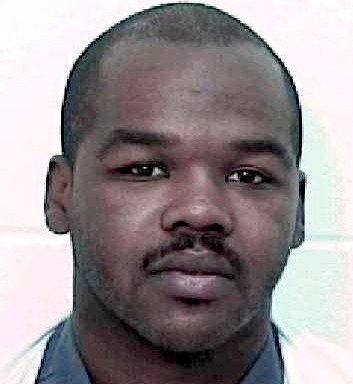
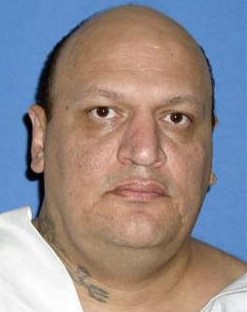
Curtis Osborne
Murderer Brian Kevin Rosenfeld
Murderer · USA · 1985
Brian Kevin Rosenfeld Brian Kevin Rosenfeld was sentenced to three concurrent l…
23 victims
Brian Kevin Rosenfeld
Murderer · USA · 1985
Brian Kevin Rosenfeld Brian Kevin Rosenfeld was sentenced to three concurrent l…
23 victims
 Yahweh ben Yahweh
Murderer · USA · 1980
Yahweh ben Yahweh was born and legally named Hulon Mitchell Jr. (October 27, 19…
23 victims
Yahweh ben Yahweh
Murderer · USA · 1980
Yahweh ben Yahweh was born and legally named Hulon Mitchell Jr. (October 27, 19…
23 victims
 Russell Ellwood
Murderer · USA · 1991
Russell Ellwood was a former taxi driver. Authorities suspected him of killing…
20 victims
Russell Ellwood
Murderer · USA · 1991
Russell Ellwood was a former taxi driver. Authorities suspected him of killing…
20 victims
 Robert Martines Perez
Murderer · USA · 1994
Name: Robert Martines Perez · Other name used in proceedings: Robert Martinez P…
15 victims
Robert Martines Perez
Murderer · USA · 1994
Name: Robert Martines Perez · Other name used in proceedings: Robert Martinez P…
15 victims
 Alofa Time
Murderer · USA · 2006
Alofa Time was from Boise, Idaho. His wife was Theresa Lee Time, and his estran…
3 victims
Alofa Time
Murderer · USA · 2006
Alofa Time was from Boise, Idaho. His wife was Theresa Lee Time, and his estran…
3 victims
 John William Byrd
Murderer · USA · 1983
John William Byrd, Jr. was executed by lethal injection for the murder of conve…
1 victim
John William Byrd
Murderer · USA · 1983
John William Byrd, Jr. was executed by lethal injection for the murder of conve…
1 victim
 Yang Xinhai
Serial killer · China · 2000
Yang Xinhai (simplified Chinese: 杨新海; pinyin: Yáng Xīnhǎi; 17 July 1968–14 Febr…
67 victims
Yang Xinhai
Serial killer · China · 2000
Yang Xinhai (simplified Chinese: 杨新海; pinyin: Yáng Xīnhǎi; 17 July 1968–14 Febr…
67 victims
 David Pittman
Murderer · USA · 1990
David Pittman (date of birth: 12/10/61) was sentenced to death in the Tenth Jud…
3 victims
David Pittman
Murderer · USA · 1990
David Pittman (date of birth: 12/10/61) was sentenced to death in the Tenth Jud…
3 victims
 Rodrick Dantzler
Mass murderer · USA · 2011
Rodrick Shonte Dantzler was the suspected gunman in a mass murder in Grand Rapi…
7 victims
Rodrick Dantzler
Mass murderer · USA · 2011
Rodrick Shonte Dantzler was the suspected gunman in a mass murder in Grand Rapi…
7 victims
- Gender
- male
- Country
- USA
- Location
- Spalding County, Georgia, USA
- Date of birth
- 1970
- Age at first offence
- 20
- Characteristics
- robbery, drug dealer, drug addict
- Victim profile
- Linda Lisa Seaborne and Arthur Jones
- Method of murder
- Shooting ( Ruger single-action .357 revolver)
- Date(s) of murder
- August 7, 1990
- Years active
- 1990
- Date of arrest
- 2 days after
- Status
-
Executed
Executed by lethal injection in Georgia on June 4, 2008
Case record: Curtis Osborne
Overview
Curtis Osborne was a male inmate convicted by a Spalding County jury of the murder of Arthur Lee Jones and Linda Lisa Seaborne. He was sentenced to death and later executed by lethal injection in Georgia on June 4, 2008. Media coverage described the execution as occurring after judicial review and rejection of clemency by the state Board of Pardons and Paroles.
Timeline
- August 6, 1990 — Crime commit date listed for the killings.
- August 7, 1990 — Bodies of Linda Lisa Seaborne and Arthur Jones were found in the front of a car in Griffin, Georgia; Special Agent David Mitchell investigated a murder on Pine View Road.
- August 7, 1990 — Osborne awakened Marcus Matthews and told him that the police wanted to see the motorcycle because “a guy had been killed.”
- August 10, 1990 — Osborne was interviewed by Spalding County Sheriff Richard Cantrell at 6:35 p.m.
- October 1990 term — Osborne was indicted during the October 1990 term in the Superior Court of Spalding County.
- August 5, 1991 — Trial began.
- August 14, 1991 — A jury found Osborne guilty on two counts of murder.
- August 15, 1991 — The jury’s recommendation of a death sentence was returned.
- August 19, 1991 — Trial ended.
- 1991 — Osborne was sentenced to death.
- June 21, 1993 — The Georgia Supreme Court affirmed Osborne’s conviction and sentence.
- February 28, 1994 — The United States Supreme Court denied Osborne’s petition for writ of certiorari.
- June 28, 1994 — Osborne filed a petition for writ of habeas corpus in the Superior Court of Butts County, Georgia.
- September 18-19, 1996 — An evidentiary hearing was held.
- August 18, 1997 — The state habeas corpus court denied Osborne state habeas corpus relief.
- April 28, 2000 — Osborne’s application for a certificate of probable cause to appeal was denied.
- November 27, 2000 — The United States Supreme Court denied Osborne’s petition for writ of certiorari.
- September 19, 2001 — Osborne filed a second petition for a writ of habeas corpus in the Superior Court of Butts County, Georgia.
- November 12, 2001 — The state habeas corpus court denied Osborne state habeas corpus relief.
- March 12, 2002 — Osborne’s application for a certificate of probable cause to appeal was denied.
- April 24, 2001 — Osborne filed a petition for writ of habeas corpus in the United States District Court for the Northern District of Georgia.
- September 29, 2004 — The district court denied Osborne federal habeas corpus relief.
- November 3, 2004 — The district court denied a motion to alter and amend judgment.
- February 1, 2005 — The district court granted Osborne a certificate of appealability on specific issues.
- March 9, 2005 — The Eleventh Circuit denied Osborne’s application for an expansion of the certificate of appealability.
- November 29, 2005 — The case was orally argued before the Eleventh Circuit.
- October 16, 2006 — The Eleventh Circuit issued an opinion denying relief.
- November 6, 2006 — Osborne filed a petition for panel rehearing.
- December 11, 2006 — The petition for panel rehearing was denied.
- May 10, 2007 — Osborne filed a petition for writ of certiorari in the United States Supreme Court.
- October 1, 2007 — The United States Supreme Court denied the petition.
- October 3, 2007 — The Superior Court of Spalding County filed an order setting a seven-day execution window.
- June 2, 2008 — Georgia Board of Pardons and Paroles denied clemency for Curtis Osborne.
- June 4, 2008 — Osborne was executed by lethal injection in Georgia.
The offence
Osborne was convicted of the murder of Arthur Lee Jones and Linda Lisa Seaborne.
The bodies of Linda Lisa Seaborne and Arthur Jones were found in the front of a car in Griffin, Georgia, on 7 August 1990. Both victims had been shot.
Special Agent David Mitchell testified that when he arrived at the scene at approximately 1:45 p.m. on August 7, 1990, he noticed glass fragments on Pine View Road and saw a 1978 Pontiac Grand Prix about forty yards from the glass. Mitchell described the car as in gear and still running, with the driver’s door glass shattered and glass inside the car on the front seat, floorboards, and armrests; the windshield was cracked and the passenger window was rolled down. Mitchell saw Seaborne in the driver’s seat, slumped over Jones in the front seat, and Mitchell noticed a black stick similar to a policeman’s nightstick lying on the floorboard to the rear of the driver’s seat.
Mitchell testified that a bullet had struck the windshield, passed underneath it through the padded dash, and was lying on the vent, and that there was also a bullet resting on the driver’s door where the glass was shattered. Mitchell testified that Jones had sustained a gunshot wound below his left eye and Seaborne was shot in the neck, and that there was blood all over the interior of the vehicle.
An autopsy described Jones dying as a result of a gunshot wound to the back of the head which exited to the left of his eye. The blood pattern showed that Jones’s body was in an upright position when he was shot, and that the gun was only an inch away from his head when it was fired. The bullet fractured Jones’s skull, causing hemorrhage and destruction of brain tissue.
An autopsy described Seaborne dying as a result of a gunshot wound to the back of the neck. The bullet entered the right side of her neck, grazed the shoulder up through the spinal cord, went through the bottom of her skull and exited through her left cheek. The gunshot wound was inflicted from one to two feet away from Seaborne. Dr. Hanzlick testified that the wound was not typical of an “execution” style wound.
The bullets that killed the victims were described as fired from a Ruger Black Hawk .357 Magnum single action revolver and were of the same type found in Osborne’s house. Osborne’s mother testified that her husband’s .357 Ruger was missing.
The murder weapon was not recovered.
Investigation
At the scene investigation, Special Agent David Mitchell described the vehicle and the placement of glass fragments, bullets, and the stick-like object.
Special Agent Chris Tolbert testified that early on the day following the crime, he interviewed Jones’s sister, Melinda Jones, and Jones’s mother; Melinda’s boyfriend, Osborne, was at her house when Tolbert arrived. Melinda Jones told Agent Tolbert that Osborne was trying to sell a motorcycle for victim Arthur Lee Jones.
Osborne told Agent Tolbert that three weeks earlier Jones had asked him to help sell Jones’s motorcycle. Osborne said he had not sold the motorcycle or spoken to Jones since that time. Osborne said that his only contact with Linda Seaborne was a week and a half earlier, when he was trying to change the title to the motorcycle.
Marcus Matthews told police that Osborne had sold him Jones’s motorcycle for $400 a week before the murders. On August 7, the day after the murder, at about 5:30 a.m., Osborne awakened Matthews and told him that the police wanted to see the motorcycle because “a guy had been killed.” Matthews gave the key to the motorcycle to Osborne, then went to the sheriff’s office to inquire about why the motorcycle had been impounded.
Osborne consented to a gunshot residue test and told police that the test would come back positive because he fed his dog doses of gunpowder on a daily basis. Osborne also explained that blood under his cuticles was due to a hangnail. Osborne said his fingerprints could have been on the Grand Prix because he had gone to WalMart to get a title for the motorcycle from Linda Seaborne about a week earlier and because Seaborne had asked him to move her car within a parking lot and he had complied. Osborne agreed to provide police with the clothes he was wearing on the day of the murders, but said his mother had previously washed these clothes in Clorox bleach.
According to the investigation, Osborne’s mother testified that her husband’s .357 Ruger was missing. Police found Osborne’s fingerprints on the door on the driver’s side of the Grand Prix in which the victims’ bodies were found.
Police were unable to locate the individuals identified by Osborne as “Jeff” and “Scott.” Motel records revealed that the room Osborne claimed “Jeff” and “Scott” were staying in was vacant on the date of the crime.
Arrest and interviews
Osborne was arrested and interviewed.
In one interview, Osborne admitted that he had sold Arthur Lee Jones’s motorcycle to Marcus Matthews and kept the money, but denied any involvement in the shootings.
In an interview on August 10, 1990 at 6:35 p.m. with Spalding County Sheriff Richard Cantrell, Osborne told Cantrell that on the day of the crime he left a message for Arthur Jones to come to Griffin, Georgia to pick up the money from the sale of the motorcycle. Osborne stated that he spent the afternoon on the street selling cocaine until a well-known narcotics officer came through the neighborhood. Osborne said that later that evening, Arthur Lee Jones and Linda Lisa Seaborne drove up, and that Jones hit him with a nightstick. Osborne said Jones asked for money for the motorcycle and Osborne told him the money was in a hotel room with “Jeff” and “Scott,” two Cuban drug dealers from Florida. Osborne stated that they stopped at the motel where “Jeff” and “Scott” allegedly were staying and that Scott gave him a .38 caliber gun which Osborne stuck in his “drawers,” after which he walked out to the car.
Osborne claimed he shot Arthur Lee Jones in the back of the head because Jones had threatened to beat him and was reaching for a weapon on the floorboard of the car. Osborne claimed that he climbed out of the driver’s side window of the car and ran. Osborne could not remember where he left his gun and his beeper.
The sheriff observed scratches on Osborne as if Osborne had been running through woods, but Osborne had no bruises in the places where he claimed Jones had struck him. Osborne’s gun was never recovered.
During the time of the investigation, Ron Buchanan testified that he searched for a weapon and pager but could not find either. Buchanan testified that he went by the hotel where Osborne claimed the Cuban drug dealers were staying and Osborne pointed out Room 213 as the room they occupied; the hotel manager, Ramesh Parekh, testified that hotel records showed Room 213 was not occupied on the day in question.
Trial
Osborne was indicted during the October 1990 term in the Superior Court of Spalding County.
A jury found Osborne guilty on two counts of murder on August 14, 1991. The jury’s recommendation of a death sentence was returned on August 15, 1991. The trial moved into sentencing and ended on August 19, 1991.
The sentencing involved statutory aggravation and other findings. In the direct appeal description, the jury found as a statutory aggravating circumstance that the murder of Linda Lisa Seaborne was committed while the defendant was engaged in the commission of another capital felony, namely the murder of Arthur Lee Jones.
In direct appeal findings, the Georgia Supreme Court held that the death sentence was not imposed as the result of passion, prejudice, or other arbitrary factor.
Osborne testified on his own behalf at trial and said:
“There were certain circumstances that took place that night [of the crime], and sometimes things happen out of emotion and not just deliberation. Just things sometimes happen in certain ways. I want to say I’m sorry and I just ask you people to have mercy on me.”
Sentencing
Osborne was sentenced to death after the jury recommended a death sentence.
Appeals
Direct appeal
The Georgia Supreme Court affirmed Osborne’s conviction and sentence on June 21, 1993 in Osborne v. State, 263 Ga. 214, 430 S.E.2d 576 (1993).
Osborne filed a petition for writ of certiorari in the United States Supreme Court, which was denied on February 28, 1994 in Osborne v. Georgia, 510 U.S. 1170 (1994).
In the direct appeal opinion, the Georgia Supreme Court described the trial record and addressed issues including striking black jurors, Miranda warnings, and whether statements had “grown stale.” The court also stated that the evidence supported the verdict.
State habeas corpus
Osborne filed a petition for writ of habeas corpus in the Superior Court of Butts County, Georgia on June 28, 1994, represented by Mary Elizabeth Wells. An evidentiary hearing was held on September 18-19, 1996. On August 18, 1997, the state habeas court denied Osborne state habeas relief.
Osborne’s application for a certificate of probable cause to appeal filed in the Georgia Supreme Court was denied on April 28, 2000. Osborne then filed a petition for writ of certiorari in the United States Supreme Court, which was denied on November 27, 2000 in Osborne v. Turpin, 531 U.S. 1020 (2000).
Osborne, represented by John Hanusz, filed a second petition for a writ of habeas corpus in the Superior Court of Butts County, Georgia on September 19, 2001. On November 12, 2001, the state habeas court denied Osborne state habeas relief. Osborne’s application for a certificate of probable cause to appeal filed in the Georgia Supreme Court was denied on March 12, 2002.
Federal habeas corpus and federal appellate proceedings
Osborne, represented by Jeffrey Ertel, filed a petition for a writ of habeas corpus in the United States District Court for the Northern District of Georgia on April 24, 2001.
On September 29, 2004, after prior orders denying specific claims, the district court denied Osborne federal habeas relief. The district court denied a motion to alter and amend judgment on November 3, 2004. The district court granted Osborne a certificate of appealability on specific issues on February 1, 2005.
On March 9, 2005, the Eleventh Circuit denied Osborne’s application for an expansion of the certificate of appealability. The case was orally argued before the Eleventh Circuit on November 29, 2005. On October 16, 2006, the Eleventh Circuit issued an opinion which denied relief in Osborne v. Terry, 466 F.3d 1298 (11th Cir. 2006).
Osborne filed a petition for panel rehearing on November 6, 2006, which was denied on December 11, 2006.
United States Supreme Court petition (2007)
Osborne filed a petition for writ of certiorari in the United States Supreme Court on May 10, 2007, which was denied October 1, 2007.
Outcome
Osborne’s direct appeal and subsequent state and federal habeas corpus proceedings were unsuccessful, and the United States Supreme Court denied certiorari.
Clemency was denied by the Georgia Board of Pardons and Paroles, and Osborne was executed by lethal injection.
Osborne declined a special last meal request and instead will have the institution’s meal tray, consisting of grilled cheeseburger, oven browned potatoes, baked beans, cole slaw, cookies and a grape beverage.
Osborne declined a special last meal and declined to make a final statement. During execution proceedings, when Warden Hilton Hall asked if Osborne had any final words and Osborne shook his head “no,” he nodded “yes” when a prayer was offered.
On the day of execution, he declined his final meal or to make a recorded last statement or to have a mild sedative offered an hour before the scheduled 7 p.m. execution.
Aftermath and execution details
Osborne was scheduled for execution by lethal injection at 7:00 p.m. on Wednesday, June 4, at the Georgia Diagnostic and Classification Prison in Jackson, Georgia.
The execution was described as delayed and involved efforts to find a vein. Osborne said nothing while the IVs were inserted.
After the IVs were inserted and the witnesses were in place, Osborne shook his head “no” when Warden Hilton Hall asked if he had any final words; he nodded “yes” when a prayer was offered. The prison chaplain prayed that God would find “favor” with Osborne. Osborne was seen moving his lips in prayer.
Two doctors pronounced Osborne dead after monitors indicated his heart had stopped.
Media witnesses were listed as Greg Bluestein, Associated Press; Sheila Marshall, Griffin Daily News; Rhonda Cook, Atlanta Constitution; Joel Foster, 920am WGKA; and Sarah Parker, CBS46.
The Georgia Attorney General press advisory described a scheduling order on October 3, 2007 setting a seven-day execution window beginning at noon on October 23, 2007 and ending seven days later at noon on October 30, 2007, with the commissioner not yet setting the specific date and time for execution.
Other details
Defendant identifiers and personal characteristics
Curtis Osborne had a Georgia Department of Corrections GDC ID: 0000654098 and a listed date of birth of 1970. The record listed his race as black and his gender as male. The record listed height as 5' 07 and weight as 140, with eye color brown and hair color black.
The record listed the most recent institution as GA DIAG & CLASS PRIS-PERM CASE NO: 283459.
The record listed “OFFENSE: MURDER, MURDER,” “SENTENCE LENGTH: DEATH, LIFE,” and “CONVICTION COUNTY: SPALDING COUNTY,” with “CRIME COMMIT DATE: 08/06/1990.”
Clemency and parole board
The Georgia Board of Pardons and Paroles denied clemency for Osborne and decided without comment, and prosecutors opposed commutation.
A Georgia parole board denied Osborne’s request for mercy.
The materials also described that Osborne’s lawyers argued his previous attorney deliberately put up a flimsy defense because he was “infected by racism,” and that he was not informed that a life sentence plea was on the table.
Protests and public response
Relatives waited for news that the execution was over while protesters gathered outside the prison and in other cities. Sara Totonchi was quoted as saying: “The fact that there was a significant delay proves there is still a problem with lethal injection,” and: “This yet another reason why we must stop executing people until we know more about lethal injection,”
Weapon and forensic ballistics details
The murder weapon was described as not recovered, but ballistics examination described it as a Ruger single-action .357 revolver firing Winchester .357 magnum copper-wash, wad-cutter bullets.
Bullets identical in brand and type to the murder bullets were found in Osborne’s home.
Bullets retrieved from a search were described as caliber 25 Auto full metal jacketed bullets in a separate case narrative included in the record for Kevin Green; that narrative did not name Curtis Osborne as the offender.
Spotted an error, or have more information about this case?