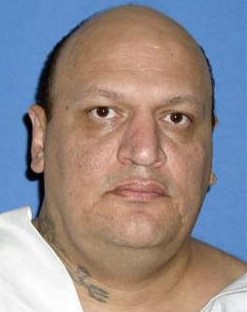
Ricardo Samaniego Ortiz
Murderer Russell Ellwood
Murderer · USA · 1991
Russell Ellwood was a former taxi driver. Authorities suspected him of killing…
20 victims
Russell Ellwood
Murderer · USA · 1991
Russell Ellwood was a former taxi driver. Authorities suspected him of killing…
20 victims
 Robert Martines Perez
Murderer · USA · 1994
Name: Robert Martines Perez · Other name used in proceedings: Robert Martinez P…
15 victims
Robert Martines Perez
Murderer · USA · 1994
Name: Robert Martines Perez · Other name used in proceedings: Robert Martinez P…
15 victims
 Billy Frank Vickers
Murderer · USA · 1993
Billy Frank Vickers Vickers was executed by lethal injection in Texas on Januar…
14 victims
Billy Frank Vickers
Murderer · USA · 1993
Billy Frank Vickers Vickers was executed by lethal injection in Texas on Januar…
14 victims
 Anthony Grandison
Murderer · USA · 1983
Anthony Grandison was an American drug dealer and murderer. He was convicted of…
2 victims
Anthony Grandison
Murderer · USA · 1983
Anthony Grandison was an American drug dealer and murderer. He was convicted of…
2 victims
 Gerald Lee Mitchell
Homicide · USA · 1985
Gerald Lee Mitchell (offender, #838) was executed by lethal injection on Octobe…
2 victims
Gerald Lee Mitchell
Homicide · USA · 1985
Gerald Lee Mitchell (offender, #838) was executed by lethal injection on Octobe…
2 victims
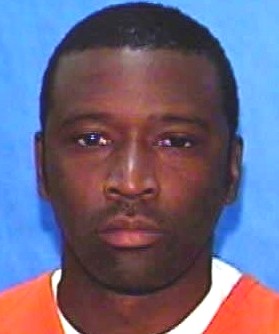 Maurice Lamar Floyd
Murderer · USA · 1998
Maurice Lamar Floyd was born on 11/29/76. He was tried in the Seventh Judicial…
1 victim
Maurice Lamar Floyd
Murderer · USA · 1998
Maurice Lamar Floyd was born on 11/29/76. He was tried in the Seventh Judicial…
1 victim
 Gail Cutro
Murderer · USA · 1993
Gail Cutro (home daycare operator; appellant) Gail Cutro was convicted of killi…
2 victims
Gail Cutro
Murderer · USA · 1993
Gail Cutro (home daycare operator; appellant) Gail Cutro was convicted of killi…
2 victims
 Donald Newbury
Murderer · USA · 2000
Donald Newbury (TDCJ Number 999403) was born on 05/18/1962. He was white, male,…
1 victim
Donald Newbury
Murderer · USA · 2000
Donald Newbury (TDCJ Number 999403) was born on 05/18/1962. He was white, male,…
1 victim
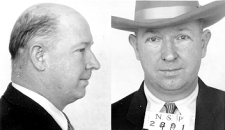 Robert H. White
Murderer · USA · 1928
Robert H. White was born in Texas in 1889 and was 39 at the time of his convict…
1 victim
Robert H. White
Murderer · USA · 1928
Robert H. White was born in Texas in 1889 and was 39 at the time of his convict…
1 victim
- Gender
- male
- Country
- USA
- Location
- El Paso County, Texas, USA
- Date of birth
- October 5, 1962
- Age at first offence
- 35
- Characteristics
- poisoner, mentally ill
- Victim profile
- Gerardo Garcia, 22 (his cellmate)
- Method of murder
- Poisoning (heroin overdose)
- Date(s) of murder
- August 18, 1997
- Years active
- 1997
- Date of arrest
- —
- Status
-
Executed
Executed by lethal injection in Texas on January 29, 2009
Case overview
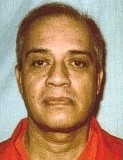
Ricardo Samaniego Ortiz was convicted of capital murder and sentenced to death for killing his cellmate Gerardo Garcia by injecting him with heroin in retaliation for Garcia’s involvement in bank robberies. Ortiz was executed by lethal injection in Texas on January 29, 2009.
Timeline
- 08/17/1997 — Gerardo Garcia died in the El Paso County Jail of a heroin overdose.
- 01/29/2009 — Ortiz was executed by lethal injection in Texas and was pronounced dead at 6:18 p.m. local time (6:18 p.m. CST as reported in one account).
- 01/22/2003 — The Court of Criminal Appeals denied Ortiz’s application for state habeas relief.
- 01/05/90 — Ortiz was released on parole to El Paso County in protest of TDCJ-ID Administration.
- 11/19/92 — Ortiz was returned to TDCJ-ID as a parole violator from El Paso County without new conviction.
- 08/26/96 — Ortiz had a Mandatory Supervision release to El Paso County.
- 09/17/1998 — An El Paso County grand jury indicted Ortiz for capital murder.
- 06/18/1999 — Judgment was entered after a jury found Ortiz guilty of capital murder; following a separate punishment hearing, the court assessed a sentence of death.
- 09/25/2002 — Ortiz’s conviction and sentence were affirmed on direct appeal by the Texas Court of Criminal Appeals.
- 04/28/2003 — The U.S. Supreme Court denied certiorari off direct appeal.
- 02/09/2004 — Ortiz filed a petition for writ of habeas corpus in the federal district court.
- 03/15/2006 — The federal district court denied Ortiz’s habeas petition but granted a limited certificate of appealability.
- 10/10/2007 — The Fifth U.S. Circuit Court of Appeals affirmed Ortiz’s conviction and denied his request for a certificate of appealability.
- 11/06/2007 — The Fifth Circuit Court denied Ortiz’s motion for rehearing.
- 01/28/2008 — Ortiz petitioned the U.S. Supreme Court for certiorari review off federal habeas.
- 05/12/2008 — The U.S. Supreme Court denied certiorni review off federal habeas.
- 10/29/2008 — The trial court set an execution date of January 29, 2009.
- 01/21/2009 — Ortiz filed a motion for stay and motion for appointment of counsel in the 5th U.S. Circuit Court of Appeals.
The offence
On 08/17/1997, while confined in El Paso County, Texas, Ortiz injected his cellmate, Gerardo Garcia, with a fatal dose of heroin. Garcia died of a heroin overdose in his jail cell.
At trial, two witnesses testified that the heroin overdose was involuntary and was forced on Garcia by Ortiz because Ortiz believed that Garcia had revealed Ortiz’s role in some bank robberies. The section of the jail where the killing occurred was known as the “Texas Syndicate tank”, because it was set aside specifically to contain those associated with the Texas Syndicate. Ortiz exercised de facto authority in the tank and acted as the “tank boss.”
Victim
- Gerardo Garcia — Hispanic male, 22 years old; died in the El Paso County Jail of a heroin overdose on 08/17/1997.
Investigation and evidence
Autopsy findings
Dr. Juan Contin, Chief Medical Examiner of El Paso, conducted the autopsy of Garcia. Contin found that Garcia died of “acute narcotism,” caused by morphine (a byproduct of heroin) found in his body. The concentration of morphine in Garcia’s blood was reported as 523 ng/ml, which was described as three times higher than the average, when compared to 76 deaths due to acute narcotism investigated by Contin’s office from January 1995 to September 1997.
Contin found a single fresh needle mark on one of Garcia’s arms but observed no needle track marks. Contin opined that the absence of track marks meant Garcia was not a heroin addict.
A sheriff’s detective found a syringe in the section of the jail in which Garcia was confined.
Witness testimony about the injection
Mario Hernandez testified he was in the same section of the jail as Garcia when Garcia died. Mario testified about the Texas Syndicate tank and described Ortiz as “tank boss,” meaning Ortiz exercised de facto authority over other inmates because of his status with the Texas Syndicate. Mario testified that he overheard Ortiz and Garcia argue about whether Garcia’s capture was the result of being “snitched off” by Garcia’s girlfriend or Ortiz’s wife, and Mario overheard more than ten phone calls Ortiz made while attempting to arrange heroin.
Mario testified that on 08/17/1997 Ortiz called Garcia into a particular cell within the tank—cell number five—and Mario described seeing Ortiz inject heroin into Garcia after Ortiz had received the heroin in a syringe from another inmate. Mario testified that almost immediately Garcia began shaking from what appeared to be “overdosing.” Mario testified that Ortiz brought heroin to Mario and another inmate not involved in the encounter, and they injected themselves. Mario testified that Ortiz told them that Garcia had overdosed, that Garcia was “stingy with the heroin” and did it all, and that they were not to say anything about the incident.
On cross-examination, Mario admitted he did not actually see the heroin exchange hands before it was “cooked.” Defense counsel showed Mario a sketch of the jail floor plan prepared by a detective several days after the murder. Mario testified that the sketch was inaccurate in some respects, including placing Ortiz and Garcia in the wrong locations. On redirect, Mario testified he reiterated he had an unobstructed view into cell number five from his seat at the day-room table, and he testified that a photograph admitted as State’s Exhibit 14 fairly and accurately depicted his view into cell number five and showed an unobstructed view into the cell.
Hector Hernandez testified he was not a member of the Syndicate but was a prospect Ortiz was trying to bring into the organization. Hector testified he was in the Syndicate tank at the time of the incident and that Ortiz ran the tank. Hector testified he heard Ortiz say Garcia had “snitched him out” and was going to have to die. Hector testified that Ortiz initially planned to stab Garcia but later decided to overdose the victim to make it look like a suicide. Hector testified that Ortiz told him some heroin had been obtained through a visit and that Ortiz planned to use three “dimes” of heroin to kill Garcia. Hector testified that three days before Garcia died, Ortiz said he was going to kill Garcia. Hector testified he used heroin the night of the murder because Ortiz told him to, and Ortiz told him to lie about the incident by saying the heroin belonged to Garcia. Hector testified Garcia was not a heroin user.
On cross-examination, Hector testified that Garcia indicated several times that he wanted to commit suicide because of the crimes he committed.
Hector also testified he had a deal with the State to testify but was told to say there was no deal. On redirect, Hector testified that no one told him he had to testify in exchange for not being arrested. Hector testified he would be killed if he were incarcerated and that he testified earlier to having a deal because he was frightened of Ortiz. Hector testified his pending charge was due to an attempt to bring drugs into jail on Ortiz’s orders.
Law enforcement testimony
El Paso Police Department detective Louie Carreon testified that Ortiz offered to give information on a bank robbery in exchange for help regarding a parole revocation warrant.
FBI special agent Thomas Lott testified that an ex-girlfriend of Garcia told police she believed Garcia was involved in some bank robberies, that Garcia and Ortiz had counted money in her living room, and that Garcia had sold a vehicle to Ortiz.
Law enforcement agents picked up Garcia, and he was identified by bank tellers in a photo lineup. While Garcia was being detained at the police station, Ortiz was brought near the area where Garcia was located so Ortiz could observe Garcia with law enforcement agents and be led to believe Garcia was talking to police. Special Agent Lott showed Ortiz a document indicating Ortiz was a witness against Garcia and indicated Garcia would know this; in reality, Garcia never cooperated with authorities.
James Nance, a sergeant with the El Paso County Sheriff’s Department, testified as an expert on prison gangs. Nance testified that Ortiz was the highest ranking member of the Texas Syndicate in El Paso that he was aware of and that given his high rank Ortiz would automatically become a tank boss of any Texas Syndicate section and could order the death of someone in the tank.
Arrest and pretrial matters
A procedural history summary stated:
- 06/18/1999 — Judgment was entered after a jury found Ortiz guilty of capital murder; the punishment hearing resulted in a death sentence.
- Mar. 8, 2002 — Ortiz filed a state writ application in the trial court.
- Sep. 25, 2002 — Ortiz’s conviction and sentence were affirmed on direct appeal by the Texas Court of Criminal Appeals.
Trial
Charge and conviction
Ortiz was convicted in the trial court, El Paso County, of capital murder and sentenced to death. The record described the conviction as involving murder committed in the course of retaliation or attempted retaliation.
Defensive theory and evidentiary disputes at trial
The defense presented testimony about Garcia’s desire to commit suicide. Yvonne Chavira, a former girlfriend of Garcia, testified that Garcia said he would kill himself if he were placed in jail again. During cross-examination, Chavira admitted she had previously told lies to authorities about Garcia.
Doctor John Buscemi read a notation in a jail medical record indicating Garcia felt suicidal at age 15.
Alino Hernandez, a detention division commander for the El Paso Sheriff’s Department, testified about suicide-screening forms: a 1990 screening form contained a “yes” answer about whether Garcia had ever attempted or seriously considered committing suicide; later forms included “no” answers with variations (1993 said “no”; January 1994 had “no” checked but “yes” circled; August 1994 had “no” circled accompanied with a question mark; and the latest form in 1997 had “no” checked).
The defense attempted to impeach Hector’s testimony through Hector’s attorney, Donna Snyder. Snyder testified that Hector told her he had a deal with the State to “have a clean record and have a chance at a new life,” but expressed concern he understood that if asked about it on the stand he should testify that there was no deal. On cross-examination, the prosecutor showed Snyder a document filed in the clerk’s office stating that Hector would not be arrested and jailed for a drug possession case as long as he was a potential witness against Ortiz and that Hector was housed as an out-of-state witness during trial, to be returned to his originating state after the trial where his probation would resume. Snyder testified the document did not seem consistent with what Hector had told her.
Juror exclusion and quotations
During voir dire, the trial court asked:
I am going to ask you some questions about your convictions regarding the death penalty. Be assured that I am not now assuming that you will find the defendant guilty of capital murder or of any other crime in this case. Nevertheless, it is necessary to learn your state of mind about capital punishment in general, to determine whether you have an open mind as regards what might be a just and proper sentence in a capital case if the defendant in that case is found guilty as charged. So I am asking about your state of mind regarding capital murder in general. I am not asking in this next question what you think would be a just penalty in this case or any particular case. I'm not at this time even asking you about your opinion as regards the death penalty in a retaliation capital murder case. And I am most especially not asking what you might think would be a just verdict in this case-in this particular case. I am asking, rather, whether for religious or philosophical or any other reason you believe that the death penalty should never be inflicted in any case, regardless of what the evidence might be. In answering this next question, keep in mind that the circumstances and motives for the commission of crimes, including capital murder, are unlimited. Place a check mark by your answer, yes or no. Do you have conscientious scruples in regard to the infliction of death for a person convicted of capital murder? Yes or no? If you have answered the proceeding [sic] question yes, come up to the bench now. (Emphasis added).
After Deporto responded:
- Deporto said:
I have seen other murder cases and have agreed with the death penalty, but I don't feel I could bring a death penalty for somebody, to put that pressure on me.
The court asked:
Ma'am, it's not a question right now of how you feel about your serving as a juror. Right now, are you opposed to the death penalty in all cases?
Deporto said:
No, sir.
The court asked:
Could you ever, sitting as a juror, no matter-no matter what the evidence showed, vote to inflict the death penalty?
Deporto said:
The court then asked:
Anybody want to ask a further question.
Neither the State nor the defense accepted the invitation to ask additional questions.
Defendant’s requested suicide instruction
The defense requested the jury instruction:
“If you find from the evidence that the deceased, Gerardo Garcia, came to his death by a wound inflicted by himself with his own hands, or you have a reasonable doubt thereof, you will acquit the defendant.”
The trial court refused the requested suicide instruction.
Sentencing
Ortiz received a death sentence after the jury’s answers to special issues under Texas Code of Criminal Procedure, Articles 37.071 §§ 2(b) and 2(e).
A media advisory stated that in 1999, Ortiz was convicted and sentenced to death for the capital murder of his cellmate Geraldo Garcia.
Appeals
Direct appeal
On direct appeal, the Texas Court of Criminal Appeals affirmed the conviction and sentence.
The direct appeal summary included holdings that:
- Evidence was sufficient to support finding that the victim was a prospective witness and that Ortiz harmed him in retaliation for or on account of being a prospective witness.
- Ortiz was not denied effective assistance.
- The trial court did not abuse its discretion by granting the State’s challenge for cause concerning a prospective juror.
- Ortiz was not entitled to a jury instruction on suicide as defense to murder.
- The probative value of evidence that an incarcerated defendant attempted to have heroin smuggled into a jail facility outweighed prejudicial value.
Federal habeas
A federal habeas procedural history included:
- 10/10/2007 — the Fifth Circuit affirmed and denied a request for a certificate of appealability.
- 11/06/2007 — denial of Ortiz’s motion for rehearing.
- 05/12/2008 — the U.S. Supreme Court denied certiorari review off federal habeas.
A Fifth Circuit habeas opinion stated that it affirmed denial of habeas relief and denied a certificate of appealability application on additional issues.
The habeas appeal summary included:
- Ex Post Facto Clause was not violated by the trial court instructing the jury using the amended version of the Texas retaliation statute.
- Affirmance of the trial court’s exclusion of a veniremember based on opposition to the death penalty did not give rise to a claim for federal habeas relief.
- The Texas death penalty scheme did not violate the Sixth Amendment by failing to require proof beyond reasonable doubt of absence of mitigating circumstances.
Outcome
Ortiz was executed in Texas by lethal injection on January 29, 2009.
Final statement and pronouncement
Ortiz’s last statement was:
“I love my family — thank you for all of your support,” Ortiz said at approximately 6:09 p.m. “Stay strong. I am at peace.”
Another account quoted Ortiz immediately before execution:
“Stay strong,” he said, although he had no friends or relatives in the death chamber.
“I'm at peace. I love you and my kids. See you.”
He was pronounced dead at 6:18 p.m. in one account, and at 6:18 p.m. CST in another account. One report stated he had made a very brief last statement at approximately 6:09 p.m.
Prior criminal history and incarceration
Ortiz had prior prison record entries:
- TDCJ-ID #335838 — 8 year sentence, El Paso County, 1 count of Robbery.
- TDCJ-ID #363689 — 15 year sentence, El Paso County, 1 count of Burglary of a Vehicle, 2 counts of Aggravated Robbery.
- 09/20/88 — Brazoria County new conviction of 5 years cumulative for 1 count of Deadly Weapon in Penal Institution.
- 01/05/90 — released on Parole to El Paso County in protest of TDCJ-ID Administration.
- 11/19/92 — returned to TDCJ-ID as Parole Violator from El Paso County without new conviction.
- 08/26/96 — Mandatory Supervision release to El Paso County.
Other details
Prison gang membership and role
Ortiz was described as a high-ranking prison gang member in the Texas Syndicate and as the “tank boss” exercising de facto authority over other inmates in the “Texas Syndicate tank.”
Conditions regarding last meal and witnesses
One account stated Ortiz did not request a last meal and had not added any friends or family to his list of witnesses to his execution. Family members of Garcia were also reported as declining to witness the punishment, and there were no witnesses in the room reserved for friends and family in one account.
Autopsy examiner and forensic terminology
Dr. Juan Contin conducted the autopsy and identified “acute narcotism” caused by morphine found in Garcia’s body. Contin found a single fresh needle mark but no needle track marks and opined Garcia was not a habitual heroin user.
Procedural history details mentioned
A procedural history section included additional dates beyond the appellate milestones:
- **Mar.
- Apr. 28, 2003 — the U.S.
- Jan. 28, 2008 — Ortiz petitioned the U.S.
- Oct. 29, 2008 — execution date set for January 29, 2009.
- Jan. 21, 2009 — Ortiz filed a motion for stay and a motion for appointment of counsel in the 5th U.S. Circuit Court of Appeals.
Identity and demographic information for Ortiz (as stated)
- Name: Ricardo Samaniego Ortiz
- TDCJ Number: 999320
- Date of Birth: 10/05/1962
- Date Received: 06/24/1999; Age (when Received): 36
- Date of Offense: 08/18/1997; Age (at the Offense): 34
- County: El Paso County; Race: Hispanic; Gender: Male
- Hair Color: Brown; Height: 6' 2"; Weight: 209; Eye Color: Brown
- Native County: El Paso; Native State: Texas
- Prior Occupation: Laborer
- A prior prison record section also referenced an inmate name or alias: “Serrucho” was reported in one account as a known name.
Medical examiner name included in trial testimony
Doctor John Buscemi read a notation in a jail medical record about Garcia feeling suicidal at age 15.
Transcript excerpts of legal proceedings (verbatim)
The habeas discussion included instructions given during voir dire on death penalty questions:
There are certain rules of law that the Court-that means the Judge-instructs every juror to obey in every criminal case. To be qualified to serve as a juror, a person must be able to obey those instructions. Now, a person may not be able to obey the instruction because he has such a deep-seated disagreement with the law or for any other reason. [But] the jury has to be able to accept the law and say, All right, I don't like it, but I can rule according to it, judge the case according to it. Or you can say, I don't like it so much there's no way I can follow that law.
Citations and case identifiers provided
The record included:
- Ortiz v. State, 93 S.W.3d 79 (Tex.Crim.App. 2002) (Direct Appeal).
- Ortiz v. Quarterman, 504 F.3d 492 (5th Cir. 2007) (Habeas).
- The execution scheduling was tied to a Media Advisory dated Thursday, January 22, 2009, for an execution after 6 p.m. on January 29, 2009.
Spotted an error, or have more information about this case?