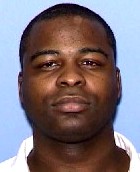
Carroll Joe Parr
Murderer Russell Ellwood
Murderer · USA · 1991
Russell Ellwood was a former taxi driver. Authorities suspected him of killing…
20 victims
Russell Ellwood
Murderer · USA · 1991
Russell Ellwood was a former taxi driver. Authorities suspected him of killing…
20 victims
 Robert Martines Perez
Murderer · USA · 1994
Name: Robert Martines Perez · Other name used in proceedings: Robert Martinez P…
15 victims
Robert Martines Perez
Murderer · USA · 1994
Name: Robert Martines Perez · Other name used in proceedings: Robert Martinez P…
15 victims
 Billy Frank Vickers
Murderer · USA · 1993
Billy Frank Vickers Vickers was executed by lethal injection in Texas on Januar…
14 victims
Billy Frank Vickers
Murderer · USA · 1993
Billy Frank Vickers Vickers was executed by lethal injection in Texas on Januar…
14 victims
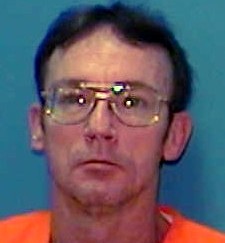 Norman Mearle Grim
Murderer · USA · 1998
Norman Mearle Grim was indicted in First Judicial Circuit, Santa Rosa County, u…
1 victim
Norman Mearle Grim
Murderer · USA · 1998
Norman Mearle Grim was indicted in First Judicial Circuit, Santa Rosa County, u…
1 victim
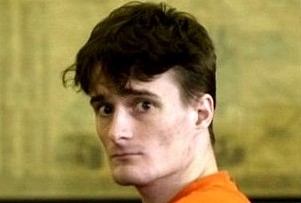 Andrew Mickel
Murderer · USA · 2002
Andrew “Andy” Mickel was convicted of one count of first-degree murder in April…
1 victim
Andrew Mickel
Murderer · USA · 2002
Andrew “Andy” Mickel was convicted of one count of first-degree murder in April…
1 victim
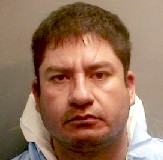 Jaime Cole
Murderer · USA · 2010
Jaime Piero Cole was a Hispanic male who was 41 when received. He was recorded…
2 victims
Jaime Cole
Murderer · USA · 2010
Jaime Piero Cole was a Hispanic male who was 41 when received. He was recorded…
2 victims
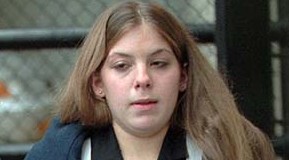 Amy Grossberg
Homicide · USA · 1996
Amy Grossberg (born 1978) dated Brian C. Peterson while both were students at R…
1 victim
Amy Grossberg
Homicide · USA · 1996
Amy Grossberg (born 1978) dated Brian C. Peterson while both were students at R…
1 victim
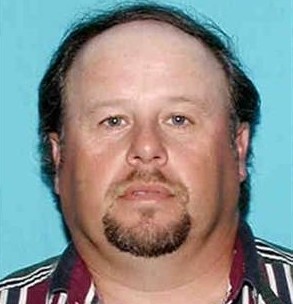 Ronald Dominique
Serial killer · USA · 1997
Ronald Joseph Dominique (born 1964) was an American serial killer from the Bayo…
23 victims
Ronald Dominique
Serial killer · USA · 1997
Ronald Joseph Dominique (born 1964) was an American serial killer from the Bayo…
23 victims
 Howard Arthur Allen
Serial killer · USA · 1974
Howard Arthur Allen was sentenced to death on June 11, 1988. August 1974 — Alle…
3 victims
Howard Arthur Allen
Serial killer · USA · 1974
Howard Arthur Allen was sentenced to death on June 11, 1988. August 1974 — Alle…
3 victims
- Gender
- male
- Country
- USA
- Location
- McLennan County, Texas, USA
- Date of birth
- October 18, 1977
- Age at first offence
- 24
- Characteristics
- drug dealer, robbery, torture
- Victim profile
- Ronnie Zarazua / Joel Dominguez
- Method of murder
- Shooting
- Date(s) of murder
- December 9, 2001 / January 11, 2003
- Years active
- 2001–2003
- Date of arrest
- —
- Status
-
Executed
Executed by lethal injection in Texas on May 7, 2013
Case overview
Carroll Joe Parr was convicted of capital murder and sentenced to death for the killing of Joel Dominguez in the course of committing or attempting to commit the offense of robbery. The execution occurred in Texas on May 7, 2013 by lethal injection.
Timeline
- November 26, 1996 — Parr was convicted of three counts of delivery of cocaine and was placed on probation.
- January 8, 1998 — Parr violated the terms of probation and was sentenced to two years in state jail.
- December 29, 2000 — Parr was convicted of evading arrest.
- December 13, 2001 — Parr was convicted of possession of marijuana.
- December 9, 2001 — Evidence was presented regarding Parr’s involvement in an unadjudicated murder of Ronnie Zarazua.
- January 11, 2003 — Parr arranged to purchase marijuana from Joel Dominguez outside the B&G Convenience store in McLennan County and later shot Dominguez and his friend Mario Chavez.
- 2002 — There was evidence that Parr committed a shooting at a residence (described as violent unadjudicated offenses).
- 2003 — There was evidence that Parr committed an assault (described as violent unadjudicated offenses).
- May 21, 2004 — A McLennan County jury convicted Parr of capital murder; the jury recommended death; the trial court sentenced Parr to death.
- June 7, 2006 — The Texas Court of Criminal Appeals affirmed Parr’s conviction and sentence.
- October 11, 2006 — The Court of Criminal Appeals denied Parr’s application for a state writ of habeas corpus.
- March 28, 2011 — Parr’s petition for a federal writ of habeas corpus was denied.
- April 30, 2012 — The U.S. Court of Appeals for the Fifth Circuit affirmed the federal district court’s denial of relief.
- January 7, 2013 — The U.S. Supreme Court denied a petition for writ of certiorari.
- February 4, 2013 — The 54th Judicial District Court of McLennan County scheduled Parr’s execution to take place on May 7, 2013.
- May 7, 2013 — Parr was executed by lethal injection in Texas; he was pronounced dead at 6:32 p.m.
Background
Carroll Joe Parr was identified as male, Black, with hair color described as black and eye color described as brown. His height was listed as 5' 07" and weight as 178. His education was listed as 3 years and his occupation as laborer. Parr was born 10/18/1977.
Parr had a prior prison record showing an earlier 2 year state jail sentence for possession of a controlled substance under a listed identifier (#810942).
The Texas Attorney General media advisory stated that Parr was scheduled for execution pursuant to a court order by the 54th Judicial District Court of McLennan County.
The offence
On January 11, 2003, Parr arranged to purchase marijuana from Joel Dominguez outside the B&G Convenience store in McLennan County. After the drug deal was completed, Parr returned to the store with his friend, Earl Whiteside, to retrieve his money.
Parr and Whiteside were armed when they arrived at the store. They forced Dominguez and his friend Mario Chavez to walk to a fenced area beside the store. Parr pistol-whipped Dominguez and demanded that Dominguez return all his money. After Dominguez complied, Parr told Whiteside to “[s]moke ’em.”
Whiteside shot Chavez in the hand. Parr then shot Dominguez in the head, killing him.
Parr later testified that he had planned the drug deal but stated that he was not involved in the robbery and that his friend Damion Montgomery did the shooting. Both Chavez and Whiteside identified Parr as the person who shot Dominguez. Four people testified that Parr confessed to them that he was the shooter: Parr’s girlfriend Dawanna Harrison, Parr’s friend Ricky Garcia, Parr’s cellmate Kenneth Reneau, and Montgomery.
In addition to the evidence surrounding the murder of Dominguez, the State presented evidence at punishment regarding an unadjudicated murder of Ronnie Zarazua and a drive-by shooting, both allegedly committed by Parr.
The federal appellate habeas background described the robbery and shooting as a robbery and shooting of Joel Dominguez after the marijuana purchase at the B&G Convenience store in Waco, Texas.
Investigation
The case included a contention by Parr that a surveillance video showing him at the convenience store was doctored by prosecutors, with Parr stating: “They chopped the tape,” in reference to the video.
Arrest
No specific arrest details were included in the provided material.
Trial
Charges and jury finding
A McLennan County grand jury indicted Parr for the offense of capital murder for intentionally and knowingly causing the death of Dominguez in the course of committing or attempting to commit the offense of robbery.
On May 21, 2004, a McLennan County jury found Parr guilty of capital murder for the killing of Joel Dominguez in the course of committing or attempting to commit the offense of robbery. The trial court sentenced Parr to death.
Co-defendant
Earl Whiteside was a co-defendant.
The material stated that Whiteside was convicted of aggravated robbery and sentenced to 15 years in prison.
Voir dire issues and juror disputes
Parr raised thirteen points of error on direct appeal. The Texas Court of Criminal Appeals addressed, among other issues, a dismissal for cause of a veniremember identified as Roderick Dylan Garrett.
The trial court found that Garrett was unable to follow the law and fulfill his duty as a juror because of his views on the death penalty. The appellate opinion included a verbatim exchange during questioning:
Q. And so if you were selected as a juror, the Judge would give you an oath that says that you must follow the law. A. Uh-huh. Q. Okay. And the law would require that you base your verdict on the evidence. But your personal convictions, as I understand them, would require you to say, I don't care what the evidence says, I'm not going to issue a death penalty. A. (Nodded head.) Q. You're shaking your head yes that you agree with that? A. Uh-huh. Q. Okay. So you see where there is a conflict between the law and your personal convictions which [are] most precious to you? Your personal convictions or the law? A. On my own, I mean, because we have laws, but then, you know, I believe in - - Q. You've got to live with yourself, right? A. Yes, sir. Q. So your personal convictions are more important to you than the law? A. We've got to have the law. Q. Well, which is it? A. I don't know. Q. Are you going to follow your belief - - A. I believe in the law. I believe in the law. Q. - - that you can't give the death penalty? A. I believe in the law but I'm still not - - I couldn't do one for the death penalty. That's just not - - I was brought up better than that.
The appellate opinion stated that Garrett continued to vacillate, and it described multiple responses, including that he eventually answered in response to a trial court question that he could answer a special issue truthfully even though it would lead to a death sentence. It also described later contradiction that he could never recommend the death penalty.
The Texas Court of Criminal Appeals held that the trial court did not abuse its discretion in granting the State’s challenge for cause.
Punishment phase and future dangerousness
The Texas Court of Criminal Appeals addressed Parr’s challenge to the sufficiency of the evidence supporting the jury’s finding that he would be a continuing threat to society. The court held that the evidence was legally sufficient to support the future dangerousness finding.
The appellate opinion summarized the offense facts and described punishment evidence, including:
- Parr’s convictions for three counts of delivery of cocaine on November 26, 1996, with probation.
- Parr’s probation violation on January 8, 1998 and sentence to two years in state jail.
- Convictions for evading arrest on December 29, 2000 and possession of marijuana on December 13, 2001.
- Evidence of violent unadjudicated offenses including a shooting at a residence in 2002 and an assault in 2003.
- Evidence regarding involvement in the unadjudicated murder of Ronnie Zarazua on December 9, 2001.
- Testimony described as indicating Parr lacked remorse and expressed a willingness to engage in future violent acts.
Mitigating evidence and jury instructions
Parr raised issues related to mitigation and constitutionality of instructions, including challenges to definitions used in the future dangerousness special issue and other aspects of Texas’s death-penalty statute. The Texas Court of Criminal Appeals rejected these claims and affirmed the trial court’s judgment.
Extraneous offences
Parr challenged the State’s failure to prove an extraneous offense beyond a reasonable doubt at punishment and argued about an alleged drive-by shooting at the residence of ex-girlfriend LaShala Hardin in 2002. The Texas Court of Criminal Appeals rejected the claim.
Sentencing
Parr’s jury convicted him of capital murder on May 21, 2004 and recommended death. The trial judge sentenced Parr to death.
The Texas Court of Criminal Appeals described that pursuant to jury answers to special issues under Texas law, the trial judge sentenced Parr to death.
Appeals
Direct appeal
On June 7, 2006, the Texas Court of Criminal Appeals affirmed Parr’s conviction and sentence. The opinion was issued by Meyers, J., with Keller, P.J., and Price, Womack, Keasler, Hervey, Holcomb, and Cochran, JJ. joined, and Johnson, J. concurring. The opinion stated it was delivered June 7, 2006 and “Do Not Publish.”
State habeas
Parr filed an application for a state writ of habeas corpus on Nov. 22, 2005. On Oct. 11, 2006, the Court of Criminal Appeals denied the application.
Federal habeas and certificate of appealability proceedings
A March 28, 2011 denial of Parr’s petition for a federal writ of habeas corpus was described. On April 30, 2012, the U.S.
The Federal Habeas section also described an application for a certificate of appealability (“COA”) and stated that the application for a COA was denied. The opinion described the court’s analysis under AEDPA and listed COA arguments (ineffective assistance of counsel related to jury selection, challenge for cause dismissal of Garret, issues with punishment phase jury instructions including mitigation special issue, alleged vagueness of terms, the 12–10 rule, and extraneous unadjudicated offenses). The court denied the COA.
U.S. Supreme Court
On Jan. 7, 2013, the U.S.
Outcome
Parr was executed by lethal injection in Texas on May 7, 2013. He was pronounced dead at 6:32 p.m. CDT, 19 minutes after the lethal dose began.
Aftermath
Final statement and last words
In the minutes before execution, Parr made statements including addressing Dominguez’s wife. The following statements were included verbatim:
“First of all, Shonna, talk to your brother. He'll tell you the truth about what happened to your husband. I told Bubba to tell you what happened. Now my statement to the world. I am in the midst of the truth. I am good. I am straight, don't trip. To all my partners, tell them I said, like Arnold Schwarzenegger, 'I'll be back.' I'm on my way back. ... These eyes sill close, but they will be opened again. My understanding of God is, Jesus has got me through.”
Parr expressed love to his family and thanked his spiritual advisor, then told the warden he was ready.
Prison conditions regarding last meal
The provided material stated that Texas no longer offers a special “last meal” to condemned inmates and that the inmate is offered the same meal served to the rest of the unit.
Scheduling and execution media advisory
A Texas Attorney General media advisory stated that Parr was scheduled for execution after 6 p.m. on May 7, 2013 pursuant to a court order by the 54th Judicial District Court of McLennan County.

Spotted an error, or have more information about this case?