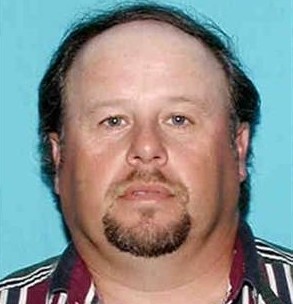
Ronald Dominique
Serial killer Glen Edward Rogers
Serial killer · USA · 1993
Glen Edward Rogers was a spree killer whose cross-country rampage in 1994-95 le…
70 victims
Glen Edward Rogers
Serial killer · USA · 1993
Glen Edward Rogers was a spree killer whose cross-country rampage in 1994-95 le…
70 victims
 Efren Saldivar
Serial killer · USA · 1989
Efren Saldivar (born 30 September 1969) was an American serial killer who murde…
50 victims
Efren Saldivar
Serial killer · USA · 1989
Efren Saldivar (born 30 September 1969) was an American serial killer who murde…
50 victims
 Richard Angelo
Serial killer · USA · 1987
Richard Angelo was 26 years old when he went to work at Good Samaritan Hospital…
25 victims
Richard Angelo
Serial killer · USA · 1987
Richard Angelo was 26 years old when he went to work at Good Samaritan Hospital…
25 victims
 Jeremy Jones
Serial killer · USA · 1992
Name: Jeremy Jones · Aliases/identities mentioned: John Paul Chapman · Age (as…
21 victims
Jeremy Jones
Serial killer · USA · 1992
Name: Jeremy Jones · Aliases/identities mentioned: John Paul Chapman · Age (as…
21 victims
 Desmond Jennings
Serial killer · USA · 1993
Desmond Jennings declined to make a last statement. Texas Attorney General John…
20 victims
Desmond Jennings
Serial killer · USA · 1993
Desmond Jennings declined to make a last statement. Texas Attorney General John…
20 victims
 John Eric Armstrong
Serial killer · USA · 1992
John Eric Armstrong was a former USS Nimitz sailor of Dearborn Heights, Michiga…
18 victims
John Eric Armstrong
Serial killer · USA · 1992
John Eric Armstrong was a former USS Nimitz sailor of Dearborn Heights, Michiga…
18 victims
 Elicia Hughes
Murderer? · USA · 2004
Elicia Hughes was a 3rd grade teacher. She married Brian Hughes in 1999. Five y…
1 victim
Elicia Hughes
Murderer? · USA · 2004
Elicia Hughes was a 3rd grade teacher. She married Brian Hughes in 1999. Five y…
1 victim
 Joan & Elizabeth Shannon
Murderers · USA · 2002
July 23, 2002 — Elizabeth Shannon shot and killed her father, Army Maj. David S…
1 victim
Joan & Elizabeth Shannon
Murderers · USA · 2002
July 23, 2002 — Elizabeth Shannon shot and killed her father, Army Maj. David S…
1 victim
 Lee Ho-seong
Mass murderer · South Korea · 2008
Lee Ho-seong (July 17, 1967 – March 10, 2008) was a South Korean baseball playe…
4 victims
Lee Ho-seong
Mass murderer · South Korea · 2008
Lee Ho-seong (July 17, 1967 – March 10, 2008) was a South Korean baseball playe…
4 victims
 James Dwight Canaday
Serial killer · USA · 1968
James Dwight Canaday was a prisoner serving two life sentences for murder and l…
3 victims
James Dwight Canaday
Serial killer · USA · 1968
James Dwight Canaday was a prisoner serving two life sentences for murder and l…
3 victims
 Jill Rockcastle
Murderer · USA · 2007
Jill Rockcastle was sentenced to 10 years to life in prison on November 19, 200…
1 victim
Jill Rockcastle
Murderer · USA · 2007
Jill Rockcastle was sentenced to 10 years to life in prison on November 19, 200…
1 victim
 Craig Zebroski
Murderer · USA · 1996
Craig Zebroski was a White male born on 09/06/1977. He was sentenced to death o…
1 victim
Craig Zebroski
Murderer · USA · 1996
Craig Zebroski was a White male born on 09/06/1977. He was sentenced to death o…
1 victim
- Gender
- male
- Country
- USA
- Location
- Louisiana, USA
- Date of birth
- January 9, 1964
- Age at first offence
- 33
- Characteristics
- rape, serial rapist, convicted rapist, torture
- Victim profile
- Kenneth Randolph / Michael Barnett / Leon Lirette / August Watkins / Kurt Cunningham / Alonzo Hogan / Chris Deville / Wayne Smith / Nicholas Pellegrin ( men aged between 16 to 46 years
- Method of murder
- Strangulation - Suffocation
- Date(s) of murder
- 1997 - 2006
- Years active
- 1997–2006
- Date of arrest
- December 1, 2006
- Status
-
Life imprisonment
Sentenced to eight life sentences in prison on September 23, 2008; pleaded guilty to eight murders
Case record: Ronald Dominique
Background
Ronald Joseph Dominique (born 1964) was an American serial killer from the Bayou Blue area of Houma, in Terrebonne Parish in southeastern Louisiana. He lived about 95km from New Orleans in Bayou Blue. He spent much of his youth in the small bayou community of Thibodaux, Louisiana. Thibodaux sits between New Orleans and Baton Rouge.
He attended Thibodaux High School, where he was in the glee club and sang in the chorus. Classmates said he was ridiculed about being homosexual during his teen years, but at the time he never admitted he was gay. He reportedly lived in two worlds and cross-dressed. He did bad impersonations of Patti LaBelle at the local gay club. People who knew him said he was not particularly well liked and described him as a loner and an outcast. A former roommate said: “He didn't have many friends. He didn't keep friends.”
Through most of his adulthood, Dominique struggled financially and would end up living with his mother or other relatives. In the weeks before his arrest, he was living with his sister in a singlewide trailer. In the weeks before his arrest, he was suffering from declining health and had been hospitalized for a severe heart condition, forced to use a cane to walk.
He joined the Lions Club just months before his arrest and spent Sunday afternoons calling out Bingo numbers to senior citizens. The membership director said he was well liked by everyone he had met through the Lions Club.
He checked into a homeless center in Houma two days before his arrest, apparently because he became aware of police officers’ observation of him. Investigators put Dominique's face in a line-up, and a witness picked him out. After arrest, Dominique was receiving medical treatment in jail, and he had presented himself as resting on the brink of death. Sheriff Jerry Larpenter said the claim was an act designed to garner sympathy. Dominique had “minor” heart trouble for which he had already scheduled a doctor’s appointment in March.
A Terrebonne Parish judge set bail at $1 million for each case in which he had been charged in that parish, for a total of $8 million. Charges in other parishes were pending.
The offence
Dominique confessed to the rape and murder of at least 23 men over a ten-year period beginning in 1997. He confessed to raping and killing his male victims over a ten-year period. He was suspected of killing 23 men.
He targeted men he thought would be willing to have sex for money. He frequented area gay bars and targeted men he thought would be willing to have sex for money. Investigators said most victims were homeless men and that many led high-risk lifestyles that included drug use and prostitution.
Investigators said the victims had been asphyxiated or strangled; some were raped. Most victims were found in various places across Terrebonne Parish, Lafourche Parish, Iberville Parish, and suburban New Orleans. Bodies were found in cane fields and near remote bayous. Police also described bodies dumped across a six-parish area, including roadside ditches. The task force suspected serial killings because of similarities in 23 of the murders.
Dominique’s tactics described by investigators included approaching men he thought would be willing to engage in sexual activity in exchange for money. He picked up men off the side of the road or in other places, propositioning them himself or luring them into his car with the promise of drugs or sex with a fictitious woman. Dominique was not married but allegedly told some potential victims he had a wife who was “shy” and wanted her partners to be tied. Investigators said he asked for permission to tie victims up; if victims refused, he let them go, but if they agreed, they were raped and murdered.
One incident described for investigators involved a man who refused to let Dominique tie him up; that man reported the incident, which led investigators to where Dominique lived.
The most recent victim named was Christoper Sutterfield, who was found dead in Iberville Parish about two months earlier.
Timeline
- July 14, 1997 — The first body in the string of homicides was found.
- 1998 — The victim bodies identified included Gary Pierre, and Dominique was charged in connection with a Jefferson Parish murder.
- 1999 — Manuel Reed’s body was found in Kenner in 1999; Dominique was charged with the first-degree murder and aggravated rape of 19-year-old Manuel Reed.
- October 15, 2006 — The last body was found.
- March 2005 — A multi-jurisdictional task force was formed to investigate the murders.
- Dec. 1, 2006 — Police arrested Dominique; authorities said he confessed to raping about two dozen young men and strangling or suffocating them.
- December 4, 2006 — Police announced they had captured a man suspected of committing as many as 23 murders.
- December 5, 2006 — Law enforcement authorities announced Dominique had confessed to 23 murders.
- December 6, 2006 — A Terrebonne Parish courtroom set bond at $8 million; a judge set a bond of $1 million for each of the eight murder and rape cases.
- December 7, 2006 — A confession from Dominique was described as leaving the LGBT community stunned and concerned about public reaction.
- September 23, 2008 — Dominique was sentenced to eight life sentences in prison after pleading guilty to eight murders.
Investigation
A task force made up of nine south Louisiana parish sheriff’s offices, the Louisiana State Police, and the FBI was formed in March 2005 to investigate the murders. The Task Force aimed at catching the murderer dubbed the “Bayou Serial Killer.” The state Attorney General Charles Foti led the task force.
Investigators knew the 23 victims were mostly homeless men and that many led high-risk lifestyles including drug use and prostitution. Investigators said causes of death included strangulation, suffocation, or other asphyxiation death. Some victims showed subtle indications of bondage. Some were found nude, and some had signs of having been beaten up.
A tip led to the investigation: one parolee mentioned to a state probation and parole agent that four or five years earlier a man living in a camper on Bayou Blue Road had promised him sex with the man’s wife if he would allow the man to tie him up first. The potential victim bolted from the camper after becoming nervous. After the parolee came forward, investigators identified the man who lived in the camper as Ronald Joseph Dominique. Investigators also discovered that in 1996 Dominique had been arrested in Thibodaux for raping another man. After three months in jail, the case was dismissed because the victim disappeared.
Investigators said Dominique confessed to at least 11 killings shortly after his arrest, and that he was held in Terrebonne Parish jail awaiting a bond hearing.
Sheriff Jerry Larpenter described the “turning point” after Dominique spent time in jail: “That was the turning point,” Larpenter said. “He didn't want to leave any more live victims. A dead man can't talk.”
Louisiana Attorney General Charles Foti said: “This was a team effort. Everybody worked together. We have captured a person who has been responsible for the deaths of 23 people in this community.”
The Jefferson Parish Sheriff's Office Crime Lab and the FBI Crime Lab later matched Dominique’s DNA.
A description of another case driving the investigation was also provided: Dominique was investigated following a police report by a man who refused to let Dominique tie him up. Investigators found the trailer location described by that man.
Police identified Christopher Sutter-field as the victim found dead in Iberville Parish about two months earlier.
Arrest
Police arrested Dominique in December 2006. He had been staying at the Bunkhouse homeless shelter. Before that, he spent the last several years living in a camper trailer next door to his mother at two locations in Terrebonne Parish.
Late Friday afternoon members of a special task force arrested a heavyset man wearing a ball cap and a hooded sweatshirt at a homeless shelter.
Investigators said DNA swab evidence matched Dominique to two Jefferson Parish bodies. A DNA sample Dominique allowed them to take matched the two cases for which he was originally charged.
During two days of police questioning, Dominique admitted to killing all 23 victims according to Sheriff Jerry Larpenter.
Charges and trial
Dominique was charged with multiple cases of aggravated rape and first-degree murder, including the murder and aggravated rape of 19-year-old Manuel Reed and the second-degree murder of 27-year-old Oliver Lebanks. He was also charged with multiple cases of aggravated rape and first-degree murder in other parishes.
A document released by the Terrebonne Sheriff's Office said police booked Dominique with eight additional counts of first-degree murder and aggravated rape for the strangulation slayings of nine Terrebonne Parish men whose bodies were found in Terrebonne, Lafourche, Assumption, and St. Charles parishes between October 2002 and November 2005.
Dominique had pleaded guilty to first-degree murder in a deal to avoid the death penalty. He pleaded guilty to eight murders.
Sentencing
On September 23, 2008, Dominique was sentenced to eight life sentences in prison after confessing to raping and killing his male victims over a ten-year period.
Assistant District Attorney Mark Rhodes said before sentencing: “The lives of eight young men were taken from these families by the actions of the defendant,” Assistant District Attorney Mark Rhodes said before sentencing. “He knew nothing about them or their families and he callously killed the victims and left a lifetime of pain as their legacy.”
Dominique bowed his head as a judge read out the names of eight young men he confessed to raping and killing over a 10-year period in Louisiana.
Richard Goorley, Dominique’s lawyer, said the point at sentencing was whether his client would ever stand trial in those cases: “Hopefully, they will realise that when someone gets sentenced to eight consecutive life sentences, there's no chance of them ever getting out and any further pursuit of any other charges will be a complete waste of taxpayers' money,” Mr. Goorley said.
Chris Cunningham said: “I hope he burns in hell, pretty much. I hope the man burns in hell. I'm sure he will.”
Appeals
No appeals were described in the provided material.
Outcome
Dominique received eight consecutive life sentences after pleading guilty to eight murders in a decade-long spree.
Aftermath
Dominique was incarcerated at the Louisiana State Penitentiary in Angola.
The victims’ bodies had been found in cane fields and near remote bayous, and families were in court for sentencing as described by television station WWLTV.
Cynthia Barabin, sister of victim Chris Deville, said: “The nature of what he did, and how he left my brother’s body in a cane field for rodents to eat at him,” Cynthia Barabin, sister of victim Chris Deville, said. “When we found him he was nothing. Nothing … We had to bury bones.”
Sheriff Jerry Larpenter said Dominique told investigators he made the decision to kill his victims after raping them because he spent three months in jail in 1996 after he was accused of rape by a man in Thibodaux. The victim disappeared while Dominique was in jail, and prosecutors dropped the charges because he was not available to testify in the trial.
A courtroom bond hearing and further cases were described as pending for other parishes.
Other details
Dominique’s criminal history included forcible rape, disturbing the peace and telephone harassment.
- Aug. 25, 1996 — Dominique was arrested on forcible rape charges and booked on a $100,000 bond. A partially dressed young man escaped from the window of Dominique's home in Thibodaux, screaming that he had tried to kill him. The victim could not be found to testify, and in November 1996 the judge continued the case indefinitely.
- June 12, 1985 — Dominique was arrested and charged with telephone harassment. He pleaded guilty, paid a $74 fine and court costs.
- May 15, 1994 — Arrested and charged with driving while intoxicated and speeding.
- May 19, 2000 — He received a summons to appear in court on disturbing the peace charges. Because it was a misdemeanor, he was able to plead guilty and pay a fine to avoid appearing in court.
- Feb. 10, 2002 — Arrested in Terrebonne Parish after he allegedly slapped a woman during a Mardi Gras parade. Dominique accused a woman of hitting a baby stroller in a parking lot. The woman apologized, but Dominique continued to verbally assault her and then slapped her across the face. He entered a parish offender's program instead of standing trial, and reports said he met all his conditions in the program in October 2002.
Investigators and police described him as selecting victims who might not be missed and targeting men who were alone and walking or riding a bicycle, and police said he preyed on men who were down on their luck at night, usually between 10 p.m. and 2:00 a.m.
Police also said “No drugs were involved” and that “Every one of them was voluntarily tied up,” according to Sheriff Larpenter.
Sheriff Jerry Larpenter said: “Every one of them was voluntarily tied up,” Sheriff Larpenter said. “Once he got you tied up, you were his.”
Sheriff Jerry Larpenter said: “Sex is the motive,” Sheriff Larpenter said. “Sex is behind all the killings.”
Sheriff Jerry Larpenter said: “He's offering them money,” Larpenter said. “He's offering them money either to come have sex with him, or he's offering them money to come have sex with a female.”
A gay bar owner described Dominique as quiet and said he did not cause problems: “He was quiet. He never really spoke to too many people. He never caused no problems,” said Ronnie Hebert.
Randy Chesnut said: “It's eerie,” said Randy Chesnut, who was a former Lafayette Police Department detective. “It's hard to believe. This is the sort of thing you think of happening in New Orleans or Dallas, but not here.”
Randy Chesnut said he recognized one of the victims: “It's hard to believe. This is the sort of thing you think of happening in New Orleans or Dallas, but not here.” (as stated in the provided material)
Wayne Beasley said: “It gives you the sensation of ewww,” said Beasley. “I guess that's the best way to describe it. Like, I can't believe I was shooting pool next to someone who turned out to be a serial killer.”
Wayne Beasley said: “It's a black eye for the gay community. I've talked to several people who have met him and know him. That pretty much sums it up a black eye.”
Wayne Beasley said: “From what I gather, he was kind of an outcast. He wasn't popular in the gay community.”
Dominique was also described as being called “Miss Moped” because he won a vehicle in a contest at a McDonald’s and used it for transportation, as described by Chesnut.
Members of victims’ families attended the sentencing, including television station WWLTV reporting that family members were present.
Spotted an error, or have more information about this case?