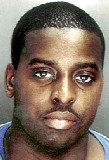
Russell Peeler
Murderer Russell Ellwood
Murderer · USA · 1991
Russell Ellwood was a former taxi driver. Authorities suspected him of killing…
20 victims
Russell Ellwood
Murderer · USA · 1991
Russell Ellwood was a former taxi driver. Authorities suspected him of killing…
20 victims
 Robert Martines Perez
Murderer · USA · 1994
Name: Robert Martines Perez · Other name used in proceedings: Robert Martinez P…
15 victims
Robert Martines Perez
Murderer · USA · 1994
Name: Robert Martines Perez · Other name used in proceedings: Robert Martinez P…
15 victims
 Billy Frank Vickers
Murderer · USA · 1993
Billy Frank Vickers Vickers was executed by lethal injection in Texas on Januar…
14 victims
Billy Frank Vickers
Murderer · USA · 1993
Billy Frank Vickers Vickers was executed by lethal injection in Texas on Januar…
14 victims
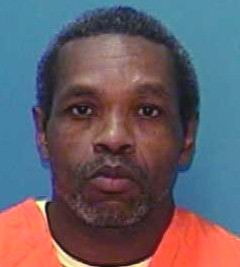 Connie Ray Israel
Murderer · USA · 1991
Defendant: Connie Ray Israel Date of birth: 04/09/57 Age at time of offense: Es…
1 victim
Connie Ray Israel
Murderer · USA · 1991
Defendant: Connie Ray Israel Date of birth: 04/09/57 Age at time of offense: Es…
1 victim
 Bruce Williams
Homicide · USA · 1999
Bruce Williams (TDCJ Number 999338) was born on 12/16/1981. He was male, from D…
1 victim
Bruce Williams
Homicide · USA · 1999
Bruce Williams (TDCJ Number 999338) was born on 12/16/1981. He was male, from D…
1 victim
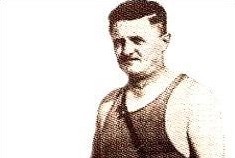 Joe Ball
Serial killer · USA · 1936
Joe Ball (January 6, 1896 – September 24, 1938) was an American serial killer.…
14 victims
Joe Ball
Serial killer · USA · 1936
Joe Ball (January 6, 1896 – September 24, 1938) was an American serial killer.…
14 victims
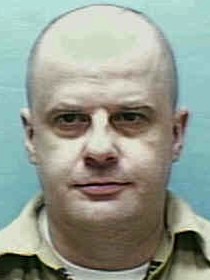 Scott Mink
Murderer · USA · 2000
Scott Andrew Mink (October 13, 1963 - July 20, 2004) lived with his elderly par…
2 victims
Scott Mink
Murderer · USA · 2000
Scott Andrew Mink (October 13, 1963 - July 20, 2004) lived with his elderly par…
2 victims
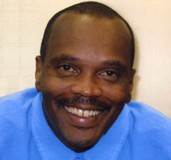 Jarvis Jay Masters
Murderer · USA · 1985
Jarvis Jay Masters (born 1962) was an African American man from Long Beach, CA.…
1 victim
Jarvis Jay Masters
Murderer · USA · 1985
Jarvis Jay Masters (born 1962) was an African American man from Long Beach, CA.…
1 victim
- Gender
- male
- Country
- USA
- Location
- Bridgeport, Connecticut, USA
- Date of birth
- January 15, 1972
- Age at first offence
- 26
- Characteristics
- drug dealer
- Victim profile
- Rudolf Snead, Jr. ( former drug associate of Peeler's) - Karen Clarke and her eight-year-old son, Leroy "B.J." Brown
- Method of murder
- Shooting
- Date(s) of murder
- May 29, 1998 / January 8, 1999
- Years active
- 1998–1999
- Date of arrest
- January 14, 1999
- Status
-
Sentenced to death
Sentenced to death on December 10, 2007
Case information
- Defendant: Russell Peeler Jr.
- Case caption: State of Connecticut v. Russell Peeler. No. 16380.
- Age: 35-year-old Peeler.
- Place: Bridgeport; Earl Avenue home; Boston Avenue barbershop; Northern Correctional Institution; Somers; Johnson Memorial Hospital in nearby Suffield; MacDougall Correctional Institution in Suffield; Hartford parking garage; Keney Park; Northern Correctional Institution; Hartford; Suffield.
Background
Russell Peeler Jr. was described as a former drug dealer. During his incarceration prior to beginning his murder trial, Peeler ordered his brother Adrian to execute the two witnesses against him. Adrian followed the orders, killing the woman and her 8-year-old son in their apartment.
Peeler denied ordering the witnesses killed throughout the proceedings and maintained his innocence of the charges. Peeler’s primary defense after the jury found him guilty was to claim ineffective assistance of counsel. The prosecution established that Peeler was especially cold-blooded and did not come from a disadvantaged background. Peeler had recently received $50,000 in life insurance proceeds from the death of his mother. Peeler was described as the only death row inmate in Connecticut that did not actually kill the victims that led to his death sentence.
The offence
Snead case (attempted murder and murder)
The state alleged that on September 2, 1997, in the vicinity of 500 Lindley Street in Bridgeport, the defendant had attempted to murder Rudolph Snead, Jr., his partner in a crack cocaine operation, by shooting at Snead while in his car. The defendant thereby committed risk of injury to the two minor children, Leroy Brown, Jr., and Tyree Snead, both seven years of age, who were in the backseat of Snead’s car during the shooting.
The state alleged that on May 29, 1998, while he was free on bond following his arrest for the drive-by shooting in the first case, the defendant, who had covered his face to conceal his identity, murdered Snead at the Boston Avenue Barbershop in Bridgeport.
Brown and Clarke homicides (capital felony)
Russell Peeler Jr. was sentenced to death for masterminding the murders of Leroy “B.J.” Brown Jr. and his mother, Karen Clarke, in their Earl Avenue home in Bridgeport. The boy and his mother were fatally shot in their home on Jan. 7, 1999. Their deaths occurred days before B.J. was to testify against Peeler for the 1998 murder of Clarke’s fianc, Rudy Snead, in a Boston Avenue barbershop.
Josephine Lee, described as a crack-addicted prostitute who lived across the street from the victims, testified that Peeler gave her a handful of crack cocaine to let him know when the boy and his mother were home. On the evening of Jan. 7, 1999, she called Peeler after she spotted the victims arrive home after going to a local supermarket. Lee testified that a few minutes later Peeler’s young brother, Adrian Peeler, arrived at her house. She testified that when the victim opened the Clarke’s door, Adrian Peeler rushed into the house. Lee related that Peeler killed Clarke as her wounded son screamed for his mother and then shot the boy in the head.
The jury in October found that the murders of Karen Clarke and her son, Leroy “B.J.” Brown Jr., were committed in an especially heinous, cruel and depraved manner, and that the aggravating factors outweighed mitigation.
Investigation
A police arrest warrant affidavit dated September 11, 1997 identified all three victims by name in relation to the attempted murder incident and the risk of injury to children. The police officer’s affidavit also recited that, after the drive-by shooting involving Snead, “[b]oth children were traumatized and were unwilling to talk about the incident.”
Arrest and pretrial proceedings
Peeler testified during trial in the Snead case, stating:
- “I did nothing to your family.”
- “I had nothing to do with killing these people,”
- “I feel bad for what happened.”
In a separate court proceeding narrative, Peeler testified that he had had nothing to do with the killings of Leroy Brown Jr. and Karen Clarke. The New York Times reported:
- “A man accused of the slayings of three people, including an 8-year-old boy expected to testify against him at a murder trial, testified yesterday that he had had nothing to do with the killings.”
- “The suspect, Russell Peeler Jr., said he was not involved in the January ambush killings of the boy, Leroy Brown Jr., and the boy's mother, Karen Clarke.”
- “Mr. Peeler is on trial in the 1998 killing of Ms. Clarke's boyfriend, Rudolph Snead Jr.”
- “He is accused of wounding Mr. Snead in a drive-by shooting, and later fatally shooting him in a barbershop.”
- “During the drive-by shooting, Leroy Brown was in the back seat of Mr. Snead's car, prosecutors have said.”
- “Leroy was to have testified in the murder case.”
- “Mr. Peeler testified that on the day of the drive-by shooting he was at his cousin's house.”
- “On the day Mr. Snead was killed, Mr. Peeler said he was out of state, buying clothes for his twin 2-year-olds.”
Peeler was prosecuted for attempted murder and other charges in relation to the Snead case, and for the Brown and Clarke murders.
Counsel and related procedural matters
Russell Peeler Jr. appealed the judgment of conviction following a jury trial. His appeal claimed the trial court improperly:
- Granted the state’s motion to disqualify the defendant’s attorney from representing him in violation of the right to secure counsel of his choice under article first, § 8, of the Connecticut constitution and the sixth amendment to the United States constitution.
- Nullified the defendant’s cross-examination of the state’s three main witnesses in violation of the sixth amendment right to confrontation and due process right to fair trial.
- Violated the defendant’s due process right to a fair trial by improperly questioning the state’s expert witness and improperly instructing the jury regarding a statement by the victim.
The appellate court agreed with the defendant’s first claim of trial court impropriety and therefore reversed the judgment of the trial court and remanded the case for a new trial.
Protective order and witness identity
On August 11, 1998, the state filed a motion for a protective order to preclude disclosure to the defense of the identity of certain witnesses, including the two minor victims, Brown and Tyree Snead. At the hearing on October 6, 1998, the trial court (Ronan, J.) provided Mastronardi with two alternatives:
- The court would order disclosure of the names and addresses of the state’s witnesses but prohibit Mastronardi from disclosing that information to the defendant; or
- The court would grant the defendant’s discovery motion with the names and addresses redacted.
The court assured Mastronardi that prior to trial he would be able to share the information with the defendant to prepare his defense. On December 9, 1998, the court issued an order precluding Mastronardi from disclosing to the defendant the names and addresses of witnesses who had given statements to the police.
On or about December 23, 1998, senior assistant state's attorney C. Robert Satti, Jr., provided Mastronardi with the statement by Brown regarding the drive-by shooting and filed with the clerk of the court notice of service of disclosure with an attached supplemental disclosure listing, inter alia, the statement given by Brown.
The appellate record included a quote attributed to Jonathan Benedict: “One thing you've got to understand ․ everybody knew everybody․ [T]he defense knew their identities even before coming to court.”
Motion to disqualify counsel
On June 9, 1999, the state moved to disqualify Mastronardi from representing the defendant in the two cases involving Snead. The motion stated:
- “[i]t is expected that Attorney Mastronardi will be called as a witness in the [capital felony case] regarding any knowledge on his part regarding the address and location of Karen Clarke and Leroy Brown, Jr. Attorney Mastronardi has spoken to the press and to Judge Ronan regarding a [s]tate's [o]bjection to disclosure of the above [witnesses'] address and statements claiming that he or his client had knowledge of their address before the [s]tate's [m]otion [for a protective order].”
At the June 30, 1999 hearing, Mastronardi contended that:
- “Mr. Satti, who is the prosecutor who's handling [the capital felony] case, knows full well that I never had the Earl Avenue address. And I assume that he's told this to [state's attorney Jonathan Benedict]. I've said it ad nauseam since the day this happened. I never had the Earl Avenue address. I never knew where these two people lived. And Mr. Satti's words to me in court one day were: In light of all this, aren't you glad that the state never gave you the Earl Avenue address? Now I don't understand why Mr. Benedict would get up and even suggest something like that in open court on the record when he knows that that's not true. His office never gave the Earl Avenue address to me and I never had it. I never knew that these people lived on Earl Avenue until I read it in the newspaper and that is an established fact. That's not-Mr. Satti could be called as a witness to establish that. Do we disqualify the state's attorney's office in this case?”
During the same hearing, the state contended:
- “So it's not so much evidence that the state would seek to offer as to the defendant's knowing where they live, but rather what is necessary and most relevant in the double homicide trial is the confirmation that Leroy Brown would indeed be a witness. That in fact is the focal point of the state's evidence as to motive in the double homicide. I'd submit that the argument that the December [1998] disclosure triggered the January [1999] murders is most compelling and that therefore Mr. Mastronardi's testimony in the trial of the double homicide will be most necessary and will not be uncontested.”
The appellate decision stated the trial court granted the state’s motion to disqualify Mastronardi, concluding that:
- “one of the core issues in the case is ․ [what] knowledge [the defendant] had about ․ Brown's potential testimony and when and how he obtained that knowledge.”
The trial court later consolidated all cases against the defendant with the case against his brother, Adrian Peeler, in connection with the Brown and Clarke homicides, and later severed the Snead cases from the capital felony cases against the defendant and his brother involving Brown and Clarke.
Trial
Convictions and proceedings in Connecticut
Following a jury trial in the Snead cases, Peeler was convicted of all four charges in connection with the Snead cases and sentenced to a total effective sentence of 105 years incarceration after the sentence enhancement pursuant to General Statutes § 53-202k was imposed.
During the capital felony trial for the Brown and Clarke homicides, the state presented Satti as a witness to testify about the specifics of the December 9, 1998 discovery order. Satti testified that, pursuant to that order, he was to turn over witness statements to Mastronardi, who was permitted to discuss with the defendant the contents of those statements but not to disclose the names of the witnesses who had provided the statements. Mastronardi confirmed the terms of the discovery order.
Peeler’s appellate challenge to disqualification resulted in a reversal of the judgment of conviction and remand for a new trial.
Sentencing
Death penalty
On December 10, 2007, Superior Court Judge Robert Devlin Jr. imposed the death penalty. Peeler was described as the ninth person on Connecticut’s death row.
The hearing included a statement attributed to Judge Devlin Jr.:
- “One can only imagine the stark terror experienced by Leroy Brown and Karen Clarke moments before their deaths,”
Peeler was formally sentenced to death at an emotionally charged hearing. He was to stand shackled before Judge Robert Devlin Jr. as the judge imposed the state’s ultimate penalty. After sentencing, Peeler was to be taken by prison van to Somers for holding in the special death row section of the Northern Correctional Institution. Peeler’s case was to be appealed to the state Supreme Court.
The material stated that:
- “By state law, Devlin must now impose the death penalty.”
- “However, Peeler's lawyers, Jeffrey Beck, Erskine McIntosh and Mark Radamacher, are expected to make an 11th-our plea against death.”
The jury had found in October that the aggravating factors outweighed mitigation.
Brother’s conviction and sentence
Adrian Peeler was convicted of conspiracy to commit murder, despite being the accused shooter, and was sentenced to 20 years in prison.
Appeals
In State of Connecticut v. Russell Peeler, No. 16380, the Supreme Court of Connecticut considered the defendant’s claims related to the disqualification of his attorney and other trial issues. The court agreed with the defendant’s first claim and therefore did not address his remaining claims. It reversed the judgment of the trial court and remanded the case for a new trial.
The appellate court’s procedural conclusions included:
- The trial court improperly disqualified Mastronardi in violation of the defendant’s constitutional right to counsel of his choice.
- The judgment was reversed and the case was remanded for a new trial.
Judge Katz concurred with Borden and Norcott and Palmer in the opinion.
Outcome
Russell Peeler Jr. was sentenced to death on December 10, 2007.
Aftermath
Stabbing while on death row
Peeler was stabbed while on death row on May 14, 2008 by another inmate during an altercation at the state’s maximum-security prison in Somers. The material said the incident was under investigation and no arrests had been made, and officials did not disclose the name of the inmate or the circumstances of the stabbing.
Police sources said the 35-year-old Peeler was stabbed in the head with a ballpoint pen about 1:45 p.m. by fellow death row prisoner Daniel Webb during a dispute at the Northern Correctional Institution. Peeler was taken to Johnson Memorial Hospital in nearby Suffield, where his condition was not disclosed Wednesday night.
At the time of Webb’s incarceration, Daniel Webb was awaiting the death penalty for murdering Diane Gellenbeck, a 37-year-old bank vice president and former Westport resident, on Aug. 24, 1989. Webb kidnapped her from a Hartford parking garage, drove her to Keney Park, raped her and then shot her twice in the back. As she attempted to crawl away, Webb walked up to her, held the gun to her face and fired another shot.
The material also described a separate incident a day earlier: MacDougall Correctional Institution in Suffield was locked down after an inmate was beaten to death by a fellow prisoner; the victim was Kevin Cales, 34, of New Britain, who was serving a sentence for manslaughter charges in the deaths of five people in May 2006.
Other details
Charges and statutory references in the appeal
The appellate decision described:
- Attempted murder in violation of General Statutes §§ 53a-49(a) and 53a-54a(a).
- Two counts of risk of injury to a child in violation of General Statutes (Rev. to 1997) § 53-21(1).
- Murder in violation of § 53a-54a(a).
It also set out:
- General Statutes § 53a-49(a).
- General Statutes § 53a-54a(a).
- General Statutes (Rev. to 1997) § 53-21(1).
Prosecutors and defense lawyers named
Prosecutors listed in the death-sentencing narrative included Jonathan Benedict and Joseph Corradino. Defense lawyer(s) named included Jeffrey Beck, Erskine McIntosh, and Mark Radamacher.
In the Supreme Court opinion, the following counsel were named:
- Glenn W. Falk, special public defender, with whom Pintip Hompluem, law student intern, was on the brief, for the appellant (defendant).
- Harry Weller, senior assistant state's attorney, with whom Jonathan C. Benedict and Joseph Corradino were on the brief, for the appellee (state).
Additional named individuals in the case narrative
The material named Rudy Snead (Rudolph Snead Jr.), Tyree Snead, Leroy Brown Jr., Tyree Snead, Karen Clarke, Leroy “B.J.” Brown Jr., Oswald Clarke, Oswald Clarke’s quote included in a dialogue, Kevin Cales, Diane Gellenbeck, and Frank Riccio, Gary Mastronardi, Robert Sullivan, and John Walkley.
Oswald Clarke and courtroom exchange
During the December 10, 2007 hearing, a shouting match broke out between Russell Peeler and Clarke’s brother, Oswald Clarke. Oswald Clarke described the impact of the crime and said:
- “He killed my mother. She died two years ago,”
- “He doesn't deserve any more time. He doesn't deserve to live any more.”
- “My only regret right now is his brother is not here with him.”
Peeler responded by shouting:
- “I did nothing to your family.”
Clarke told Peeler:
- “You need to be quiet,”
Peeler replied:
- “This ain't no show. See you later,”
Dates that were stated in the appellate procedural history
The appellate record included:
- Argued May 21, 2003.
- August 19, 2003 decision.
- October 6, 1998 hearing on protective order.
- December 9, 1998 protective order and discovery order.
- January 7, 1999 murders of Brown and Clarke.
- June 9, 1999 motion to disqualify Mastronardi.
- June 30, 1999 hearing and trial court action on disqualification.
- August 6, 1999 consolidation of double murder charges with Snead charges.
Spotted an error, or have more information about this case?