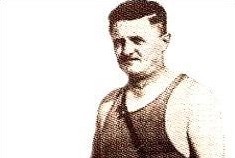
Joe Ball
Serial killer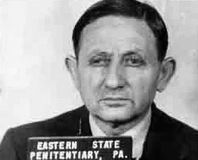 Morris Bolber
Serial killer · USA · 1932
Morris Bolber was prosecuted as part of a Philadelphia poison-murder ring invol…
50 victims
Morris Bolber
Serial killer · USA · 1932
Morris Bolber was prosecuted as part of a Philadelphia poison-murder ring invol…
50 victims
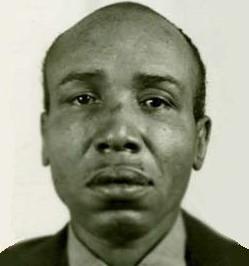 Jake Bird
Serial killer · USA · 1930
October 30, 1947 — Jake Bird broke into the home of Bertha Kludt and her daught…
44 victims
Jake Bird
Serial killer · USA · 1930
October 30, 1947 — Jake Bird broke into the home of Bertha Kludt and her daught…
44 victims
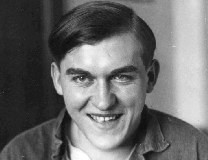 Gordon Northcott
Serial killer · USA · 1928
Gordon Stewart Northcott was a Canadian-born ranch owner who later murdered boy…
20 victims
Gordon Northcott
Serial killer · USA · 1928
Gordon Stewart Northcott was a Canadian-born ranch owner who later murdered boy…
20 victims
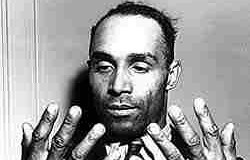 Jarvis Catoe
Serial killer · USA · 1935
Jarvis Theodore Roosevelt Catoe was convicted of killing a woman in Washington…
8 victims
Jarvis Catoe
Serial killer · USA · 1935
Jarvis Theodore Roosevelt Catoe was convicted of killing a woman in Washington…
8 victims
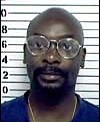 Stressla Johnson
Murderer · USA · 1987
Name: Stressla Johnson · Full name: Stressla Lynn Johnson · Date of birth: 4/9/…
2 victims
Stressla Johnson
Murderer · USA · 1987
Name: Stressla Johnson · Full name: Stressla Lynn Johnson · Date of birth: 4/9/…
2 victims
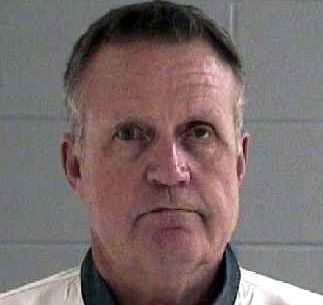 Billy Sunday Birt
Murderer · USA · 1972
Billy Sunday Birt was sentenced to death in 1975, for murder counts connected w…
3 victims
Billy Sunday Birt
Murderer · USA · 1972
Billy Sunday Birt was sentenced to death in 1975, for murder counts connected w…
3 victims
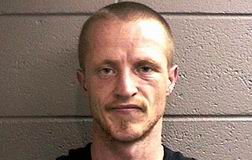 Nicholas Sheley
Spree killer · USA · 2008
Nicholas Troy Sheley (born July 31, 1979) was an American ex-convict accused of…
8 victims
Nicholas Sheley
Spree killer · USA · 2008
Nicholas Troy Sheley (born July 31, 1979) was an American ex-convict accused of…
8 victims
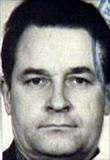 Leonardas Zavistonovicius
Mass murderer · Lithuania · 1998
Leonardas Zavistonovičius went on a house-to-house shooting spree in Draučiai,…
9 victims
Leonardas Zavistonovicius
Mass murderer · Lithuania · 1998
Leonardas Zavistonovičius went on a house-to-house shooting spree in Draučiai,…
9 victims
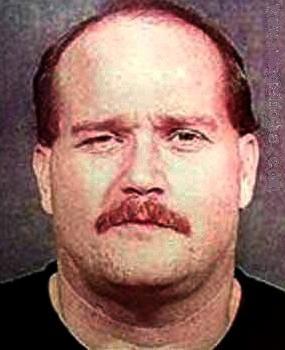 Buford Furrow
Murderer · USA · 1999
Buford O'Neal Furrow, Jr. (born November 25, 1961) perpetrated the August 1999…
1 victim
Buford Furrow
Murderer · USA · 1999
Buford O'Neal Furrow, Jr. (born November 25, 1961) perpetrated the August 1999…
1 victim
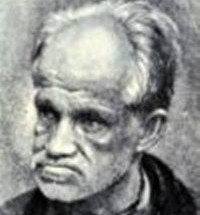 Charles Peace
Murderer · United Kingdom · 1876
Charles Peace was executed by hanging in Leeds on February 25, 1879. Charles Pe…
2 victims
Charles Peace
Murderer · United Kingdom · 1876
Charles Peace was executed by hanging in Leeds on February 25, 1879. Charles Pe…
2 victims
- Gender
- male
- Country
- USA
- Location
- Elmendorf, Bexar County, Texas, USA
- Date of birth
- January 7, 1896
- Age at first offence
- 40
- Characteristics
- serial rapist, abuse, torture, dismemberment, murder-for-hire
- Victim profile
- Young women
- Method of murder
- Shooting
- Date(s) of murder
- 1936 - 1938
- Years active
- 1936–1938
- Date of arrest
- September 24, 1938
- Status
-
Died in custody
Committed suicide by shooting himself to avoid arrest on September 24, 1938
Case record: Joe Ball
Identifying information
Joe Ball (January 6, 1896 – September 24, 1938) was an American serial killer.
Status / legal outcome
Ball committed suicide on September 24, 1938 by shooting himself to avoid arrest.
Timeline
- January 6, 1896 — Joe Ball was born.
- September 24, 1938 — Ball committed suicide by shooting himself to avoid arrest.
- October 14, 1938 — Minnie's partially decomposed remains were found buried in the sand.
- September 1937 — Relatives reported Minnie Gotthardt missing.
- 1934 — Joe met Minnie Gotthardt.
- 1937 — Hazel “Schatzie” Brown began working at the bar; Minnie disappeared; Ball married Dolores “Buddy” Goodwin.
- January 1938 — Dolores was involved in a near fatal car accident that resulted in the amputation of her left arm.
- April 1938 — Dolores disappeared.
- October 14, 1938 — Police found Minnie's partially decomposed remains buried in the sand.
- 1939 — Clifton Wheeler pled guilty and was sentenced to two years in prison.
- Two weeks after Dolores was located in California — Investigators located another woman in Phoenix, Arizona.
Background
Ball had served on the front lines in Europe during World War I and later began a career as a bootlegger, providing illegal liquor to those who could pay.
After the end of Prohibition, he opened a saloon called the Sociable Inn in Elmendorf, Texas. He built a pond that contained five alligators and charged people to view them, especially during feeding time; the food consisted mostly of live cats and dogs. The establishment was described as having a bar, a player piano, tables for men to drink, and two bedrooms.
The case materials also described Ball practicing and perfecting his skills with guns, and he used a Model A Ford in the course of bootlegging.
The offence
The killings were linked to a series of disappearances of women connected to the Sociable Inn. Ball was described as killing at least 20 women in the 1930s, with no firm evidence that the alligators actually ate any of his victims.
Specific victims named in the case materials included:
- Hazel Brown
- Minnie Gotthardt
- Julia Turner
- Dolores “Buddy” Goodwin (who later reappeared alive)
Wheeler’s admissions described dismemberment and disposal involving feeding bodies’ remains to alligators. The case materials also described investigations finding rotting meat around the gator pond and an axe matted with blood and hair.
There were competing accounts about the exact number of victims and whether any human remains were actually fed to the alligators.
Investigation
Rangers compiled a list of Ball’s known employees. Many were found alive, and more than twelve were reported missing, alongside Ball’s second and third wives.
When inquiries began in 1938, Ball was questioned multiple times but initially dismissed as a suspect when investigators lacked evidence of foul play.
An old neighbor of Ball and a Mexican-American man provided information that led investigators back to the Sociable Inn. Investigators returned to examine the “meat barrel,” discovered rotting meat and other physical evidence, and began recalling other disappearances.
Chief deputy sheriff J. W. Davis stated:
“might lead to the discovery of one or a dozen more murders.”
Investigators discovered a scrapbook containing photos of dozens of women, but none of the photos proved to have any known connection to Ball.
Investigators secured the scene at the bar and picked up Ball’s handyman for questioning.
Arrest / confrontation
Two Bexar County sheriff’s deputies went to question Ball in 1938. Ball pulled a handgun from his cash register and killed himself with a bullet through the heart; some accounts reported that he shot himself in the head.
In one account, investigators arrived to take Ball to San Antonio for questioning. As deputies waited, Ball pressed the “No Sale” button on the cash register, reached inside, grabbed a .45 caliber revolver, waved it, and the deputies yelled “Don’t!” just as he pointed it at his heart. He then pulled the trigger and fell dead on the barroom floor.
People
- Joe Ball — suspect; serial killer; owner of the Sociable Inn; handyman and witnesses described him as disposing of bodies by feeding them to alligators.
- Clifford Wheeler — handyman that conspired with Ball; admitted helping get rid of bodies; later pled guilty and was sentenced to two years in prison.
- Hazel Brown — one of the missing women; remains were later found.
- Minnie Gotthardt — missing waitress; remains were later found.
- Julia Turner — missing waitress; family reported her missing.
- Dolores “Buddy” Goodwin — one of Ball’s wives; located later alive in California.
- John Gray — Bexar County deputy sheriff.
- John Klevenhagen — deputy sheriff.
- J. W. Davis — chief deputy sheriff.
- Michael Hall — newspaper editor who investigated the story in depth in 2002 and wrote findings for Texas Monthly.
- Elton Cude Jr. — provided an account through a description attributed to his father, a Bexar County deputy sheriff who later wrote about Ball.
- Elton Crude — described as a neighbor who was threatened with a pistol after complaining about the stench from the alligator pool.
- William Sneed — referred to as Ball’s handyman in one section; described as later jailed for being an accessory after the fact and mentioned as spending two years in prison; also identified by name as the handyman who admitted helping dispose of bodies.
Trial
No trial proceedings were described for Ball, because he died by suicide.
Clifton Wheeler pled guilty for his part in disposing of the bodies and was sentenced to two years in prison in 1939.
Sentencing
Clifton Wheeler was sentenced to two years in prison after his guilty plea in 1939.
Appeals
No appeals were described.
Outcome
Ball died by suicide on September 24, 1938 to avoid arrest. Investigators later located a number of people who had been listed as missing.
Aftermath
Dolores was located in California and was described as alive, having left the area for a new start in San Diego. Two weeks later, in Phoenix, Arizona, investigators located another woman that had previously been listed as missing from the tavern.
One version stated that “none of the rotting flesh in the alligator pond was found to be human.” Another version stated it had never been any firm evidence that the alligators actually ate any of Ball’s victims.
In a 1957 interview with the San Antonio Light, Dolores “Buddy” Goodwin stated:
“Joe, ‘never put no people in that alligator tank,’ she said. ‘Joe wouldn’t do a thing like that. He wasn’t no horrible monster Joe was a sweet, kind, good man, and he never hurt nobody unless he was driven to it There were just two murders,’ she said.”
Ball’s alligators were seized by the state of Texas and donated to the San Antonio Zoo, where they lived out the remainder of their lives as tourist attractions.
The film Eaten Alive by Tobe Hooper was described as being inspired by Joe Ball.
Other details
- Ball was sometimes referred to as “The Alligator Man,” the “Butcher of Elmendorf” and the “Bluebeard of South Texas.”
- There were few written sources from the era that could verify Ball’s crimes.
- One neighbor reportedly moved away due to fear after Ball threatened him.
- The case materials included accounts of Ball feeding live animals to alligators and charging visitors to watch during feeding time.
- The case materials described an “No Sale” action on the cash register at the time deputies came to investigate.
- The handyman’s role was described as having cracked under pressure, and he led investigators to the remains of Hazel Brown and Minnie Gotthard.
- Wheeler stated that Ball forced him at gunpoint to dig a grave and helped dismember remains.
- Minnie’s remains were found on October 14, 1938.
- The materials described that Ball took Minnie to Ingleside, near Corpus Christi, waited until she was distracted, and then shot her in the temple; she was buried in the sand.
- Investigators found evidence including rotting meat around the gator pond and an axe matted with blood and hair.
Spotted an error, or have more information about this case?