
Leszec Pekalski
Homicide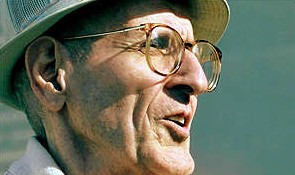 Jack Kevorkian
Homicide · USA · 1990
Jack Kevorkian (born May 26, 1928) was a controversial American pathologist. He…
130 victims
Jack Kevorkian
Homicide · USA · 1990
Jack Kevorkian (born May 26, 1928) was a controversial American pathologist. He…
130 victims
 David Koresh
Homicide · USA · 1993
David Koresh (born Vernon Wayne Howell; August 17, 1959 – April 19, 1993) led t…
79 victims
David Koresh
Homicide · USA · 1993
David Koresh (born Vernon Wayne Howell; August 17, 1959 – April 19, 1993) led t…
79 victims
 Edward Charles Allaway
Homicide · USA · 1976
Edward Charles Allaway Edward Charles Allaway was found not guilty by reason of…
7 victims
Edward Charles Allaway
Homicide · USA · 1976
Edward Charles Allaway Edward Charles Allaway was found not guilty by reason of…
7 victims
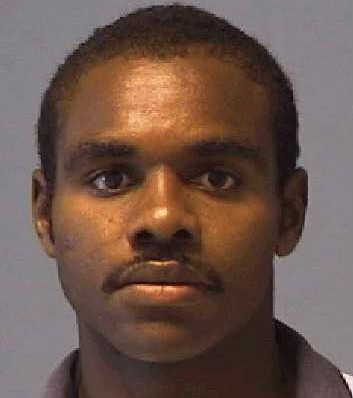 Clinton Bankston
Homicide · USA · 1987
15 August 1987 — Ann Morris (63), her sister Sally Nicholson (59), and Sally’s…
5 victims
Clinton Bankston
Homicide · USA · 1987
15 August 1987 — Ann Morris (63), her sister Sally Nicholson (59), and Sally’s…
5 victims
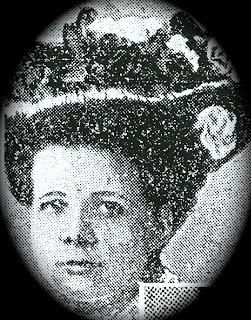 Augusta Fullam
Murderer · India · 1911
Augusta Fullam Augusta Fullam was sentenced to death in 1913. Her sentence was…
2 victims
Augusta Fullam
Murderer · India · 1911
Augusta Fullam Augusta Fullam was sentenced to death in 1913. Her sentence was…
2 victims
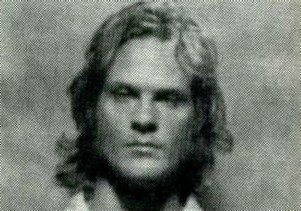 Michael Dee Mattson
Murderer · USA · 1978
Michael Dee Mattson was convicted of multiple offenses arising from the kidnapp…
3 victims
Michael Dee Mattson
Murderer · USA · 1978
Michael Dee Mattson was convicted of multiple offenses arising from the kidnapp…
3 victims
 Brian Alpress Hunt
Murderer · USA · 1992
Brian Alpress Hunt (defendant; homeless drifter; 49-year-old at the time of the…
2 victims
Brian Alpress Hunt
Murderer · USA · 1992
Brian Alpress Hunt (defendant; homeless drifter; 49-year-old at the time of the…
2 victims
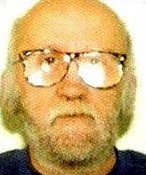 Ronald Jebson
Murderer · United Kingdom · 1970
Ronald Jebson (born 1939) was a convicted pedophile who was also known as Ronal…
3 victims
Ronald Jebson
Murderer · United Kingdom · 1970
Ronald Jebson (born 1939) was a convicted pedophile who was also known as Ronal…
3 victims
 Cheng Zhengping
Mass murderer · China · 2002
Cheng Zhengping was executed on October 13, 2002. Cheng Zhengping confessed to…
42 victims
Cheng Zhengping
Mass murderer · China · 2002
Cheng Zhengping was executed on October 13, 2002. Cheng Zhengping confessed to…
42 victims
- Gender
- male
- Country
- Poland
- Location
- Bytów, Poland
- Date of birth
- February 12, 1966
- Age at first offence
- 18
- Characteristics
- rape, serial rapist
- Victim profile
- Men and women
- Method of murder
- Several
- Date(s) of murder
- 1984 - 1992
- Years active
- 1984–1992
- Date of arrest
- —
- Status
-
Imprisoned
Sentenced to 25 years in psychiatric institution on December 9, 1996
Case record: Leszek Pękalski
Timeline
- 1984–1992 — Leszek Pękalski was believed to have killed at least 17 people.
- 1992 — Leszek Pękalski was incarcerated and asked the warden for permission to keep a rubber sex-shop doll in his detention cell.
- December 9, 1996 — After an eight-month trial, Leszek Pękalski was sentenced to 25 years in a psychiatric institute by the Provincial Court in the northern city of Slupsk, Poland.
- 2017 — Leszek Pękalski was to be released in 2017 (as of 2007).
Background
Leszek Pękalski, also known as "Vampire of Bytów," was born 12 February 1966 in Osieki near Bytów, Poland. He was a Polish serial killer believed to have killed at least 17 people between 1984 and 1992. At some stage in criminal procedures, he admitted to having killed as many as 80 people, but he later retracted his confessions.
The offence
Leszek Pękalski was accused of killing 17 women from 1984 to 1992. He was believed to have killed at least 17 people in that period. The court said there was insufficient evidence to convict him of the other killings beyond the one murder count.
Police described that he would hit with a wooden cane or would strangle his victim with a belt. The court and reporting also referenced that he had an abnormal sex drive, and he was characterised as a lust killer.
Investigation
DNA tests of hair strands were described as crucial pieces of evidence implicating the defendant. Doctor Ryszard Pawelski from the Gdansk Medical Academy’s forensic medicine institute examined the evidence and declared that the police had clumsily handled the hair strands and damaged their evidential value.
Police also reported that Leszek Pękalski confessed to details of the crimes no one else could have known about. Police said he could not be found for a long time, and that he never followed a regular pattern, with no typical victim and no repeated killing method.
Arrest
At the time he was first arrested, Leszek Pękalski admitted to killing more than 80 people. He later said the police had forced the confession out of him.
Trial
Leszek Pękalski was tried for the accusation of killing 17 women from 1984 to 1992. The Provincial Court in the northern city of Slupsk, Poland, convicted him of one murder but cleared him of more than a dozen other slayings. The court described that there was insufficient evidence to convict him of the other killings. The trial lasted eight months.
During the trial, Leszek Pękalski told the judge:
"I'm a gullible man, and I was easily persuaded by what the officers had told me," Pekalski told the judge. "I'm mentally weak, and if somebody pushes me, I break down. Then I admit to things I have never done. I have never killed anyone. I'm so scared. The prosecutor threatened that the victims' families or the public would kill me if I'm acquitted or get a mild sentence. He yelled at me and told me to confess everything."
Sentencing
After the eight-month trial, the Provincial Court in the northern city of Slupsk, Poland, sentenced Leszek Pękalski to 25 years in a psychiatric institute on December 9, 1996. The court said there was insufficient evidence to convict him of the other killings.
Appeals
Leszek Pękalski appealed to the government’s Citizen Rights representative, and he was awaiting the decision.
Aftermath
When Leszek Pękalski was first incarcerated in 1992, he asked the warden’s permission to keep a rubber sex-shop doll in his detention cell. He was not allowed to get the sex-doll.
As of 2007, he was serving a 25-year term and was to be released in 2017. It was said that he had put on a lot of weight in jail and was hopeful to soon "find a girl," in the flesh or made out of rubber.

Spotted an error, or have more information about this case?