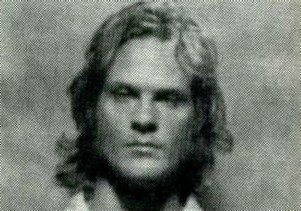
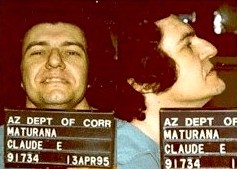
Michael Dee Mattson
Murderer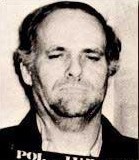 Ervil LeBaron
Murderer · USA · 1972
Ervil Morrell LeBaron (1925 to August 16, 1981) was the leader of a polygamous…
35 victims
Ervil LeBaron
Murderer · USA · 1972
Ervil Morrell LeBaron (1925 to August 16, 1981) was the leader of a polygamous…
35 victims
 Brian Kevin Rosenfeld
Murderer · USA · 1985
Brian Kevin Rosenfeld Brian Kevin Rosenfeld was sentenced to three concurrent l…
23 victims
Brian Kevin Rosenfeld
Murderer · USA · 1985
Brian Kevin Rosenfeld Brian Kevin Rosenfeld was sentenced to three concurrent l…
23 victims
 Marvin Gray
Murderer · USA · 1975
Marvin Gray was convicted killer who claimed responsibility for 23 slayings and…
23 victims
Marvin Gray
Murderer · USA · 1975
Marvin Gray was convicted killer who claimed responsibility for 23 slayings and…
23 victims
 Yahweh ben Yahweh
Murderer · USA · 1980
Yahweh ben Yahweh was born and legally named Hulon Mitchell Jr. (October 27, 19…
23 victims
Yahweh ben Yahweh
Murderer · USA · 1980
Yahweh ben Yahweh was born and legally named Hulon Mitchell Jr. (October 27, 19…
23 victims
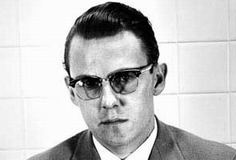 Joseph Corbett
Murderer · USA · 1950
Joseph Corbett, Jr. (October 25, 1928 – August 24, 2009) became the 127th fugit…
2 victims
Joseph Corbett
Murderer · USA · 1950
Joseph Corbett, Jr. (October 25, 1928 – August 24, 2009) became the 127th fugit…
2 victims
 Jean Pierre Orlewick
Murderer · USA · 2007
Jean Pierre Orlewicz was an 18-year-old high school senior from Canton, Michiga…
1 victim
Jean Pierre Orlewick
Murderer · USA · 2007
Jean Pierre Orlewicz was an 18-year-old high school senior from Canton, Michiga…
1 victim
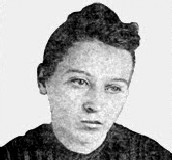 Mary Farmer
Murderer · USA · 1908
Mary Farmer was convicted of murdering Sarah Brennan and was executed by electr…
1 victim
Mary Farmer
Murderer · USA · 1908
Mary Farmer was convicted of murdering Sarah Brennan and was executed by electr…
1 victim
 Angelica Vazquez
Murderer · USA · 2013
Angelica Vazquez — wife and mother; cafeteria worker for Mesquite Independent S…
3 victims
Angelica Vazquez
Murderer · USA · 2013
Angelica Vazquez — wife and mother; cafeteria worker for Mesquite Independent S…
3 victims
- Gender
- male
- Country
- USA
- Location
- California, USA
- Date of birth
- July 23, 1973
- Characteristics
- serial rapist, drug addict, kidnapping, rape
- Victim profile
- Cheryl Gutierrez, 9 / Deanna Musquiz, 16 / Adele Jean Corradini, 16
- Method of murder
- Strangulation
- Date(s) of murder
- July-September 1978
- Years active
- 1978
- Date of arrest
- September 21, 1978
- Status
-
Died in custody
Sentenced to death on February 7, 1986; died in prison on July 17, 2009
Case overview
Michael Dee Mattson was convicted of multiple offenses arising from the kidnapping, rape, and murder of three victims: nine-year-old Cheryl G., sixteen-year-old Adele C., and fifteen-year-old Kiz L. He was sentenced to death on each murder count. His death sentence was upheld on appeal, and he later died in prison.
Timeline
- July 14, 1978 — Nine-year-old Cheryl G. disappeared from the parking lot of Santa Fe Springs High School in Los Angeles County.
- July 15, 1978 — Cheryl G.’s body was found in the Legg Lake region of the Whittier Narrows Recreation Area.
- September 6, 1978 — Adele C. was last seen alive by her mother.
- September 10, 1978 — Fifteen-year-old Kiz L. missed the bus to Huntington Beach and began hitchhiking; Mattson picked her up, kidnapped, and assaulted her.
- September 22, 1978 — Mattson was arrested at the home of his grandparents in Cherry Creek, Nevada, by Archie Robison, the sheriff of White Pine County, Nevada.
- September 25, 1978 — Mattson was released to North Las Vegas police.
- September 26, 1978 — Mattson appeared in a lineup and later asked to speak to Detective Pat Dingle; an interview followed.
- September 27, 1978 — Detective Pat Dingle again advised Mattson of his rights; Mattson expressed willingness to talk without an attorney present.
- September 29, 1978 — Mattson made a full confession as to each case after being advised of his rights, waiving them, and responding “Sure.”
- November 5, 1978 — Detective Reed filed complaints in Whittier Municipal Court charging Mattson with the Cheryl G. and Kiz L. offenses.
- November 8, 1978 — Detective Reed interviewed Mattson; Mattson admitted kidnapping, rape, and murder conduct involving Cheryl G. and volunteered information about another murder.
- November 9, 1978 — Adele C.’s remains were located in a wooded area in Duarte.
- December 10, 1985 — Trial began.
- December 26, 1985 — Penalty trial began.
- January 8, 1986 — The jury returned a verdict of death on each murder count after a day of deliberation.
- February 7, 1986 — Judgment was pronounced; Mattson was sentenced to death on each murder count and to additional determinate terms on other counts.
- 1984 — Confessions were ruled invalid by the California Supreme Court; the death judgment was reversed in this respect.
- 1985 — The jury convicted Mattson after the second trial.
- 1990 — The California Supreme Court upheld Mattson’s death sentence.
- July 17, 2009 — Mattson died of natural causes in an outside hospital facility early Friday morning; he had been confined to death row at San Quentin State Prison.
Background
A crime wave swept California in the late 1970s. Several young girls were kidnapped, brutally raped, and murdered. Michael Dee Mattson was described as a drug addict with severe emotional problems. He was convicted of these crimes and sentenced to be executed in California’s gas chamber.
Mattson was released on parole after serving time for robbing and raping an Oregon girl in 1971. He moved to Southern California and continued a spree of rapes described as totaling as many as 15 girls by the detective involved.
Mattson eventually fled California to stay with his grandparents in northern Nevada, where he was later arrested.
The offence
Mattson’s convictions included kidnapping, rape, lewd conduct, and murders connected to the following victims.
Cheryl G. (nine-year-old)
Cheryl G. disappeared from the parking lot of Santa Fe Springs High School in Los Angeles County on July 14, 1978. Cheryl had been swimming with her older sisters who left her briefly while they went to telephone their mother to pick them up. Cheryl wore a two-piece swimming suit and a pair of thongs and carried a towel.
A plant foreman saw a young Hispanic girl waiting near the gate of the parking lot when he left work at about 3:30 p.m. on that date. He also saw a young man with long, dark hair and a beard. The man looked very much like the defendant and was sitting in a car within 20 feet of the girl. The car was yellow or orange, had mud streaks on the sides, and had brush marks on the passenger side of its top.
Cheryl’s body was found on July 15, 1978, in the Legg Lake region of the Whittier Narrows Recreation Area. She was nude. The top of her swimming suit was wrapped around her neck, as were a piece of monofilament fishing line and a “Handy Wipe.” Fecal matter was found on the cheeks of her buttocks and the inner side of her thigh. Death was caused by asphyxiation by ligature strangulation and/or suffocation. She had suffered injuries consistent with blows to the head. Her hymen was not intact.
Mattson subsequently confessed to investigators that he had picked up a Hispanic girl in the parking lot of Santa Fe Springs High School, had driven to Legg Lake, had intercourse with the girl in the bushes, and then strangled her with his belt and tied fishing line around her neck. Information about the ligature had not been released to the public by investigators at the time Mattson confessed.
Adele C. (sixteen-year-old)
Adele C. was last seen alive by her mother on September 6, 1978. Adele’s mother dropped her off at 8:30 a.m. on a street corner where Adele was to be picked up by friends who were to give her a ride to her part-time job at a motel on the Pacific Coast Highway. Adele wore a white eyelet blouse with straps, a hooded multicolored sweater, jeans, and blue tennis shoes. She also wore a pukka shell necklace. She did not report to work that day.
Adele’s remains were located in a wooded area in Duarte on November 9, 1978, by an officer who followed directions given him by Detective Reed who was then in Nevada. The cause of death could not be determined. The body had a pukka shell necklace, white eyelet blouse, and a blue tennis shoe on it. There was no underwear on the body.
Detective Reed obtained his information about the location of Adele’s remains from Mattson while interrogating him about the Cheryl G. murder. Mattson volunteered information stating that he had picked up a 16-year-old girl who was hitchhiking, had taken her to a remote area of Duarte off the Foothill Freeway, had intercourse with her three times, and then strangled her.
Kiz L. (fifteen-year-old)
On September 10, 1978, 15-year-old Kiz L., who lived in Seal Beach (Orange County), missed the bus to Huntington Beach and started hitchhiking. Mattson picked her up, but before reaching the location to which she had told him she was going, he made a U-turn, pulled out a knife, and told her to lock the door of the car. Mattson was driving a yellow car.
He drove north onto the 605 Freeway where he pulled over and got out, saying he had to urinate. When Kiz left the car, he grabbed her, apologized for scaring her, threw the knife away, and promised to take her home. Instead he drove to an area near Diamond Bar where he forced her to leave the car and walk to a desolate area where he orally sexually assaulted her, and raped and sodomized her. He then removed his belt and told her he was going to hang her. Finally, however, he threw the belt away, saying he could not kill her.
Kiz escaped from Mattson’s car when he stopped to buy beer. She identified Mattson as the person who had kidnapped and assaulted her and testified at trial.
Mattson confessed that he had kidnapped, raped, sodomized, and orally copulated Kiz, and that he had intended to kill her.
Investigation
Detective Pat Dingle led the investigation and obtained Mattson’s confessions. The detective who broke the case, Pat Dingle, was described as the director of the Southern Nevada Zoological-Botanical Park at the time referenced.
Investigators working on the cases said Mattson confessed to raping and killing both Cheryl G. and the 16-year-old girl.
During the investigation of the Nevada kidnapping and assault, Mattson was described as having run out of gas near Las Vegas on his way to his grandparents’ home. He decided to get off the freeway near a community college and kidnapped a young co-ed at gunpoint in a parking lot at the school. The detective described that Mattson brought her to the desert and raped her, and that she escaped when they went back into town to fill up again. The detective described finding Mattson’s car, which was full of women’s clothes in the backseat, and putting out an “attempt to locate.” A sheriff’s deputy later found Mattson at his grandparents’ home.
Arrest
Mattson was arrested at the home of his grandparents in Cherry Creek, Nevada, on September 22, 1978, by Archie Robison, the sheriff of White Pine (then Ely) County, Nevada. Mattson was arrested as a suspect in a kidnapping and sexual assault that had occurred two days earlier at the North Las Vegas Community College.
Trial
The California Supreme Court described the procedural history: the court had reversed a prior judgment of conviction and sentence imposing the death penalty holding the confessions were inadmissible. Defendant was retried. At the second trial, a pretrial hearing determined admissibility of confessions, and the trial court ruled the confessions admissible.
Charges and counts
At the second trial, beginning December 10, 1985, the jury convicted Mattson of the following counts:
- Count I — the July 14, 1978 wilful, deliberate, and premeditated murder of Cheryl G., with special circumstances of murder committed during commission or attempted commission of rape, lewd and lascivious conduct on a child under age 14, and multiple murder.
- Count II — kidnapping of Cheryl G. with intentional infliction of great bodily injury.
- Count III — rape of Cheryl G. with great bodily injury.
- Count IV — lewd conduct with Cheryl G. with great bodily injury.
- Count VI — the September 6, 1978 wilful, deliberate, and premeditated first degree murder of Adele C., with special circumstances of murder committed during commission or attempted commission of kidnapping and rape and multiple murder.
- Count VII — kidnapping of Adele C.
- Count X — the September 10, 1978 kidnapping of Kiz L.
- Count XI — rape of Kiz L.
- Count XII — sodomy of Kiz L.
- Count XIII — oral copulation of Kiz L.
Guilt phase evidence
The California Supreme Court summarized evidence in connection with guilt.
Confessions and Miranda-related issues
The court described that during an interrogation on October 3, 1978, in North Las Vegas, Nevada, Mattson confessed that he had raped Kiz L. On November 8, 1978, he confessed that he had kidnapped, raped, and murdered Cheryl G. and a girl later identified as Adele C.
The court described that the confessions were previously reversed because they were obtained in violation of the California privilege against self-incrimination (article I, section 15), relying on People v. Pettingill and People v. Fioritto.
The second trial included relitigation of admissibility. The California Supreme Court concluded that none of Mattson’s claims had merit and that the judgment would be affirmed.
Penalty trial and verdict
The penalty trial began on December 26, 1985. The jury returned a verdict of death on each murder count on January 8, 1986, after a day of deliberation. Judgment was pronounced on February 7, 1986.
Sentencing
On February 7, 1986, the court sentenced Mattson to:
- Death on each murder count.
- The upper term of five years with a three-year enhancement on counts II, III, IV, and VII.
- The upper term of five years on counts X, XI, and XII.
- The upper term of three years on count XIII.
Appeals
Mattson’s appeal was automatic.
Jury selection claim
Mattson contended he was denied his right to trial by a jury drawn from a representative cross-section of the community. The California Supreme Court addressed underrepresentation claims and concluded defendant failed to establish a prima facie violation.
Death qualification / Witherspoon-Witt issue
Mattson contended the trial court erred in restricting his effort to rehabilitate jurors who expressed reservations regarding capital punishment. The California Supreme Court found no abuse of discretion.
Denial of funds
Mattson contended the trial court erred in denying funds for an expert in jury selection under section 987.9. The California Supreme Court concluded there was no abuse of discretion.
Admission of confessions / relitigation
Mattson argued his confessions should have been excluded and that relitigation was improper. The California Supreme Court rejected the arguments and concluded the confessions were admissible.
Other guilt-phase issues
Mattson asserted multiple claims involving admission of evidence, instructions, prosecutorial argument, corpus delicti, and ineffective assistance of counsel, including severance issues. The California Supreme Court concluded that none had merit.
Penalty-phase issues
Mattson asserted claims regarding other criminal activity evidence, future dangerousness expert questioning, and the court’s ruling on the automatic application for modification of the verdict. The California Supreme Court concluded there was no error and affirmed.
Supreme Court decision date
The California Supreme Court described the decision as May 3, 1990, in People v. Mattson, and concluded the judgment was affirmed in all respects.
Outcome
Mattson was sentenced to death on February 7, 1986 and remained on death row for 29 years before dying of natural causes.
On July 17, 2009, Mattson died of natural causes in an outside hospital facility early Friday morning. The record referenced San Quentin State Prison and noted that the exact cause of death had not been released.
Aftermath
James William Potts, described as a Pasadena attorney, wrote a memoir in July 2008 titled “Right to Counsel” about his law school work on Mattson’s appeal.
A quoted interview was included describing Pat Dingle’s reaction to Mattson’s death, and describing the detective’s views of Mattson.
Verbatim quotations
- Pat Dingle said:
- “Pause. To tell you the truth, I really haven't had time to think about it. The world is better off without him. I'm sorry I wasn't there to see it happen – I was kind of looking forward to an invitation to watch him die on death row.”
- Pat Dingle said:
- “The first time I saw him sitting in a cell, the hair on the back of my neck stood up – I knew he was absolute evil.”
- Pat Dingle said:
- “He never showed remorse – he could sit on your chest, strangle you, twist a tourniquet around your neck, watch you die, and eat a sandwich. He had little social redeeming value.”
- Pat Dingle said:
- “He indicated to me that he had raped about 15 women throughout his life – not necessarily all murders – but certainly more than what he was convicted on. He was an evil person. No question about that.”
Additional court-provided verbatim statements
- During the described interrogation, Mattson replied:
- “no.”
- During the described interview process, Mattson responded:
- “Sure.”
Other details
Victim ages and identification details
- Cheryl G. was nine years old.
- Adele C. was sixteen years old.
- Kiz L. was fifteen years old.
Cheryl G. was found on July 15, 1978, in the Legg Lake region of the Whittier Narrows Recreation Area. Adele C.’s remains were located in Duarte on November 9, 1978. Kiz L. lived in Seal Beach (Orange County) at the time.
Materials found on Cheryl G.
The record described Cheryl G. as being nude. The top of her swimming suit was wrapped around her neck along with a piece of monofilament fishing line and a “Handy Wipe.” Fecal matter was found on the cheeks of her buttocks and the inner side of her thigh.
Body causes of death
The record described Cheryl G.’s death as caused by asphyxiation by ligature strangulation and/or suffocation and stated she had injuries consistent with blows to the head.
For Adele C., the record stated the cause of death could not be determined.
Defence evidence described
The record described that defendant sought to discredit his confessions by establishing that he had falsely confessed to the July 20, 1978, murder of Deanna M. in Riverside County. Defendant introduced evidence that he had been at work at the time of the offense. The prosecution offered rebuttal evidence tending to show that defendant’s confession included details with which only the killer would be familiar.
Mitigating evidence described
The record described mitigating evidence offered by defendant through expert testimony that defendant had been diagnosed as suffering from schizophrenia attributable to major traumatic childhood experiences, the deprivation and abuse he had suffered as a child, his history of sexual identity problems that led him to “cross-dress” as a child, and drug abuse; it also described exemplary behavior in prison from 1980 to 1984, during which time defendant received psychotropic drugs.
Characterization by the California Supreme Court
The court’s opinion included discussion of juror selection, death qualification, denial of funds, admissibility of confessions, and penalty-phase evidentiary issues, and affirmed the judgment.

Spotted an error, or have more information about this case?