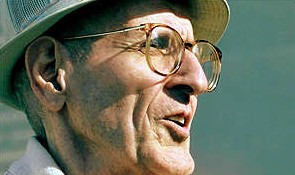
Jack Kevorkian
Homicide David Koresh
Homicide · USA · 1993
David Koresh (born Vernon Wayne Howell; August 17, 1959 – April 19, 1993) led t…
79 victims
David Koresh
Homicide · USA · 1993
David Koresh (born Vernon Wayne Howell; August 17, 1959 – April 19, 1993) led t…
79 victims
 Todd Hall
Homicide · USA · 1996
Todd Hall was described by neighbors as "mentally slow" and was said to have su…
9 victims
Todd Hall
Homicide · USA · 1996
Todd Hall was described by neighbors as "mentally slow" and was said to have su…
9 victims
 Clinton Bankston
Homicide · USA · 1987
15 August 1987 — Ann Morris (63), her sister Sally Nicholson (59), and Sally’s…
5 victims
Clinton Bankston
Homicide · USA · 1987
15 August 1987 — Ann Morris (63), her sister Sally Nicholson (59), and Sally’s…
5 victims
 Joshua Jenkins
Homicide · USA · 1996
Joshua Jenkins was a 15-year-old American killer who killed five members of his…
5 victims
Joshua Jenkins
Homicide · USA · 1996
Joshua Jenkins was a 15-year-old American killer who killed five members of his…
5 victims
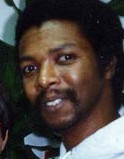 Dobie Gillis Williams
Murderer · USA · 1984
Dobie Gillis Williams was black and was staying at the home of his grandfather…
1 victim
Dobie Gillis Williams
Murderer · USA · 1984
Dobie Gillis Williams was black and was staying at the home of his grandfather…
1 victim
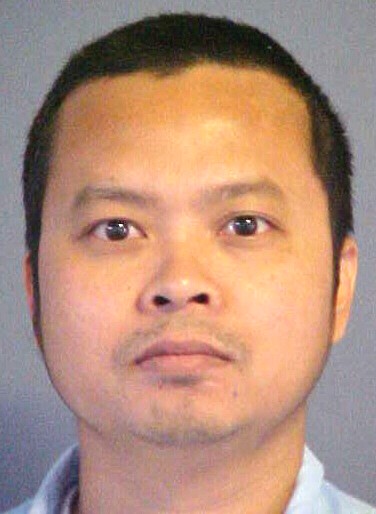 Hung Thanh Le
Murderer · USA · 1992
Hung Thanh Le was executed by lethal injection in Oklahoma on March 23, 2004. H…
1 victim
Hung Thanh Le
Murderer · USA · 1992
Hung Thanh Le was executed by lethal injection in Oklahoma on March 23, 2004. H…
1 victim
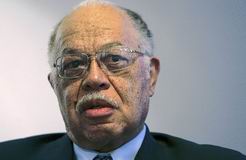 Kermit Gosnell
Murderer · USA · 2006
Kermit Barron Gosnell was an American physician from Philadelphia. He ran an ab…
4 victims
Kermit Gosnell
Murderer · USA · 2006
Kermit Barron Gosnell was an American physician from Philadelphia. He ran an ab…
4 victims
 Benjamin Ng
Mass murderer · USA · 1983
Benjamin Ng participated in the killings at the Wah Mee gambling club in Seattl…
3 victims
Benjamin Ng
Mass murderer · USA · 1983
Benjamin Ng participated in the killings at the Wah Mee gambling club in Seattl…
3 victims
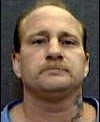 David Lee Cox
Murderer · USA · 1998
1998 — A dispute arose between David Lee Cox and Mark Davis; Davis asked Cox fo…
1 victim
David Lee Cox
Murderer · USA · 1998
1998 — A dispute arose between David Lee Cox and Mark Davis; Davis asked Cox fo…
1 victim
- Gender
- male
- Country
- USA
- Location
- Several States, USA
- Date of birth
- May 26, 1928
- Age at first offence
- 62
- Characteristics
- —
- Victim profile
- Men and women (terminal patients)
- Method of murder
- Poisoning (drugs/carbon monoxide)
- Date(s) of murder
- 1990 - 1999
- Years active
- 1990–1999
- Date of arrest
- —
- Status
-
Released
Released on June 1, 2007
Case record: Jack Kevorkian
Background
Jack Kevorkian (born May 26, 1928) was a controversial American pathologist. He was most noted for publicly championing a terminal patient's right to die via physician-assisted suicide, and he claimed to have assisted at least 130 patients to that end. He was known for the quotation, "dying is not a crime."
Kevorkian was born in Pontiac, Michigan, to Armenian-American parents. He graduated from Pontiac Central High School with honors in 1945, at the age of 17. He then enrolled at the University of Michigan Medical School and graduated in 1952. In the 1980s, he wrote a series of articles for the German journal Medicine and Law that laid out his thinking on the ethics of euthanasia.
Kevorkian started advertising in Detroit newspapers in 1987 as a physician consultant for "death counseling." In 1991 the State of Michigan revoked his medical license and made it clear that, given his actions, he was no longer permitted to practice medicine or to work with patients.
During the course of the various proceedings, Kevorkian made statements under oath and to the press that he considered it his duty to assist persons in their death. He also indicated under oath that because he thought laws to the contrary were archaic and unjust, he would persist in civil disobedience, even under threat of criminal punishment.
Kevorkian became known as "Dr. Death." He had been noted for efforts in the 1950s photographing the eyes of dying patients. He had also published on euthanasia and related topics, including a 1956 paper titled "The Fundus Oculi and the Determination of Death," and he advocated consensual experiments on convicts during executions in a paper presented in December 1958. A 1961 article described his efforts to transfuse blood from dead bodies into living patients. In 1989, he began tinkering on a suicide machine after a quadriplegic patient publicly asked for assistance.
Kevorkian had medical research experience connected to Hepatitis C. The biography stated that he contracted Hepatitis C while doing research on blood transfusions in Vietnam. He was described as terminally ill with Hepatitis C while incarcerated.
Kevorkian had a son named Zachary Kevorkian, who said: "I don't like to think of him as the 'Doctor of Death', I think of him as a liberator."
Statements attributed to others included an NBCS interview quote from the St. Petersburg Times about Kevorkian expressing a desire for assisted suicide to be "a medical service" for willing patients, and Kevorkian being quoted as saying: "My aim in helping the patient was not to cause death" and "My aim was to end suffering. It's got to be decriminalized."
Family and personal details
- Sister: Flora Holzheimer
- Sister: Margo Janus
Art and cultural references (included as provided)
Kevorkian created artwork in adult education oil painting classes in Pontiac, Michigan, in the 1960s, producing 18 canvases as described by author Michael Betzold. It stated that the 18 original canvases were lost and that Kevorkian returned to his art in the 1990s to finance his crusade for assisted-suicide. His paintings were used on album covers for Acid Bath and Knife. It also described themes frequently present in his paintings.
A list of cultural references was included, including heavy metal, EBM-project, television shows, films, and songs, as well as a specific note that American comedian Stephen Lynch's song "Grandfather" references Kevorkian and includes the line: "Oh grandfather die, before the fiscal year. Oh grandfather I/ wish Kevorkian were here." Additional references included quotes and character name mentions across multiple television episodes and films, including the line: "I've never lost a patient before." attributed in context to a character associated with "Krekorian" in the described TV series episode. (All cultural references were included in the provided text as factual claims in the biography.)
The offence
Kevorkian was convicted for his role in the televised death of Thomas Youk, 52, in Oakland County, Michigan. The Michigan jury found him guilty of second-degree homicide. The record stated that it was proven he had directly killed a person because Thomas Youk was not physically able to kill himself.
The biography also discussed a period in which he allegedly assisted deaths of nearly one hundred terminally ill people between 1990 and 1998, with individuals themselves allegedly taking the final action after being attached to a device. It described devices including:
- A device called the "Thanatron" that delivered euthanizing drugs mechanically through an IV.
- A device called the "Mercitron" that employed a gas mask fed by a canister of carbon monoxide.
The biography described that Kevorkian allegedly assisted only by attaching the individual to a device he had made, with the individual then pushing a button to release drugs or chemicals that would end their own life. It further stated that two deaths were assisted using the "Thanatron" and that other people were assisted using the "Mercitron."
Investigation
The case narrative included the broadcast and charge development connected to Thomas Youk.
On the November 23, 1998 broadcast of 60 Minutes, Kevorkian allowed the airing of a videotape he had made on September 17, 1998. The videotape depicted the voluntary euthanasia of Thomas Youk, an adult male with full decisional capacity who was in the final stages of ALS.
It stated that after Youk provided his fully-informed consent on September 17, 1998, Kevorkian administered a lethal injection. The account stated that during the videotape, Kevorkian dared the authorities to try to convict him or stop him from carrying out assisted suicides, and it stated that this incited the district attorney to bring murder charges against him.
Prosecutors brought murder charges, claiming Kevorkian had single-handedly caused the death. Prosecutors also argued later in sentencing that Kevorkian should get a minimum of 10 to 25 years because he was a danger to society and had shown contempt for the law.
Arrest
The record stated that on March 26, 1999, Kevorkian was charged with second-degree homicide and the delivery of a controlled substance (administering a lethal injection to Thomas Youk). It also stated that his license to practice medicine had been revoked eight years previously, and thus he was not legally allowed to possess the controlled substance.
Trial
Kevorkian was tried multiple times over the years for assisting in suicides. Many of these trials took place in Oakland County, Michigan. The record stated that in every instance prior to the Thomas Youk case, Kevorkian was acquitted. It also described that he began to gain public support for his cause, and it noted the defeat of Oakland County prosecutor Richard Thompson to David Gorcyca in the Republican primary as evidence of declining public support for prosecution and associated legal expenses.
The trial for Thomas Youk included that Kevorkian discharged his attorneys and proceeded through the trial pro se (representing himself). The judge ordered a criminal defense attorney to remain available at trial for information and advice.
The Michigan jury found Kevorkian guilty of second-degree homicide. It was stated that it was proven he had directly killed a person because Thomas Youk was not physically able to kill himself.
Sentencing
Kevorkian was sentenced by a Michigan judge on April 13, 1999. He received a 10-to-25-year prison sentence for second-degree murder (and the record also stated that he received three to seven years for delivery of a controlled substance in one narrative segment).
The sentencing judge was identified as Oakland County Circuit Judge Jessica Cooper. The record included Judge Cooper's remarks:
"You were on bond to another judge when you committed this offense, you were not licensed to practice medicine when you committed this offense and you hadn't been licensed for eight years. And you had the audacity to go on national television, show the world what you did and dare the legal system to stop you. Well, sir, consider yourself stopped."
It also included additional remarks attributed to Judge Cooper:
- She said, "I question whether you will ever cease and desist,"
- She said, "This is a court of law,"
- She said, "You may not take the law into your own hands,"
- She said, "You invited yourself to the wrong forum,"
- She added, "You had audacity to go on national television, showed the world what you did and dared the legal system to stop you," and "Consider yourself stopped."
- She stated that when he injected Youk with a lethal cocktail of drugs, what he did was "murder."
Prosecutor John Skrzynski praised the judge and was quoted:
"This is not a special case. He is not a special person. He was accountable to law," and: "This is a highly courageous thing to do."
The record stated that the prosecution argued Kevorkian must serve two-thirds of his term before he was eligible for parole.
The sentencing narrative included that Youk's widow, Melody, asked for leniency. It included Melody's quoted characterization:
"My husband was grateful for the doctor's assistance to end his suffering," and calling Kevorkian's intervention "an act of compassion and courage."
It also included Melody's further quotes:
"It was not a crime," and: "and certainly not a murder."
Melody was also quoted regarding Youk's preferences and reasoning:
"Tom chose it," "bring himself to a peaceful transition,"
The record also included a quote from Terry Youk:
"He was caught in hell,"
It further described that Kevorkian declined to speak at sentencing, and it stated that Kevorkian threatened to starve himself to death if imprisoned.
Kevorkian was sent to prison in Coldwater, Michigan.
Appeals
After conviction, the record stated that Kevorkian was denied parole repeatedly following subsequent losses on appeal. The narrative included that after his conviction and subsequent losses on appeal, he was denied parole repeatedly.
A specific parole board denial was described:
- On December 22, 2005, Kevorkian was denied parole by a board on the count of 7-2 recommending not to give parole.
There was also a statement about an NBCS interview aired on September 29, 2005. Kevorkian said:
- "if he were granted parole, he would not resume directly helping people die and would restrict himself to campaigning to have the law changed."
Outcome
Kevorkian served eight years of a 10-to-25-year prison sentence between 1999 and 2007. He was released on June 1, 2007.
Parole was granted due to good behavior. It stated that after applying for a pardon, parole, or commutation by the parole board and Governor Jennifer Granholm, he was paroled on June 1, 2007 due to good behavior.
The record included parole conditions:
- He would be on parole for two years.
- One of the conditions was that he could not help anyone else die.
- He was also prohibited from providing care for anyone who was older than 62 or was disabled.
- He could go back to prison if he violated his parole.
Aftermath
On June 4, 2007, Kevorkian appeared on CNN's Larry King Live to discuss his time in prison and his future plans.
At the time of Kevorkian's release, the biography stated that the only state in the United States that had legalized doctor-assisted suicide for terminally ill people was Oregon.
On January 15, 2008, Kevorkian gave a large public lecture since his release from prison, speaking to a crowd of 4,867 people at the University of Florida. The St. Petersburg Times reported that Kevorkian expressed a desire for assisted suicide to be "a medical service" for willing patients, and it included the quoted lines:
"My aim in helping the patient was not to cause death,"
"My aim was to end suffering. It's got to be decriminalized."
The record also described plans to run for Congress:
- On March 12, 2008, Kevorkian announced plans to run for congress in Michigan's 9th Congressional District against long-term congressman Joe Knollenberg (R-Bloomfield Hills) and Central Michigan University Professor Gary Peters (D-Bloomfield Township).
- He said he would run as an independent.
Other details
Earlier device-related and prior-death narratives (included as provided)
The biography included additional names and death-related episodes:
- It stated that Kevorkian's first suicide he was involved in was the 1990 death of Jane Adkins, 54, who suffered from Alzheimer's disease. She died in Dr Kevorkian's Volkswagen van in Groveland Oaks Park near Holly, Michigan.
- It stated that a murder charge against Dr. Kevorkian was dismissed in the death of Jane Adkins and that the ruling has never been appealed.
- It stated that since then, Dr. Kevorkian had been acquitted in two more trials involving four other deaths.
- It stated that in 1995, he opened a "suicide clinic" in an office in Springfield Township, Michigan, but was booted out by the building's owner a few days after his first client died.
Timeline
- May 26, 1928 — Jack Kevorkian was born in Pontiac, Michigan.
- 1952 — He graduated from the University of Michigan medical school.
- 1987 — Kevorkian started advertising in Detroit newspapers as a physician consultant for "death counseling."
- 1990 — The biography described Kevorkian being involved in the death of Jane Adkins, 54, who had Alzheimer's disease.
- 1991 — The State of Michigan revoked Kevorkian's medical license.
- September 17, 1998 — Kevorkian made a videotape depicting voluntary euthanasia of Thomas Youk, and Youk provided fully-informed consent.
- November 23, 1998 — 60 Minutes broadcast the videotape depicting the death of Thomas Youk.
- March 26, 1999 — Kevorkian was charged with second-degree homicide and the delivery of a controlled substance.
- April 13, 1999 — A Michigan judge sentenced Kevorkian to 10-to-25 years in prison.
- September 29, 2005 — In an MSNBC interview, Kevorkian stated he would not resume directly helping people die if granted parole and would instead campaign to have the law changed.
- December 22, 2005 — Kevorkian was denied parole by a board on the count of 7-2 recommending not to give parole.
- June 1, 2007 — Kevorkian was paroled and released on good behavior.
- June 4, 2007 — Kevorkian appeared on CNN's Larry King Live.
- January 15, 2008 — Kevorkian gave a public lecture at the University of Florida to a crowd of 4,867 people.
- March 12, 2008 — Kevorkian announced plans to run for Congress in Michigan's 9th Congressional District as an independent.
Biographical chronology included in the provided text
The record also included a detailed chronology of Kevorkian's life and assisted suicide campaign that listed multiple specific dates and events. Those events included the following dated entries as provided:
- May 28, 1928 — Kevorkian is born in Pontiac, Michigan.
- 1956 — He published "The Fundus Oculi and the Determination of Death."
- December 1958 — He presented a paper advocating medical experimentation on consenting convicts during executions.
- 1961 — He published an article in The American Journal of Clinical Pathology detailing transfusing blood from cadavers to live patients.
- 1970 — He became chief pathologist at Saratoga General Hospital in Detroit.
- 1987 — He advertised as a "physician consultant" for "death counseling."
- 1988 — His article "The Last Fearsome Taboo: Medical Aspects of Planned Death" was published in Medicine and Law.
- 1989 — He used scrap parts to build his "suicide machine."
- June 4, 1990 — He was present at the death of Janet Adkins, a 54-year-old Portland, Oregon, woman with Alzheimer's disease, in his 1968 Volkswagen van in Groveland Oaks Park near Holly, Michigan.
- June 8, 1990 — An Oakland County Circuit Court judge enjoined him from aiding in any suicides.
- December 12, 1990 — District Court Judge Gerald McNally dismissed a murder charge against him in the death of Adkins.
- October 23, 1991 — He attended the deaths of Marjorie Wantz and Sherry Miller at a rented state park cabin near Lake Orion, Michigan.
- November 20, 1991 — The state Board of Medicine summarily revoked Kevorkian's license to practice medicine in Michigan.
- May 15, 1992 — Susan Williams died from carbon monoxide poisoning in her home in Clawson, Michigan.
- July 21, 1992 — Oakland County Circuit Court Judge David Breck dismissed charges against Kevorkian in deaths of Miller and Wantz.
- September 26, 1992 — Lois Hawes died from carbon monoxide poisoning at the home of Neal Nicol in Waterford Township, Michigan.
- November 23, 1992 — Catherine Andreyev died in Nicol's home.
- December 3, 1992 — The Michigan Legislature passed a ban on assisted suicide to take effect on March 30, 1993.
- February 15, 1993 — Hugh Gale died in his Roseville home.
- February 25, 1993 — Michigan Governor John Engler signed legislation banning assisted suicide.
- April 27, 1993 — A California law judge suspended Kevorkian's medical license.
- August 4, 1993 — Thomas Hyde was found dead in Kevorkian's van on Belle Isle, a Detroit park.
- September 9, 1993 — Hours after a judge ordered him to stand trial in Hyde's death, he was present at the death of cancer patient Donald O'Keefe, 73, in Redford Township, Michigan.
- November 5-8, 1993 — He fasted in Detroit jail after refusing to post $20,000 bond in Hyde's case.
- November 29, 1993 — He began fast in Oakland County jail for refusing to post $50,000 bond after being charged in the October death of Merian Frederick, 72.
- December 17, 1993 — He ended fast and left jail after Oakland County Circuit Court Judge reduced bond to $100 in exchange for his vow not to assist in any more suicides until state courts resolved legality.
- January 27, 1994 — A Circuit Court Judge dismissed charges against him in two deaths.
- May 2, 1994 — A Detroit jury acquitted Kevorkian of charges he violated the state's assisted suicide ban in the death of Thomas Hyde.
- May 10, 1994 — The Michigan Court of Appeals struck down the state's ban on assisted suicide.
- November 8, 1994 — Oregon became the first state to legalize assisted suicide when voters passed a Death with Dignity Act.
- November 26, 1994 — Hours after Michigan's ban on assisted suicide expired, Margaret Garrish died of carbon monoxide poisoning in her home in Royal Oak.
- December 13, 1994 — The Michigan Supreme Court upheld the constitutionality of Michigan's assisted suicide ban and ruled assisted suicide was illegal under common law.
- June 26, 1995 — Kevorkian opened a "suicide clinic" in an office in Springfield Township, Michigan.
- September 14, 1995 — He arrived at the Oakland County Courthouse in Pontiac in homemade stocks with a ball and chain.
- October 30, 1995 — A group of doctors and other medical experts announced support for Kevorkian, saying they would draw up guiding principles for medically-assisted termination of life.
- February 1, 1996 — New England Journal of Medicine published studies of physicians' attitudes towards doctor-assisted suicide in Oregon and Michigan.
- March 6, 1996 — The 9th U.S. Circuit Court of Appeals ruled that mentally competent, terminally ill adults had a constitutional right to aid in dying.
- March 8, 1996 — A jury acquitted Kevorkian in two deaths.
- March 20, 1996 — Representative Dave Camp introduced a bill to prohibit tax-payer funding of assisted suicide.
- April 1, 1996 — Trial began in Pontiac in the deaths of Miller and Wantz.
- May 14, 1996 — The jury acquitted him in the Wantz/Miller deaths.
- November 4, 1996 — His lawyer announced a previously unreported assisted suicide of a 54-year-old woman.
- June 12, 1997 — In Kevorkian's fourth trial, a judge declared a mistrial and the case was later dropped.
- June 26, 1997 — The U.S. Supreme Court ruled unanimously that state governments had the right to outlaw doctor-assisted suicide.
- November 5, 1997 — Oregon residents voted to uphold the state's assisted suicide law.
- March 14, 1998 — The biography marked Kevorkian's 100th assisted suicide involving a 66-year-old Detroit man.
- September 1, 1998 — Michigan's second law outlawing physician-assisted suicide went into effect.
- November 3, 1998 — Michigan voters rejected a proposal to legalize physician-assisted suicide.
- November 22, 1998 — 60 Minutes aired a videotape showing Kevorkian giving a lethal injection to Thomas Youk.
- November 24, 1998 — Michigan charged Kevorkian with first-degree murder and violations connected to assisted suicide law and delivery of a controlled substance; prosecutors later dropped the suicide charge.
- April 13, 1999 — Convicted of second-degree murder and delivery of a controlled substance, Kevorkian was sentenced to 10-25 years in prison.
- March 15, 2000 — Kevorkian received a Civil Activist Award from the Gleitsman Foundation as he awaited an appeal.
- December 13, 2006 — It was announced he would be paroled on June 1, 2007.
Individuals named in the provided text
The record included multiple individuals named within the provided material, including:
- Thomas Youk, 52 (adult male with full decisional capacity; in final stages of ALS)
- Melody (Youk's widow)
- Terry Youk (Youk's brother)
- Richard Thompson (Oakland County prosecutor)
- David Gorcyca
- Jessica Cooper (Oakland County Circuit Judge)
- John Skrzynski (prosecutor)
- Geoffrey Fieger (attorney described as involved earlier and in the biography)
- Zachary Kevorkian (Jack Kevorkian's son)
- Joe Knollenberg (long-term congressman)
- Gary Peters (Central Michigan University Professor)
It also included earlier names in the biography chronology and device-related narrative:
- Jane Adkins, 54
- Janet Adkins
- Marjorie Wantz, 58
- Sherry Miller, 43
- Susan Williams, 52
- Erika Garcellano, 60
- Neal Nicol (Kevorkian's assistant)
- Lois Hawes, 52
- Catherine Andreyev, 45
- Hugh Gale, 70
- Thomas Hyde, 30
- Donald O'Keefe, 73
- Merian Frederick, 72
- Margaret Garrish, 72
- Hugh Gale
- Additionally, the chronology referenced unnamed "Royal Oak" home for Margaret Garrish and multiple other referenced locations.
Spotted an error, or have more information about this case?