Walter Hill
Serial killer Richard Kuklinski
Serial killer · USA · 1949
Richard “Iceman” Kuklinski was sentenced to life in prison in 1988. He died in…
100 victims
Richard Kuklinski
Serial killer · USA · 1949
Richard “Iceman” Kuklinski was sentenced to life in prison in 1988. He died in…
100 victims
 Ottis Toole
Serial killer · USA · 1961
Ottis Elwood Toole (sometimes misspelled as “Otis”) was an American serial kill…
65 victims
Ottis Toole
Serial killer · USA · 1961
Ottis Elwood Toole (sometimes misspelled as “Otis”) was an American serial kill…
65 victims
 Juan Vallejo Corona
Serial killer · USA · 1960
Juan Vallejo Corona was a native of Mexico, born in 1934. He moved to Yuba City…
25 victims
Juan Vallejo Corona
Serial killer · USA · 1960
Juan Vallejo Corona was a native of Mexico, born in 1934. He moved to Yuba City…
25 victims
 Raymond Fernandez
Serial killer · USA · 1947
Raymond Martinez Fernandez was executed by electrocution at Sing Sing prison in…
17 victims
Raymond Fernandez
Serial killer · USA · 1947
Raymond Martinez Fernandez was executed by electrocution at Sing Sing prison in…
17 victims
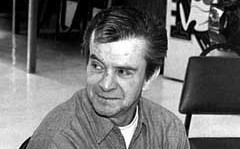 Carroll Edward Cole
Serial killer · USA · 1948
Carroll Edward Cole, also known as “Eddie,” was born in Sioux City, Iowa on May…
15 victims
Carroll Edward Cole
Serial killer · USA · 1948
Carroll Edward Cole, also known as “Eddie,” was born in Sioux City, Iowa on May…
15 victims
 Laura Rogers
Murderer · USA · 2004
Laura Rogers was convicted of manslaughter after the shooting death of her husb…
1 victim
Laura Rogers
Murderer · USA · 2004
Laura Rogers was convicted of manslaughter after the shooting death of her husb…
1 victim
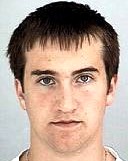 Adam Sapikowski
Homicide · USA · 2005
Adam Sapikowski was a Chapel Hill teenager who pleaded guilty to second-degree…
2 victims
Adam Sapikowski
Homicide · USA · 2005
Adam Sapikowski was a Chapel Hill teenager who pleaded guilty to second-degree…
2 victims
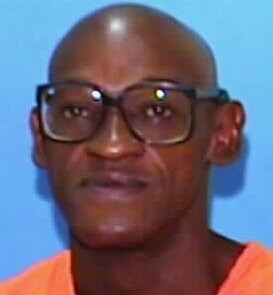 Jerry Haliburton
Murderer · USA · 1981
Jerry Haliburton was born on 09/19/54. The case occurred in the Fifteenth Judic…
1 victim
Jerry Haliburton
Murderer · USA · 1981
Jerry Haliburton was born on 09/19/54. The case occurred in the Fifteenth Judic…
1 victim
 Sarah Malcolm
Murderer · United Kingdom · 1733
Sarah Malcolm was a powerfully built 22-year-old Irish laundress employed in th…
3 victims
Sarah Malcolm
Murderer · United Kingdom · 1733
Sarah Malcolm was a powerfully built 22-year-old Irish laundress employed in th…
3 victims
 Jieming Liu
Murderer · USA · 2012
Jieming Liu was a 79-year-old man from Shrewsbury. His wife, Yuee Zhou, was 73…
1 victim
Jieming Liu
Murderer · USA · 2012
Jieming Liu was a 79-year-old man from Shrewsbury. His wife, Yuee Zhou, was 73…
1 victim
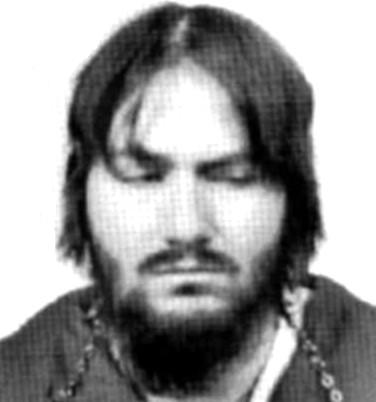 William Minnick
Murderer · USA · 1981
William Minnick was convicted of Murder, Rape, and Robbery following the death…
1 victim
William Minnick
Murderer · USA · 1981
William Minnick was convicted of Murder, Rape, and Robbery following the death…
1 victim
- Gender
- male
- Country
- USA
- Location
- Bessemer/Jefferson Counties, Alabama, USA
- Date of birth
- 1934
- Age at first offence
- 18
- Characteristics
- kidnapping, drug addict
- Victim profile
- 3 men and 2 woman
- Method of murder
- Shooting / St abbing with knife
- Date(s) of murder
- 1952 - 1977
- Years active
- 1952–1977
- Date of arrest
- —
- Status
-
Executed
Executed by electrocution in Alabama on May 2, 1997
Case record: Walter Hill
Timeline
- January 7, 1977 — Walter Hill shot Willie Mae Hammock, John Tatum, and Lois Tatum in the Booker Heights community of Jefferson County, Alabama.
- 1952 — Walter Hill pled guilty to second-degree murder and was sentenced to ten years’ imprisonment.
- 1960 — Walter Hill was released from custody.
- 1961 — A year after his release, Walter Hill was convicted in federal court in Alabama of kidnapping and interstate transportation of a stolen vehicle; he received a 25-year sentence.
- Atlanta penitentiary (during federal sentence) — Walter Hill was convicted of stabbing another inmate to death and was sentenced to an additional five years in custody.
- 1975 — Walter Hill was released from his federal sentences and returned to live in Birmingham; less than two years later he committed the murders for which he was sentenced to death.
- October 1977 — Walter Hill was convicted in Alabama circuit court of capital murder in the killings of Willie Mae Hammock and the Tatums.
- January 21, 1987 — Circuit Judge James Garrett held an evidentiary hearing on Walter Hill’s Brady claim and denied it by written order.
- December 5, 1985 — Attorney Alan W. Howell filed a petition for writ of error coram nobis on Walter Hill’s behalf in the Circuit Court of Jefferson County, Alabama.
- April 12, 1990 — Walter Hill filed a petition for habeas corpus in the United States District Court for the Northern District of Alabama.
- April 17, 1990 — The district court ordered Walter Hill to amend within 30 days.
- March 22, 1991 — Attorney Howell withdrew to permit Mr. Hill to more clearly present issues critical to his case.
- April 13, 1994 — The district court dismissed Walter Hill’s claims and denied his petition without a hearing.
- May 2, 1997 — Walter Hill was executed at 12:13 in the morning at Holman prison near Mobile, Alabama, after receiving a lethal shock from the state’s electric chair.
- February 18, 1997 — The United States Supreme Court denied Walter Hill’s petition for a writ of certiorari.
- March 20, 1997 — Walter Hill filed his third state post-conviction petition in the Circuit Court of Jefferson County pursuant to Rule 32 of the Alabama Rules of Criminal Procedure.
- March 31, 1997 — The Alabama Supreme Court determined that Walter Hill would be executed at 12:01 a.m. on May 2, 1997.
- April 22, 1997 — The Alabama Court of Criminal Appeals affirmed the trial court’s summary denial of Walter Hill’s Rule 32 petition.
- April 23, 1997 — The Court of Criminal Appeals denied Walter Hill’s petition for rehearing.
- April 30, 1997 — The Alabama Supreme Court denied the stay of execution.
- May 1, 1997 — The Alabama Supreme Court denied Walter Hill’s petition for writ of certiorari; on the same date, the Eleventh Circuit received a filing related to a successive petition application.
Background
Walter Hill was an Alabama inmate convicted of capital murder and sentenced to death. He was also described as a “5-time killer” who spent 20 years on Alabama’s death row and spent a total of 44 years in different prisons. He was 62 at the time of execution and was declared dead at 12:13 in the morning at Holman prison near Mobile, Alabama, after receiving a lethal shock from the state’s electric chair.
The murders for which he was sentenced to death occurred in January 1977. Hill sought to marry Toni Hammock, 13. At his execution, he was described as having become the 2nd condemned prisoner executed that year in Alabama, and the 15th overall since Alabama resumed executions in 1983. His execution was described as the 19th in the USA that year and the 377th overall since America resumed capital punishment on Jan. 17, 1977.
The offence
Victims
The killings involved:
- Willie Mae Hammock, 60, who was described as Toni Hammock’s grandmother and adoptive mother.
- John Tatum, 36, who was described as Hammock’s son.
- Lois Jean Tatum, 34, who was described as Tatum’s wife. Toni Hammock was 13 and was described as the girl Hill sought to marry.
Murder and sequence of events
In the Booker Heights community of Jefferson County, Alabama, Hill frequently gambled and drank at Willie Mae Hammock’s home while Ms. Hammock operated what was described as a “shot house” (an illegal social club). Ms. Hammock, Toni Hammock, John Tatum, and Lois Tatum lived in Ms. Hammock’s house. John Tatum was described as a 31-year-old retarded man and was Lois Tatum’s brother. Toni was Ms. Hammock’s 13-year-old ward and was often present at the house while patrons, including Hill, were gambling and drinking.
Hill apparently developed a romantic interest in Toni and quarreled with Ms. Hammock approximately two weeks before the murders when Ms. Hammock refused to allow Toni to go with him to California.
On January 7, 1977, at approximately 4:30 in the afternoon, Hill went to Ms. Hammock’s home. After Hill arrived, Ms. Hammock gave Hill a pistol that he had left there on an earlier occasion. Hill asked whether he could marry Toni, but Ms. Hammock refused permission. Hill followed Ms. Hammock when she turned to enter a closet in a front bedroom and shot her in the back of the head with his pistol. Proceeding to the dining room, Hill shot John Tatum twice in the head. Hill then chased down Lois Tatum and shot her in the back of the head as well.
Hill told Toni, who had witnessed the shootings, he had “one more to kill.” Hill was referring to Toni’s 16-year-old brother Robert. Hill and Toni drove to another house to get Robert. Robert got into the car but threatened to jump from the car when Hill was evasive about their destination. Hill told Robert he would “put a bullet in his head” if he attempted to escape. Hill, Toni, and Robert then drove to Georgia where their car broke down. Robert escaped and returned to Birmingham, where he discovered the bodies of Ms. Hammock and the Tatums.
After Robert escaped, Hill and Toni walked into a residential neighborhood in Decatur, Georgia, where they encountered Lewis Nunnery. Hill and Toni told Nunnery they needed assistance getting their car repaired, and Nunnery agreed to help. After the three of them got into Nunnery’s car, Hill ordered Nunnery to drive them to South Carolina. Hill told Nunnery that he was a fugitive from Alabama who had just killed three people and would kill again, warning he would kill the police or anyone else who tried to stop him. Hill forced Nunnery on a drive through South Carolina and Tennessee. After the car overheated and broke down in North Carolina, Hill fell asleep and Nunnery escaped. Nunnery reported his abduction to police, and Hill was arrested in the disabled car on the side of the road. Police found the pistol with which Hill had killed Ms. Hammock and the Tatums in his pocket.
Prior victim context and motive framed in the record
The killings followed Hill’s attempt to marry Toni Hammock after permission was refused by Ms. Hammock. The record also described Hill’s romantic interest and prior quarrel with Ms. Hammock about taking Toni to California.
Investigation and arrest
Police arrested Walter Hill in the disabled car on the side of the road after Lewis Nunnery escaped and reported his abduction. Police found the pistol used to kill Willie Mae Hammock and the Tatums in Hill’s pocket at the time of his arrest.
Hill was 45 years old at the time of his arrest and had spent most of his adult life incarcerated.
Prior history and incarceration before capital conviction
In 1952, Walter Hill was convicted of second-degree murder in an Alabama state court and sentenced to ten years’ imprisonment. He was released in 1960. A year later, he was convicted in federal court in Alabama of kidnapping and interstate transportation of a stolen vehicle and received a 25-year sentence. While serving that sentence in the federal penitentiary in Atlanta, he was convicted of stabbing another inmate to death and sentenced to an additional five years.
Hill was paroled in 1975 after having served approximately 13 years of his federal sentences. He returned to live in Birmingham and then, less than two years later, committed the murders for which he was sentenced to death.
Trial
First capital murder conviction and reversal
In October 1977, Hill was convicted in Alabama circuit court of capital murder in the killings of Willie Mae Hammock and the Tatums. At the time, Hill was represented by attorneys William Short and Jackie McDougal. Judge Harry Pickens sentenced Hill to death.
The Alabama Court of Criminal Appeals reversed the conviction after finding the prosecution had improperly used “for cause” challenges to strike death-scrupled jurors in violation of Witherspoon v. Illinois, 391 U.S. 510 (1968). See Hill v. State, 371 So.2d 64, 67 (Ala.Crim.App.1979).
Second capital murder trial and sentencing
Hill was tried a second time for capital murder before Judge Pickens beginning on August 21, 1979. At his second trial, Hill was represented by McDougal and Robert Boyce. He was again convicted of capital murder.
Judge Pickens conducted a sentencing hearing on September 14, 1979, and orally sentenced Hill to death. Judge Pickens died before he could enter a signed sentencing order. Judge Gardner Goodwyn assumed Hill’s case thereafter and held a de novo sentencing hearing on February 19, 1980 to determine whether Hill should be sentenced to death or life without parole.
Goodwyn read the transcript of Hill’s second guilt-phase trial and made separate findings of fact about aggravating and mitigating circumstances. Goodwyn found evidence supported three statutory aggravating circumstances:
- The murders were “especially heinous, atrocious or cruel,”
- Hill knowingly created a “great risk of death to many persons,” and
- Hill had been convicted of several prior violent felonies.
Goodwyn found no mitigating circumstances and sentenced Hill to death.
Direct appeals and federal review
Hill appealed his second conviction and death sentence to the Alabama Court of Criminal Appeals. The appeals court reversed his conviction citing Beck v. Alabama, 447 U.S. 625 (1980). Hill v. State, 407 So.2d 567 (Ala.Crim.App.1981). The Supreme Court of Alabama denied certiorari. Hill v. State, 407 So.2d 567 (Ala.1981).
The Alabama State petitioned the U.S. Supreme Court. On June 14, 1982, the U.S. Supreme Court vacated and remanded in light of Hopper v. Evans, 456 U.S. 605 (1982). Alabama v. Hill, 457 U.S. 1114 (1982). After review, the Alabama Court of Criminal Appeals affirmed Hill’s conviction and sentence. Hill v. State, 455 So.2d 930 (Ala.Crim.App.1984). The Alabama Supreme Court affirmed. Ex parte Hill, 455 So.2d 938, 939 (Ala.1984).
The U.S. Supreme Court denied certiorari. Hill v. Alabama, 469 U.S. 1098 (1984).
On his final petition to the U.S. Supreme Court on direct appeal, only attorney Alan W. Howell represented Hill.
Sentencing
Judge Harry Pickens orally sentenced Hill to death following the sentencing hearing on September 14, 1979, after Hill’s second capital murder conviction. Judge Pickens died before entering a signed sentencing order. Judge Gardner Goodwyn later conducted a de novo sentencing hearing on February 19, 1980, finding three statutory aggravating circumstances and no mitigating circumstances, and sentenced Hill to death.
Appeals and post-conviction proceedings
Writ of error coram nobis and Brady claim
On December 5, 1985, attorney Alan W. Howell filed a petition for a writ of error coram nobis on Hill’s behalf in the Circuit Court of Jefferson County, Alabama. The petition raised one claim: that the prosecution withheld exculpatory evidence from Hill’s trial counsel in violation of Brady v. Maryland, 373 U.S. 83 (1963).
On January 21, 1987, Circuit Judge James Garrett held an evidentiary hearing on Hill’s Brady claim and denied the claim by written order.
The Alabama Court of Criminal Appeals affirmed: Hill v. State, 541 So.2d 83 (Ala.Crim.App.1988). The Alabama Supreme Court denied certiorari: Ex parte Hill, 562 So.2d 315 (Ala.1989).
Hill later argued to the U.S. Supreme Court that his death sentence rested on the “especially heinous, atrocious or cruel” aggravating circumstance applied in an unconstitutionally vague manner under Godfrey v. Georgia, 446 U.S. 420 (1980), and Maynard v. Cartwright, 486 U.S. 356 (1988). The U.S. Supreme Court denied certiorari on October 2, 1989. Hill v. Alabama, 493 U.S. 874 (1989).
Second collateral petition under Rule 20
In March 1990, Hill filed a second petition for collateral relief in the Alabama trial court under Rule 20 of the Alabama (Temporary) Rules of Criminal Procedure. He listed twelve claims, including the Brady claim previously denied. He also raised ineffective assistance of trial and appellate counsel for the first time.
Without an evidentiary hearing, Judge Garrett dismissed all but the Brady claim as barred under Alabama’s successive petition rule codified in Temporary Rule 20.2(b). For the Brady claim, the court found it factually insufficient and concluded Hill was attempting to reargue an issue previously litigated in the 1985 coram nobis petition.
Federal habeas corpus proceedings (Northern District of Alabama; Eleventh Circuit)
Petition and amendments
Hill, represented by attorneys Howell and Oliver Loewy, filed a petition for habeas corpus in the Northern District of Alabama on April 12, 1990. On April 17, 1990, the district court ordered Hill to make amendments adding new claims within 30 days; Hill filed his amended petition by the deadline, asserting seventeen grounds for relief.
The State countered that most of Hill’s claims, including ineffective assistance of counsel allegations, were procedurally defaulted. Seven months later, the court sua sponte issued an order questioning Hill’s cursory reply to the State’s procedural default defense and directed the parties to review and present additional argument and authority.
On March 22, 1991, Howell withdrew “to permit Mr. Hill to more clearly present issues critical to his case.” Loewy continued to represent Hill. By August 21, 1991, Hill had not alleged that collateral counsel was ineffective, and the court assumed Hill had raised all intended issues. The court instructed Hill to file a supplemental brief on procedural default, citing Coleman v. Thompson, 501 U.S. 722 (1991) and Johnson v. Singletary, 938 F.2d 1166 (11th Cir. 1991) (en banc).
Hill filed a supplemental brief raising three general arguments against finding most claims procedurally defaulted: (1) he argued he was entitled to an evidentiary hearing on his claims regardless of status under state law because it was his initial federal petition; (2) he argued the State did not adequately compensate his coram nobis counsel or provide sufficient funds to investigate and present all viable claims in 1985; and (3) he argued it would be manifestly unjust to bar review on procedural grounds.
District court dismissal
On April 13, 1994, the district court dismissed Hill’s claims and denied his petition without a hearing. The court found twelve of Hill’s claims procedurally defaulted and determined Hill failed to demonstrate cause and prejudice or manifest injustice excusing defaults. The remainder of Hill’s claims were concluded to be without merit.
Fifteen days after the denial, Loewy moved to withdraw as counsel. Barry Fisher and Palmer Singleton entered notices of appearance, and contemporaneously filed a “Second Amended Petition” for habeas corpus, motions to alter or amend judgment, and for an evidentiary hearing. The district court struck the second amended petition and supplemental evidentiary materials as untimely and denied the motions as dilatory.
Eleventh Circuit decision
Hill appealed to the Eleventh Circuit, and the panel affirmed the denial of habeas relief, stating that the district court did not err in denying relief on Hill’s claims and affirming.
The discussion included claims of:
- ineffective assistance of trial counsel,
- ineffective assistance of appellate counsel,
- a Beck claim regarding lesser-included offense instructions,
- and a Swain claim regarding alleged racial discrimination in jury selection through peremptory challenges.
The Eleventh Circuit discussed procedural default, cause and prejudice, and manifest injustice, and concluded that the district court properly dismissed Hill’s claims.
Application for leave to file a successive habeas petition (Eleventh Circuit; AEDPA)
Per curiam denial (May 1, 1997)
In Walter Hill, Petitioner, the Eleventh Circuit issued a per curiam order on May 1, 1997 denying Hill’s application for permission to file a second or successive petition. The Court concluded that the claim advanced by Hill did not satisfy the criteria in 28 U.S.C. § 2244(b)(2).
Hill sought permission to raise a claim described as under Cage v. Louisiana, 111 S.Ct. 328 (1990). He contended the Alabama trial court deprived him of due process by improperly instructing the jury regarding reasonable doubt during the capital trial, asserting the instruction repeatedly and erroneously intimated that the State did not need to prove guilt beyond a reasonable doubt.
The Court addressed whether the Cage claim was “previously unavailable” under 28 U.S.C. § 2244(b)(2)(A) and whether the new rule was made retroactive to cases on collateral review by the Supreme Court under the same subsection. The Court found Hill’s circumstances did not satisfy “previously unavailable” and also concluded that the application did not satisfy the requirement that the Supreme Court made the new rule retroactive on collateral review.
The Court denied the application.
State post-conviction petitions near execution
Hill filed his third state post-conviction petition on March 20, 1997 in the Circuit Court of Jefferson County pursuant to Rule 32 of the Alabama Rules of Criminal Procedure. The petition challenged, among other things, the validity of a reasonable doubt instruction requested by Hill’s attorney and given by the court.
On the following day, the court summarily denied the petition citing various procedural bars incorporated into Rule 32. The Alabama Court of Criminal Appeals affirmed in a decision issued on April 22, 1997. The Court of Criminal Appeals denied rehearing on April 23, 1997.
On April 30, 1997, the Alabama Supreme Court denied the stay of execution. On May 1, 1997, the Alabama Supreme Court denied Hill’s petition for writ of certiorari.
Execution date setting and denials
After the U.S. Supreme Court denied Hill’s petition for a writ of certiorari on February 18, 1997, the State moved the Alabama Supreme Court to set an execution date. On March 31, 1997, the Alabama Supreme Court set Hill’s execution for 12:01 a.m. on May 2, 1997.
Last-minute appeals to the Alabama Supreme Court and US Supreme Court were denied.
Other details
Charles of prison and last-minute legal activity
The district court proceedings included references to attorneys and procedural matters, including that attorneys Barry Fisher and Palmer Singleton were the third and fourth attorneys to represent Hill in his state and federal collateral petitions, and that their amended filings were untimely.
Statements and quoted language
- Hill told Toni, who had witnessed the shootings, he had “one more to kill.”
Names of judges, attorneys, and parties in federal appellate matters
In the Eleventh Circuit appeal regarding denial of habeas relief, the record identified:
- Judges: HATCHETT, COX and BLACK, Circuit Judges (BLACK wrote the opinion).
- Parties: Walter Hill, Petitioner-Appellant, v. Ronald E. JONES, Commissioner, Alabama Department of Corrections, Respondent-Appellee. In the Eleventh Circuit successive petition proceeding:
- Judges: HATCHETT, Chief Judge, and COX and BLACK, Circuit Judges.
In state proceedings:
- Circuit Judge Harry Pickens (sentencing).
- Judge Gardner Goodwyn (de novo sentencing hearing).
- Circuit Judge James Garrett (coram nobis Brady evidentiary hearing and dismissal of the second Rule 20 collateral petition).
- Alabama Court of Criminal Appeals (reversal and subsequent affirmance in different stages).
- Alabama Supreme Court (decisions on certiorari, including denial and affirmation steps).
Spotted an error, or have more information about this case?