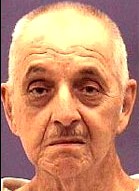
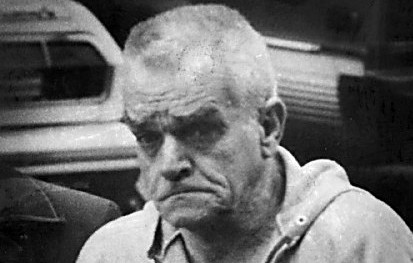
William Pierce
Serial killer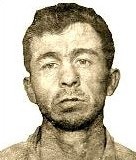 Donald Henry Gaskins
Serial killer · USA · 1969
Donald Henry Gaskins, also known as Donald “Pee Wee” Gaskins, was a serial kill…
200 victims
Donald Henry Gaskins
Serial killer · USA · 1969
Donald Henry Gaskins, also known as Donald “Pee Wee” Gaskins, was a serial kill…
200 victims
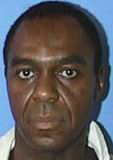 Carl Eugene Watts
Serial killer · USA · 1974
Carl Eugene Watts (born November 7, 1953; died September 21, 2007), also known…
100 victims
Carl Eugene Watts
Serial killer · USA · 1974
Carl Eugene Watts (born November 7, 1953; died September 21, 2007), also known…
100 victims
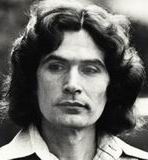 Rodney Alcala
Serial killer · USA · 1977
Rodney James Alcala (born August 23, 1943) was also known as Rodrigo Jacques Al…
100 victims
Rodney Alcala
Serial killer · USA · 1977
Rodney James Alcala (born August 23, 1943) was also known as Rodrigo Jacques Al…
100 victims
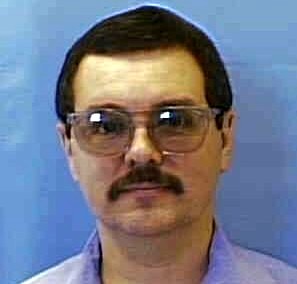 Donald Harvey
Serial killer · USA · 1970
Donald Harvey was known as an American serial killer and a self-professed “Ange…
87 victims
Donald Harvey
Serial killer · USA · 1970
Donald Harvey was known as an American serial killer and a self-professed “Ange…
87 victims
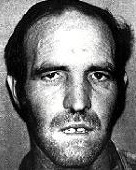 Ottis Toole
Serial killer · USA · 1961
Ottis Elwood Toole (sometimes misspelled as “Otis”) was an American serial kill…
65 victims
Ottis Toole
Serial killer · USA · 1961
Ottis Elwood Toole (sometimes misspelled as “Otis”) was an American serial kill…
65 victims
 Donald Leroy Evans
Serial killer · USA · 1975
Donald Leroy Evans (born July 5, 1957) was an American serial killer who murder…
60 victims
Donald Leroy Evans
Serial killer · USA · 1975
Donald Leroy Evans (born July 5, 1957) was an American serial killer who murder…
60 victims
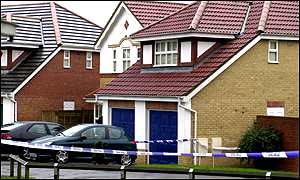 Anthony Smith
Murderer · United Kingdom · 2001
Anthony Smith was a former sergeant in the Coldstream Guards. He had left the C…
3 victims
Anthony Smith
Murderer · United Kingdom · 2001
Anthony Smith was a former sergeant in the Coldstream Guards. He had left the C…
3 victims
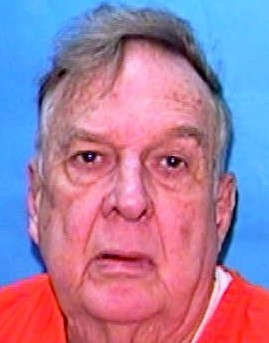 John Bruce Vining
Murderer · USA · 1987
John Bruce Vining John Vining was convicted and sentenced to death for the murd…
1 victim
John Bruce Vining
Murderer · USA · 1987
John Bruce Vining John Vining was convicted and sentenced to death for the murd…
1 victim
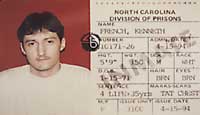 Kenneth Junior French
Mass murderer · USA · 1993
Kenneth Junior French (born January 15, 1971) was convicted in connection with…
4 victims
Kenneth Junior French
Mass murderer · USA · 1993
Kenneth Junior French (born January 15, 1971) was convicted in connection with…
4 victims
 Tristan Van der Vlis
Mass murderer · Netherlands · 2011
9 April 2011 — Tristan van der Vlis entered the Ridderhof mall in Alphen aan de…
6 victims
Tristan Van der Vlis
Mass murderer · Netherlands · 2011
9 April 2011 — Tristan van der Vlis entered the Ridderhof mall in Alphen aan de…
6 victims
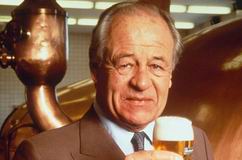 The kidnapping of Freddy Heineken
Kidnapping · Netherlands · 1983
The kidnapping of Freddy Heineken, chairman of the board of directors and CEO o…
2 victims
The kidnapping of Freddy Heineken
Kidnapping · Netherlands · 1983
The kidnapping of Freddy Heineken, chairman of the board of directors and CEO o…
2 victims
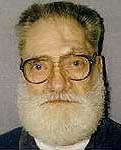 James Henry Hampton
Murderer · USA · 1992
James Henry Hampton was executed by lethal injection in Missouri on March 22, 2…
2 victims
James Henry Hampton
Murderer · USA · 1992
James Henry Hampton was executed by lethal injection in Missouri on March 22, 2…
2 victims
- Gender
- male
- Country
- USA
- Location
- Georgia/South Carolina/North Carolina, USA
- Date of birth
- 1931
- Age at first offence
- 39
- Characteristics
- rape, rapist, abduction, domestic violence, torture
- Victim profile
- 2 men and 7 women ages 17 to 60
- Method of murder
- Several
- Date(s) of murder
- 1970 - 1971
- Years active
- 1970–1971
- Date of arrest
- March 8, 1971
- Status
-
Life imprisonment
Sentenced to life in prison in Georgia and South Carolina, 1973
Case details
William Pierce was paroled from the Georgia state prison at Reidsville in May 1970, despite a report from staff psychiatrists stating that he “may be dangerous to himself and others.”
He claimed his first victim a month later, killing at least nine persons before his arrest on March 8, 1971.
Three months after that arrest, he was formally charged with the August 21, 1970 slaying of Virginia Maines, a 20-year-old housewife in Gaston, North Carolina.
On June 5, he was indicted for the August 10, 1970 murder of James Sires, a service station operator in Beaufort County, South Carolina.
Authorities said Pierce was responsible for seven other victims dispatched in separate incidents in June and December 1970, and in January 1971.
William “Junior” Pierce was convicted of raping and murdering Margaret “Peg” Cuttino, 13, in Sumter County, South Carolina. The crime occurred in December 1970 in Sumter County, South Carolina. Cuttino was reported missing on December 18, and her body was found on December 30.
Pierce had an IQ that “barely broke 70” and was described as a known serial confessor.
A document written by Georgia State Prison’s Dr. Schlinger, dated October 2, 1971, was presented as substantiating Pierce’s allegation that his confession to the Peg Cuttino murder was coerced by physical abuse consisting of burns, bruises, and cuts to his “privates.”
A dispute arose about the timing of the killing. The prosecution theorized that Cuttino was murdered on December 18, but when her body was found, the sperm evidence was not much degraded and implied that she was not killed before December 25.
Public disagreement with the verdict arose. An uncalled witness allegedly saw Cuttino on the afternoon of December 19. The county coroner joined the opposition.
New evidence raised the possibility that Pierce would be acquitted if he could get a retrial, but getting a retrial because of new evidence was described as difficult under South Carolina law.
New technology raised the possibility of DNA testing, but authorities contended Hurricane Hugo destroyed the biological evidence in 1989.
Authorities said Pierce was convicted after confessing to three murders in Georgia.
Timeline
- May 1970 — Pierce was paroled from the Georgia state prison at Reidsville despite a report from staff psychiatrists.
- June 1970 — Pierce was described as having dispatched victims in separate incidents in June 1970.
- August 10, 1970 — James Sires was murdered (service station operator in Beaufort County, South Carolina).
- August 21, 1970 — Virginia Maines was slain (charged later in connection with this slaying).
- December 1970 — Pierce was described as having dispatched victims in separate incidents in December 1970.
- December 18, 1970 — Margaret “Peg” Cuttino was reported missing.
- December 19, 1970 — An uncalled witness allegedly saw Cuttino on the afternoon of December 19.
- December 25, 1970 — The sperm evidence implied Cuttino might not have been killed before December 25.
- December 30, 1970 — Cuttino’s body was found.
- January 1971 — Pierce was described as having dispatched a victim in January 1971.
- March 8, 1971 — Pierce was arrested in Louisville, Georgia.
- April 1971 — Pierce was questioned at the Appling County, GA jail.
- October 2, 1971 — Dr. Schlinger dated a document about injuries inflicted on William Pierce Jr. during questioning at the Appling County, GA, jail.
- March 1, 1973 — Pierce’s trial began.
- March 2, 1973 — The jury deliberated and returned a verdict finding Pierce guilty of murder; he was sentenced to life in prison.
- June 1973 — Coroner Howard J. Parnell went public with grave concerns about the case.
- April 5 — McElveen and his team laid out their case for a new trial in court after the conviction.
- 1977 — Donald Henry “Pee Wee” Gaskins made an announcement that he, not Junior Pierce, had abducted and killed Peg Cuttino.
- 1983 — A court agreed to hear yet another appeal on Pierce’s behalf based on Gaskins’s confession; the appeals court declined and upheld Pierce’s conviction.
- 1989 — Authorities contended Hurricane Hugo destroyed the biological evidence.
Background
Pierce was released from prison in Georgia in May 1970 after serving only seven years on a 10-20 year sentence for a variety of charges, including burglary, arson, receiving stolen property and attempted prison break.
A prison psychologist reported in connection with his release stated: “test scores reveal the possibility of sociopathic disorders. This individual may be dangerous to himself or others.”
Later, the narrative stated that Pierce’s confession was coerced by physical abuse during his April 1971 questioning at the Appling County, GA, jail.
The offence
Virginia Maines
Pierce was charged with the August 21, 1970 slaying of Virginia Maines, a 20-year-old housewife in Gaston, North Carolina.
James Sires
Pierce was indicted on June 5 for the August 10, 1970 murder of James Sires, a service station operator in Beaufort County, South Carolina.
Margaret “Peg” Cuttino
Pierce was convicted of raping and murdering Margaret “Peg” Cuttino, 13, the daughter of a South Carolina state senator.
It was reported that Cuttino had been bludgeoned to death with a blunt object, in all probability a tire iron, and that she had also been raped. Traces of semen were described as present, some of it still fresh.
Authorities argued that Cuttino had been raped and murdered on December 18, probably within an hour or so of her disappearance. Critics said sperm evidence indicated a later time, potentially as late as Dec. 26, eight days after her disappearance.
The prosecution theorized she was murdered on December 18. When the body was found, the sperm evidence was not much degraded and implied she was not killed before December 25.
A county coroner joined opposition to the verdict.
Other victims listed
Authorities said Pierce had killed multiple people in separate incidents in June and December 1970 and in January 1971. The victims listed included:
- Margaret “Peg” Cullino: strangled; body found in a wooded area in Sumpter, South Carolina 12 days after she went missing on December 18, 1970; strangled and beaten.
- Kathy Anderson: a 17-year-old waitress from Columbia, South Carolina.
- James L. Sires: a 60-year-old gas station operator in Beaufort, South Carolina.
- Mrs. Lacy Thigpen: a 51-year-old county store owner near Soperton, Georgia.
- Joe Fletcher: a 50-year-old gas station attendant from Vidalia, Georgia.
- Virginia Carol Mains: a 20-year-old housekeeper from Gastonia, North Carolina.
- Mrs. Vivian Miles: a 60-year-old country storekeeper from Baxley, Georgia.
- Mrs. Hazel Wilcox: a 32-year-old country store keeper from Hazelhurst, Georgia.
- Ann Goodwin: an 18-year-old Winthrop college student.
A described account stated that one victim was abducted on Jan 22, 1971, and that Pierce led police to the woman’s skeletal remains two months later. The woman had been tied to a tree in the woods not far from Hazelhurst and hanged with a piece of short, stout cord. The cord was described as so tight around the woman’s neck that her neck had to be taken apart before they could remove the noose. Even in advanced decomposition it was described that the woman was nude from the waist down.
Investigation
Search efforts for Margaret “Peg” Cuttino began soon after she was reported missing.
Sumter Police Chief Leslie Griffin acknowledged in a statement widely reported in South Carolina that kidnapping could not be ruled out and that he issued a nationwide alert. He added: “we have not been able to discern any evidence which might indicate foul play.”
On December 30, 1970, two young officers from nearby Shaw Air Force Base found a figure lying on the ground, partially covered with sticks and leaves, in Manchester State Forest. They spotted Cuttino’s polka-dot sash, which had been described in detail in news releases. Police were summoned and pathologists from the Medical University of South Carolina at Charleston concluded that Cuttino had been bludgeoned to death with a blunt object, in all probability a tire iron, and had been raped. They described traces of semen in her body.
Authorities issued another conclusion described as among the most controversial: they argued that Cuttino had been raped and murdered on Dec. 18, 1970, probably within an hour or so of her disappearance.
In connection with a possible later timeframe, critics pointed to sperm evidence not significantly degraded given late December temperatures, implying rape and murder might have occurred later, perhaps as late Dec. 26.
The investigation involved extensive interviews and leads, including an early rule-out of Pee Wee Gaskins as a suspect due to it being said he was interviewed early and ruled out.
Carrie LeNoir, a part-time postmistress in Horatio, described a chance encounter on Dec. 19, 1970 involving a brownish-yellow car outside her store. She later stated: “the boys seemed excited.” She also later described the car as “brownish-yellow car.” The narratives included that detectives Hugh Mathis and Tommy Mims visited her during a rehearsal at the Church of the Ascension.
It was described that the list of potential witnesses swelled to include 1,465 names, and that it even included Pee Wee Gaskins.
A dispute about the confession and the lack of documentation was described. The narrative stated that Pierce’s alleged confession was never put down on paper and never recorded in any way.
Arrest
Pierce was arrested on March 8, 1971 in Louisville, Georgia for failing to pay for some gasoline.
Soon afterward, Appling County Sheriff J.B. Carter charged Pierce with the murder of Mrs. Vivian Miles, sixty years of age, who had been robbed and shot in her country store about eight miles south of Baxley on Jan. 26.
After being interviewed by authorities from North and South Carolina, Pierce was charged with nine murders: four in Georgia and South Carolina and one in North Carolina.
Trial
Venue and focus
Pierce’s trial began on March 1, 1973.
Pierce’s lawyers argued that public furor would prevent a fair jury in Sumter County, so the case was moved to Williamsburg County. The trial was expected to last two days, and it did last about that long.
The prosecution focused on Pierce’s testimony and, per critics, glossed over inconsistencies and weaknesses including the lack of corroboration for the crucial confrontation outside a restaurant allegedly on Dec. 18, 1970.
Defense counsel argued that Pierce could not have been in Sumter on the day Cuttino disappeared. The defense presented testimony from Ray Sconyers, vice president of the Handy House Corporation, described as having handed Pierce a time card at about 7:05 a.m. and having seen Pierce about once every hour during the day. Sconyers was described as having handed Pierce his paycheck around 4 p.m.
Pierce’s girlfriend was described as testifying that she had been with him, along with two other witnesses, all night on the evening of Dec. 18, 1970.
The defense allowed Pierce to testify that he had been forced to talk and that he had never actually admitted to killing the girl, and that authorities had twisted his words.
Confession and hypnosis
The narrative stated that Sheriff J.B. “Red” Carter from Baxley, Georgia contacted SLED Chief J.P. Strom in April, 1971 and told him he had a “good ol' boy in his jail” who had a statement to make in connection with Peg Cuttino’s murder.
The alleged confession included claims that Pierce drove to Sumter on Dec. 18, 1970 with intent “to ‘rob and steal.’” It was alleged that Pierce stopped for a bite at a drive-through restaurant near the center of town, saw two girls and a young man in a bitter dispute, listened as long as “I could take it,” told the boy to leave, retrieved a gun from his maroon Pontiac, and the other young woman and the boy drove off leaving Peg Cuttino behind.
It was alleged that Pierce saw a woman watching from inside the restaurant, but critics said the woman and any witness did not corroborate the statement.
The narrative stated that Pierce’s supposed claim that Peg Cuttino then volunteered to go with him by saying, “I'll ride with you,” was disputed.
Sheriff Parnell’s testimony was described as recounting Pierce’s alleged statement that he parked at the landfill and: “the little girl started crying and said she wanted to go home,” and that Junior told her, “I can't carry you home.”
According to the sheriff’s testimony, after that, “That's when he struck her in the head with a bumper jack," a tire iron.
The narrative stated that Pierce allegedly drove half-mile to a wooded area and dumped her there, covering her body with leaves and moss and sticks.
The narrative also described that Pierce allegedly said he spotted two people walking through the woods, a man and a boy, and that he stood behind the car to block his license plate from view.
The narrative included that a boy later testified he was hunting squirrels and spotted a man standing near his car, lingering until the boy and father left.
The narrative stated that Pierce would later disavow the confession and claimed it was cobbled together from pieces of information he had been fed by Baxley Sheriff Red Carter before officers from South Carolina arrived to interview him, including a claim that Red Carter told him “if he made a statement, he would never stand trial in South Carolina .”
The defense attempted hypnosis with a nationally noted hypnotist named Robert Sauer, but Sauer was not permitted to testify.
The narrative stated that under hypnosis Pierce denied killing Peg Cuttino and denied being in Sumter County at or about the time of her disappearance, and that Pierce was “not even certain where Sumter County was.”
Verdict and sentencing
About 6 p.m. on March 2, 1973, after less than 16 hours of testimony, the jury began deliberations. About 6 hours later, they returned with a verdict.
Pierce was found guilty of murder.
He was sentenced to life in prison, though the narrative stated he was already serving life for murder in Georgia and likely would not see the inside of a South Carolina prison.
Sentencing
He received a life sentence for the murder conviction in South Carolina.
Appeals
After the conviction, courts all the way to the state Supreme Court continued to reject Pierce’s appeals and bids for post conviction relief, and a second grand jury failed to reopen the case.
In 1983, a court agreed to hear another appeal on Pierce’s behalf claiming, among other things, that Gaskins’s confession was grounds to overturn the conviction; the appeals court declined and upheld Pierce’s conviction.
Outcome
Pierce remained convicted and was sentenced to life in prison in Georgia and South Carolina, with sentencing in 1973.
A narrative stated that Hurricane Hugo destroyed biological evidence in 1989, affecting the possibility of DNA testing.
Other details
Allegations of coerced confession document
A document was dated October 2, 1971 and described as written by Georgia State Prison’s Dr. Schlinger. It was described as investigating injuries inflicted on William Pierce Jr. during his April 1971 questioning at the Appling County, GA, jail.
The narrative stated this document substantiated Pierce’s allegation that his confession was coerced by physical abuse consisting of burns, bruises, and cuts to his “privates.”
Witness and evidence disputes
The narrative stated that Carrie LeNoir’s statement was discounted as not fitting investigators’ conclusions.
It was also described that Pierce’s alleged confession was never recorded in writing.
It was described that Pierce’s car, which he claimed he had abandoned at a service station near his Georgia home, was never recovered, and the tire iron believed by authorities to be the murder weapon was never recovered.
Quotes attributed to named individuals
- Sumter Police Chief Leslie Griffin said: “we have not been able to discern any evidence which might indicate foul play.”
- The narrative included a quote attributed to Sheriff “Red” Carter as he contacted SLED Chief J.P. Strom: “a good ol' boy in his jail who had a statement to make in connection with Peg Cuttino's murder.”
- Pierce’s alleged statement about listening was quoted as: “about as long as I could take it,”.
- Pierce’s alleged statement about volunteering to go was quoted as: “I'll ride with you.”
- Sheriff Parnell’s testimony was quoted as: “the little girl started crying and said she wanted to go home,” and “I can't carry you home,” and “That's when he struck her in the head with a bumper jack,”.
- The narrative included testimony that about Pierce being told details: “if he made a statement, he would never stand trial in South Carolina .”
- Howard Parnell was quoted as storming out and saying: “I'm through! I'm through,” and claiming he had been ambushed by “a hostile group.”
- It was described that Howard Parnell believed officials urged him “just go along and forget about this and we'll promise you that your funeral home will get business.”
- Third Circuit Judge Dan F. Laney told the grand jurors: “It is high time and quite proper that you check this off the books of Sumter County”.
- LeNoir said: “They think it's over”.
- LeNoir said: “They think they've cleared the names and reputations of all the individuals in law enforcement and all the law enforcement agencies involved.”
- Hubert Osteen was quoted: “Up until that time, there was no mistrust of the authorities,” and “The sheriff had been in office for 20-something years. He could do no wrong, and then this thing broke. That's when people started questioning his case”.
- Ken Young was quoted as saying: “Kirk and I were very close,” and “I don't think he would ever lie and he (was) convinced thathe had the right man.” Young also said: “According to Junior Pierce, he was told what to say by the sheriff down in Georgia ,” and “These fellows went down there, there was a lot of pressure to solve the case and I think that they heard this man give them enough of the answers to convince them that they had the right man. That's all they needed to hear.”
- McElveen was quoted as saying: “They pinned their case on her having been killed on the same day that she was taken andwe proved he was back inSwainsboro that night.”
- Young was quoted on hypnosis evidence being withheld as: “I don't believe they disclosed to the defense counsel all of the autopsy reportsthat the semenhad the tails,” and “My expert, she's made the casethat there's no way that they could have been placed in the body at the time that was claimed by the state, December the 18 th .” Young also said: “fromthe position of the body and the fact that the sperm still had tails on them that the earliest date that she could have the time of death would be December 26.”
- Young was quoted about missing files: “somebody's trying to impede my investigation of this”.
- Marilyn Bardsley was associated with receiving a document dated October 2, 1971.
Names and roles mentioned
- Virginia Maines (victim described as a 20-year-old housewife in Gaston, North Carolina).
- James Sires (victim described as a service station operator in Beaufort County, South Carolina).
- Margaret “Peg” Cuttino (victim described as 13; daughter of a South Carolina state senator).
- Kathy Anderson (victim described as a 17-year-old waitress from Columbia, South Carolina).
- Mrs. Lacy Thigpen (victim described as a 51-year-old county store owner near Soperton, Georgia).
- Joe Fletcher (victim described as a 50-year-old gas station attendant from Vidalia, Georgia).
- Virginia Carol Mains (victim described as a 20-year-old housekeeper from Gastonia, North Carolina).
- Mrs. Vivian Miles (victim described as a 60-year-old country storekeeper from Baxley, Georgia).
- Mrs. Hazel Wilcox (victim described as a 32-year-old country store keeper from Hazelhurst, Georgia).
- Ann Goodwin (victim described as an 18-year-old Winthrop college student).
- Michael Newton (author referenced as “Michael Newton - An Encyclopedia of Modern Serial Killers - Hunting Humans”).
- Dr. Schlinger (Georgia State Prison physician mentioned in the document).
- Sheriff “Red” Carter (Appling County Sheriff and Sheriff Red Carter mentioned in connection with the confession and allegations).
- Sheriff J.B. Carter (Appling County Sheriff referenced).
- Sheriff Byrd Parnell (Sumter sheriff mentioned).
- Howard J. Parnell (coroner mentioned).
- Leslie Griffin (Sumter Police Chief mentioned).
- Hugh Munn (reporter/spokesman mentioned).
- J.P. Strom (SLED Chief mentioned).
- Ray Sconyers (Handy House Corporation vice president mentioned).
- Ray Sconyers and Pierce’s girlfriend (defense witnesses mentioned).
- Robert Sauer (hypnotist mentioned).
- Dan F. Laney (Third Circuit Judge mentioned).
- Carrie LeNoir (witness mentioned).
- Hugh Mathis and Tommy Mims (detectives mentioned).
- Kirk McLeod (prosecutor mentioned).
- Joe McElveen (Pierce’s representative mentioned; also described later as mayor of Sumter).
- Ken Young (assistant county solicitor and later Pierce’s representative mentioned).
- Robert “Pee Wee” Gaskins / Donald Henry “Pee Wee” Gaskins (serial killer mentioned).
- Marilyn Bardsley (Crimelibrary executive editor mentioned).
- Hurricane Hugo (weather event mentioned in connection with biological evidence).
Spotted an error, or have more information about this case?