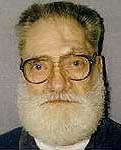
James Henry Hampton
Murderer Brian Kevin Rosenfeld
Murderer · USA · 1985
Brian Kevin Rosenfeld Brian Kevin Rosenfeld was sentenced to three concurrent l…
23 victims
Brian Kevin Rosenfeld
Murderer · USA · 1985
Brian Kevin Rosenfeld Brian Kevin Rosenfeld was sentenced to three concurrent l…
23 victims
 Russell Ellwood
Murderer · USA · 1991
Russell Ellwood was a former taxi driver. Authorities suspected him of killing…
20 victims
Russell Ellwood
Murderer · USA · 1991
Russell Ellwood was a former taxi driver. Authorities suspected him of killing…
20 victims
 Robert Martines Perez
Murderer · USA · 1994
Name: Robert Martines Perez · Other name used in proceedings: Robert Martinez P…
15 victims
Robert Martines Perez
Murderer · USA · 1994
Name: Robert Martines Perez · Other name used in proceedings: Robert Martinez P…
15 victims
 Billy Frank Vickers
Murderer · USA · 1993
Billy Frank Vickers Vickers was executed by lethal injection in Texas on Januar…
14 victims
Billy Frank Vickers
Murderer · USA · 1993
Billy Frank Vickers Vickers was executed by lethal injection in Texas on Januar…
14 victims
 Tiago Gomes da Rocha
Serial killer · Brazil · 2011
Tiago Henrique Gomes da Rocha was a former Brazilian security guard. Gomes da R…
39 victims
Tiago Gomes da Rocha
Serial killer · Brazil · 2011
Tiago Henrique Gomes da Rocha was a former Brazilian security guard. Gomes da R…
39 victims
 Van Roosevelt Solomon
Murderer · USA · 1979
Van Roosevelt Solomon was convicted in Georgia state court of first-degree murd…
1 victim
Van Roosevelt Solomon
Murderer · USA · 1979
Van Roosevelt Solomon was convicted in Georgia state court of first-degree murd…
1 victim
 Richard Tucker
Murderer · USA · 1963
Richard Tucker was executed by electrocution in Georgia on May 22, 1987. Richar…
2 victims
Richard Tucker
Murderer · USA · 1963
Richard Tucker was executed by electrocution in Georgia on May 22, 1987. Richar…
2 victims
- Gender
- male
- Country
- USA
- Location
- Missouri/New Jersey, USA
- Date of birth
- March 5, 1938
- Age at first offence
- 54
- Characteristics
- kidnapping, armed robbery
- Victim profile
- Frances Keaton, 58 / Christine Schurman, 48
- Method of murder
- Beating with a hammer / Shooting
- Date(s) of murder
- August 3/September 16, 1992
- Years active
- 1992
- Date of arrest
- December 19, 1992
- Status
-
Executed
Executed by lethal injection in Missouri on March 22, 2000
Case identity
James Henry Hampton was executed by lethal injection in Missouri on March 22, 2000.
STATUS and disposition
He was convicted and sentenced to death for the first degree murder of Frances Keaton. The Missouri Supreme Court affirmed his conviction and sentence.
Timeline
- August 2, 1992 (around 9:00 p.m.) — James Hampton parked a green Pontiac Bonneville in the lot of Fellowship Baptist Church in Warrenton, Missouri; he told passersby he was having car trouble and declined offers of assistance, saying he had a bicycle; he left a note on his windshield reading: "Car trouble. Gone for help. S.G. Gambosi," and rode the bicycle about three miles to the neighborhood where Frances Keaton lived.
- August 3, 1992 (around 1:15 a.m.) — While driving Frances Keaton toward the realtor's farm in Callaway County, Hampton had Keaton call her pastor on Allen Mulholland’s cellular phone and ask if he could provide $10,000 cash by nine o’clock that morning.
- August 3, 1992 (around 2:24 a.m.) — Contact with Frances Keaton was lost.
- August 15, 1992 — Ms. Keaton’s body was found on a farm in Callaway County, Missouri.
- December 19, 1992 — James Hampton was apprehended in West Orange, New Jersey and arrested for homicide; one day after he was featured on the television show "America’s Most Wanted," Hampton shot himself in the head as he was about to be taken into custody.
- September 16, 1992 — Hampton killed Christine Schurman, 48, of Wantage Township; her body was found by her husband, Dr. Alan Schurman.
- March 18, 1995 — Hampton was returned to Fulton, Missouri where he was charged with Murder First Degree.
- September 16, 1996 — Hampton was sentenced to death.
- July 29, 1996 — Hampton went to trial for Murder 1st Degree in Circuit Court of Callaway County.
- August 2, 1996 — He was found guilty by a jury and they recommended a sentence of death.
- December 23, 1997 — The Missouri Supreme Court affirmed Hampton's conviction and sentence.
- April 27, 1998 — Hampton filed a motion for post-conviction relief in Circuit court of Callaway County.
- January 26, 1999 — Circuit Court of Callaway County dismissed the motion for post-conviction relief.
- January 11, 2000 — The Missouri Supreme Court dismissed the appeal from the dismissal of the post-conviction relief motion.
- February 23, 2000 — The Missouri Supreme Court set March 22, 2000, as the date for Hampton's execution.
- March 22, 2000 — Hampton was executed by lethal injection in Missouri.
Background
James Henry Hampton was born on 3-5-38 in Louisville, Kentucky. He grew up one of 11 children in a poor family in the Louisville, Ky., area and went to reform school at age 11.
Prior criminal record
- May 17, 1955 — Hampton was arrested in Jefferson County, Kentucky for Attempted Operating a Motor Vehicle with out the Owner's Consent; he was sentenced to one year in the county jail; execution of the sentence was suspended and he was placed on five years probation.
- February 7, 1957 — Hampton was arrested in Louisville, Kentucky for two counts of Burglary of a Dwelling; he was sentenced to two years in the Kentucky State Penitentiary and was discharged on 10-21-58.
- December 2, 1960 — Hampton was arrested in Frankfort, Kentucky for Armed Robbery and Operating a Motor Vehicle with out the Owner's Consent; he was sentenced to six years in the Kentucky State Penitentiary and was released on 12-2-65.
- March 10, 1966 — Hampton was arrested in Louisville, Kentucky for two counts of Attempted Burglary; he was fined $200.
- April 9, 1966 — Hampton was arrested in Clayton, Missouri for Burglary and Stealing; he was sentenced to three years in the Missouri Department of Corrections on each count to be served concurrently; he was discharged on 1-26-68.
- March 13, 1970 — Hampton was arrested in Oklahoma City, Oklahoma for Interstate Transportation of Counterfeit Securities; he was sentenced to ten years in the Federal Bureau of Prisons; he was released to the Oklahoma Department of Corrections on 3-25-77.
- March 12, 1970 — Hampton was arrested in Oklahoma City, Oklahoma for Burglary and Stealing; he was sentenced to five years in the Oklahoma Department of Corrections; he was discharged on 3-14-80.
- December 1981 — Hampton was arrested in Portland, Oregon for Distribution of Heroin and Conspiracy to Distribute Heroin; he was sentenced to ten years in the Federal Bureau of Prisons; he was paroled on 10-4-85.
- January 11, 1986 — Hampton was arrested in Portland Oregon for Assault Fourth Degree and Recklessly Endangerment; he was sentenced to five years in the Oregon Department of Corrections.
- December 19, 1992 — Hampton was arrested in West Orange, New Jersey for Homicide; he was sentenced to a life sentence without parole.
The offence
Murder and kidnapping of Frances Keaton
At approximately 9:00 p.m. on the evening of August 2, 1992, James Hampton parked a green Pontiac Bonneville in the lot of Fellowship Baptist Church in Warrenton, Missouri. Hampton told passersby that he was having car trouble but declined offers of assistance, saying that he had a bicycle. He left a note on his windshield that read: "Car trouble. Gone for help. S.G.
Hampton knew, through his acquaintance with Patricia Supinski (Keaton’s realtor), that Keaton and her fiancée, Allen Mulholland, had access to a checking account containing at least $30,000. Using a copy of Keaton’s house key provided to him by Supinski, Hampton entered Keaton’s house dressed in dark clothing, wearing a stocking cap over his face, and carrying a sawed-off shotgun.
Some time after 10 p.m., Hampton awoke Keaton and Mulholland, who were asleep in their bedroom, and told them: "I’ve come here to rob you." After binding Mulholland’s and Keaton’s hands and feet, Hampton demanded $30,000 from them. They replied that they didn’t have that much money, but Keaton said she thought she could get $10,000 from her pastor. Hampton untied Keaton and allowed her to get dressed. When Keaton attempted to escape, Hampton overpowered her and eventually placed a coathanger around her neck and threatened to kill her if she again resisted him.
Hampton told Mulholland that he had a police scanner and that, if the police learned of the kidnapping, he would kill Keaton. Hampton then took Keaton outside to her car and drove her toward Supinski’s farm in Callaway County.
While they were driving, at 1:15 a.m. on August 3, Hampton had Keaton call her pastor on Mulholland’s cellular phone and ask him if he could provide her with $10,000 cash by nine o’clock that morning. The pastor called her back on the cellular phone, but all contact with Keaton was lost at 2:24 a.m.
At some point during the drive, Hampton learned from his police scanner that law enforcement authorities had been alerted to the kidnapping. According to his own testimony, he decided in advance to kill his hostage if police learned of the kidnapping before he received the ransom. Carrying out his plan, Hampton bound and blindfolded Keaton and took her to a wooded area one half mile from the Supinski farm. Once there, he killed Keaton with several hammer blows to her head and then buried her body.
The morning after killing Keaton, Hampton drove her car back to Warrenton and attempted to retrieve the green Pontiac he had left at Fellowship Baptist Church. He abandoned his attempt when he saw that police were keeping the car under surveillance. Late that night, after police had impounded the car, he was apprehended attempting to enter the locked impound lot, but gave an alias and was released.
Investigation and arrest
Soon after Keaton’s kidnapping was reported, FBI agents investigating the crime suspected that the Pontiac Bonneville parked at the church was used in the crime. They watched and eventually towed the car. Two days later, they searched the car and found several items introduced against Hampton at trial: a notebook and various documents in Hampton’s handwriting, some indicating that he used the name S.G. Gambosi; a file; a shotgun; and a map of Missouri.
The FBI agents testified that their attention was first drawn to the green Pontiac by a neighbor of Keaton, Norma Smith, who reported seeing a man wearing dark clothes entering the neighborhood on foot at about ten o’clock that night and that she had seen him earlier at her church. The agents learned that the owner of the Pontiac had behaved unusually and had refused offers of a ride, instead leaving on a bicycle. The agents concluded that a man on a bicycle could have ridden from the church to the spot where Smith saw him in the approximately one hour between sightings. The agents knew that the kidnapper and Keaton had left in her car and suspected the Pontiac might have been used to approach the scene.
The agents checked the registration, showing that the car was registered to a Sam Gambosi; although the car had only been sold to "Gambosi" a week earlier, the address given for the registration did not belong to anyone by that name and no one at that address had heard of such a person.
Hampton was finally captured on December 19, 1992, one day after he was featured on "America’s Most Wanted." A New Jersey pastor recognized Hampton from the television program and alerted police. As he was about to be placed into custody, Hampton shot himself in the head, injuring his brain’s frontal lobes.
Related homicide during another incident
On September 16, 1992, Hampton killed Christine Schurman, 48, of Wantage Township; her body was found by her husband, Dr. Alan Schurman. She died of a single bullet wound to the head, also after a failed kidnapping attempt.
Trial
Participation and self-representation arguments
Hampton contended that he was denied his right to represent himself at trial. He argued that he wanted to be permitted self-representation, and he filed a "Motion/Demand/Notice for Self-Representation" asking the court to enter an order "permitting self-representation . . . as explained . . . in Faretta . . ." He also filed an "Entry of Appearance," advising "all persons connected [with the case] that he is now the attorney of record . . ." On September 18 (ten months before trial started), the trial court suggested it would delay ruling on the motion but, when pressed, overruled it. On October 13, Hampton again sought to have the motion for self-representation taken up; the court ruled it would follow its original ruling. Hampton filed a second entry of appearance and motion for self-representation and then sought a writ of prohibition in the court of appeals; when denied, he sought similar relief in the Missouri Supreme Court, which was also denied in March 1996. The trial court heard argument again on July 5 and, on July 16, continued to rule against Hampton’s request.
In his numerous filings and arguments, Hampton never suggested that asking to act as his own lawyer was intended to waive his right to be represented by counsel. Hampton argued that his intent was to prevent his attorneys from making "certain strategic decisions" in his case that he disagreed with. He argued that attorneys "are to advise and represent, not to replace or second-guess the defendant . . . . [I]f I am the attorney of record, then I will be able to make that decision. I don’t intend to conduct the voir dire." He also reported he did not intend to conduct the cross-examination of "many, if any of the witnesses." The trial court characterized the requests as Hampton wanting defense counsel to represent him, conduct the voir dire, and cross-examine witnesses, while Hampton wanted "the final say-so."
Waiver of right to remain silent
Hampton argued that his Fifth Amendment right against self-incrimination was violated because the trial court did not make a finding on the record that he had waived the right "knowingly, voluntarily and intelligently" before he took the stand and confessed to murdering Keaton. He cited Boykin v. Alabama and Rolfes v. State. The trial court had advised him of his right not to testify, would instruct the jury that it could not infer guilt from his failure to testify, that by testifying he was subject to cross-examination, and that by testifying he enabled the prosecution to present evidence of his prior criminal record. Hampton testified that he understood the admonishments but took the stand against his attorneys’ advice.
Competency to stand trial
Hampton argued that, due to his self-inflicted gunshot wound, he was not competent to stand trial because he suffered damage to both right and left frontal lobes. Upon defense counsel’s motion, two experts examined him.
The defense’s expert neurologist, Dr. Pincus, testified that as a result of his examination he concluded Hampton’s frontal lobe injury severely impaired his judgment, causing him paranoia that impaired his ability to assist in his defense. Dr. Pincus based his conclusion on physical tests and on his interview with Hampton, where Hampton exhibited that he did not trust defense counsel or Dr. Pincus. Dr. Parwatikar, a State forensic psychiatrist, examined Hampton, filed a report, and testified. Dr. Parwatikar concurred that Hampton suffered brain damage and was distrustful of his defense counsel, but concluded that Hampton did not suffer from any mental disease or defect and that he was able to assist his attorney in his defense.
The trial court explicitly found Dr. Parwatikar’s testimony more believable than Dr. Pincus’s testimony and, based on that testimony and observation of Hampton’s behavior in court, found Hampton competent.
Suppression issue: seizure and search of the Pontiac Bonneville
Hampton asserted the trial court erred by refusing to suppress items seized during a warrantless search of the Pontiac Bonneville. The suppression court admitted items found during a search after the FBI agents watched the car, towed it, and searched it two days later. The items included a notebook and various documents in Hampton’s handwriting, a file, a shotgun, and a map of Missouri. The court held probable cause to search existed at the time the car was seized.
Jury and penalty-phase issues
Hampton claimed the trial court erred in overruling his motion for a separate penalty phase jury; the claim was treated as meritless.
Hampton also alleged error in the refusal to give a non-MAI cautionary instruction prior to death penalty voir dire. The proffered instruction indicated the death qualification questions were routine and did not imply guilt. The refusal was found not to be error.
Hampton challenged the reasonable doubt instruction in the penalty phase, specifically language explaining that proof beyond a reasonable doubt leaves jurors "firmly convinced of the truth of a proposition" and that the law does not require proof that "overcomes every possible doubt."
Voir dire exchange concerning degrees of murder
During voir dire, defense counsel stated: "It’s necessary for this next question that I’m going to ask you that I give you a short kind of description of what the law is as it relates to homicide. Now, you’ve heard that Mr. Hampton has been charged with murder in the first degree. That is the highest level of homicide. Murder in the first degree we define it as what we call deliberate murder. It is not the only level of homicide. We also have something we call murder in the second degree which is the next step down. And then we have two forms of what we call manslaughter. So they’re all four levels of homicide. Murder in the first degree being the highest and murder in the second degree being the next step down. Now, as I said, murder in the first degree is defined as deliberate murder. I think we used to use the word "premeditated." But we don’t use that any more. It is called deliberate murder. It is defined by the law as cool reflection for a period of time no matter how brief. Okay, that’s our highest level. Deliberate murder. Murder second degree is what we call knowingly murdering someone. The difference between the two goes to what we call the state of mind of the defendant." The prosecutor objected at sidebar, stating: "Judge, may we approach the bench? [At sidebar]: [Prosecutor]: I’m going to object to some what I perceive is a misstatement of the law. Trying to distinguish second from first." The court responded: "The objection will be sustained. Let’s proceed." Defense counsel then asked: "Judge, may I address the court on this? I intend to ask the jury whether in this or any other case they’ve learned that kidnapping is involved or weapons involved they will automatically feel that is murder in the first degree. I believe it’s necessary to define the difference between murder in the first degree and murder in the second degree in order to place that question in context. I believe I’m correctly defining those two levels of homicide." The court replied: "Well, I think I will allow you to, if they consider one thing is automatic, but you, I don’t want you getting into the definitions of first and second degree murder. You can ask them if they think that kidnapping or something else would influence them in the case if you want to. I don’t think you really do want to, but if you want to ask that question you can." Defense counsel said: "I do want to ask that question. . . . . THE COURT: The objection will be sustained as to the question that was put to the jury just now." Defense counsel stated: "So the court is allowing, just for clarification purposes, the court is allowing me to ask about abduction and a weapon involved, but the court is not allowing me to ask whether the juror would automatically feel if a weapon or abduction or kidnapping is involved whether that would be murder in the first degree?" The court responded: "Oh, if you want to ask them if that automatically is murder in the first degree, you are entitled to ask that." Defense counsel added: "I think it’s necessary to define the concept." The court replied: "I don’t want you to go into the definitions of what is murder first and murder second." Defense counsel said: "I don’t know how to ask them if it’s murder in the first degree without telling them before I do that. I guess I’ve already done it. But I mean I don’t know." The court responded: "The objection will be sustained as asked. Let’s proceed." In open court, defense counsel then asked: "... Does anybody on this side of the room feel that if they heard that a gun was involved in a case or an abduction, that they would automatically conclude that this is murder in the first degree?"
Hampton alleged error based on this exchange.
Voir dire about signing a death verdict
Hampton argued the trial court erred in allowing the prosecution to ask potential jurors whether they could sign a death verdict if chosen as foreperson. The claim was treated as baseless.
Child care for jurors
Hampton asserted the trial court erred by refusing to provide child care for jurors, arguing that it effectively and unconstitutionally excluded women and poor people from the jury. The claim was treated as already decided against him.
Post-mortem photographs
Hampton argued that nine photographs of Keaton’s corpse admitted into evidence were unduly prejudicial. The photographs included three pictures of the body at the site where it was buried as it was uncovered, three photographs of the body prepared for transport, and three photographs taken during autopsy. Hampton conceded the court’s discretion and that gruesome photos could be admissible to corroborate testimony, assist jurors in understanding facts and testimony, or prove an element. The photographs were used to corroborate and illustrate the testimony of an officer and an investigator involved in excavating the burial site and to corroborate and illustrate testimony about the cause of death. Their admission was treated as not an abuse of discretion.
Sentencing
A jury recommended a sentence of death and Hampton was sentenced to death on September 16, 1996.
In review of the death sentence, the court found three aggravating circumstances: that Hampton had a prior serious assaultive criminal conviction; that Hampton committed the murder for the purpose of receiving money from the victim or another; and that the victim was killed in the course of a kidnapping.
The court stated the evidence supported at least one aggravating circumstance required by statute and supported the other aggravating circumstances found. It also found that the death sentence was proportionate to similar cases involving kidnappings and killings for money and killings of victims brutally killed while bound and helpless.
In sentencing review, Hampton’s own testimony was treated as establishing he broke into Keaton’s bedroom, terrorized, kidnapped, bound and blindfolded her, took her to a secluded area, and killed her with complete detachment in an utterly brutal manner when his ransom plan failed.
Appeals
Hampton appealed his conviction for first degree murder and the death sentence. The Missouri Supreme Court affirmed the judgment of the trial court and affirmed the conviction and sentence.
Aftermath and final words
As police moved in on Hampton in New Jersey, he stuck a gun beneath his chin and shot himself. The bullet exited through the front of Hampton’s brain and he injured his brain’s frontal lobes.
At his execution, his last words were: "Take the phone off the hook." Corrections department personnel stated Hampton chose a dozen glazed doughnuts and two pints of milk for his last meal.
He refused to make court appeals and did not seek clemency from Gov. Mel Carnahan. A group of death penalty opponents sought clemency led by the Missouri Catholic Conference; Carnahan denied their request about 10:15 p.m. Tuesday. A spokesman said: “The governor saw no reason to commute the sentence,” spokesman Jerry Nachtigal said.
Spotted an error, or have more information about this case?