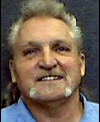
Mark Allen Pinnell
Murderer Brian Kevin Rosenfeld
Murderer · USA · 1985
Brian Kevin Rosenfeld Brian Kevin Rosenfeld was sentenced to three concurrent l…
23 victims
Brian Kevin Rosenfeld
Murderer · USA · 1985
Brian Kevin Rosenfeld Brian Kevin Rosenfeld was sentenced to three concurrent l…
23 victims
 Marvin Gray
Murderer · USA · 1975
Marvin Gray was convicted killer who claimed responsibility for 23 slayings and…
23 victims
Marvin Gray
Murderer · USA · 1975
Marvin Gray was convicted killer who claimed responsibility for 23 slayings and…
23 victims
 Yahweh ben Yahweh
Murderer · USA · 1980
Yahweh ben Yahweh was born and legally named Hulon Mitchell Jr. (October 27, 19…
23 victims
Yahweh ben Yahweh
Murderer · USA · 1980
Yahweh ben Yahweh was born and legally named Hulon Mitchell Jr. (October 27, 19…
23 victims
 Russell Ellwood
Murderer · USA · 1991
Russell Ellwood was a former taxi driver. Authorities suspected him of killing…
20 victims
Russell Ellwood
Murderer · USA · 1991
Russell Ellwood was a former taxi driver. Authorities suspected him of killing…
20 victims
 Lisa Shuler
Murderer · USA · 2013
Lisa Shuler was a New Albany woman who pleaded guilty to murdering Charles Pier…
1 victim
Lisa Shuler
Murderer · USA · 2013
Lisa Shuler was a New Albany woman who pleaded guilty to murdering Charles Pier…
1 victim
 Fletcher Mann
Murderer · USA · 1980
Fletcher Thomas Mann was executed by lethal injection in Texas on June 1, 1995.…
2 victims
Fletcher Mann
Murderer · USA · 1980
Fletcher Thomas Mann was executed by lethal injection in Texas on June 1, 1995.…
2 victims
 Luther Douglas
Murderer · USA · 1999
Luther Douglas was sentenced to death on June 14, 2002. On the evening of 12/25…
1 victim
Luther Douglas
Murderer · USA · 1999
Luther Douglas was sentenced to death on June 14, 2002. On the evening of 12/25…
1 victim
 John Martini
Serial killer · USA · 1977
John Martini Sr. was sentenced to death in New Jersey on December 12, 1990. The…
6 victims
John Martini
Serial killer · USA · 1977
John Martini Sr. was sentenced to death in New Jersey on December 12, 1990. The…
6 victims
 Rickey Nolen McGinn
Serial killer · USA · 1992
Ricky Nolen McGinn was convicted of capital murder and sentenced to die for the…
3 victims
Rickey Nolen McGinn
Serial killer · USA · 1992
Ricky Nolen McGinn was convicted of capital murder and sentenced to die for the…
3 victims
 Sonny Ray Jeffries
Murderer · USA · 1993
Sonny Ray Jeffries was sentenced to death on January 22, 1999. Wilma Martin wor…
1 victim
Sonny Ray Jeffries
Murderer · USA · 1993
Sonny Ray Jeffries was sentenced to death on January 22, 1999. Wilma Martin wor…
1 victim
- Gender
- male
- Country
- USA
- Location
- Washington County, Oregon, USA
- Date of birth
- J une 12, 1948
- Age at first offence
- 37
- Characteristics
- robbery, torture
- Victim profile
- John Ruffner, 65
- Method of murder
- Ligature strangulation
- Date(s) of murder
- September 19, 1985
- Years active
- 1985
- Date of arrest
- 3 days after
- Status
-
Sentenced to death
Sentenced to death on July 12, 1988
Case record: Mark Allen Pinnell
Timeline
- August 1985 — Mark Allen Pinnell contacted Randy Brown in response to an advertisement in “Swing N Sway” Magazine; Pinnell and Brown met and engaged in homosexual relations.
- September 9, 1985 — Pinnell again contacted Randy Brown and arranged to meet later that evening at Brown’s residence.
- September 19, 1985 — Pinnell called John Ruffner, the victim in this case.
- September 20, 1985 — Ruffner’s body was found.
- September 22, 1985 — Pinnell and Cornell were arrested.
- July 12, 1988 — Pinnell was sentenced to death.
Background
Mark Allen Pinnell was convicted of aggravated murder and felony murder and was sentenced to death.
The offence
Sexual contact and kidnapping/robbery events involving Randy Brown (August–September 1985)
In August 1985, Mark Allen Pinnell contacted Randy Brown in response to an advertisement placed by Brown in “Swing N Sway” Magazine, a publication through which persons meet for sexual purposes. Pinnell and Brown met and engaged in homosexual relations.
On September 9, 1985, Pinnell again contacted Brown and arranged to meet with him later that evening at Brown’s residence. Pinnell and his then constant companion, Donald Cornell, were driven by a friend to a location near Brown’s house. The two men gained entry into the house and tied Brown’s hands and feet together behind his back with electrical cord and other materials. Brown was also blindfolded and gagged. Pinnell and Cornell repeatedly threatened Brown with a knife, and one of the men kicked Brown on the side of the head when Brown attempted to loosen the bindings.
Over the ensuing three-hour period, Pinnell and Cornell ransacked the house, loaded the stolen property into Brown’s pickup truck and left, leaving Brown tied and gagged on the bathroom floor. Brown eventually managed to summon help and suffered no permanent injuries.
Murder and associated robbery of John Ruffner (September 1985)
Several days later, Pinnell obtained the use of a car from his ex-wife, Dixie Timmons. Shortly after midnight on September 19, 1985, Pinnell called John Ruffner, the victim in this case. Ruffner had an advertisement in the same issue of “Swing N Sway” in which Brown’s advertisement appeared.
Driving Timmons’ car, with Cornell and an acquaintance named Velma Varzali as passengers, Pinnell went to the victim’s apartment in Tualatin. Pinnell parked, left Cornell and Varzali in the car, and went to see the victim. About five minutes later, Cornell left the car. Several hours later, Pinnell and Cornell returned to the car, loaded it with property stolen from the victim’s apartment, and drove back to their lodgings.
Ruffner’s body was found the next day. Ruffner’s apartment had been ransacked. Ruffner’s body lay on the bathroom floor, with hands and feet tied behind his back in part with electrical cords ripped from appliances in the apartment. Ruffner was gagged in part with a scarf, and a ligature was wrapped around his neck. Additionally, a large wad of tissue paper was stuffed into his mouth.
The autopsy revealed that Ruffner died of asphyxiation as a result of either the tissue or the ligature. Ruffner’s body also had cuts on his hands and a “blunt-force injury to the right side of his head.”
Investigation and arrest
On September 22, 1985, Mark Allen Pinnell and Cornell were arrested.
Pinnell eventually was indicted for six counts of aggravated murder and two counts of felony murder involving a single victim, Ruffner. Pinnell was found guilty by the jury of all eight counts. At sentencing, all counts were merged into count number 1, aggravated murder by torture.
Trial
Conviction
Pinnell was indicted for six counts of aggravated murder and two counts of felony murder involving a single victim, Ruffner.
Sentencing (first death sentence)
The trial court held a penalty-phase proceeding and sentenced Pinnell to death.
Direct appeal and remand for penalty-instruction error
The convictions and sentence ultimately were affirmed on direct appeal. The Supreme Court affirmed Pinnell’s conviction but vacated the sentence of death based on the trial court’s failure to instruct the jury on the “fourth question” required by State v. Wagner, 309 Or 5, 14-20, 786 P2d 93, cert den, 498 US 879 (1990), an instruction that permits the jury to spare a defendant’s life if it believes that, under all the circumstances, it is appropriate to do so.
On remand, Pinnell was again sentenced to death. On direct and automatic review, the Supreme Court affirmed that death sentence. State v. Pinnell, 319 Or 438, 446, 877 P2d 635 (1994).
Post-conviction proceedings
Petition and claims
Pinnell filed a petition for post-conviction relief in Marion County Circuit Court. The petition alleged four claims for relief:
- In the first of the criminal proceedings, Pinnell received constitutionally inadequate assistance of counsel in 38 specific ways at trial and on appeal.
- In the operative penalty proceeding, Pinnell received constitutionally inadequate assistance of counsel in 56 ways at trial and on appeal.
- Pinnell was denied constitutionally adequate assistance of counsel and denied a myriad of constitutional rights when counsel failed to argue various issues concerning the constitutionality of the death penalty.
- The trial court in the second penalty proceeding committed a variety of reversible errors.
The case was assigned to Judge Rhoades. Judge Rhoades issued a decision via a 24-page set of findings of fact and conclusions of law explaining the grounds for dismissal of all of Pinnell’s claims for post-conviction relief.
Appeal and appellate disposition
The appeal involved five appeals from Circuit Court, Marion County. Jamese Rhoades, Judge. The panel included Landau, Presiding Judge; Armstrong, Judge; and Deits, Judge pro tempore.
Landau, P. J., affirmed the post-conviction dismissal. The appellate court discussed several assignments of error concerning both the conduct of the post-conviction trial and asserted constitutional issues.
Outcome
The appellate court affirmed the post-conviction trial court’s dismissal of Pinnell’s petition for post-conviction relief.
Other details
Post-conviction trial conduct: motion to recuse and motion for new trial
Pinnell contended that the post-conviction judge erred in declining to recuse herself and in denying a motion for a new trial based on what Pinnell characterized as “ex parte contacts” with another judge on the same court.
Pinnell had called Lundberg-Rogers, who had testified as a “mitigation specialist” for Pinnell in the second penalty-phase proceeding. In the post-conviction trial, Lundberg-Rogers testified that she had been unable to view transcripts of the underlying criminal trial, that she had not been told that certain state witnesses would testify, and that she had had “very, very little time” to prepare for the penalty-phase proceeding. She testified that she was “somewhat distracted” and had lost confidence and was “shaken” after learning that another case she had been working on in a similar capacity had resulted in a death sentence. Regarding her performance in Pinnell’s penalty-phase proceeding, Rogers concluded that:
“I tried to do the best I could, but I have to say, it was sadly lacking. * * * It was not adequate.”
Judge Leggert, approximately six weeks later, sent a letter to the State Court Administrator’s office expressing concerns about the use of mitigation specialists in death penalty cases. Judge Leggert stated she became concerned when she examined an affidavit of Lundberg-Rogers in a case unrelated to the appeal, and that she had heard from Judge Rhoades that the same person had testified in this post-conviction trial and that Lundberg-Rogers had said she had not done a good job in Pinnell’s case.
Judge Leggert wrote:
“This raises two issues for me. First, I question whether this is even a specialty. From what Judge Rhoades told me, she understood from the testimony at her trial [that] a 'mitigation specialist' is an investigator who tries to get close to the defendant so that he will disclose information to the specialist so the specialist can locate witnesses who might mitigate the sentence. This whole concept to me seems absurd at best and not required by the constitution in providing a defense to a criminal defendant. I believe this represents a waste of taxpayer money and is one area [that] the indigent defense fund could work to cut costs. This is especially concerning as Judge Rhodes has been informed that these people are paid extra for their work and spend countless hours meeting with the defendant in an effort to * * * gain the trust of the defendant. “The second issue for me is the quality of this particular person's work. I am very concerned about the statements in her affidavit concerning the work that she did in this case, and Judge Rhoades had additional concerns regarding the testimony she gave in a case of hers. In this vein, the question I have is what kind of oversight or qualification requirements do we have for this position.”
Pinnell obtained a copy of the letter about a week later. He then filed a motion for a new trial and a motion to recuse Judge Rhoades and any other member of the Marion County Circuit Court. Pinnell alleged that Judge Leggert’s letter demonstrated that Judge Rhoades had “obtain[ed] information on a matter which was tried before her and outside the record.”
Judge Rhoades denied the motion, explaining that it was untimely and lacked merit. Judge Rhoades explained that her conversation with Judge Leggert was part of the “court’s ongoing obligation of judicial administration.”
On appeal, the appellate court concluded that it was not confronted with an ex parte contact in the ordinary sense, and that the kind of judge-to-judge communication reflected in the letter was permitted in discussions about matters in the record between judges of the same level. The court concluded that there was no evidence Judge Rhoades acquired information by conducting an independent investigation of material witnesses, and that Pinnell did not demonstrate prejudice. The court held the post-conviction trial court did not abuse its discretion in denying the motion to recuse. Pinnell’s motion for a new trial was denied as hinging on the recusal issue.
Post-conviction trial conduct: exclusion of impeachment evidence
Pinnell had a post-conviction claim involving the adequacy of his representation by Bassel, an attorney at the second penalty-phase proceeding. To respond, the state sent Bassel a letter asking a series of questions about his representation of Pinnell. Bassel responded by letter. The state then obtained an affidavit from Bassel about his work; the affidavit was admitted into evidence in the post-conviction trial.
Three statements in Bassel’s affidavit were described as pertinent:
- Bassel’s affidavit stated:
“[P]rior to the time the second penalty phase commenced, [petitioner] was one of the most difficult clients I have ever had to work with. After the hearing actually began, [petitioner] was one of the best clients I have ever worked with.”
- Bassel’s affidavit stated:
“I recall that I went through a 'dry rehearsal' of [psychologist] Dr. Colby's testimony in person on two occasions prior to the penalty-phase hearing.”
- Bassel’s affidavit stated:
“[N]otwithstanding any time limitation we may have had, I believe the mitigation team we assembled was able to gather sufficient information to present to the jury a picture of [petitioner's] upbringing and the obstacles he had faced that might explain to the jury his actions the night of [the victim's] murder.” and it also states: “I do not recall any particular matter that was left uninvestigated because of time constraints.”
Pinnell offered into evidence the state’s letter to Bassel as Exhibit 6 and Bassel’s reply as Exhibit 16. The state objected on relevancy and hearsay grounds. The post-conviction trial court sustained the objection.
The appellate court concluded that the exhibits did not demonstrate prior inconsistent statements that were materially at variance with Bassel’s affidavit, and held the post-conviction trial court did not err in excluding them.
Constitutionality challenge to Oregon’s death penalty statute (ORS 163.150)
Pinnell argued Oregon’s death penalty statute ORS 163.150 was unconstitutional, asserting:
- Due process violations based on the statute’s future dangerousness and deliberateness determinations, argued to be the functional equivalent of elements that must be pleaded and proved beyond a reasonable doubt under Ring v. Arizona.
- Unconstitutionality based on allowing evidence inadmissible to prove an element of the underlying conviction to establish elements necessary to impose the death penalty.
- Unconstitutionality based on the future dangerousness finding permitting criminal punishment of future misconduct.
The appellate court rejected the arguments, concluding the state’s points were well taken and that each of Pinnell’s arguments was rejected without further discussion. The appellate court referenced the state’s position including issues of waiver and prior rejection by Oregon appellate decisions, including State v. Oatney and that Ring did not apply retroactively to Oregon post-conviction proceedings per Page v. Palmateer.
Trial court error in the second penalty-phase proceeding: alleged jury coercion
Pinnell complained that the post-conviction trial court erred in dismissing his claim arising from alleged errors in the second penalty-phase proceeding, specifically alleging “coercion” by court personnel.
Pinnell asserted that an affidavit from the jury foreperson demonstrated jurors were improperly informed by the court’s judicial assistant that the court “would keep us there until we reached a verdict [and] that this could be very late into the night.”
The appellate court described the rule that “[a]ffidavits of jurors will not be received to impeach their verdict,” while noting that the prohibition had been relaxed for misconduct that amounted to fraud, bribery, forcible coercion or obstruction of justice subjecting the offender to criminal prosecution. The court concluded the alleged misconduct, as stated in the foreperson’s affidavit, did not amount to forcible coercion or obstruction of justice of the type described in Carson v. Brauer. The post-conviction trial court did not abuse its discretion in denying relief on the ground that the jury verdict had been improperly coerced.
Ineffective assistance of counsel claims (selected holdings described)
The appellate court discussed multiple ineffective assistance of counsel grounds under Oregon and federal standards, including that prejudice required a tendency to affect the result under Oregon law, and under federal law the Strickland reasonable-probability standard.
The appellate court addressed and rejected arguments including:
- Trial counsel’s failure to call LaPine as a witness at trial, stating LaPine’s pretrial testimony did not contradict Varzali’s testimony and that the decision not to call LaPine was a reasonable tactical decision.
- Trial counsel’s cross-examination of Dr. Larry Lewman, described as not falling below the constitutional standard.
- Trial counsel’s failure to locate and present percipient witnesses (a paper boy and two police officers), stating Pinnell did not present evidence demonstrating what the witnesses would have said and thus failed to demonstrate prejudice.
- Trial counsel’s supervision of investigator Eldred, including allegations that Eldred disclosed privileged information to Varzali causing her to alter her testimony, with the court concluding Pinnell failed to demonstrate prejudice.
- Trial counsel’s opening statement, including a detailed description of counsel’s quoted statement and the court’s conclusion that it was a reasonable strategy and not deficient.
- Voir dire and jury selection arguments, rejected based on preservation and the use of an extensive jury questionnaire and absence of evidence it was insufficient.
- Trial counsel’s closing argument arguments, rejected for failure to demonstrate prejudice.
- Second penalty-phase counsel’s investigation of mitigation, including testimony by Drs. Larsen and Colby described as concluding Pinnell would likely be unlikely to pose a threat in prison, and rejection of arguments that counsel failed to adduce additional prison violence rate evidence.
- Guilt-phase failure to raise voluntary intoxication/diminished capacity defenses and failure to investigate organic brain deficiency and fetal alcohol syndrome arguments, with the appellate court describing planning and deliberation as inconsistent with incapacity and concluding Pinnell failed to prove counsel acted unreasonably or that defenses would have been available.
The appellate court also addressed:
- Second penalty-phase counsel’s failure to object to verdict form arguments, concluding the documentary evidence of the verdict form was not included in the record and therefore could not be reviewed.
- Trial and appellate counsels’ failure to move to dismiss indictment arguments under ORS 132.020(4), concluding the claim was waived because it was not included in Pinnell’s post-conviction petition as required by Oregon law.
Legal outcome
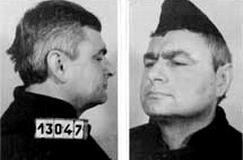
Spotted an error, or have more information about this case?