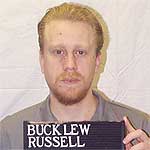
Russell Bucklew
Murderer Russell Ellwood
Murderer · USA · 1991
Russell Ellwood was a former taxi driver. Authorities suspected him of killing…
20 victims
Russell Ellwood
Murderer · USA · 1991
Russell Ellwood was a former taxi driver. Authorities suspected him of killing…
20 victims
 Robert Martines Perez
Murderer · USA · 1994
Name: Robert Martines Perez · Other name used in proceedings: Robert Martinez P…
15 victims
Robert Martines Perez
Murderer · USA · 1994
Name: Robert Martines Perez · Other name used in proceedings: Robert Martinez P…
15 victims
 Billy Frank Vickers
Murderer · USA · 1993
Billy Frank Vickers Vickers was executed by lethal injection in Texas on Januar…
14 victims
Billy Frank Vickers
Murderer · USA · 1993
Billy Frank Vickers Vickers was executed by lethal injection in Texas on Januar…
14 victims
 Willie James Hodges
Murderer · USA · 2001
Willie James Hodges was convicted of the murder of Patricia Belanger and was se…
3 victims
Willie James Hodges
Murderer · USA · 2001
Willie James Hodges was convicted of the murder of Patricia Belanger and was se…
3 victims
 Vaughn Greenwood
Serial killer · USA · 1964
Vaughn Greenwood was known as the “Skid Row Slasher.” He was suspected of killi…
11 victims
Vaughn Greenwood
Serial killer · USA · 1964
Vaughn Greenwood was known as the “Skid Row Slasher.” He was suspected of killi…
11 victims
 Michael Durant
Murderer · Canada · 2003
Michael Durant was found guilty of two counts of first-degree murder in the dea…
2 victims
Michael Durant
Murderer · Canada · 2003
Michael Durant was found guilty of two counts of first-degree murder in the dea…
2 victims
 Brian Keith Roberson
Murderer · USA · 1986
Brian Keith Roberson was convicted and sentenced to death for the August 1986 m…
2 victims
Brian Keith Roberson
Murderer · USA · 1986
Brian Keith Roberson was convicted and sentenced to death for the August 1986 m…
2 victims
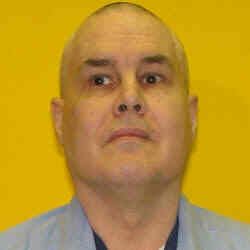 Thomas Lee Dillon
Serial killer · USA · 1989
Defendant: Thomas Lee Dillon · Sex: M · Race: W · Type: N · Motive: PC-nonspeci…
11 victims
Thomas Lee Dillon
Serial killer · USA · 1989
Defendant: Thomas Lee Dillon · Sex: M · Race: W · Type: N · Motive: PC-nonspeci…
11 victims
 Wendi Andriano
Murderer · USA · 2000
Wendi Andriano was sentenced to death on December 22, 2004. Wendi Elizabeth Och…
1 victim
Wendi Andriano
Murderer · USA · 2000
Wendi Andriano was sentenced to death on December 22, 2004. Wendi Elizabeth Och…
1 victim
- Gender
- male
- Country
- USA
- Location
- Cape Girardeau County, Missouri, USA
- Date of birth
- May 16, 1968
- Age at first offence
- 28
- Characteristics
- jealous rage, kidnapping, rape
- Victim profile
- Michael Sanders
- Method of murder
- Shooting
- Date(s) of murder
- March 21, 1996
- Years active
- 1996
- Date of arrest
- Next day (wounded by police)
- Status
-
Sentenced to death
Sentenced to death on May 15, 1997; affirmed by the Supreme Court of Missouri in State of Missouri v. Russell E. Bucklew, 973 S.W.2d 83 (Mo. banc 1998)
Case identification
Russell E. Bucklew was convicted in State of Missouri v. Russell E. Bucklew, 973 S.W.2d 83 (Mo. banc 1998). The case style was State of Missouri, Respondent, v. Russell E. Bucklew, Appellant. Case number was 80052.
Timeline
05/15/1997 — Bucklew was sentenced to death.
03/06/1996 — Bucklew returned to the trailer shared with Stephanie Ray, found Michael Sanders there, put a knife to Sanders’s throat, and threatened to kill Sanders if Sanders came back.
03/07/1996 — Bucklew called Ray at work and threatened to kill her, Sanders, and her children if he saw her with Sanders again.
03/20–21/1996 — Bucklew stole his nephew’s car, two of his brother’s pistols, two sets of his brother’s handcuffs, and duct tape; he left a note asking family not to report the theft to police.
03/21/1996 — By afternoon Bucklew began surreptitiously following Ray and ultimately went to Sanders’ trailer.
03/22/1996 — Shortly after the Missouri highway patrol wounded Bucklew in the gunfight, Al Riehl read Bucklew his Miranda rights and asked if he wished to make a statement; Bucklew declined to comment.
03/26/1996 — After five days of treatment, Bucklew was released from the hospital and transported to the sheriff’s office; Riehl again read Miranda warnings and asked if Bucklew would like to give a statement; Bucklew agreed to give a lengthy videotaped statement.
05/26/1998 — The Supreme Court of Missouri handed down its decision affirming the judgment.
Background
Russell Bucklew apparently did not want to live apart from Stephanie Ray. The two had lived together in Cape Girardeau County until Ray decided to break up with Bucklew on Valentine’s Day, 1996. Bucklew left their mobile home and went to live with his parents.
On March 6, Bucklew returned to the trailer he had shared with Ray. He found Michael Sanders, concluded that Sanders and Ray were romantically involved, put a knife to Sanders’s throat, and threatened to kill Sanders if Sanders ever came back to Ray’s trailer. Later that same evening, Bucklew returned to the trailer, found Ray alone, threatened her with a knife, cut her jaw, and punched her in the face before leaving. Ray reported all of this to the police.
Bucklew called Ray at work on March 7. He threatened her again and promised to kill her, Sanders, and her children if he saw her with Sanders again. Ray moved in with Sanders, fearing to return to her own home.
The offence
Sometime during the night of March 20–21, Bucklew stole his nephew’s car. He also took two of his brother’s pistols, two sets of his brother’s handcuffs, and a roll of duct tape. He left a note asking his family not to report his theft to the police.
By the afternoon of March 21, Bucklew began surreptitiously following Ray as she left work and ran errands, ultimately discovering where she lived by following her to Sanders’ trailer. Bucklew waited for some period of time before he knocked on the trailer door. One of Sanders’s children opened the door. Sanders saw Bucklew through the window, escorted the children to a back bedroom, and grabbed a shotgun.
Bucklew entered the trailer with a pistol in each hand. Sanders came into the hallway carrying the shotgun. Bucklew yelled "get down" and began shooting at Sanders without further warning. Sanders fell, struck by two bullets; one entered his chest and tore through his lung. Sanders dropped the shotgun. The shotgun went off and blew a hole in the trailer wall.
Bucklew aimed the gun at Sanders’s head, but when he saw Sanders’s six-year-old son, Bucklew fired at the boy instead. The shot missed.
Ray stepped between Bucklew and Sanders, who was holding his chest as he slumped against the wall. Bucklew invited Ray to drop to her knees. When she delayed, he struck her face with the pistol. He produced handcuffs, handcuffed her hands behind her back, and dragged her to the car. The two drove away.
During the journey, Bucklew demanded sex. When all of the acts he demanded were not performed, Bucklew raped Ray in the back seat of the car. Resuming the journey, Bucklew drove north on Interstate 55.
Michael Sanders bled to death from his wounds.
Investigation and arrest
By that time, law enforcement authorities had broadcast a description of the Bucklew car. Trooper James Hedrich saw the car, called for assistance, and began following Bucklew. The highway patrol ultimately apprehended Bucklew after a gunfight in which both a trooper and Bucklew were wounded by gunshot.
Trial
Convictions and jury findings
A jury convicted Bucklew of first degree murder, kidnapping, and first degree burglary. The jury recommended the death sentence. The trial court imposed the death sentence.
The opinion stated that the jury convicted Bucklew of first degree murder, section 565.020, RSMo 1994; kidnapping, section 565.110, RSMo 1994; and first degree burglary, section 569.160, RSMo 1994. The jury found two aggravating circumstances and recommended the death sentence. The trial court sentenced Bucklew to death.
In the penalty phase, the jury was instructed that it must find aggravating circumstances beyond a reasonable doubt and that: “In determining the punishment to be assessed under Count I [first degree murder] against the defendant for the murder of Michael H. Sanders, you must first unanimously determine whether one or more of the following statutory aggravating circumstances exist: 1. Whether the murder of Michael H. Sanders was committed while the defendant was engaged in the perpetration of kidnapping ... 2. Sanders was committed while the defendant was engaged in the perpetration of burglary .... 3. Sanders was committed while the defendant was engaged in the perpetration of rape ....”
The jury found:
- “That Russell Bucklew Committed the Crime of Kidnapping during the murder of Michael H. Sanders”
- “Russell Bucklew Committed the Crime of Burglary during the murder of Michael H. Sanders”
Statement to police; motion to suppress videotaped statement
Bucklew challenged the admission of a statement he made to police, seeking suppression of a videotaped statement.
On March 22, shortly after the Missouri highway patrol wounded Bucklew in the gunfight and while he remained in the hospital receiving treatment, Al Riehl of the Missouri highway patrol approached Bucklew, read him his rights under Miranda v. Arizona, 384 U.S. 436 (1966), and asked if Bucklew wished to give a statement about the events of March 21. Bucklew told Riehl that he did not wish to make any comment. Riehl immediately ceased questioning and left.
On March 26, after five days of treatment, the hospital released Bucklew. The Cape Girardeau County sheriff transported him to the sheriff’s office. When Bucklew arrived, Riehl approached him again, read him his Miranda warnings, and asked if he would like to give a statement. Bucklew responded, “yes, but it would take a long time.” Bucklew executed a standardized written “Notification and Waiver of Rights” form and then gave a lengthy videotaped statement about the events of March 21, 1996.
The trial court overruled Bucklew’s motion to suppress. The court found that Bucklew was advised of his Miranda rights, understood them, and that the statement was freely and voluntarily made without threat or cosercion [sic].
Bucklew argued that the police did not “scrupulously honor” his right to remain silent. The Supreme Court of Missouri held that the police scrupulously honored his rights. It also held that Bucklew’s claim that his medical condition at the time made the statement unknowing and unintelligent failed. The Supreme Court of Missouri further held that Bucklew did not make an actual, unambiguous, unequivocal request for counsel. The court held that, assuming it was error to admit the videotape, the refusal to exclude it would at most constitute harmless error beyond a reasonable doubt.
Within the videotaped statement, Riehl said: “I think we'll just let you rest now, Rusty, unless you want to talk some more. I'll be glad to sit here and listen to you.”
Bucklew responded: “I would like to talk some more. It feels good to get this sh__ off my chest if you don't mind.”
During the videotaped statement, Bucklew suggested counsel, and the videotape included the following: “Well do you think I should have an attorney present?” “I can't tell you that Rusty.” “How fast could you get an attorney here?” “Well, I don't know. I don't, I wouldn't, that would be up to you.” “I mean, a public defender is all I can handle.” “Ya; ya; if, if, if, if that's what you want to do you just have to tell me that and I” “I don't know man.”
Telephone conversation; Rule 25.03(A)(2) discovery issue
Bucklew claimed the trial court erred in overruling his objection and request for a mistrial because of an alleged prosecutorial discovery violation under Rule 25.03(A)(2).
Ray testified that in a telephone conversation on March 7, 1996, Bucklew threatened her life, the lives of her children, and the murder victim, Michael Sanders.
The rule required the state, upon motion, to provide the defense with “[a]ny written or recorded statements and the substance of any oral statements made by the defendant.”
At trial, the prosecutor asked Ray about the phone call while she was at work. Defense counsel objected at the bench; the bench colloquy included: Defense: “I just wanted to specifically object to the contents of this phone call as evidence of other crimes and irrelevant to the charges that we're trying.” Prosecution: “I expect the answer to be that he told her he was going to kill her and her children and cut her children up in front of her.” Court: “The objection will be overruled.”
In open court, the prosecutor asked Ray: “Stephanie, would you go ahead and describe for the jury what Russell Bucklew told you in that phone call on March 7, 1996?” Ray answered: “He said that he knew I'd been cheating on him and that he would, if he ever seen Michael around me again, he said he'd kill him and me and all the kids. So he said he'd kill us all is what he said.”
At the bench, the defense then stated: “I'm sorry. But I believed that statement that she just made included a threat towards Mike. And I believe that's contrary to what the expected testimony was. I mean I don't think she said the phone call, previously claimed that this phone call included a threat towards Mike.” Prosecution: “That's something you could impeach her about. That's the first time I've heard it too.” Defense: “And also my objection is it's a statement of the defendant, hasn't been disclosed under Rule 25 because she's claiming that in this phone call at Ceramo [Ray's place of employment] there was a threat against Mike. I believe that's what she just said.” Prosecution: “I can only disclose what I have been told and I have, you can impeach it.” Court: “The objection is overruled. Defense: Ask for a mistrial Court: That request is denied.”
The Supreme Court of Missouri held that Rule 25.03 did not require the state to disclose what it did not have, and it found no prejudice from any discovery violation.
Evidence admitted during chase and during flight
Bucklew challenged the admission of evidence of his flight from police and statements he made during his flight. The Supreme Court of Missouri held the claims were procedurally waived and reviewed for plain error only, concluding plain error review was not warranted.
Exhibit 57; bloodstained child artwork
Bucklew alleged trial court error in admitting Exhibit 57, “a piece of a child's bloodstained artwork seized from the murder scene.” The Supreme Court of Missouri held the evidence was probative and cumulative. It also noted Bucklew had failed to object to admission of Exhibit 37, “a close-up photograph of exhibit 57 and the bloodstained carpet in the immediately surrounding area,” and that Exhibit 57 was cumulative.
Jury instructions
Bucklew argued on appeal that Instruction Number 22 should not have been given because it was not supported by the evidence; the Supreme Court of Missouri held the argument was not preserved for appeal by a specific objection at trial and, given its earlier conclusions about the admission of Bucklew’s statements, found no need to review the claim.
Instruction Number 22 provided: “Evidence has been introduced that the defendant made certain statements relating to the offense for which he is on trial. If you find that a statement was made by the defendant, and that at that time he understood what he was saying and doing, and that the statement was freely and voluntarily made under all of the circumstances surrounding and attending the making of the statement, then you may give it such weight as you believe it deserves in arriving at your verdict. However, if you do not find and believe that the defendant made the statement or if you do not find and believe that he understood what he was saying and doing, or if you do not find and believe that the statement was freely and voluntarily made under all of the circumstances surrounding and attending the making of the statement, then you must disregard it and give it no weight in your deliberations.”
Appeals
The Supreme Court of Missouri affirmed the judgment. The opinion author was Edward D. Robertson, Jr., Judge. The court voted “AFFIRMED” and stated all concur.
Issues raised on appeal
The Supreme Court of Missouri addressed Bucklew’s arguments related to (1) admission of the videotaped statement, (2) the Rule 25.03(A)(2) discovery issue concerning the phone conversation, (3) admission of evidence of flight and statements during flight, (4) admission of Exhibit 57, (5) Instruction Number 22, (6) acceptance of the jury’s sentencing recommendation and the jury’s language in findings of aggravating circumstances, (7) disclosure of non-statutory aggravating circumstances including future dangerousness, deterrence arguments, and victim impact, and (8) proportionality review.
The court also stated that Bucklew’s remaining points raised issues previously and recently decided against his position, and repeating those holdings would serve no jurisprudential purpose (Rule 30.25).
Outcome
It held that the trial court did not err in receiving Bucklew’s videotaped statement and that any error would be harmless beyond a reasonable doubt. It also held that the trial court did not violate Rule 25.03(A)(2) and that Bucklew failed to show prejudice. It further held that the trial court did not err with respect to evidence and instructions challenged on appeal and that it properly accepted the jury’s sentencing recommendation.
On proportionality review under section 565.035.3, RSMo 1994, the Supreme Court of Missouri found no evidence that the death sentence was imposed under the influence of passion, prejudice, or any other arbitrary factor. It held ample evidence supported finding aggravating circumstances that the murder was perpetrated during burglary and kidnapping. It concluded the death sentence was not excessive or disproportionate to penalties imposed in similar cases, noting that it had upheld death sentences where a victim was murdered in front of his children and where the murder occurred during perpetration or attempted perpetration of a burglary in the victim’s home, and noting that it had upheld death sentences where defendants fired multiple shots.
Additional notes reflected in the opinion
Bucklew’s appeals included argument about statutory aggravating circumstance language in the jury’s verdict forms. The Supreme Court of Missouri rejected Bucklew’s argument that the aggravating circumstance required a primary purpose that the murder occurred only as an incident to kidnapping or burglary. The Supreme Court of Missouri held that the section 565.032.2(11) aggravating circumstance was not time or cause specific and focused on a contemporaneous, multiple-crime event.
Spotted an error, or have more information about this case?