
Wendi Andriano
Murderer Megan Huntsman
Murderer · USA · 1996
Megan Huntsman was 40 at sentencing. She was a mother of three children who wer…
6 victims
Megan Huntsman
Murderer · USA · 1996
Megan Huntsman was 40 at sentencing. She was a mother of three children who wer…
6 victims
 Angela Johnson
Murderer · USA · 1993
Angela Jane Johnson was convicted in federal court of aiding and abetting the m…
5 victims
Angela Johnson
Murderer · USA · 1993
Angela Jane Johnson was convicted in federal court of aiding and abetting the m…
5 victims
 Michele Kalina
Murderer · USA · 1996
Michele Kalina pleaded guilty to murder for one of five infants she initially w…
5 victims
Michele Kalina
Murderer · USA · 1996
Michele Kalina pleaded guilty to murder for one of five infants she initially w…
5 victims
 Tiffany Hall
Murderer · USA · 2006
Tiffany Hall was 24 when she was charged in September 2006. She later entered a…
5 victims
Tiffany Hall
Murderer · USA · 2006
Tiffany Hall was 24 when she was charged in September 2006. She later entered a…
5 victims
 Banita Jacks
Murderer · USA · 2007
Banita Jacks was a Washington, DC resident convicted of murdering her four daug…
4 victims
Banita Jacks
Murderer · USA · 2007
Banita Jacks was a Washington, DC resident convicted of murdering her four daug…
4 victims
 Susan Eubanks
Murderer · USA · 1996
Susan Dianne Eubanks, also referred to as Susan Eubanks, was convicted by a jur…
4 victims
Susan Eubanks
Murderer · USA · 1996
Susan Dianne Eubanks, also referred to as Susan Eubanks, was convicted by a jur…
4 victims
 Alvin Goodwin
Murderer · USA · 1986
Defendant: Alvin Goodwin Alvin Urial Goodwin III Status: Executed by lethal inj…
1 victim
Alvin Goodwin
Murderer · USA · 1986
Defendant: Alvin Goodwin Alvin Urial Goodwin III Status: Executed by lethal inj…
1 victim
 James Homer Elledge
Murderer · USA · 1975
James Homer Elledge was executed by lethal injection in Washington on August 28…
2 victims
James Homer Elledge
Murderer · USA · 1975
James Homer Elledge was executed by lethal injection in Washington on August 28…
2 victims
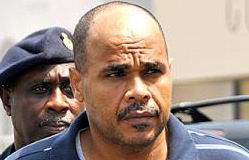 Cyril Darville
Serial killer? · The Bahamas · 1990
Cyril Darville was convicted for a murder committed in 1990. He had a prior rec…
9 victims
Cyril Darville
Serial killer? · The Bahamas · 1990
Cyril Darville was convicted for a murder committed in 1990. He had a prior rec…
9 victims
 Robert Martines Perez
Murderer · USA · 1994
Name: Robert Martines Perez · Other name used in proceedings: Robert Martinez P…
15 victims
Robert Martines Perez
Murderer · USA · 1994
Name: Robert Martines Perez · Other name used in proceedings: Robert Martinez P…
15 victims
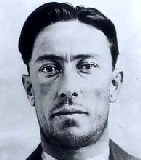 Colin Campbell Ross
Murderer ? · Australia · 1921
5 March 1920 — Ross asked Lily Mae Brown to marry him and produced a revolver a…
1 victim
Colin Campbell Ross
Murderer ? · Australia · 1921
5 March 1920 — Ross asked Lily Mae Brown to marry him and produced a revolver a…
1 victim
- Gender
- female
- Country
- USA
- Location
- Maricopa County, Arizona, USA
- Date of birth
- August 6, 1970
- Age at first offence
- 30
- Characteristics
- parricide, to collect insurance money
- Victim profile
- Joseph Andriano, 33 (her terminally ill husband)
- Method of murder
- Bludgeoning with a barstool and stabbing with knife
- Date(s) of murder
- October 8, 2000
- Years active
- 2000
- Date of arrest
- Same day
- Status
-
Sentenced to death
Sentenced to death on December 22, 2004
Case record: Wendi Andriano
Status
Wendi Andriano was sentenced to death on December 22, 2004.
Background
Wendi Elizabeth Ochoa was born on August 6, 1970. In January 1994, she married Joseph Andriano. Joe fell ill and, after many misdiagnoses, was diagnosed with adenoid cystic carcinoma in 1998. His illness was terminal by 1998. Joe attempted holistic therapies and by 2000 had resorted to chemotherapy.
Wendi had given birth to two children and was working as an apartment manager. She began to resent her increased responsibilities. She frequently attended bars and engaged in extramarital affairs. During August and September 2000, she made attempts to obtain a life insurance policy on Joe’s life. The efforts included soliciting friends to pose as her husband during life insurance pre-screening processes; no life insurance policy was ever obtained.
In 2004, Wendi was found guilty of one count of first degree murder and sentenced to death.
Wendi was an inmate on death row in Arizona. She was incarcerated at the Lumley Unit in the Arizona State Prison Complex - Perryville. Her inmate number was #191593.
The offence
On October 7, 2000, Wendi Andriano, her terminally ill husband Joe, and their two small children attended a barbeque. They returned to their apartment around midnight.
At about 2:15 a.m. on October 8, Andriano called Chris, a coworker who also lived at the apartment complex, and asked Chris to watch the children while Andriano took Joe to the doctor. When Chris arrived, Andriano met her outside the apartment and told her: “I have a problem. Don't ask any questions. My husband's in on the floor dying and I haven't called 911 yet.” When Andriano cautioned, “He doesn't know I haven't called 911,” Chris urged her to make the call.
Chris entered the apartment and found Joe lying on the living room floor in the fetal position. Joe appeared weak, had vomited, and had difficulty breathing. While Andriano was in another room calling 911, Joe told Chris that he needed help and said that he had needed help “for a long time.” Joe asked why it was taking “forty-five minutes for the paramedics to arrive.”
Andriano returned to the room and told Chris she needed to get Joe to the car so she could drive him to the hospital because paramedics were responding to another call. Joe said he could not get up, and Andriano tried to lift him. She became irritated and yelled at Joe using profanities. Hearing sirens approaching, Chris went out to direct the paramedics to the apartment as Joe began to vomit again.
When the paramedics were unloading equipment, Andriano came out screaming at them to go away and slammed the door. Chris and four paramedics knocked on the apartment door, but no one answered. After five to ten minutes of knocking, the Phoenix Fire Department alarm room called the Andrianos’ home telephone to attempt to get Andriano to open the door. The alarm room notified the paramedics that contact had been made with someone in the apartment who would come out to speak with them. Rather than coming through the front door, Andriano went out through her back door, climbed over the back patio wall, and walked around the apartment building to the front door where Chris and the paramedics were standing. She told the paramedics that Joe was dying of cancer and had a do-not-resuscitate order and explained: “this was not the way that he wanted to go.”
The paramedics and Chris left without going into the apartment. Andriano called 911 again at 3:39 a.m., and the same paramedics responded and saw her outside the apartment wearing a bloody shirt standing and talking to a police officer.
When the paramedics entered the apartment, they found Joe lying on the floor in a pool of blood. Joe had a deep stab wound to the left side of his neck and lacerations on his head that exposed some brain matter. A police detective observed at 3:52 a.m. that the blood surrounding Joe’s head was already starting to dry. A broken bar stool covered in blood was found near Joe’s body, along with pieces of a lamp, a kitchen knife with blood on the sharp edge, a bloody pillow, and a belt.
The medical examiner determined that Joe sustained brain hemorrhaging caused by no fewer than twenty-three blows to the back of his head, with eight to ten blows that independently could have rendered Joe unconscious. Defensive wounds on Joe’s hands and wrists indicated he was conscious for at least part of the attack. Joe sustained a stab wound 3 and 3/4 inches long by 2 inches wide to the left side of his neck extending to his spine and severing his carotid artery. The medical examiner opined that the blows to the head were sustained before the stab wound and that Joe was still alive, likely unconscious, when he was stabbed. Trace amounts of sodium azide were found in Joe’s blood and gastric contents. The cause of death was attributed to blunt force trauma and the stab wound.
Based on blood spatter and other evidence, a Phoenix police detective opined that Joe was lying down while he was being struck and did not get up during the attack. The detective further opined that, based on the absence of arterial spurting on the belt and the knife, both items were placed beside Joe’s body after he died. Blood spatter on the bar stool suggested that the stool was present when arterial spurting began.
After being taken into custody, Andriano called one of her coworkers and asked her to hide certain items that were in Andriano’s business office. Andriano’s adoptive father told a police detective on the day of the murder, “I remember [Andriano] telling me that she stabbed [Joe].”
Andriano was indicted on one count of first degree murder.
Investigation and evidence
A search of the Andrianos’ storage unit revealed an open cardboard shipping box containing a 500-gram bottle of sodium azide, two Tupperware containers containing sodium azide, nine Q-tips, a plastic knife and fork, and two pairs of latex gloves. Andriano’s fingerprints were on the plastic knife and on the vacuum-packed bag in which the cardboard box was shipped.
During a search of the Andrianos’ apartment, police found gelatin capsules filled with sodium azide in a bottle labeled for an herbal supplement. Trace amounts of sodium azide were discovered in the contents of a pot and two soup bowls in the kitchen. In all, 20.8 grams of sodium azide could not be accounted for.
The jury found that Andriano’s murder was a dangerous felony based on the intentional or knowing infliction of serious physical injury upon Joseph Andriano.
Evidence also was presented that police found sodium azide trace amounts in Joe’s blood and gastric contents, and that the evidence supported that Joe was likely conscious for at least part of the attack.
Arrest
After being taken into custody, Andriano called one of her coworkers and asked her to hide certain items in Andriano’s business office.
Trial
Andriano testified at trial that, after a failed assisted suicide attempt by poison, she and Joe got into a fight during which she hit Joe with a bar stool in self-defense. She claimed that he ultimately slit his own throat.
The State filed a notice of intent to seek the death penalty and subsequently alleged two aggravating factors:
- that Andriano committed the offense “in expectation of the receipt [ ] of anything of pecuniary value,” in violation of A.R.S. § 13-703(F)(5) (Supp. 2000)
- that she committed the murder “in an especially heinous, cruel or depraved manner,” in violation of A.R.S. § 13-703(F)(6)
The State further alleged that the offense was a dangerous felony because it “involved the intentional or knowing infliction of serious physical injury upon Joseph Andriano.”
At trial, Andriano raised claims that evidence of her extramarital affairs and her attempts to obtain insurance policies on Joe’s life was unfairly prejudicial and not admissible under Arizona Rule of Evidence 404(b). The trial court found the insurance and affairs evidence intrinsic to the crime and admitted it. The Arizona Supreme Court later held that neither category was intrinsic but concluded both categories were admissible under Rule 404(b) to show motive, plan, knowledge, intent, and premeditation, and to rebut the domestic violence victim defense.
Regarding the evidence of extramarital affairs, the Arizona Supreme Court described that during the summer of 2000, Andriano had a brief extramarital affair with Rick, a resident of the apartment complex where she lived and worked as the property manager. The court described that the affair ended in July when Rick learned Andriano was married and had children, and that Rick rejected her advances but she aggressively pursued him. The court recounted that Andriano stood outside Rick’s apartment late at night, banging on his door for five minutes, demanding to be let in, and threatening to get the master “pass key” if he did not let her in.
The Arizona Supreme Court described that in September 27, after Joe’s fourth chemotherapy treatment, Andriano went to a dance club, began dancing provocatively with and kissing a man she met there, and they returned to the Andrianos’ apartment and had sex. The court further described that during a phone conversation the following day, Andriano told the man her husband had died of cancer.
During closing arguments, prosecutors and defense counsel addressed the case as a financial motive and domestic violence self-defense claim, respectively. Andriano’s defense position included domestic violence victim and self-defense theories.
The jury found Andriano guilty of first degree murder. It also found that the murder was a dangerous felony. The jury found the (F)(6) “especially cruel” aggravating factor but did not find the (F)(5) “pecuniary gain” aggravator.
Finding that the mitigating circumstances were not sufficiently substantial to call for leniency, the jury returned a verdict calling for a sentence of death.
Sentencing
The sentencing occurred in December 2004. Due to the heinousness, cruelty, and depravation of the crime and because the crime was financially motivated, Andriano was sentenced to death by lethal injection on December 22, 2004.
The Arizona Supreme Court later conducted independent review and affirmed the death sentence.
The court described the (F)(6) aggravating circumstance as involving “especially cruel” manner. It explained that cruelty involved the infliction of physical pain and/or mental anguish on a victim before death, and that the victim had to be conscious for at least some portion of the time when pain and/or anguish was inflicted. The jury had found only the cruelty prong of (F)(6), and it did not find the murder “heinous or depraved.” A finding of any of the three prongs is sufficient to support the (F)(6) aggravating circumstance.
The Supreme Court described evidence supporting the especially cruel finding, including poisoning with sodium azide and leaving the victim to suffer. It stated that the evidence showed physical pain and mental anguish and that Andriano had known or should have known that poisoning with sodium azide would cause physical pain and mental anguish.
Appeals
After the sentencing, Andriano filed post-conviction relief proceedings in 2007. She argued that evidence of her affairs and efforts to buy life insurance policies unfairly prejudiced her before the jury and that jurors were not allowed to consider lesser charges such as second-degree murder or manslaughter. Ultimately, her conviction was affirmed by the Arizona Supreme Court in July 2007.
In the Arizona Supreme Court’s opinion, Andriano’s appeal was described as an automatic appeal after her 2004 conviction and sentence of death.
The opinion addressed:
- admission of other act evidence, including evidence of extramarital affairs and life insurance attempts
- lesser-included offense instructions for second degree murder and “sudden quarrel or heat of passion” manslaughter
- constitutionality and application of the (F)(6) aggravating factor
- adequacy of the (F)(6) “cruelty” instruction
- an instruction regarding murder being “above the norm of other first degree murders”
- penalty phase issues including residual doubt mitigation, “mercy” as mitigation, and jury unanimity in determining mitigating circumstances
- jury coercion related to an impasse instruction and discussion of juror duty to deliberate
- constitutionality of Arizona’s lethal injection statute, A.R.S. § 13-704(A)
- independent review of aggravating and mitigating circumstances and the propriety of the death sentence
The Arizona Supreme Court also addressed a jury coercion claim arising from a question from the jury during penalty phase deliberations and an impasse instruction given by Judge Brian K. Ishikawa. The court reproduced the jury’s question and the judge’s instruction. The jury question was: “If we are unable to reach a unanimous verdict, what is the procedure that will be followed?” The court reproduced the judge’s response instruction in full, beginning with: “It appears from your note that you are at a deadlock in your deliberations.” The court also stated that the jury returned a death verdict two days later.
Regarding mitigation, the Supreme Court summarized mitigating circumstances presented by Andriano, including stress of Joe’s cancer, missionary and community work, strong religious convictions, model prisoner, family life as a good mother to two children, and evidence she was a sexual abuse and domestic violence victim. The court also described conflicting evidence about whether Andriano was a good mother and assigned mitigating circumstances little or no substantial weight. It concluded that the mitigation evidence was not sufficiently substantial to warrant leniency in light of the especially cruel manner in which she murdered her husband.
Outcome
The Arizona Supreme Court affirmed Andriano’s conviction and death sentence.
The procedural posture reflected that a Maricopa County Superior Court jury convicted Andriano of first-degree murder for the death of her terminally ill husband. The jury found the state proved the especially cruel aggravator under A.R.S. § 13-751(F)(6) and determined that she should be sentenced to death. The Arizona Supreme Court affirmed the judgment.
Other details
The court described the barbeque and the timeline of calls and responses by paramedics and police, including Joe’s interaction with Chris, Andriano’s calls to 911, and the observation by a police detective at 3:52 a.m.
The court described evidence related to evidence handling after the murder, including Andriano’s request to hide certain items and fingerprint evidence on sodium azide-related items, and the finding of 20.8 grams of sodium azide not accounted for.
The Supreme Court’s opinion included details about the press coverage of the case including juror interviews and post-sentencing reporting, and it included discussion of numerous appellate claims and their rejection. It also noted various claims raised to avoid preclusion, including claims that the death penalty was cruel and unusual punishment, imposed arbitrarily and irrationally, and issues about the lethal injection statute and the absence of proportionality review.


Spotted an error, or have more information about this case?