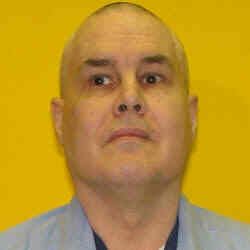
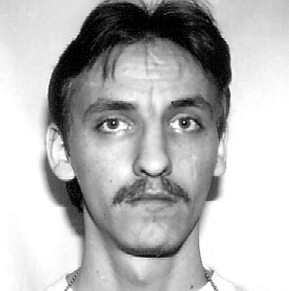
Thomas Lee Dillon
Serial killer Glen Edward Rogers
Serial killer · USA · 1993
Glen Edward Rogers was a spree killer whose cross-country rampage in 1994-95 le…
70 victims
Glen Edward Rogers
Serial killer · USA · 1993
Glen Edward Rogers was a spree killer whose cross-country rampage in 1994-95 le…
70 victims
 Michael Swango
Serial killer · USA · 1981
Michael Swango (Joseph Michael Swango) was a physician and American serial kill…
60 victims
Michael Swango
Serial killer · USA · 1981
Michael Swango (Joseph Michael Swango) was a physician and American serial kill…
60 victims
 Efren Saldivar
Serial killer · USA · 1989
Efren Saldivar (born 30 September 1969) was an American serial killer who murde…
50 victims
Efren Saldivar
Serial killer · USA · 1989
Efren Saldivar (born 30 September 1969) was an American serial killer who murde…
50 victims
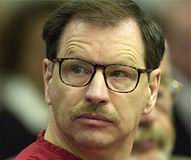 Gary Ridgway
Serial killer · USA · 1982
Gary Leon Ridgway Ridgway was born 18-February-1949 in Salt Lake City, UT. He w…
49 victims
Gary Ridgway
Serial killer · USA · 1982
Gary Leon Ridgway Ridgway was born 18-February-1949 in Salt Lake City, UT. He w…
49 victims
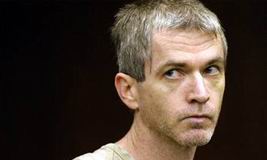 Charles Cullen
Serial killer · USA · 1984
Charles Cullen (born February 22, 1960) was a former nurse and the most prolifi…
45 victims
Charles Cullen
Serial killer · USA · 1984
Charles Cullen (born February 22, 1960) was a former nurse and the most prolifi…
45 victims
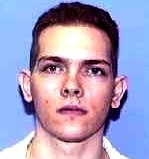 Robert Gene Will
Murderer · USA · 2000
Robert Gene Will, II (TDCJ Number 999402) was convicted of capital murder and s…
1 victim
Robert Gene Will
Murderer · USA · 2000
Robert Gene Will, II (TDCJ Number 999402) was convicted of capital murder and s…
1 victim
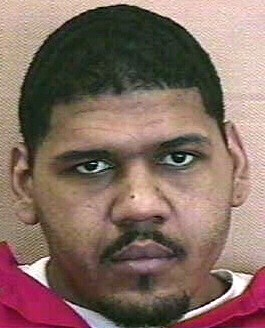 Robbie James Lyons
Murderer · USA · 1993
Robbie James Lyons (male, Black), death row inmate and defendant. · Stephen Wil…
1 victim
Robbie James Lyons
Murderer · USA · 1993
Robbie James Lyons (male, Black), death row inmate and defendant. · Stephen Wil…
1 victim
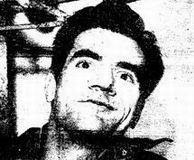 Stephen Nash
Serial killer · USA · 1955
Stephen Nash Stephen Nash was executed by asphyxiation-gas in California on Aug…
11 victims
Stephen Nash
Serial killer · USA · 1955
Stephen Nash Stephen Nash was executed by asphyxiation-gas in California on Aug…
11 victims
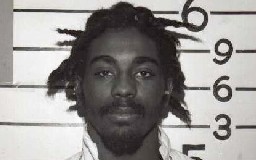 Larry Hicks
Murderer? · USA · 1978
Larry Hicks · Larry Hicks was sentenced to death on September 1, 1978. · At ret…
2 victims
Larry Hicks
Murderer? · USA · 1978
Larry Hicks · Larry Hicks was sentenced to death on September 1, 1978. · At ret…
2 victims
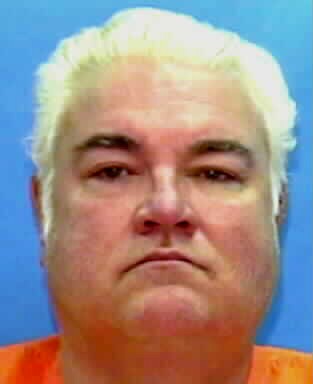 Allen Lee Davis
Murderer · USA · 1982
Allen Lee Davis, also known as “Tiny,” was convicted of killing a pregnant Jack…
3 victims
Allen Lee Davis
Murderer · USA · 1982
Allen Lee Davis, also known as “Tiny,” was convicted of killing a pregnant Jack…
3 victims
- Gender
- male
- Country
- USA
- Location
- Ohio/Indiana/Michigan, USA
- Date of birth
- July 9, 1950
- Age at first offence
- 39
- Characteristics
- serial rapist
- Victim profile
- Donald Welling, 35 / Jamie Paxton, 21 / Kevin Loring, 30 / Claude Hawkins, 49 / Gary Bradley, 44
- Method of murder
- Shooting
- Date(s) of murder
- 1989 - 1992
- Years active
- 1989–1992
- Date of arrest
- November 27, 1992
- Status
-
Life imprisonment
Pled guilty to five counts of murder in Ohio and was sentenced to life in prison with no chance of parole for 165 years on July 12, 1993
Case identifiers
- Defendant: Thomas Lee Dillon
- Sex: M
- Race: W
- Type: N
- Motive: PC-nonspecific
- Mode of operation: Shot outdoorsmen in random, motiveless attacks
- Disposition: 165 years for five Ohio murders, 1993
Background
Thomas Lee Dillon was born 9 July 1950 in Canton, Ohio.
He worked as a draftsman for a municipal water department. He liked to cruise back roads in southeastern Ohio.
He was described as a mild-mannered draftsman who liked to imagine himself as a special forces soldier and as someone hunting for enemy combatants. Authorities described him as a serial sniper who shot and killed five people in southeastern Ohio.
Dillon was described as having a college degree. A psychologist examining Dillon at the request of his defense attorneys summarized that Dillon looked and presented “in a way that seems frighteningly normal,” while most people who commit such crimes “come across just that way.”
Dillon had a drinking problem and a history of compulsive vandalism and arson. Stress was said to trigger shootings, which were usually committed while he was drunk. He was said to have acted against animals and started setting fires to appease his demons. Authorities said he later admitted setting more than 100 fires and killing more than 1,000 pets and farm animals.
Dillon visited Loring’s grave in Massachusetts. After his arrest, Dillon told police:
“When I went to New England last year with my wife … I looked up on microfilm in the Plymouth Library where the guy lived and everything.
He was from the Duxbury area. I just read, you know, to see what–who the hell he was. I didn’t know who he was.”
Family and social background
Dillon’s mother died when he was 15 months old after succumbing to Hodgkin’s disease.
Classmates from Glenwood High School in Plain Township remembered Dillon as extremely intelligent but a loner; his 1968 senior yearbook listed no extracurricular activities. One classmate said:
“Tom was removed from the group,”
and also described him as:
“He was a person who marched to the beat of a different drummer - separated from the mainstream.”
Another classmate, Thomas Breit, said:
“I always liked him,”
“I got a kick out of him - he made me laugh.”
Dillon was married and had a son.
Dillon married Catherine Elsass, a nurse from Alliance, Ohio, in 1978. Catherine’s work at Timken Mercy Medical Center in Canton was mentioned in connection with her dealing with the revelation that her husband might be a serial killer.
Dillon’s mother-in-law, Anne Elsass, was a retired teacher and guidance counselor. She described Dillon as:
“We’re a very close-knit family,”
and said:
“Tom was always pleasant. He was always joking. He seemed like a son to me.”
She also said:
“If they’re true, they’re true.”
She confided:
“My stomach is churning,”
“I have to keep my spirits up for Cathy. Maybe part of me wants to deny this.”
The offence
Dillon was described as a serial sniper who shot and killed five people in southeastern Ohio during the period beginning 1 April 1989 and continuing until April 1992.
The killings were described as targeting campers, outdoorsmen, and joggers with a high-power rifle.
Authorities said that the killer left little forensic evidence, with no spent casings or other forensic evidence, and that no witnesses saw any cars.
Victims and killings described in the case record
Donald Welling
- Victim: Donald Welling
- Age: 35
- Time and context: shot while jogging
- Location/context: near New Philadelphia, Ohio
He was shot on April 1, 1989.
Dillon later described a confession about Welling’s shooting:
“He said, ‘What’s up?’ just before I shot him. Just from me to you, just five feet away. This guy was just trying to be friendly and he blew, you know, I killed him. It wasn’t premeditated, I told you guys that,” he confessed later.
“Just, I was just driving along and came up on him and that’s it, Welling…And just, I heard a voice in my head said, ‘Open fire on him.’ And I did. And in 10 seconds, from the, the time I heard that voice ’til I shot him and killed him.”
Jamie Paxton
- Victim: Jamie Paxton
- Age: 21
- Time and context: shot to death while hunting
- Location/context: while hunting outside St. Clairsville, Ohio
Dillon’s anonymous letter described the shooting of Jamie Paxton. The letter was addressed to the Times Leader, to Sheriff McCort, and to the Paxtons.
The anonymous letter said:
“I am the murderer of Jamie Paxton, he announced in an anonymous two-page photocopied typescript addressed to the Times Leader, as well as to Sheriff McCort and to the Paxtons.”
The letter also stated:
“Jamie Paxton was a complete stranger to me. I never saw him before in my life and he never said a word to me that Saturday.”
The letter continued:
“The motive for the murder was this - the murder itself. … Paxton was killed because of an irresistable (sic) compulsion that has taken over my life. I knew when I left my house that day that someone would die by my hand. I just didn’t know who or where.”
The letter also stated:
“Technically, I meet the defintion (sic) of a serial killer (three or more victims with a cooling off period in between) but I’m an average looking person with a family, job, and home just like yourself. Something in my head causes me to turn into a merciless killer with no conscience.”
The letter further stated:
“Five minutes after I shot Paxton I was drinking a beer and had blacked out all thoughts of what I had just done out of my mind. I thought no more of shooting Paxton than shooting a bottle at the dump.”
The letter also addressed not solving the case:
“Don’t feel bad about not solving this case. You could interview till doomsday everyone that Jamie Paxton ever met in his life and you wouldn’t have a clue to my identity…With no motive, no weapon, and no witnesses you could not possibly solve this crime.”
In another portion of the record, an expanded version of the letter included these details:
“I was very drunk and a voice inside my head said, ‘do it.’ I stopped my car behind Jamie’s and got out. Jamie started walking very slowly down the hill toward the road. He appeared to be looking past me at something in the distance. “I raised my rifle to my shoulder and lined him up in the sights. It took at least five seconds to take careful aim. My first shot was off a little bit and hit him in the right chest. He groaned and went down. I wanted to make sure he was finished so I fired a second shot aimed half way between his hip and shoulder. He was crawling around on the ground. I jerked the shot, and hit him in the knee. He raised his head and groaned again. My third shot also missed and hit him in the butt. He never moved again.”
The record also included:
“Five minutes after I shot Paxton, I was drinking a beer and had blocked out all thoughts of what I had just done out of my mind. I thought no more of shooting Paxton than shooting a bottle at the dump.”
Another stated line in the record for Dillon’s statement about the shooting was:
“I heard a voice that just said, ‘Do it,’ you know. I just, I got out. I had a rifle with me. It was a 308. I got out. He came off the hill for me. I just, I opened fire on him,” Dillon said.
A CBS interview included dialogue between an investigator and Dillon. Dillon answered and described one scenario:
“How far away was he from you when you shot him?” an investigator asked him.
“Seventy-five feet, maybe,” Dillon answered.
“Where did you shoot him at?” Dillon: “right between the eyes.”
“Is that where you aimed for?” Dillon: “Yes.”
“Did you walk up to him and look at him?” Dillon: “No. Didn’t come close.”
“But you’re sure he was dead?” Dillon: “Yeah, yeah. His hat blew straight up about 20 feet. I knew I - I had to blow his whole head off.”
Kevin Loring
- Victim: Kevin Loring
- Age: 30
- Time and context: slain while hunting
- Location/context: Muskingum County
- Residence mentioned in the case record: Massachusetts
Kevin Loring was murdered on November 28, 1990, while hunting. The record described the bullet shattering his skull and that the bullet that shattered his skull was never found (as stated in connection with Loring).
Additional victim killings described
Claude Hawkins
- Victim: Claude Hawkins
- Age: 49
- Time and context: murdered as he fished
- Location/context: Coshocton County
- Family: described as a blue-collar father of four children
Claude Hawkins was murdered on March 14, 1992.
Dillon described his shooting of Hawkins:
“(I) drove by and he waved at me. I heard a voice that day that said, “Go back and get him,” Dillon said about Hawkins’s shooting. “I saw him fishing down there, I heard a voice in my head say, ‘Go back and get him.’ Went down there and killed him. Shot him right in the back.”
Gary Bradley
- Victim: Gary Bradley
- Age: 44
- Time and context: struck down fishing
- Location/context: Noble County, near county seat
- Residence mentioned in the case record: West Virginia
- Family: described as father of three children
Gary Bradley was described as killed in April 1992.
The record stated that all except Loring were shot on a weekend — two each on Saturday and Sunday — with a high-powered rifle, most likely from a nearby road, investigators said. It also stated that Loring was killed on a Wednesday at a time Dillon was on vacation.
Investigation
Authorities established a joint local-state-federal task force to take charge in the investigation of the murders of five men shot with a high-power rifle.
A letter to a local newspaper written by the killer a year after he shot Paxton gave authorities sufficient reason to believe they were seeking a serial killer.
The FBI’s Behaviorial Sciences Unit prepared a profile. The profile described the killer as an educated white male with a college degree, with a predilection for crimes such as arson and killing pets and farm animals.
The profile included points that it lived within a short distance of all of the crimes and was in his 20s; those predictions were noted as not perfect because Dillon lived as far away as 150 miles and was 42 when arrested.
A “Hannibal Lector Squad” was described as formed by three personality profilers from the FBI’s Behavioral Science Unit in Quantico, Virginia.
The profile stated the killer:
“a white male over 30, a gun enthusiast, avid hunter and owned at least several weapons. The killer would have above-average intelligence but was introverted and without many friends, and would resolve personal problems in a cowardly fashion. He might have a drinking problem and engage in obscene telephone calls, arson fire and vandalism by shooting out windows or tires of vehicles. He likely would take sadistic delight in mutilating and killing animals of all sorts. Stressful events would trigger his criminal episodes, which usually would be committed while he is drunk.”
The FBI profile further stated the killer “lived within easy driving distance of the slayings.”
Key evidentiary and investigative links described
First clue involving a dog killing
A dog killing provided a first link. On Sept. 20, someone saw a red Toyota pickup truck near the spot where a dog was killed in Tuscarawas County and a .25-caliber slug was removed from the animal’s body. Wilson obtained the relevant gun from the informant and made a ballistic match.
Surveillance and corroboration
The case included surveillance:
- The task force tailed Dillon from the air and on the ground about a dozen times to gun shows and weekend jaunts of 75 to 125 miles over country roads in Belmont, Harrison, Tuscarawas, Holmes, Coshocton and Carroll counties.
- Dillon often bought beer, sometimes as early as 7:15 a.m.
On Nov. 8, investigators in the air saw Dillon stop several times and point what appeared to be a gun; later examination identified targets including four shattered electric meters on oil well pumps and a stop sign. Investigators also reported that Dillon picked up a large rock and threw it through a car windshield while stopped next to a for-sale sign.
On Nov. 11, task force members lost sight of Dillon on his way home from Belmont County; later that day, investigators learned that two cows had been killed with a crossbow in Tuscarawas County. The informant helped obtain Dillon’s arrows, which matched those recovered from the dead cows.
Weapon purchases and ballistics
- On a gun dealer report, a Swedish Mauser rifle was brought in on December 4 and was said to have been sold by Dillon on April 6, the day after Gary Bradley was murdered. Ballistics indicated it was the rifle used to kill Gary Bradley and Claude Hawkins.
- On Nov. 21, Dillon bought a .22-caliber rifle at a gun show in New Philadelphia, and this purchase was sufficient to arrest him for violating his bond on the silencer charge.
Indictments
The record states that on Jan. 27, Dillon was indicted on capital charges in both cases. It also states that on January 22, 1993, a Noble County grand jury indicted Dillon on two counts of aggravated murder with death penalty specifications, and Dillon’s bond was set at $1 million.
Arrest and custody
Dillon was captured in 1992 when a friend recognized a behavioral profile compiled by the FBI.
Dillon was arrested on a federal weapons charge described as involving possessing a silencer and he was awaiting sentencing for possessing a silencer.
The record also describes Dillon being arrested on Nov. 27 after his appearance from a convenience store in Tuscarawas County.
After the arrest, Dillon was placed on “homicide watch” after two strips of blanket were found in his cell, with one strip reportedly fashioned into a noose. Dillon claimed the strips were used to cover his eyes while he slept.
The record states that shortly after that incident Dillon told a mental health counselor that:
“he would strangle inmates if he had the chance, and he wouldn’t shed a tear.”
He was escorted inside Noble County Courthouse on February 9, 1993.
Trial and plea proceedings
The record states that on February 9, 1993, Dillon pleaded not guilty to murder charges in the deaths of Gary Bradley and Claude Hawkins.
A third murder charge was filed on May 22, 1993 for aggravated murder in the death of Jamie Paxton.
The record stated that on July 3, 1993, Dillon placed a call from jail to a WTOV television reporter and confessed to the murders. A similar call was described as also being placed to an Akron Beacon Journal reporter.
In July 1993, Dillon was described as admitting to setting 160 fires and committing other acts of vandalism in Eastern Ohio during the preceding five years. Noble County Sheriff Landon Smith estimated that Dillon’s fires caused more than $2 million in damages, and the fires were set in Coshocton, Belmont, Guernsey, Carroll, Columbiana and Tuscarawas counties.
Confession and plea bargain statements
The record states:
- Dillon’s attorneys put together a plea bargain guaranteeing he would not receive the death penalty.
- The record states that Dillon would confess to all three murders on the guarantee and that no further charges would be brought against him.
On July 12, 1993, Dillon entered his pleas before Judge John Nau in Noble County Common Pleas Court. He answered “Guilty” to each charge.
The record quotes Dillon as saying:
“I have major problems,”
“I’m crazy. I want to kill. I want to kill.”
It also includes earlier quoted statements about what Dillon wanted and said at the time of other guilty pleas:
“I have major problems,” he said at the time.
A sheriff’s offer of photographs was included in a videotaped confession dialogue:
Investigator: You want to see the autopsy pictures? Dillon: “Just - I want to see 'em all. Show 'em all to me.”
Investigator: Alright. Dillon: I never saw 'em in color. What the hell.
Investigator: Okay, we'll show you some pictures. Dillon: Not the neatest job in the world, was it? Hmm.
Investigator: The shooting? And-- yeah, it's not-- Dillon: No, this autopsy. Geez. Dirty job, i'll tell 'ya.
When asked about why he killed, Dillon reportedly answered:
“No feelings whatsoever. They were just there. The wrong place at the wrong time.”
The psychologist Jeffrey Smalldon was described as saying:
“I really think that he felt he was something special,”
and also saying Dillon asked:
“Have you ever met anyone as complicated as me? Can you understand this? Am I, is this behavior as perplexing to you as it is to me? There’s never been a crime like this in Ohio has there? No motive. No contact with the victims. How could you figure that out?”
Sentencing
On July 12, 1993, Judge John Nau sentenced Dillon to life in prison with no chance of parole for 165 years, described as the maximum sentence, after Dillon entered guilty pleas to charges including five counts of murder in Ohio.
Appeals
No appeals were described in the provided case record.
Outcome
Dillon was sentenced to life in prison with no chance of parole for 165 years on July 12, 1993, after pleading guilty to five counts of murder in Ohio.
Aftermath and additional statements
Victim family reactions
Paxton’s mother Jean Paxton said she was relieved the case was over and described Dillon’s guilt and lack of remorse:
“Today is the beginning of the end for Thomas Dillon,”
She also said:
“We were given a life sentence the day he decided to kill our son,”
and:
“I think he’s a pathetic coward. He’s taken the coward’s way out of everything.”
Prosecutor and defense reactions
Noble County Prosecutor Lucien Young said the plea agreement was the “most practical solution” while preferring a death sentence:
“I kind of felt like he ought to die,”
Dillon’s lawyer Roger Synenberg countered claims that Dillon felt no remorse:
“He has some regrets about this, but he’s also got to put it all behind him,”
Phone call to Jean Paxton
At seven o’clock the next night after sentencing, the record described a telephone call from Thomas Dillon to Jean Paxton. The record included the following exchange.
Jean Paxton said Dillon’s comment “pathetic coward” hurt him and she responded:
“That’s what you are, Thomas,”
and:
“And if you start with your cocky attitude, I will hang up. I’ve heard enough of that for the past several months. I’m not interested in what you have to say. But there are things I want you to know.”
She continued:
“Thomas, have you ever heard the expression 'Tears are the safety valve of the heart'?”
She told him about repentance and prayer, and concluded after speaking for an hour:
“We have spoken long enough. I can’t hate you, but I can never forgive you for what you’ve done to our lives.”
Petition drive and prison facility
The record stated Dillon publicly said he was afraid to be sent to the Southern Ohio Correctional Facility in Lucasville, site of a murderous riot just a few years before he was caught.
In response, family members of his victims began a petition drive to have him sent there. More than 8,000 Ohioans signed the petitions, and the State of Ohio honored that.
The record also states Dillon was sent to Lucasville. Dillon pleaded with authorities not to be sent there in November 1993 and said:
“If I go to Lucasville, I’m a dead man,”
When news of this comment reached Jean Paxton, she collected 8,000 names on a petition.
Spotted an error, or have more information about this case?