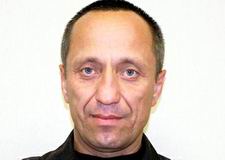
Mikhail Popkov
Serial killer Alexander Pichushkin
Serial killer · Russia · 1992
Alexander Yuryevich “Sasha” Pichushkin (Russian: Алекса́ндр Ю́рьевич Пичу́шкин,…
49 victims
Alexander Pichushkin
Serial killer · Russia · 1992
Alexander Yuryevich “Sasha” Pichushkin (Russian: Алекса́ндр Ю́рьевич Пичу́шкин,…
49 victims
 Maxim Petrov
Serial killer · Russia · 1999
Maxim Vladimirovich Petrov (born 1966) (Russian: Максим Петров) was a Russian d…
19 victims
Maxim Petrov
Serial killer · Russia · 1999
Maxim Vladimirovich Petrov (born 1966) (Russian: Максим Петров) was a Russian d…
19 victims
 Sergei Ryakhovsky
Serial killer · Russia · 1989
Sergei Vasilyevich Ryakhovsky (рус. Сергей Василевич Ряховский), also known as…
19 victims
Sergei Ryakhovsky
Serial killer · Russia · 1989
Sergei Vasilyevich Ryakhovsky (рус. Сергей Василевич Ряховский), also known as…
19 victims
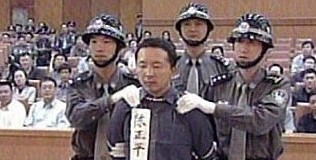 Cheng Zhengping
Mass murderer · China · 2002
Cheng Zhengping was executed on October 13, 2002. Cheng Zhengping confessed to…
42 victims
Cheng Zhengping
Mass murderer · China · 2002
Cheng Zhengping was executed on October 13, 2002. Cheng Zhengping confessed to…
42 victims
 Bruce Williams
Homicide · USA · 1999
Bruce Williams (TDCJ Number 999338) was born on 12/16/1981. He was male, from D…
1 victim
Bruce Williams
Homicide · USA · 1999
Bruce Williams (TDCJ Number 999338) was born on 12/16/1981. He was male, from D…
1 victim
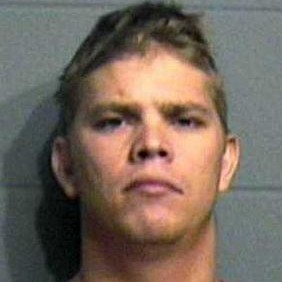 Eric Hanson
Mass murderer · USA · 2005
Eric Hanson — defendant; self-employed mortgage broker of Naperville; convicted…
4 victims
Eric Hanson
Mass murderer · USA · 2005
Eric Hanson — defendant; self-employed mortgage broker of Naperville; convicted…
4 victims
 Joy Hodge
Murderer · USA · 2011
Joy Hodge was a Warren, Ohio mother who lived with her daughter A’nana Brantley…
1 victim
Joy Hodge
Murderer · USA · 2011
Joy Hodge was a Warren, Ohio mother who lived with her daughter A’nana Brantley…
1 victim
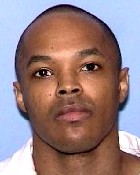 Terry Darnell Edwards
Murderer · USA · 2002
Name: Terry Darnell Edwards TDCJ Number: 999463 Date of birth: 08/10/1973 Gende…
2 victims
Terry Darnell Edwards
Murderer · USA · 2002
Name: Terry Darnell Edwards TDCJ Number: 999463 Date of birth: 08/10/1973 Gende…
2 victims
- Gender
- male
- Country
- Russia
- Location
- Angarsk, Irkutsk Oblast, Russia
- Date of birth
- March 7, 1964
- Age at first offence
- 28
- Characteristics
- police officer, rape, necrophilia
- Victim profile
- Women ( 25 of whom were aged 19 to 28 and four who were aged 35 to 40)
- Method of murder
- The victims were reportedly axed, stabbed, or strangled to death
- Date(s) of murder
- 1992 - 2000
- Years active
- 1992–2000
- Date of arrest
- June 23, 2012
- Status
-
In prison awaiting trial; suspected Russian serial killer and former policeman allegedly responsible for the murders of at least 24 women.
Background
Mikhail Viktorovich Popkov (Russian: Михаил Викторович Попков; born March 7, 1964) was a suspected Russian serial killer and a former policeman. He later became a security guard. He had a wife and a daughter. His wife was also in the police and provided an alibi for Popkov several times. Popkov was nicknamed “The Wednesday Murderer” by police, referring to the day when many of the bodies were found. One detective hunting him labeled him a “werewolf”.
It was speculated that Popkov had been targeting women who resembled his reportedly alcoholic mother who abused him in his childhood.
The offence
Popkov was suspected of murdering women from 1992 to 2000. Police suspected him of killing at least 29 women, while he confessed to 24 murders. Police suspected a larger total than the number he confessed to, and crime experts feared even more.
He would pick up slightly intoxicated women who were just leaving bars or parties. He used his police car and uniform to gain the victims' trust. After driving them to the forest, he raped and murdered them. The victims were reportedly axed, stabbed, or strangled to death. One of the victims was decapitated and another's heart had been ripped out. He raped the victims after they were deceased as well.
Police and investigators also described attack methods and restraints used during crimes. Popkov was accused of raping the corpses of his victims. It was stated that he murdered victims with “a slipknot, knife, awl, screwdriver or an axe” which he used “up to 17 times on some victims.” He also selected victims who were described as full-figured and not tall.
A surviving victim later identified him from a photo.
Investigation
Police were unable to prove any killings after the period ending at least by 2000. Police chose to believe Popkov's wife’s alibi, even after a survivor identified him. A key clue described in the material involved a teenager named Svetlana M.
Nikolai Kitaev, an ex-police investigator who was critical of the handling of the probe, said:
“It was enough just to perform a DNA test of this man but the police interrogated Popkov's wife who composed an alibi for her husband,” said Nikolai Kitaev, an ex-police investigator who is critical of the handling of the probe. “Later he became more careful and carried on with his horrific crimes.”
Kitaev said about Svetlana M:
“She was unconscious because of severe head injuries. Police did not start a criminal investigation for a long time despite numerous complaints from the girl's mother”. “She was shown a picture of him and his police car. ‘She clearly confirmed it was him. But again, the police trusted Mikhail's wife - once more she composed an alibi for him and the criminal investigation was stopped and sent to the archives', Kitaev said.”
He also said he was convinced there were at least a dozen more cases in police files likely to be Popkov’s victims.
An investigator, Mikhail Zavorin, described the traits of the killer they were still hunting in 2003:
“He is charming and sociable. Women like him but he is a beast inside, and it is always hard to fight a werewolf.”
Arrest
Popkov was arrested on June 23, 2012 when he went to Vladivostok to buy a car after having his DNA sampled. The material stated that DNA sampling included 3,500 other police officers.
Trial
Popkov was later charged with the murders he confessed to. He was charged with the 24 murders on October 31, 2013.
During questioning, Popkov said he stopped killing after a sexually transmitted disease left him impotent and he lost the will to rape and kill. Another statement attributed to him was:
“I just felt I wanted to kill a woman I was giving a lift to in my car.”
Sentencing
The material stated only that he was in prison awaiting trial.
Appeals
No appeal information was provided.
Outcome
Popkov remained in prison awaiting trial.
Aftermath
The material included statements by multiple people about the case and the victims.
Viktoria Chagaeva, sister of victim Tatiana (Tanya) Martynova, said:
“It happened 15 year ago but the pain does not go away - it was me who presented Tanya a ticket to go to a concert, and she was killed after attending it,” said Viktoria Chagaeva, 46, who owns a beauty salon in Angarsk.
Chagaeva described the deaths of Tanya Martynova and Yulia Kuprikova. She said:
“On the morning of 29 October, Igor called me saying Tanya had not come back home. ‘I got truly scared. It was the first time, she had never done this before. There were no mobile phones at that time, we could only call Yulia's parents thinking Tanya must have stayed overnight there for some reason. But Yulia's parents said she had not come home either.'”
She said:
“They went to the police and were told that they should wait three days before the young women could be listed as missing.”
Chagaeva said:
“It was 1am when Tanya's husband Igor and I came to the police. We did not tell our mother yet. Igor was absolutely devastated and only repeated - ‘She was killed, she was killed'. I was shocked too, but I simply could not believe it and replied - ‘what are you talking about?'”
She described identification and injuries:
“Later we were told that their bodies were found next to each other, both girls were raped, cut and chopped.” “The experts told us that at first they were killed then raped. My elder brother Oleg went to the morgue to identify Tanya. He had flown from Moscow immediately. He felt sick when saw the body, she was so mutilated. He was almost green when he came out of there - he just could not say a word. I did not dare to go in and look.”
Chagaeva described their mother Lubov’s reaction:
“She felt as if she had died with Tanya, life became useless for her. She lived only because she was visiting various mediums one by one, looking for the killer and wasting her money. Nobody gave her any serious information but she kept doing it.” “She died in 2007 aged 66 from a heart attack. I think her heart could not cope with the pain any longer”.
Viktoria Chagaeva also said:
“Only the fact that this bastard was in a police uniform explains why Tanya got into his car.”
Another statement was attributed to Dmitry, a former police colleague of Popkov:
“When I read about him in the press I literally choked, because I used to work with him and thought I knew him. He was an absolutely normal man. He liked biathlon; once on duty he shot a rapist during an arrest. There was an investigation and he was not punished, the chiefs considered he had taken fair action”.
Nikolai, another ex-colleague, said:
“I used to work closely with him for 5 years. He knew lots of jokes and stories, and could be soul of the party”.
Angarsk psychiatrist Alexander Grishin said:
“There are two groups of maniacs - organised and non-organised. Non-organised maniacs are easy to catch, their crimes are quickly solved - they are people with psychiatric pathologies, who live in their own world, they are hiding from people, often untidy. ‘Organised maniacs - Popkov is a good example - are people with high mental abilities, socially adapted, often with families, they find convenient jobs which secures them and gives time for crimes. It is a hard job to catch such a maniac, it is hard to spot such a person, even police enrolment tests are not good enough for it. The fact that only drunk women attracted him could be the result of his childhood problems and associations - his mother used to drink alcohol and often abused him. ‘Maybe in his childhood other drunk women abused him too, and all this affected his behaviour later in his adult life and led to such horrible consequences.'”
Timeline
- June 23, 2012 — Popkov was arrested when he went to Vladivostok to buy a car after DNA sampling, along with 3,500 other police officers.
- October 31, 2013 — Popkov was charged with the murders he confessed to.
- January 26, 1998 — Svetlana M described being offered a lift by a police car and being taken into woodland where he forced her to take off all her clothes; she was found alive the next day.
- August 17, 1999 — Maria Molotkova was found dead in the forest after going missing.
- October 29, 1998 — Tatiana (Tanya) Martynova, 20, was found dead with her friend Yulia Kuprikova, 19.
- June 2, 2000 — Marina Lyzhina and Lilia Pashkovskaya started to go home after visiting Marina’s sister.
- June 5, 2000 — Marina Lyzhina and Lilia Pashkovskaya’s bodies were found in the forest near Veresovka village.
- June 8, 2000 — Marina Lyzhina and Lilia Pashkovskaya were buried in closed coffins.
- August 12, 1999 — A beheaded body of a woman was found with six knife wounds; the head was found in a rubbish container in a different district.
- 2007 — Lubov died aged 66 from a heart attack.
Other details
Victims and localities
All the victims were residents of Angarsk, Irkutsk Oblast. The material also referenced murders and findings in forested areas near villages and suburbs.
- Tatiana (Tanya) Martynova, 20: her body was found with Yulia Kuprikova on 29 October 1998 by the road in an Angarsk suburb. The bodies were found near Meget, a village close to Angarsk, after a shepherd found them. Her sister Viktoria Chagaeva, 46, said she had been killed after attending a concert.
- Yulia Kuprikova, 19: her body was found with Tatiana Martynova on 29 October 1998. Chagaeva said Tanya and Yulia went for a quick drink with friends and then were offered a lift by a policeman.
- Svetlana M, 15: she survived an attack described by police. She told how a police car stopped near her and offered to give her a lift; he took her into woodland, forced her to strip, and smashed her head against a tree. She was found alive next day and awoke in hospital. She later identified Popkov in a photo.
- Maria Molotkova, 20: she worked at a water pumping station in Angarsk and was found dead in the forest after going missing on 17 August 1999. All the workers from the local water supply company came to her funerals.
- A beheaded woman described as a medical student: her body was found on 12 August, with six knife wounds; her remains were discovered in a rubbish container in Angarsk, and her head was found in a rubbish container in a different district.
- Marina Lyzhina, 35: her body was found in the forest near Veresovka village on 5 June 2000. She had a background as a friend to Lilia Pashkovskaya and they worked the same shop.
- Lilia Pashkovskaya, 37: her body was found with Marina Lyzhina on 5 June 2000. She had children including a 12-year-old daughter and three-year-old son.
- Additional family details: Tanya was married with a child and had a husband, Igor, who was 24 at the time of the 29 October 1998 events. Viktoria Chagaeva said her sister’s husband Igor was against her going to the concert, but she went with a girlfriend, Yulia Kuprikova.
- Burial details: Marina Lyzhina and Lilia Pashkovskaya were buried in closed coffins on 8 June 2000, despite a stated Russian tradition for coffins to be open at gravesides.
Physical and crime-scene details described
The material included multiple descriptions of injuries and methods:
- Victims were “axed, stabbed or strangled” to death.
- One victim was decapitated.
- Another victim had her heart ripped out.
- Tanya and Yulia were described as “both girls were raped, cut and chopped,” with experts stating “at first they were killed then raped.”
- For the beheaded woman (medical student), a beheaded body was found with six knife wounds.
- The material asserted Popkov forced victims to strip naked before killing them and had sex with their blood-soaked bodies.
- It stated Popkov “murdered the women with a slipknot, knife, awl, screwdriver or an axe” and that he used an axe “up to 17 times on some victims.”
- It stated that Popkov used his police uniform and patrol car to gain trust “of at least some of his victims.”
Police and witness characterization
The material attributed descriptions to multiple people:
- A detective predicted the killer “is charming and sociable. Women like him but he is a beast inside, and it is always hard to fight a werewolf.”
- Mikhail Zavorin described the killer traits as quoted above.
- Dmitry and Nikolai described Popkov as normal and sociable, and Dmitry added that Popkov liked biathlon and had once “shot a rapist during an arrest” with an investigation that “was not punished.”
Individuals linked by biathlon and identification
Viktoria Chagaeva said that after Popkov’s arrest, she realized she “vaguely” knew him because they had both been involved in biathlon at the same sports ground. She said:
“I was stuck with horror when I saw the picture of this maniac in the paper and online,” she said. “My sister's killer was looking into my eyes. I immediately felt as if I'd met him. Looking at him, I could hardly breathe. Some minutes later I looked at him another time and thought - oh my God, I know him. I was so shocked, I even took a knife and cut his face in the newspaper, I needed to let this horror out of me.” “I remember him as a tall slim man, he was always alone, with a slippery and shifty glance.” “I think such people just must not live. This beast took the life of my sister, who had so many happy years in front of her.” “I cried a lot that day, but it is time to be quiet and just wait. He will be punished by law and criminals in jail will punish him too, I am sure he will pay for all the murders one day....”
Alleged targets and suspected numbers
Police suspected that:
- 25 victims were aged 19 to 28.
- Four victims were aged 35 to 40. Popkov was suspected of killing at least 29 women, with police unable to prove killings after then. He confessed to 24 murders. The material also stated he was suspected of being behind an attempted murder.

Spotted an error, or have more information about this case?