
Terry Darnell Edwards
Murderer Robert Martines Perez
Murderer · USA · 1994
Name: Robert Martines Perez · Other name used in proceedings: Robert Martinez P…
15 victims
Robert Martines Perez
Murderer · USA · 1994
Name: Robert Martines Perez · Other name used in proceedings: Robert Martinez P…
15 victims
 Billy Frank Vickers
Murderer · USA · 1993
Billy Frank Vickers Vickers was executed by lethal injection in Texas on Januar…
14 victims
Billy Frank Vickers
Murderer · USA · 1993
Billy Frank Vickers Vickers was executed by lethal injection in Texas on Januar…
14 victims
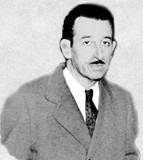 Arnold Axilrod
Murderer · USA · 1955
Arnold Axilrod was a dentist. He was 49 years old and had a reputation as a lad…
1 victim
Arnold Axilrod
Murderer · USA · 1955
Arnold Axilrod was a dentist. He was 49 years old and had a reputation as a lad…
1 victim
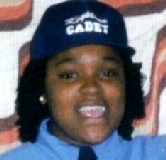 Leisa Jones
Mass murderer · USA · 2010
Leisa Jones died in a fire that she set intentionally in a second-floor apartme…
4 victims
Leisa Jones
Mass murderer · USA · 2010
Leisa Jones died in a fire that she set intentionally in a second-floor apartme…
4 victims
 Gregory Paul Wilson
Murderer · USA · 1992
Gregory Paul Wilson was born on 5/10/67. Wilson maintained his innocence. The v…
1 victim
Gregory Paul Wilson
Murderer · USA · 1992
Gregory Paul Wilson was born on 5/10/67. Wilson maintained his innocence. The v…
1 victim
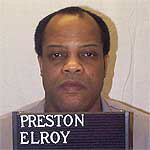 Elroy Preston
Murderer · USA · 1980
Elroy Preston was convicted of capital murder for the killing of Willie “Pee We…
2 victims
Elroy Preston
Murderer · USA · 1980
Elroy Preston was convicted of capital murder for the killing of Willie “Pee We…
2 victims
 Arthur Gary Bishop
Serial killer · USA · 1979
Arthur Gary Bishop was raised by devout Mormon parents in Salt Lake City, Utah.…
5 victims
Arthur Gary Bishop
Serial killer · USA · 1979
Arthur Gary Bishop was raised by devout Mormon parents in Salt Lake City, Utah.…
5 victims
 Michael Lee McBride
Murderer · USA · 1985
Michael Lee McBride was a bartender and moved to Lubbock to be close to Christi…
2 victims
Michael Lee McBride
Murderer · USA · 1985
Michael Lee McBride was a bartender and moved to Lubbock to be close to Christi…
2 victims
- Gender
- male
- Country
- USA
- Location
- Dallas County, Texas, USA
- Date of birth
- August 10, 1973
- Age at first offence
- 29
- Characteristics
- robbery, drug addict, mentally ill
- Victim profile
- Tommy Walker, 34, and Mickell Goodwin, 26 (Subway sandwich shop workers)
- Method of murder
- Shooting
- Date(s) of murder
- July 8, 2002
- Years active
- 2002
- Date of arrest
- Same day
- Status
-
Sentenced to death
Sentenced to death December 4, 2003
Case details
Name: Terry Darnell Edwards TDCJ Number: 999463 Date of birth: 08/10/1973 Gender: Male Race: Black Hair color: Black Eye color: Brown Height: 05'07" Weight: 157
Date received: 12/04/2003 Age when received: 30
Education level: 12
Date of offense: 07/08/2002 Age at the offense: 28
County: Dallas State: Texas Native county: Native Prior occupation: Dallas Texas Warehouseman, Carpenter, Laborer
Prior record
Terry Darnell Edwards had a prior prison record #807214 on a 7 year sentence from Dallas County for possession with intent to deliver a controlled substance and theft of property.
The Texas Department of Criminal Justice said Terry Edwards was sentenced in November 1997 to concurrent five-year terms for theft in 1992 and for possession of cocaine in 1997 with intent to deliver. He was released from prison on Oct. 1, 1999 and was to remain on parole until Aug. 14.
The offence
On July 8, 2002, in Dallas, Texas, Edwards and co-defendant Kirk Edwards entered a restaurant and fatally shot 2 adult males. They took money from the cash register and fled the scene.
A jury later convicted Edwards of capital murder. The trial judge sentenced him to death after the jury’s answers to the special issues set forth in Texas Code of Criminal Procedure Article 37.071, sections 2(b) and 2(e).
Victims
Tommy Walker — manager, 34; shot in the upper torso; family members described him as an ordained minister planning to leave the Subway job and open his own tattoo parlor soon. Mickell Goodwin — employee, 26; mother of two; shot in the upper torso.
Investigation and evidence
Police found three spent cartridges.
Balch Springs Police Chief Ed Morris said police found a .380-caliber hand gun in a trash bin near a cafeteria across the street from the sandwich shop in suburban Balch Springs.
Arrest and surrender
Lancaster was stated to be 25 miles east of Balch Springs.
Edwards was arrested after he was seen dumping a gun into a trash bin next to a cafeteria across the street from the sandwich shop in suburban Balch Springs. Edwards was an ex-convict and had been fired from the Subway about a month ago.
Edwards was jailed on two probable cause capital murder arrest warrants. His bond was set at $1 million on each count. He was transported to the Dallas County jail.
Kirk Darnell Edwards surrendered to the Dallas Police Department about 11 a.m. Tuesday, after his mother helped him negotiate with police. Police said the cousin Terry Darnell Edwards, a 28-year-old former employee at the shop, was arrested after disposing of a gun in a trash bin near the restaurant.
Two men entered the sandwich shop on Monday as it was opening, shot and killed the manager, Tommy Walker, and an employee, Mickell Goodwin. The men fled with about $3,000, police said. Police said the victims were shot in the upper torso.
Court proceedings
Trial and conviction
In November 2003, a jury convicted Edwards of capital murder. Pursuant to the jury’s answers to the special issues set forth in Texas Code of Criminal Procedure Article 37.071, sections 2(b) and 2(e), the trial judge sentenced Edwards to death.
Direct appeal was automatic.
Edwards raised thirteen points of error, including challenges to the sufficiency of the evidence at the punishment stage of trial.
Testimony and evidence described on appeal (future dangerousness)
The Court reviewed the sufficiency of the evidence at punishment by looking at the evidence in the light most favorable to the verdict to determine whether any rational trier of fact could have believed beyond a reasonable doubt there was a probability Edwards would commit criminal acts of violence that would constitute a continuing threat to society.
The Court stated that, on the morning of July 8, 2002, Edwards and another man robbed and killed two clerks at a Dallas Subway sandwich shop. The Court said both victims were shot in the head from only inches away.
The Court stated that Edwards later gave a statement admitting he was inside the sandwich shop but claimed that the other man, “AT-Bone,” did the shooting. The Court stated Edwards acknowledged having the money stolen from the store and the gun used to kill the victims, but claimed that “AT-Bone gave him the gun when they left the store.”
The Court stated Edwards had worked at that Subway some months earlier, but had been fired when it appeared he had been stealing money from the register. The Court also stated he had previously been fired from another Subway shop for misappropriating store funds under his control.
The Court stated the State presented evidence that Edwards had been charged with felony theft and placed on deferred adjudication community supervision on March 25, 1992.
The Court stated that on November 7, 1997, Edwards was adjudicated guilty and sentenced to five years in prison. On that same day, he was also convicted of possession with intent to deliver cocaine and sentenced to five years and a $500 fine.
The Court stated Michael Weast testified that he was in a Subway shop in Fort Worth at about 9:00 p.m. on April 26, 2002; two men came in and began acting suspiciously; one pulled a gun and ordered people behind the counter to lie down while the other apparently took video surveillance tape; as they drove off, the robbers almost ran down a uniformed deputy sheriff who drew his gun and yelled at them to stop; Weast identified Edwards as the perpetrator without the gun.
The Court held that evidence was legally sufficient to support the jury’s affirmative answer to the future dangerousness issue, and overruled point of error four.
Voir dire issues
Edwards asserted that the trial court violated his rights by denying his motion to quash the panel of three prospective jurors, including venire member James Redden, based on the court’s instruction that “mitigation” was a “justifying” or “extenuating” circumstance for the offense.
Edwards claimed he was harmed because he had to use a valuable peremptory challenge on Redden that he would have used on a different venire person had the court not erred.
The Court stated that because the record reflected Edwards received an extra peremptory challenge in addition to the fifteen granted by statute, he could not demonstrate detriment from the loss of the strike used on Redden.
Point of error one was overruled.
Edwards also challenged the State’s challenges for cause to venire members Cecelia Hurley and Byron Tatum.
The Court stated Hurley indicated bias in favor of police testimony and the State challenged her for cause based on this bias.
The Court stated Tatum indicated bias against the range of punishment for the lesser included offense of murder and did not believe he could give five years for an intentional murder. The Court stated Tatum also indicated the beyond a reasonable doubt standard was too low and he would have to be nearly one hundred percent certain before he could convict someone of such a serious crime.
The Court stated error asserted on these bases was not of constitutional dimension and reversal was warranted only if the record showed the error deprived Edwards of a lawfully constituted jury. It held Edwards failed to show he was deprived of a lawfully constituted jury.
Points of error two and three were overruled.
Jury charge issue
Edwards claimed the trial court erred by refusing to instruct the jury that, when answering the future dangerousness special issue, the jury could consider that Edwards would not be eligible for parole for at least forty years if a life sentence were assessed.
The Court stated the trial court provided the parole instruction required by Article 37.071 ' 2(e)(2)(B) and included that a defendant sentenced to life imprisonment would not be eligible for parole for 40 years and that parole eligibility did not mean parole would be granted.
The Court held refusal to provide any additional parole-eligibility instruction did not violate due process and was not error.
Point of error six was overruled.
Constitutional and related issues on appeal
Edwards claimed the Texas death penalty scheme violated due process because the mitigation question submitted to the jury pursuant to Article 37.071, section 2(e) did not require the State to prove the absence of sufficient mitigating circumstances beyond a reasonable doubt. The Court stated it had previously rejected such claims and Edwards gave no reason to revisit.
Point of error seven was overruled.
Edwards raised additional challenges in points of error eight through eleven, including:
- An argument that the “12-10 Rule of Article 37.071 violated appellant’s right to due process and the prohibition against cruel and unusual punishment.”
- Arguments that the court’s failure to define terms—“Probability,” “criminal acts of violence,” “continuing threat to society,” “personal moral culpability,” and “moral blameworthiness”—violated due process, right to an impartial jury, and prohibition against cruel and unusual punishment because the terms were vague and indefinite.
- Arguments that the death penalty scheme denied due process and due course of law and imposed cruel and unusual punishment by imposing restrictions on the jury’s discretion to impose death while also allowing the jury unlimited discretion to consider evidence militating against death.
The Court stated it previously considered and rejected these claims and Edwards gave no reason to revisit.
Points of error eight through eleven were overruled.
Edwards argued points twelve and thirteen that the cumulative effect of the above-enumerated constitutional violations denied him due process and due course of law. The Court stated that because Edwards had not shown any error, there could be no cumulative effect.
Points of error twelve and thirteen were overruled.
Appellate disposition
The Court affirmed the judgment of the trial court.
The opinion was delivered March 1, 2006 and included “Do Not Publish.”
Other details
Names and roles in the incident
- Co-defendant: Kirk Edwards (surrendered).
- Edwards: ex-convict; former employee at the shop.
Police chief statement
Balch Springs Police Chief Ed Morris said: “I believe that his mother was very instrumental in having him turn himself in.”
Ed Morris also said: “He didn’t know why Terry Edwards was fired” and said the motive for the killings appeared to be robbery, stating: “We believe there is no other indication except for pure robbery.”
Family statement
Family members described Tommy Walker as “a big teddy bear,” stating through Walker’s wife Beth: “He was a big teddy bear,” and “He was famous for making people laugh. His kids and grandkids were his life. He got himself ordained so he could preside at his own kids’ weddings.”
Timeline
- 07/08/2002 — Edwards and co-defendant Kirk Edwards entered a Dallas restaurant, fatally shot 2 adult males, took money from the cash register, and fled the scene.
- 07/10/2002 — A news report described Kirk Edwards turning himself in to authorities and stated Terry Edwards had been arrested after allegedly disposing of a gun in a trash bin near the restaurant.
- 11/1997 — Edwards received concurrent five-year terms for theft in 1992 and for possession of cocaine in 1997 with intent to deliver.
- 10/01/1999 — Edwards was released from prison.
- 08/14 — Edwards was to remain on parole until Aug. 14.
- 03/25/1992 — Edwards was placed on deferred adjudication community supervision for felony theft.
- 11/07/1997 — Edwards was adjudicated guilty and sentenced to five years in prison; on the same day he was convicted of possession with intent to deliver cocaine and sentenced to five years and a $500 fine.
- 12/04/2003 — Edwards was received with an age of 30.
- 11/2003 — A jury convicted Edwards of capital murder; the trial judge sentenced him to death.
- 12/04/2003 — Sentenced to death December 4, 2003.
- 03/01/2006 — Appellate opinion delivered affirming the trial court.

Spotted an error, or have more information about this case?