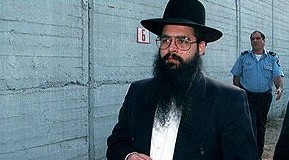
Ami Popper
Mass murderer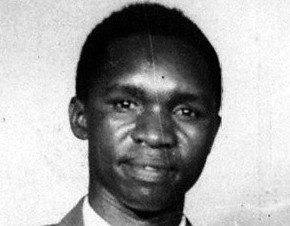 Joseph Kibweteere
Mass murderer · Uganda · 2000
Joseph Kibweteere led a breakaway sect known as the Movement for the Restoratio…
1000 victims
Joseph Kibweteere
Mass murderer · Uganda · 2000
Joseph Kibweteere led a breakaway sect known as the Movement for the Restoratio…
1000 victims
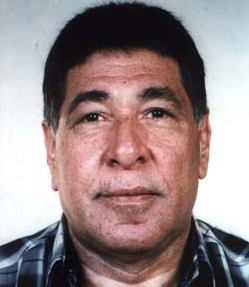 Gameel Al-Batouti
Mass murderer · USA · 1999
Gameel Al-Batouti (also rendered “Gamil ElBatouty” or “El Batouty” in U.S. offi…
216 victims
Gameel Al-Batouti
Mass murderer · USA · 1999
Gameel Al-Batouti (also rendered “Gamil ElBatouty” or “El Batouty” in U.S. offi…
216 victims
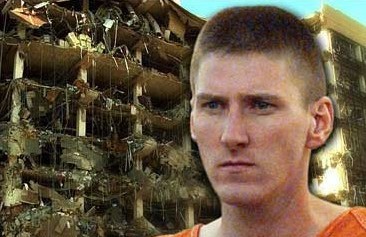 Timothy McVeigh
Mass murderer · USA · 1995
Timothy James McVeigh (April 23, 1968 – June 11, 2001) was a United States Army…
168 victims
Timothy McVeigh
Mass murderer · USA · 1995
Timothy James McVeigh (April 23, 1968 – June 11, 2001) was a United States Army…
168 victims
 Julio Gonzalez
Mass murderer · USA · 1990
Julio Gonzalez was sentenced to 174 twenty-five-year sentences (a total of 4,35…
87 victims
Julio Gonzalez
Mass murderer · USA · 1990
Julio Gonzalez was sentenced to 174 twenty-five-year sentences (a total of 4,35…
87 victims
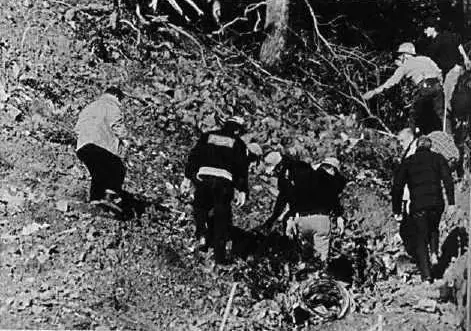 David Burke
Mass murderer · USA · 1987
David Augustus Burke (May 18, 1952–December 7, 1987) was an employee of USAir,…
43 victims
David Burke
Mass murderer · USA · 1987
David Augustus Burke (May 18, 1952–December 7, 1987) was an employee of USAir,…
43 victims
 Gregorio Cardenas
Spree killer · Mexico · 1942
Gregorio Cárdenas buried the bodies in his garden. · Gregorio Cárdenas Hernánde…
4 victims
Gregorio Cardenas
Spree killer · Mexico · 1942
Gregorio Cárdenas buried the bodies in his garden. · Gregorio Cárdenas Hernánde…
4 victims
 Walanzo Robinson
Murderer · USA · 1989
May 19, 1989 — Walanzo Deon Robinson and Dennis Eugene Hill argued in northeast…
1 victim
Walanzo Robinson
Murderer · USA · 1989
May 19, 1989 — Walanzo Deon Robinson and Dennis Eugene Hill argued in northeast…
1 victim
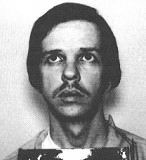 Dayton Leroy Rogers
Serial killer · USA · 1987
Dayton Leroy Rogers was sentenced to death on June 9, 1989. He was resentenced…
8 victims
Dayton Leroy Rogers
Serial killer · USA · 1987
Dayton Leroy Rogers was sentenced to death on June 9, 1989. He was resentenced…
8 victims
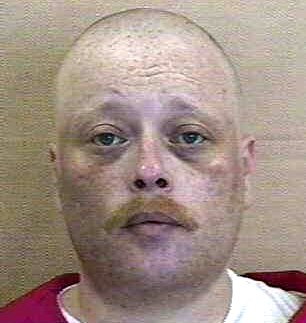 Bobby Lee Harris
Murderer · USA · 1991
Bobby Lee Harris was convicted in North Carolina and received a death sentence…
1 victim
Bobby Lee Harris
Murderer · USA · 1991
Bobby Lee Harris was convicted in North Carolina and received a death sentence…
1 victim
- Gender
- male
- Country
- Israel
- Location
- Rishon Lezion, Israel
- Date of birth
- 1969
- Age at first offence
- 21
- Characteristics
- revenge
- Victim profile
- Male palestinians
- Method of murder
- Shooting
- Date(s) of murder
- May 20, 1990
- Years active
- 1990
- Date of arrest
- Same day
- Status
-
Life imprisonment
Sentence to seven life terms in 1991; commuted to 40 years in 1999
Background
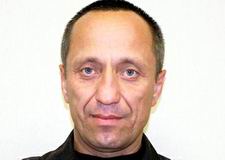
Ami Popper (Hebrew: עמי פופר; born 1969) was an Israeli convicted of murder. Popper had been a former dishonorably-discharged soldier. After the shootings, Arab riots led to the deaths of seven more Palestinians, and 700 injured.
While on a 48-hour furlough, Popper was involved in a car accident caused by him crossing a solid line. His wife and one of his sons were killed in the accident, and Popper himself was moderately injured. Popper was serving 40 years at Ma’asiyahu Prison near Ramle. He was originally given seven life sentences—one for each of the seven Palestinian laborers he gunned down near Rishon Lezion on May 20, 1990.
In prison, Popper became religious. In June 1993, he married a Canadian woman from a family of Kach activists, and they had three children.
The offence
On 20 May 1990, Popper put on his army uniform and asked men waiting at a bus stop in the Israeli town of Rishon Lezion for their identity cards. After confirming they were Arabs, he lined them up and opened fire, killing seven. Another report described that he killed eight unarmed Palestinian laborers and wounded 10. A U.S.-made M-16 assault rifle was reported. The attack was described as a shooting spree and as a burst of automatic rifle fire.
After his act, Popper left the scene in a car belonging to one of the Palestinians. He was taken into custody after contacting police.
Riots followed the killings, with clashes leaving additional Palestinians dead and many injured due to Israeli army gunfire.
Investigation
Israel Radio reported that Popper claimed to have been distraught because his girlfriend had decided to leave him. He later told police that he had been raped by an Arab when he was 13 and that he committed the killings out of shame and a desire for revenge.
A jailhouse note reported that Popper confessed in Jerusalem to killing seven Palestinian workers and that he now said the massacre was a premeditated act of personal revenge for a gang rape he suffered at the age of 12. The jailhouse account reported that the leader of a gang that raped him in 1982 was among the Arabs he attacked May 20, and it was described as contradicting an earlier statement that he shot the Arabs over a failed romance.
A five-man psychiatric panel rejected a contention that Popper was unfit to stand trial.
Arrest
Within an hour, Popper was arrested by Israeli police.
Trial
Popper was charged and convicted of seven acts of murder in March 1991.
As his trial opened, Popper refused to speak. Judge Chaim Steinberg ruled that Popper’s silence amounted to a plea of innocent to charges that he gunned down the seven Arabs and wounded 10 others on May 20 outside Tel Aviv.
Sentencing
On March 18, 1991, a court sentenced Popper to life in prison for shooting to death seven Palestinians. The Tel Aviv District Court found Popper guilty of seven murders and ordered him to serve seven life terms consecutively. Israeli law did not provide for parole for prisoners serving life sentences; however, they could seek a commutation from the president and then become eligible for parole.
Appeals
No appeal process was described in the provided material.
Outcome
In February 1999, Popper’s sentence was commuted. From seven life sentences, his sentence was reduced to 40 years.
The Israeli Government cut the prison sentences of four Israelis jailed for murdering Palestinians, and it was described that one convicted murderer was to be released. It was stated that Popper’s sentence was reduced from seven life sentences to 40 years in prison. The justice minister told Israeli radio that the review of sentences was justified because the government had released a number of Palestinian prisoners over recent years as a result of the peace process. Palestinian human rights activists voiced opposition, describing that Israel’s position was that it would not release any Palestinian prisoners who “have Jewish blood on their hands”. The activists said Palestinians who murder Israelis were charged in military courts and received severe sentences, while they argued that Israelis guilty of murdering Palestinians often claimed self-defence and received lighter sentences in regular courts. The issue of prisoners was described as central to the recent stalling of the Wye peace accord.
Popper was expected to be released on parole in 2023 after 33 years in prison.
Aftermath
After completing the first 10 years of his sentence, Popper was allowed furloughs. It was reported that he left the prison grounds more than 120 times since 2000. A police representative said that the Shin Bet (Israel Security Services), and not the Israel Prisons Service, was responsible for approving the frequency and durations of Popper’s furloughs. The Shin Bet referred questions about the accident to the Prime Minister’s Office.
On January 17, 2007, Popper’s wife and six-year-old son were killed when the car he was driving collided head-on with one full of tourists on the Arava Highway, 50 km north of Eilat. Five others were injured, including Popper’s two other children, with two injured seriously. Popper was on a 48-hour furlough from prison and was moderately injured; his son was pronounced dead at the scene. Popper’s wife, Sarah, 42, an American-born social worker affiliated with the Kahane Chai movement, was killed instantly.
The initial investigation suggested that Popper’s three children were sitting in the backseat without seat belts. Police believed that Ami Popper was distracted by his children, causing him to veer into oncoming traffic. Popper’s driving license expired in 1999. Traffic authorities described one of the vehicles, most likely Popper’s, as making a sudden move into oncoming traffic just before 9:30 p.m. and causing “one of the more horrific accidents we have seen... completely unnecessary.”
Magen David Adom medics treated casualties, and firefighters extracted others from the wreckage. Two helicopters evacuated the most seriously injured to Soroka Hospital in Beersheba.
Spotted an error, or have more information about this case?