
Alexander Pichushkin
Serial killer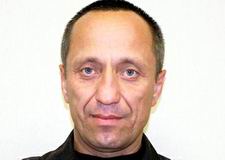 Mikhail Popkov
Serial killer · Russia · 1992
Mikhail Viktorovich Popkov (Russian: Михаил Викторович Попков; born March 7, 19…
29 victims
Mikhail Popkov
Serial killer · Russia · 1992
Mikhail Viktorovich Popkov (Russian: Михаил Викторович Попков; born March 7, 19…
29 victims
 Maxim Petrov
Serial killer · Russia · 1999
Maxim Vladimirovich Petrov (born 1966) (Russian: Максим Петров) was a Russian d…
19 victims
Maxim Petrov
Serial killer · Russia · 1999
Maxim Vladimirovich Petrov (born 1966) (Russian: Максим Петров) was a Russian d…
19 victims
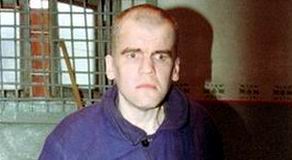 Sergei Ryakhovsky
Serial killer · Russia · 1989
Sergei Vasilyevich Ryakhovsky (рус. Сергей Василевич Ряховский), also known as…
19 victims
Sergei Ryakhovsky
Serial killer · Russia · 1989
Sergei Vasilyevich Ryakhovsky (рус. Сергей Василевич Ряховский), also known as…
19 victims
 Jérôme Carrein
Murderer · France · 1975
Jérôme Carrein (1939 — June 23, 1977) was executed by guillotine in the yard of…
1 victim
Jérôme Carrein
Murderer · France · 1975
Jérôme Carrein (1939 — June 23, 1977) was executed by guillotine in the yard of…
1 victim
 Julian Andrew Frank
Mass murderer · USA · 1960
6 January 1960 — National Airlines Flight 2511 exploded and crashed 1-1/2 miles…
33 victims
Julian Andrew Frank
Mass murderer · USA · 1960
6 January 1960 — National Airlines Flight 2511 exploded and crashed 1-1/2 miles…
33 victims
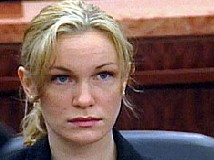 Susan Wright
Murderer · USA · 2003
Susan Lucille Wright (also described as Susan Lucille Wyche; born April 24, 197…
1 victim
Susan Wright
Murderer · USA · 2003
Susan Lucille Wright (also described as Susan Lucille Wyche; born April 24, 197…
1 victim
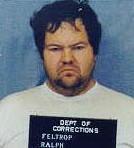 Ralph Cecil Feltrop
Murderer · USA · 1997
Ralph Cecil Feltrop was convicted of first-degree murder in the Circuit Court o…
1 victim
Ralph Cecil Feltrop
Murderer · USA · 1997
Ralph Cecil Feltrop was convicted of first-degree murder in the Circuit Court o…
1 victim
- Gender
- male
- Country
- Russia
- Location
- Moscow, Russia
- Date of birth
- April 9, 1974
- Age at first offence
- 18
- Characteristics
- serial rapist, torture, alcohol, arsonist
- Victim profile
- Men and women
- Method of murder
- Hitting with a hammer
- Date(s) of murder
- 1992 - 2006
- Years active
- 1992–2006
- Date of arrest
- June 14, 2006
- Status
-
Life imprisonment
Sentenced to life in prison on October 29, 2007
Background
Alexander Yuryevich “Sasha” Pichushkin (Russian: Алекса́ндр Ю́рьевич Пичу́шкин, born 9 April 1974 in Mytishchi, Moscow Oblast) was also known as The Chessboard Killer and The Bitsa Park Maniac. He was a Russian serial killer.
Russian media speculated that Pichushkin may have been motivated by a macabre competition with Andrei Chikatilo, who was convicted in 1992 of killing 52 children and young women in 12 years. Pichushkin said his aim was to kill 64 people, the number of squares on a chessboard. He later recanted this statement, saying that he would have continued killing indefinitely if he had not been stopped.
Experts at the Serbsky Institute, Russia’s main psychiatric clinic, found Pichushkin irrecuperable.
The offence
Pichushkin primarily targeted elderly homeless men by luring them with vodka. After drinking with them, he killed them by hitting them on the head with a hammer. He then stuck vodka bottles in their skulls to ensure that they did not survive.
He also targeted younger men, children and women. He claimed that he always attacked from behind to avoid spilling blood on his clothes. He claimed that while killing people he felt like God as he decided whether his victims should live or die. He said: “For me, life without murder is like a life for you without food”. He also said: “I felt like the father of all these people, since it was I who opened the door for them to another world”.
In televised material and in police-led demonstrations, Pichushkin led officers to scenes of many of his crimes in Bitsa Park and acted out the murders in great detail.
The murders included cases in which Pichushkin stated that they were not done in his preferred method (hammer blows to the back of the head), and instead he threw victims down into the sewers underneath Bitsa Park, although one of his victims did survive the ordeal.
Pichushkin’s last murder was the murder of Marina Moskalyova, 36, in the summer of 2006.
Authorities believed he had killed at least 48 people and up to 61–63 people in southwest Moscow’s Bitsa Park, where several victims’ bodies were found. Russian media described that several victims were found, while many victims were never found.
Investigation
Pichushkin was arrested and later led police to scenes of many crimes in Bitsa Park. He demonstrated a keen recollection of how the murders were committed, often acting them out in great detail.
A metro ticket was found in Marina Moskalyova’s possession at the time her body was found. Authorities were able to view the last footage of her alive from surveillance tapes of the Moscow metro system, where she was walking on the platform accompanied by Pichushkin.
Russian media also reported that when police finally caught Pichushkin, he had been able to demonstrate where he buried some of his victims, though police were not near recovering 61 bodies and in some cases found only skulls.
The investigation involved psychiatric evaluation to assess whether Pichushkin was sane and could be held responsible, and investigators suspected he suffered from a mental disorder.
Arrest
Pichushkin was arrested on 15 June 2006.
Accounts in the material describe that authorities initially charged him with the murder of two women on April 11 and 13, 2006, but prosecutors later ascertained his involvement in 46 murders.
Trial
Pichushkin was convicted on 24 October 2007 of 48 (of 49) murders and three attempted murders.
A Russian court housed him in a glass cage during the trial.
The verdict was read by Judge Vladimir Usov, and it included life in prison with the first 15 years to be spent in solitary confinement.
During the trial, Pichushkin asked the court to add an additional 11 victims to his body count, bringing his claimed death toll to 60 and 3 surviving victims.
The jury rejected a plea from defence lawyers, who were seeking a 25-year jail-term, to clear him of 18 killings. The jury said that there were no mitigating circumstances in the former shop assistant’s murders.
Sentencing
He was sentenced to life in prison on October 29, 2007.
Appeals
A capital punishment moratorium in Russia established in 1996 was described in the material as leading to a practical abolition of capital punishment.
Outcome
Pichushkin remained sentenced to life in prison after his October 2007 conviction.
Aftermath
The case led to calls for the death penalty to be brought back in Russia.

Spotted an error, or have more information about this case?