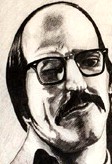
Jack Howard Potts
Murderer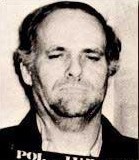 Ervil LeBaron
Murderer · USA · 1972
Ervil Morrell LeBaron (1925 to August 16, 1981) was the leader of a polygamous…
35 victims
Ervil LeBaron
Murderer · USA · 1972
Ervil Morrell LeBaron (1925 to August 16, 1981) was the leader of a polygamous…
35 victims
 Brian Kevin Rosenfeld
Murderer · USA · 1985
Brian Kevin Rosenfeld Brian Kevin Rosenfeld was sentenced to three concurrent l…
23 victims
Brian Kevin Rosenfeld
Murderer · USA · 1985
Brian Kevin Rosenfeld Brian Kevin Rosenfeld was sentenced to three concurrent l…
23 victims
 Marvin Gray
Murderer · USA · 1975
Marvin Gray was convicted killer who claimed responsibility for 23 slayings and…
23 victims
Marvin Gray
Murderer · USA · 1975
Marvin Gray was convicted killer who claimed responsibility for 23 slayings and…
23 victims
 Yahweh ben Yahweh
Murderer · USA · 1980
Yahweh ben Yahweh was born and legally named Hulon Mitchell Jr. (October 27, 19…
23 victims
Yahweh ben Yahweh
Murderer · USA · 1980
Yahweh ben Yahweh was born and legally named Hulon Mitchell Jr. (October 27, 19…
23 victims
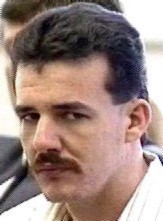 Shawn Humphries
Murderer · USA · 1994
Shawn Humphries was convicted of murder and sentenced to death for the shooting…
1 victim
Shawn Humphries
Murderer · USA · 1994
Shawn Humphries was convicted of murder and sentenced to death for the shooting…
1 victim
 Abdelaâli Hadi
Serial killer · M orocco · 2001
Abdelaâli Hadi was a homeless man living near the place where the bodies of the…
9 victims
Abdelaâli Hadi
Serial killer · M orocco · 2001
Abdelaâli Hadi was a homeless man living near the place where the bodies of the…
9 victims
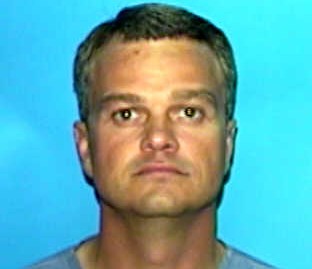 Donnie Gene Craig
Murderer · USA · 1987
Donnie Gene Craig was identified as a perpetrator of a robbery and killing at a…
1 victim
Donnie Gene Craig
Murderer · USA · 1987
Donnie Gene Craig was identified as a perpetrator of a robbery and killing at a…
1 victim
 Ernest Marvin Carter
Murderer · USA · 1990
Ernest Marvin Carter was executed by lethal injection in Oklahoma on December 1…
1 victim
Ernest Marvin Carter
Murderer · USA · 1990
Ernest Marvin Carter was executed by lethal injection in Oklahoma on December 1…
1 victim
 Mark Allen Wisehart
Murderer · USA · 1982
Mark Allen Wisehart was a White male born on 11-21-1962. Wisehart was sentenced…
1 victim
Mark Allen Wisehart
Murderer · USA · 1982
Mark Allen Wisehart was a White male born on 11-21-1962. Wisehart was sentenced…
1 victim
 Ann Miller Kontz
Murderer · USA · 2000
Ann Miller Kontz was the widow of Eric Miller and the defendant in the arsenic…
1 victim
Ann Miller Kontz
Murderer · USA · 2000
Ann Miller Kontz was the widow of Eric Miller and the defendant in the arsenic…
1 victim
- Gender
- male
- Country
- USA
- Location
- Forsyth and Cobb counties, Georgia, USA
- Date of birth
- 1945
- Age at first offence
- 30
- Characteristics
- robbery, kidnapping
- Victim profile
- Michael Priest, 24
- Method of murder
- Shooting
- Date(s) of murder
- May 8, 1975
- Years active
- 1975
- Date of arrest
- Same day
- Status
-
Sentenced to death
Sentenced to death on March 1976
Other details
Jack Howard Potts was sentenced to death in March 1976 in two counties, Forsyth and Cobb counties, for the kidnapping and murder of a 24-year-old good Samaritan, Michael Priest.
Background
Potts told Michael Priest there had been an accident on May 8, 1975, and Michael Priest agreed to help Potts.
Potts had a co-defendant, Norma Blackwell. The source also described that a co-defendant pleaded guilty to aggravated assault in exchange for a 10-year sentence.
Potts escaped from the Forsyth County Jail in September 1987 and was shot twice by officers.
Potts’ conviction was overturned in May 1984. Potts was resentenced to death in 1988 and again in 1990.
Investigation
On May 8, 1975, appellant Potts and Norma Blackwell persuaded Eugene Robert Snyder to drive them to Marietta, Georgia, from Shake Rag, a community located in Forsyth County. Potts and Blackwell, along with Snyder and a friend, Donna Glaze, got into Snyder’s pick-up truck and proceeded toward Marietta with appellant driving.
As the group drove along Sewell Mill Road in Cobb County, Potts shot Snyder through the left ear with a pistol. Snyder was able to remove the key from the ignition and, after realizing he was not seriously injured, requested Potts to take him to a hospital. Potts then shot Snyder in the nose.
Snyder acted as if he were unconscious while Potts dragged him out of the truck, off onto the side of the road. Potts removed some cash and other items from Snyder’s person while directing his female companions to clean up the truck. Unable to find the key to the ignition of the truck, the appellant walked to the nearby home of Paul Gurley, who, at the time, was being visited by his daughter and her husband, Michael D. Priest.
Potts told Gurley and Priest that there had been an accident, that a man had been hurt, and that he needed a ride. Priest volunteered to help Potts, and shortly thereafter, the two left in Priest’s automobile.
Upon their arrival at the pick-up truck, Priest saw Snyder lying in a ditch and attempted to go help him, but Potts directed him at gunpoint to drive the group in his automobile toward Marietta.
Priest pled for his life while Potts threatened him with the gun. On the trip back to Forsyth County the car made a stop and Potts began to drive while he held the gun on Priest. Potts stopped the car on a dirt road in Forsyth County leading to the trailer where he and the two females had met earlier in the day. He forced Priest out of the car at gunpoint, into an area by the road with high grass.
Priest continued to plead with Potts for his life. When Priest said, "Oh my God, don't kill me," Potts responded that there was no such thing as God, and that he would determine whether Priest would live or die. Potts then put the gun to Priest’s head, shot and killed him.
After Priest was killed, the appellant, Norma Blackwell and Donna Glaze removed personal effects from the victim’s automobile, changed the license plate and headed south.
Donna Glaze fled from the other two at a motel and contacted local authorities.
Arrest
The appellant and Norma Blackwell were apprehended on a farm near Quitman, Georgia, after a gunfight with police officers.
During his flight toward Florida after kidnapping and killing Michael Priest, Potts told his companion Norma Blackwell that if she wanted a dog "was cute," he would "run" its owner "off the road and kill her and get the dog."
Potts was arrested in south Georgia after a high speed chase and a shootout with police.
Trial
This was a death penalty case.
Jack Howard Potts, whose death sentence for the murder of Michael Priest in Forsyth County was affirmed in Potts v. State, 259 Ga. 96 (376 SE2d 851) (1989), had been convicted in Cobb County for the kidnapping with bodily injury of Michael Priest and sentenced to death for this offense also.
Potts’ appeal was from the Cobb County conviction and death sentence. The facts of Potts’ multi-county criminal episode were described as essentially as set forth in Potts v. State, id.
The source identified: Kidnapping with bodily injury. Cobb Superior Court. Before Judge Kreeger. Potts v. THE STATE. S91P0670. ( 261 Ga. 716 ) ( 410 SE2d 89 ) (1991) BELL, Justice.
Double jeopardy issues
Potts raised double jeopardy issues, relying primarily on the recently-decided United States Supreme Court opinion in Grady v. Corbin, 495 U. S. ---- (110 SC 2084, 109 LE2d 548) (1990). He contended that since the bodily-injury element of his Cobb County conviction for kidnapping with bodily injury was based on the same conduct—shooting Michael Priest in the head—that led to his murder conviction in Forsyth County, he could not be convicted both of murder in Forsyth County and kidnapping with bodily injury in Cobb County. He also argued that he was originally convicted in Cobb County of simple kidnapping and could not be reprosecuted for kidnapping with bodily injury.
The Double Jeopardy Clause of the Fifth Amendment, applicable to the States through the Fourteenth, was quoted in the decision as:
"protects against a second prosecution for the same offense after acquittal. It protects against a second prosecution for the same offense after conviction. And it protects against multiple punishments for the same offense." North Carolina v. Pearce, 395 U. S. 711, 717 [(89 SC 2072, 23 LE2d 656)] (1969). [Brown v. Ohio, 432 U. S. 161, 164-165 (97 SC 2221, 53 LE2d 187) (1977).]
The source also discussed the Blockburger test and then discussed Grady v. Corbin.
It stated that kidnapping with bodily injury and murder were not the "same" offense under the Blockburger test because kidnapping with bodily injury required an unlawful abduction or stealing away and the holding of a person, plus the infliction of some bodily injury upon that person, while the crime of murder was committed when one caused the death of another with the peculiar mental state of express or implied malice.
The decision also stated that the state did not have to prove that Potts acted with malice or that Michael Priest died to establish kidnapping with bodily injury in Cobb County, and did not have to prove that Potts kidnapped Michael Priest to establish murder in Forsyth County, and that in neither trial was it necessary for the state to prove the "entirety" of the conduct for which Potts was convicted in the other trial.
Venue
Because Potts seized his victim in Cobb County, venue for prosecuting the charge of kidnapping with bodily injury lay in Cobb County even though the bodily injury was inflicted in Forsyth County. Krist v. State, 227 Ga. 85 (4) (179 SE2d 56) (1970). The trial court’s instructions to the jury on the issue of venue were not erroneous.
Sentencing and statutory aggravating circumstances
The jury was authorized to impose a death sentence for kidnapping with bodily injury on the ground that the offense of kidnapping with bodily injury was committed while the offender was engaged in the commission of the capital felonies of murder and armed robbery. OCGA 17-10-30 (b) (2).
It was stated that although the offense of kidnapping was consummated when the victim was seized in Cobb County, see Miller v. State, 174 Ga. App. 42 (3) (329 SE2d 252) (1985), the murder and the armed robbery were sufficiently a part of the same criminal transaction to be considered as and found to be b (2) statutory aggravating circumstances of the offense of kidnapping with bodily injury. Horton v. State, 249 Ga. 871 (11) (295 SE2d 281) (1982).
The decision rejected Potts’ argument that he could not be sentenced to death in Cobb County for the same homicide because he had already been sentenced to death in Forsyth County for murder. It stated he had not been sentenced to death in Cobb County for murder, but for the offense of kidnapping with bodily injury—a capital felony. It also stated that the imposition of a death sentence for this offense as well as for murder did not subject Potts to greater punishment than intended by the legislature.
Jury verdict form and unanimity
Potts contended the jury’s sentencing verdict was ambiguous because the jury used a pre-printed form filled in several spaces and left other spaces blank. The decision stated there was no ambiguity.
The court did not err by telling the jury its sentencing verdict must be unanimous. Romine v. State, 256 Ga. 521 (2) (350 SE2d 446) (1986).
Speedy trial and self-representation
Potts contended he was denied his right to a speedy trial. The decision stated the delays since 1987 were caused by Potts and that Potts was not denied his constitutional right to a speedy trial.
Potts contended he was effectively denied the right to represent himself after he had to fight for that right. The decision stated Potts chose to represent himself and was provided the assistance of standby counsel, and that the trial court did not err by denying Potts’ motion for inmate legal assistance. Bounds v. Smith, 430 U. S. 817, 823 (97 SC 1491, 52 LE2d 72) (1977). It also stated the trial court did not err by refusing to provide funds to ascertain the cost of long-term imprisonment versus the cost of imposing a death sentence.
The decision also addressed denial of Potts’ motion for discovery relating to a possible challenge to the grand jury which indicted him in 1975, stating that Potts had waived his right to present such a challenge.
It stated the trial court did not err by refusing to formally reprimand the district attorney for actions taken by the prison warden at the Georgia Diagnostic and Classification Center in the absence of any showing of wrongdoing.
The decision stated Potts was granted ample access to the prison law library and to supplies, that he was physically competent to stand trial, and that he was not denied proper medical care. It also stated the trial court did not abuse its discretion when it denied Potts’ motion for a two-day continuance so Potts could “rest” before the trial began. O’Neal v. State, 254 Ga. 1 (2) (325 SE2d 759) (1985).
Jury selection and procedural issues
The decision stated death qualification of prospective jurors was not unconstitutional. It stated the trial court’s death-qualification findings were within the deference due the trial judge’s determination, and it did not err by denying Potts’ motion to excuse for cause two prospective jurors who were former law enforcement officers.
It also stated the voir dire examination regarding possible pre-voir dire discussion by one panel of prospective jurors was adequate to unearth any possible prejudice.
It stated Potts did not timely raise an issue of the prosecutor’s exercise of peremptory challenges against women and that the claim was not preserved for review.
Regarding the first panel of prospective jurors, it stated Potts did not seek excusal of the panel and did not challenge for cause based on the restraining devices issue. It stated members of the first panel testified on voir dire that they either had not noticed the restraining devices or had not been affected by them, and it concluded Potts was not prejudiced by his brief appearance in restraining devices before a small minority of prospective jurors.
Evidence and sentencing-phase evidentiary disputes
The decision stated it did not need to consider whether testimony about Potts’ statement regarding a dog injected impermissible character evidence because Potts did not object at trial.
It stated there was no error in the admission of photographs of a Florida murder victim into evidence at the sentencing phase.
It stated the trial court’s instructions on reasonable doubt were not erroneous.
It stated testimony about Potts’ flight to south Georgia was properly admitted over a relevancy objection.
It addressed evidence concerning an allegedly involuntary confession to a murder committed in Florida. It stated that in 1975 while Potts was in the hospital recovering from a bullet wound he received three weeks previously, Potts initiated an interview with a Florida law enforcement officer. The decision stated a doctor told the officer Potts was physically and mentally sound enough to be interviewed, and the officer’s observations confirmed Potts was coherent and understood what he was doing.
The decision stated that after obtaining a waiver of rights, the officer interviewed Potts and elicited Potts’ confession to murder, and that the voluntariness determinations were supported, including that Potts “understood and voluntarily waived each of his Miranda rights and thereafter gave this statement freely and voluntarily without any hope of benefit or fear of injury” and that the “voluntariness of the statement was not affected by any medication” Potts may have been taking.
The decision stated the record likewise supported admission of a 1987 statement to a Forsyth County law officer that Potts initiated after being treated and released for another gunshot wound.
It stated it was not error to exclude evidence of Potts’ ineligibility for parole if given a life sentence, and it stated it was not error to prove Potts’ escape attempt in aggravation even though he had not been prosecuted or convicted for that offense.
It stated there was no merit to Potts’ contention that impermissible “victim-impact” evidence was admitted at the sentencing phase.
Appeals
Potts’ appeal from the Cobb County conviction and death sentence raised multiple issues including double jeopardy, venue, sentencing aggravators, jury verdict ambiguity, speedy trial, self-representation, jury selection issues, evidentiary disputes, and challenges to death penalty laws and procedures.
The decision stated it did not find merit to the general constitutional attacks on death penalty laws and procedures Potts raised.
It also stated it did not err by denying Potts’ motion for new trial.
The decision stated the evidence supported the jury’s findings of statutory aggravating circumstances and that it did not find that the death sentence was imposed as the result of passion, prejudice or other arbitrary factor. It also stated the death sentence was neither excessive nor disproportionate to sentences imposed in similar cases, considering both the crime and the defendant.
The decision’s procedural final lines were: DECIDED NOVEMBER 6, 1991 — RECONSIDERATION DENIED DECEMBER 4, 1991.
Outcome
Potts was convicted in Cobb County for the kidnapping with bodily injury of Michael Priest and sentenced to death for this offense also. The appeal from the Cobb County conviction and death sentence was addressed in the decision and the death sentence remained in place as described.

Spotted an error, or have more information about this case?