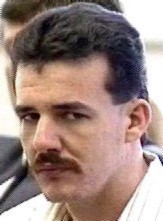
Shawn Humphries
Murderer Brian Kevin Rosenfeld
Murderer · USA · 1985
Brian Kevin Rosenfeld Brian Kevin Rosenfeld was sentenced to three concurrent l…
23 victims
Brian Kevin Rosenfeld
Murderer · USA · 1985
Brian Kevin Rosenfeld Brian Kevin Rosenfeld was sentenced to three concurrent l…
23 victims
 Russell Ellwood
Murderer · USA · 1991
Russell Ellwood was a former taxi driver. Authorities suspected him of killing…
20 victims
Russell Ellwood
Murderer · USA · 1991
Russell Ellwood was a former taxi driver. Authorities suspected him of killing…
20 victims
 Robert Martines Perez
Murderer · USA · 1994
Name: Robert Martines Perez · Other name used in proceedings: Robert Martinez P…
15 victims
Robert Martines Perez
Murderer · USA · 1994
Name: Robert Martines Perez · Other name used in proceedings: Robert Martinez P…
15 victims
 Billy Frank Vickers
Murderer · USA · 1993
Billy Frank Vickers Vickers was executed by lethal injection in Texas on Januar…
14 victims
Billy Frank Vickers
Murderer · USA · 1993
Billy Frank Vickers Vickers was executed by lethal injection in Texas on Januar…
14 victims
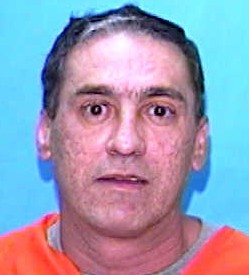 Guillermo Arbelaez
Murderer · USA · 1988
Guillermo Arbelaez was identified as the appellant in Florida Supreme Court Gui…
1 victim
Guillermo Arbelaez
Murderer · USA · 1988
Guillermo Arbelaez was identified as the appellant in Florida Supreme Court Gui…
1 victim
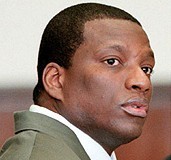 Alfred Gaynor
Serial killer · USA · 1995
Alfred Gaynor was a serial killer from western Massachusetts who was convicted…
9 victims
Alfred Gaynor
Serial killer · USA · 1995
Alfred Gaynor was a serial killer from western Massachusetts who was convicted…
9 victims
 Marie-Thérèse Kouao
Murderer · United Kingdom · 2000
Marie-Thérèse Kouao Victoria Climbié was born on 2 November 1991 in a small Afr…
1 victim
Marie-Thérèse Kouao
Murderer · United Kingdom · 2000
Marie-Thérèse Kouao Victoria Climbié was born on 2 November 1991 in a small Afr…
1 victim
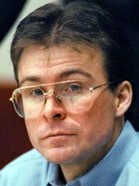 Robert James Acremant
Murderer · USA · 1995
Robert James Acremant was 29 years old when he pleaded guilty last year to aggr…
3 victims
Robert James Acremant
Murderer · USA · 1995
Robert James Acremant was 29 years old when he pleaded guilty last year to aggr…
3 victims
 Michael James Hayward
Murderer · USA · 1994
Michael James Hayward was sentenced to death in 1996. Hayward was involved in c…
1 victim
Michael James Hayward
Murderer · USA · 1994
Michael James Hayward was sentenced to death in 1996. Hayward was involved in c…
1 victim
- Gender
- male
- Country
- USA
- Location
- Greenville County, South Carolina, USA
- Date of birth
- October 19, 1971
- Age at first offence
- 23
- Characteristics
- armed robbery, alcohol, drug addict
- Victim profile
- Mendal Alton "Dickie" Smith, 43 (store clerk)
- Method of murder
- Shooting
- Date(s) of murder
- January 1, 1994
- Years active
- 1994
- Date of arrest
- Same day
- Status
-
Executed
Executed by lethal injection in South Carolina on December 2, 2005
Case record
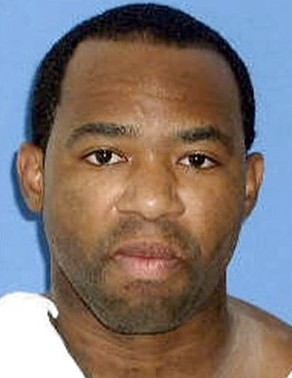
Shawn Humphries was convicted of murder and sentenced to death for the shooting death of Mendal Alton “Dickie” Smith, the owner of a Max-Saver convenience store in Fountain Inn, South Carolina.
Humphries and his accomplice, Eddie Blackwell, drank beer together for most of the day and then entered the Max-Saver convenience store with the intention of robbing the store. Smith asked Humphries whether he wanted anything. Humphries flashed a gun that he had stolen the night before and replied that he wanted money. There was some evidence to suggest Smith reached under the counter to get a gun. When Smith reached under the counter, Humphries fired a shot in Smith’s direction and fled from the store. The bullet fired by Humphries struck Smith in the head, killing him. Blackwell slumped to the ground in the store and was arrested.
Humphries was apprehended later that day and immediately confessed. Blackwell was convicted of murder and was sentenced to life imprisonment.
People
- Shawn Humphries — defendant; shot and killed Mendal Alton “Dickie” Smith
- Eddie Blackwell — accomplice; convicted of murder; sentenced to life imprisonment
- Mendal Alton “Dickie” Smith — store owner/victim
- Kathy Smith Carpenter — victim’s sister
- Carol Smith Cooley — victim’s sister
- Patricia Smith — victim’s widow
- Teresa Norris — Humphries’s attorney
- Gov. Mark Sanford — Governor of South Carolina; rejected clemency application
- Warden Bill White — warden in chamber during execution
- Warden Raymond Reed — warden in back of the chamber during execution
- Abe Bonowitz — Citizens United Against the Death Penalty; commented on protesters
- Joel Sawyer — spokesman for Gov. Mark Sanford
Other named individuals included:
- Albert Humphries — Humphries’s paternal grandfather
- Richard Humphries — Humphries’s brother
- Patricia Goode — Humphries’s aunt
- Carla Scott — Humphries’s mother
- Debbie Humphries — Humphries’s step-mother
- Mary Shults — expert witness
- Ruby Badsen — Humphries’s maternal grandmother
- Lindsay Badsen — Humphries’s uncle
- Randy Smith — Smith’s brother
- Pat Smith — Smith’s wife
Timeline
- January 1, 1994 — Humphries shot Dickie Smith, the owner of the Max-Saver convenience store in Fountain Inn, South Carolina.
- New Year’s Day 1994 — Prosecutors said Humphries and a friend decided to rob the store where Smith was working after drinking beer all day.
- August 5, 1994 — Humphries was convicted of murder, attempted robbery, possession of a firearm during the commission of a violent crime, and criminal conspiracy.
- August 26, 2002 — The South Carolina Supreme Court affirmed the denial of post-conviction relief.
- December 2, 2005 — Humphries was executed by lethal injection and pronounced dead at 6:18 p.m.
- 6:03 p.m. (day of execution) — The curtains opened.
- 6:18 p.m. (day of execution) — Department of Corrections officials pronounced Humphries dead.
The offence
Humphries and his accomplice decided to rob the Max-Saver convenience store after drinking beer. Smith was working in the store. Humphries flashed a stolen gun and demanded money. Smith reached under the counter to get a gun, according to some evidence. Humphries fired a shot in Smith’s direction and fled.
The bullet struck Smith in the head and killed him.
There was also evidence at sentencing that the crime was captured on videotape, including Humphries going into the store and flashing a gun, and the shot fired when Smith reached under the counter.
The execution materials also referenced that Humphries did not kill Donna Brashier, who was described as being present at the time of the shooting and as a potential witness.
Investigation and arrest
Humphries fled after firing a shot in Smith’s direction.
Trial
Charges and conviction
A Greenville County grand jury charged Humphries with:
- murder
- attempted robbery
- possession of a firearm during the commission of a violent crime
- criminal conspiracy
The jury returned a verdict of guilty on all counts.
During sentencing, the State introduced evidence about Smith’s childhood, work ethic, generosity, and close relationship with his young daughter, Ashley. The statutory aggravating factor relied on by the State and found by the jury was that the murder was carried out while in the commission of an armed robbery. The jury recommended a death sentence.
Sentencing
Humphries was sentenced to death for murder. The trial court also imposed concurrent sentences of twenty years for attempted armed robbery and five years for criminal conspiracy.
Appeals
Direct appeal (South Carolina Supreme Court)
The South Carolina Supreme Court affirmed the conviction and sentence. The court held that attempted armed robbery accompanying murder was an aggravating circumstance. It also held that Humphries was not entitled to notice of the state’s intent to introduce evidence of victim impact and that he was not entitled to a mitigating circumstance instruction on diminished capacity. The judgment was affirmed.
Post-conviction relief (PCR)
Humphries sought post-conviction relief following affirmance of his murder conviction and death sentence. The circuit court denied the petition, and the Supreme Court of South Carolina affirmed the denial.
The Supreme Court of South Carolina held that the solicitor’s closing argument at the penalty phase had not improperly suggested that the victim was “worthy” and that Humphries was “unworthy,” and therefore trial counsel was not ineffective in failing to object to the closing argument.
Federal habeas proceedings
Humphries filed a petition for a writ of habeas corpus in federal district court. The district court dismissed the petition. The Court of Appeals for the Fourth Circuit affirmed the dismissal.
The Court of Appeals described issues including:
- a claim that the comparison of lives during the prosecutor’s closing argument did not warrant federal habeas relief
- that state law claims were not cognizable on federal habeas review
- a due process claim regarding alleged lack of notice concerning victim-impact evidence, which the court rejected because Humphries knew or reasonably should have known that victim-impact evidence would be used
Outcome
Humphries exhausted legal proceedings and was executed.
STATUS NARRATIVE (moved into record): Humphries mouthed “I’m sorry” before fatal chemicals were pumped through his veins. Department of Corrections officials pronounced Humphries dead at 6:18 p.m. Humphries was executed by lethal injection.
Final Meal: A McDonald’s hamburger, french fries, broccoli and cheese, oat cereal, and a Dr. Pepper.
Final Words and interactions: Humphries looked toward the victim’s sisters, Kathy Smith Carpenter and Carol Smith Cooley, and mouthed “I’m sorry.” Carpenter nodded in response. It appeared that a tear rolled down Humphries’ cheek after the exchange. Carpenter said afterward that she appreciated the gesture. Carpenter stated: “Shawn gave me something very special tonight when he said to me through the window that he was sorry,” Carpenter said. “That was the greatest gift that I could have ever received.”
Handwritten statement read in the death chamber:
“I hope that my execution brings the Smith family some peace,” he wrote.
“But now I want to say something to everyone who supports this or any execution. We are all sinners, so what gives you the right as a sinner to take away a gift that God gave?”
The statement also included a final line attributed to his handwritten statement:
“In Christ’s Love, Shawn Paul Humphries.”
Execution setting and procedure details: Before the curtains opened at 6:03 p.m., the victim’s widow, Patricia Smith, looked toward other family members and whispered “I can’t do it,” and walked out of the viewing area without witnessing her husband’s killer be put to death. Humphries was dressed in a green prison jumpsuit and turned to look toward the women. Warden Bill White and Warden Raymond Reed were present. Two executioners triggered the flow of three drugs into Humphries’s arms. A doctor lifted Humphries’s eyelids and listened to his chest with a stethoscope, nodded, and Warden Raymond Reed announced Humphries’s death. For about 10 minutes, witnesses watched silently, with the only sound coming from a ticking clock above.
Protest and contemporaneous actions: Several dozen death penalty opponents marched along the road near the entrance to the Broad River Correctional Institution. Abe Bonowitz said protesters held candles and prayed from around 6 p.m. until a “phalanx of guards” approached the group and said the execution had been carried out. Bonowitz said: “I’ve never seen them do that in other states,” Bonowitz said, of the formality with which officers approached the protesters. He also stated that he was among the 16 people arrested there Thursday night.
Clemency and court stay: Gov. Mark Sanford rejected Teresa Norris’s application for clemency earlier Friday. On Thursday, the U.S. Supreme Court rejected a request for a stay of execution.
Count status within South Carolina executions: Humphries was the third person executed in South Carolina that year and the 35th inmate put to death in South Carolina. He was the 1,001st person executed in the nation since the death penalty was reinstated in 1976. The “1000th execution” took place 16 hours earlier in North Carolina.
Other details
Inmate details
Humphries was listed as an inmate with:
- Inmate #: 00004892
- DOB: 10/19/1971
- Race: White
- County of Conviction: GREENVILLE
- Hair: Brown
- Eyes: Hazel
- Height: 6' 00"
- Date received: 08/09/1994
- Location referenced: Lieber Correctional Institution in Ridgeville
The execution-related materials stated he was 34 at the time of execution.
Background and history referenced during clemency materials and appeals
Humphries had a criminal record prior to the murder. Materials described:
- an arrest in 1984 for two counts of breaking and entering and placement on probation
- probation after suspension from school for fighting on several occasions
- at fifteen, being sent to a state facility in Columbia for thirty days
- an arrest in January 1989 for breaking into a church while looking for food because he had been living on the street for a week
- a first jail term in Alabama from stealing a car, with two years in prison followed by four years of probation
- in 1990, a charge with stealing an automobile after release from substance abuse treatment in Texas, resulting in two years imprisonment followed by four years of probation
Material referenced about procedural disputes
At trial, counsel sought to prohibit the solicitor from referencing victim impact in the closing argument; the trial judge denied the motion and did not prohibit discussion of facts that were in the record.
The prosecutor’s closing argument included detailed comparisons of Smith’s life and Humphries’s life, which became a central appellate issue.
Victim description
Smith was described as hard-working and generous by family members. He was survived by a wife and then-5-year-old daughter Ashley, who was later described as 17 and as supporting capital punishment.
Prosecutor’s quoted remarks (verbatim)
The solicitor’s sentencing phase closing remarks included the following quoted excerpts (as reproduced in the case materials):
“It’s easy in this stage of the game--in this stage of the trial to start looking at [Petitioner] as a victim in this case. And the Defense wants to paint a picture sort of a window for you to look through. Let’s remember the good [Petitioner], and lets forget what he did and let’s forget all the back record and all that stuff. Let’s just look at what he did.”
“Folks, the State of South Carolina is *368 not attempting to send to death row that little boy in that picture. Every defendant in this country who has gone to death row has had pictures like that.”
“We’re talking about a 22 year old man who went to a store and executed [Smith]. That’s what we’re talking about.”
“And they presented a bajillion [sic] pictures of [Petitioner] as a little boy to you.”
“I would submit to you that [Smith], by everybody’s description to you was a unique individual.”
“I would submit, when you look at the character of this Defendant, and when you look at Dickie Smith, how profane when you look at all the circumstances of this crime and of this [Petitioner], how profane to give this man a gift of life under these circumstances.”
“When you look at a case like this, when you look at the aggravation, when you look at the total lack of mitigation, I would **165 submit, when you look at the character of this Defendant, and when you look at Smith, how profane to give this man a gift of life under these circumstances.”
“If not now, then when?”
Additional quotes from later portions reproduced in the case materials included:
“Shawn Paul Humphries comes into this courtroom asking you for mercy. Shawn Paul Humphries comes in here and asks you for mercy, and I ask you what mercy did he give? Shawn Paul Humphries comes in here and asks you for mercy, and he gave none.”
“Shawn Paul Humphries comes in here and asks you for life, and he gave death.”
“Is that fair? Is that justice? That’s what you’re here for is justice.”
Other quoted remarks (verbatim)
Judge Wilkinson was quoted in the materials:
“No person should be executed in America on the theory that his life is of less worth than that of someone else.”
A quote attributed to Carpenter describing the apology gesture:
A quote attributed to Patricia Smith: “I can’t do it,”
A quote attributed to Warden or officials was included as: Humphries’s death was announced after the doctor nodded to Warden Raymond Reed, who turned to witnesses and announced Humphries’ death.
Bonowitz’s protest quote included: “I’ve never seen them do that in other states,”

Spotted an error, or have more information about this case?