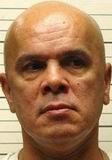
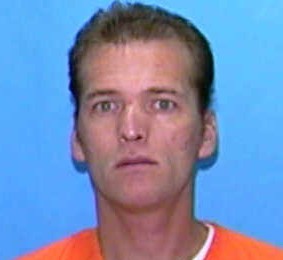
Gerald Lee Powers
Murderer Russell Ellwood
Murderer · USA · 1991
Russell Ellwood was a former taxi driver. Authorities suspected him of killing…
20 victims
Russell Ellwood
Murderer · USA · 1991
Russell Ellwood was a former taxi driver. Authorities suspected him of killing…
20 victims
 Robert Martines Perez
Murderer · USA · 1994
Name: Robert Martines Perez · Other name used in proceedings: Robert Martinez P…
15 victims
Robert Martines Perez
Murderer · USA · 1994
Name: Robert Martines Perez · Other name used in proceedings: Robert Martinez P…
15 victims
 Billy Frank Vickers
Murderer · USA · 1993
Billy Frank Vickers Vickers was executed by lethal injection in Texas on Januar…
14 victims
Billy Frank Vickers
Murderer · USA · 1993
Billy Frank Vickers Vickers was executed by lethal injection in Texas on Januar…
14 victims
 Jeffery Henry Caldwell
Murderer · USA · 1988
Jeffery Henry Caldwell Jeffery Henry Caldwell was executed by lethal injection…
3 victims
Jeffery Henry Caldwell
Murderer · USA · 1988
Jeffery Henry Caldwell Jeffery Henry Caldwell was executed by lethal injection…
3 victims
 Gertrude Baniszewski
Murderer · USA · 1965
Name: Gertrude Baniszewski Also known as: Gertrude Wright; Nadine Van Fossan; G…
1 victim
Gertrude Baniszewski
Murderer · USA · 1965
Name: Gertrude Baniszewski Also known as: Gertrude Wright; Nadine Van Fossan; G…
1 victim
 Tammy Corbett
Murderer · USA · 1987
Tammy Corbett was born in Illinois on October 2, 1965. She had one younger sist…
3 victims
Tammy Corbett
Murderer · USA · 1987
Tammy Corbett was born in Illinois on October 2, 1965. She had one younger sist…
3 victims
 Napoleon Beazley
Homicide · USA · 1994
Napoleon Beazley was a 17-year-old offender who was convicted of capital murder…
1 victim
Napoleon Beazley
Homicide · USA · 1994
Napoleon Beazley was a 17-year-old offender who was convicted of capital murder…
1 victim
 Bruce Howse
Murderer · New Zealand · 2001
Bruce Howse was the partner of Charlene Aplin and the stepfather of Saliel Apli…
2 victims
Bruce Howse
Murderer · New Zealand · 2001
Bruce Howse was the partner of Charlene Aplin and the stepfather of Saliel Apli…
2 victims
 Christopher Dwayne Peterson
Spree killer · USA · 1990
Christopher Dwayne Peterson (born January 20, 1969, in Gary, Indiana, USA) was…
7 victims
Christopher Dwayne Peterson
Spree killer · USA · 1990
Christopher Dwayne Peterson (born January 20, 1969, in Gary, Indiana, USA) was…
7 victims
- Gender
- male
- Country
- USA
- Location
- Shelby County, Tennessee, USA
- Date of birth
- September 22, 1954
- Age at first offence
- 42
- Characteristics
- robbery
- Victim profile
- Shannon Sanderson, 25
- Method of murder
- Shooting
- Date(s) of murder
- April 19, 1996
- Years active
- 1996
- Date of arrest
- May 22, 1996
- Status
-
Sentenced to death
Sentenced to death on December 14, 1998
Case overview
Gerald Lee Powers was convicted in Tennessee of first degree felony murder in the perpetration of a robbery and of aggravated robbery. The Shelby County jury sentenced Powers to death for the murder of Shannon Sanderson and imposed a consecutive thirty-year prison sentence for aggravated robbery. The Court of Criminal Appeals affirmed the felony murder conviction and death sentence but reduced Powers’ aggravated robbery sentence to twenty years.
Timeline
- April 18, 1996 — Shannon Sanderson spent the evening gambling at Sam’s Town Hotel and Gambling Hall in Tunica, Mississippi.
- approximately 6:30 p.m. — Shannon Sanderson left her children with their paternal grandparents and departed for Tunica alone.
- around 4:45 a.m. — Edward Holland saw Shannon Sanderson bending over beside her car, heard her say, “Don't-don't,” and noticed that she was gone by the time he dressed and went outside.
- around 4:30 a.m. — Johnnie Rose saw Shannon Sanderson’s car drive by his house, followed by a second vehicle.
- approximately 6:40 a.m. (April 19, 1996) — Alonzo Jeans saw a white male backing into the driveway of an abandoned house near Eudora, Mississippi, and later confirmed it matched a photograph of the maroon Beretta owned by Powers’ wife.
- approximately 9:30 a.m. (April 19, 1996) — Powers returned to his Clarksdale, Mississippi home in his wife’s maroon Beretta after gambling in Tunica.
- May 9, 1996 — Shannon Sanderson’s badly decomposed body was discovered in a storage room at the back of the abandoned house on Highway 301 in Eudora, Mississippi.
- May 15, 1998 — Counsel first raised the issue of the admissibility of Margaret York’s deposition.
- December 14, 1998 — Powers was sentenced to death.
- September 28, 2001 — The Court of Criminal Appeals filed its opinion.
- January 06, 2003 — The Supreme Court of Tennessee delivered its opinion.
Background
Shannon Sanderson had originally planned to spend her evening at the casino with her husband, Robert Sanderson, to celebrate his birthday. After leaving her children with their paternal grandparents at approximately 6:30 p.m., she departed for Tunica alone.
An argument occurred between Shannon Sanderson and Robert Sanderson. After leaving her children with their paternal grandparents at approximately 6:30 p.m., Mrs. Sanderson departed for Tunica alone.
Shannon Sanderson played blackjack most of the night and won $5,000. She cashed in her chips shortly after 3:00 a.m. on April 19, 1996, receiving her winnings in one-hundred dollar bills. She was then escorted to her car by a Sam’s Town security officer and began the fifty-six mile drive back to Memphis to pick up her children.
The offence
On the morning of April 19, 1996, Shannon Sanderson was abducted from near her car and later died from a gunshot wound.
An examination of the skull revealed that Shannon Sanderson suffered at least one major blow to her face that knocked out her upper right front tooth, chipped another tooth, and fractured her jaw and other facial bones. The autopsy disclosed that Shannon Sanderson died from a single gunshot wound to the right side of the head.
After robbing the victim, Powers threw the victim’s purse and his gun into the river behind the site where the Splash Casino had been located.
Investigation and identification evidence
Witnesses and observations
Edward Holland awoke to barking dogs and saw Shannon Sanderson bending over beside her car. He heard her say, “Don't-don't” and thought she was talking to her husband. By the time Mr. Holland dressed and went outside, Mrs. Sanderson was gone, but her car remained in the driveway.
William and Anna Dillon were awakened by the barking. Mr. Dillon looked out his window and saw a person wearing a red baseball cap crouched in the Hollands’ driveway near Mrs. Sanderson’s car. Mrs. Dillon heard a scream and a thud. She saw a car parked at the curb with its dome light on and saw a person behind the steering wheel lean over the seat and push something down in the back. The person then drove away at a high rate of speed.
Johnnie Rose saw Shannon Sanderson’s car drive by his house around 4:30 a.m., with a second vehicle following. He described the second vehicle as dark-colored and shaped like a Chevrolet Beretta. He watched the second car turn down his street, turn around in a driveway, and park in front of the Hollands’ house.
Photographs and matching vehicles
Johnnie Rose was later shown a photograph of the maroon Beretta owned by Powers’ wife and stated that the car in the photograph “looked like” the car he had seen following Mrs. Sanderson.
Alonzo Jeans was heading north on Highway 301 near Eudora, Mississippi, at approximately 6:40 a.m. on April 19, 1996. He saw a white male backing into the driveway of an abandoned house and confirmed later that the car in a photograph of the maroon Beretta owned by Powers’ wife was the one he had seen.
Surveillance and identification ruling
The State introduced video clips chronologically compiled from Sam’s Town surveillance cameras operating on the night and early morning hours of April 18–19, 1996. The videotape showed a person wearing white tennis shoes standing in an area overlooking the blackjack table. The tape then recorded Shannon Sanderson leaving the casino, followed approximately thirty seconds later by the person from the second floor balcony.
During the trial, Tom Scott explained the surveillance videotapes taken at Sam’s Town on the night of April 18, 1996. Mr. Scott repeatedly referred to the person seen in the tapes as “Mr. Powers.” The defense objected on the basis that Mr. Scott did not have personal knowledge of the defendant’s identity and his knowledge was based on information provided by the F.B.I. The trial court overruled the objection. On appeal, the Court of Criminal Appeals held that the trial court erred in allowing Mr. Scott to refer to the person shown in the tapes as “Mr. Powers” because Mr. Scott had no personal knowledge of the defendant’s appearance or identity and that his knowledge was based on information provided by the F.B.I.
The Court of Criminal Appeals also found that during the State’s redirect examination, the trial court erred in allowing Mr. Scott to testify that the person in the videotape was the Defendant because the prosecutor’s question called for an opinion from a lay witness that was not necessary or helpful.
The Court of Criminal Appeals found the errors harmless and concluded the issue lacked merit because jurors saw the videotape and had the defendant before them, and because Ms. Powers viewed a still photograph made from the surveillance tapes and identified the person as the defendant.
Defendant’s confession and conduct after the offence
Powers returned to his Clarksdale, Mississippi home at approximately 9:30 a.m. on April 19, 1996, wearing the same yellow shirt, blue jeans, red baseball cap, blue denim jacket, and white tennis shoes that he had worn the night before. According to Powers’ wife, Sharon Powers, he was in a good mood but was also “kind of wired up.” He appeared nervous and kept looking out the blinds.
Powers told his wife he had won a large amount of money at the casino and gave her a one-hundred dollar bill from the stack he had in his wallet. Mrs. Powers noticed that Powers had washed her car and cleaned and vacuumed its interior. She accused him of having an affair.
After repeated questioning, Powers confessed to kidnapping, robbing, and killing a woman he had seen playing blackjack at Sam’s Town the night before. He described in specific detail how he watched the woman play blackjack from the second floor balcony of the casino, followed her home, and abducted her from her driveway. He drove her approximately forty miles to an abandoned house in Mississippi and stopped at one point to move her from the back seat of the car to the trunk. He stole the woman’s jewelry as well as $5,000 in cash. After killing the woman, he threw the victim’s purse and his gun into the river behind the site where the Splash Casino had been located.
Powers told his wife that a school bus driver may have seen him at the abandoned house and that a neighbor may have seen him take Mrs. Sanderson from her driveway. He stated that he did not believe either person could identify him.
That afternoon, Powers visited his neighbor, Margaret York, and asked her to provide him with an alibi for the night of April 18, 1996. Laughing, Ms. York agreed to say that he had been with her as long as he “didn't kill anybody.” According to Ms. York, Powers’ expression did not change when she made this remark, and he left shortly thereafter.
The next evening, Powers and his wife saw a television news report of the victim’s abduction. The report described the perpetrator as a man wearing a red baseball cap and driving a maroon Beretta. After hearing the report, Powers packed a bag and left home in his wife’s car. Before leaving, he told his wife to tell anyone who asked that he was visiting his mother in Murfreesboro, Tennessee. He also told his wife that there was some money buried in the backyard.
Soon after he left, Mrs. Powers called the police and told them that her husband may have been involved in Mrs. Sanderson’s abduction; she did not inform authorities about his confession.
Powers returned a week later, retrieved some of the money he had buried, and told his wife where he had hidden Mrs. Sanderson’s jewelry. As his wife watched, he wrote a note stating that he was leaving because he was not happy with his marriage.
Search and physical evidence
On May 9, 1996, the badly decomposed body of Shannon Sanderson was discovered in a storage room at the back of the abandoned house on Highway 301 in Eudora, Mississippi. The body was clad in the same clothing Shannon Sanderson had been wearing the night she disappeared. Her jewelry was missing.
An autopsy disclosed that Mrs. Sanderson had died from a single gunshot wound to the right side of the head.
An examination of the skull revealed that she had also suffered at least one major blow to her face that had knocked out her upper right front tooth, chipped another tooth, and fractured her jaw and other facial bones.
Officers searched the Splash Casino site but did not find the victim’s purse or the murder weapon.
Arrest and attempted evasion
On May 22, 1996, Powers was stopped by an Immigration and Naturalization Services (INS) agent in Hebronville, Texas, after making a suspicious turn in an apparent attempt to avoid a checkpoint. When ordered to step out of the vehicle, Powers pulled a knife on the agent. The agent was able to subdue Powers.
Upon arrest, the agent discovered fourteen one-hundred dollar bills in Powers’ pockets. Powers was on parole for a prior offense at the time of his arrest.
The Federal Bureau of Investigation (FBI) secured the vehicle at the checkpoint and learned that Sharon Powers was its registered owner. With Mrs. Powers’ consent, the FBI searched the Beretta and found a black wool fiber in the back seat that was consistent with the victim’s clothing.
FBI interview and recovery of jewelry occurred after Mrs. Powers’ disclosure of the confession, and her guidance to the B & W Lounge, where the jewelry was recovered. The jewelry was wrapped in pink plastic wrap that matched wrap from Powers’ home.
Trial
Charges and conviction
A Shelby County jury convicted the defendant, Gerald Powers, of first degree felony murder and aggravated robbery. The jury convicted him of first degree felony murder in the perpetration of a robbery and of aggravated robbery.
Sentencing phase
During the sentencing phase, the State sought to prove three aggravating circumstances:
- the defendant had been previously convicted of one or more felonies wherein the statutory elements involve the use of violence to the person;
- the murder was committed for the purpose of avoiding, interfering with, or preventing a lawful arrest or prosecution; and
- the murder was knowingly committed, solicited, directed, or aided by the defendant while he was committing, attempting to commit, or fleeing after having committed a kidnapping.
The jury sentenced Powers to death for the murder of Shannon Sanderson and sentenced him to a consecutive thirty-year prison sentence for aggravated robbery.
The Court of Criminal Appeals affirmed the conviction and death sentence for the felony murder but reduced Powers’ sentence for aggravated robbery to twenty years.
Evidence at sentencing regarding prior convictions
The State presented facts relating to Powers’ prior felony convictions over defense counsel’s objection.
1979 Rutherford County aggravated assault
Emily Dodson testified that in 1979 in Rutherford County, Tennessee, Powers followed her home one night. When she was getting out of the car, Powers jumped into the car and held a knife to her throat. They struggled, and Powers hit her with a crescent wrench. Ms. Dodson escaped to her house. Powers was apprehended shortly thereafter, and Ms. Dodson identified him as her attacker. Powers pleaded guilty to the aggravated assault of Ms. Dodson.
October 1980 Murfreesboro aggravated assault
Karen Cannon testified that in October 1980 in Murfreesboro, Tennessee, she was giving Powers a ride when he pulled a knife and broke her nose with the handle. Despite being held at knifepoint, Ms. Cannon drove to the county jail and alerted authorities by honking the horn. Powers was apprehended, and Ms. Cannon later identified him as her assailant. Cannon.
June 1984 aggravated assault and robbery
Captain Sammy Magee, an officer with the Sheriff’s Office of Hinds County, Mississippi, testified about his investigation of Powers’ robbery and aggravated assault of Clyo Griffin in June 1984. Captain Magee testified that Powers entered Ms. Griffin’s home, beat her with an iron skillet, and stole her jewelry, credit cards, and a pistol. Powers hid the jewelry and pistol in a plastic bag and buried them. He later pleaded guilty to robbery and aggravated assault of Ms. Griffin.
A copy of the judgment reflecting Powers’ guilty plea and conviction for assault with a dangerous weapon on the INS agent in Hebronville, Texas, in May 1996 was also introduced.
Victim impact
Caroline Holland, the paternal grandmother of Shannon Sanderson’s three children, testified that Shannon Sanderson’s death was traumatic for the children. She stated that they suffered a “devastating feeling of terror” that people would get lost and never come back. She also stated that the children had trouble sleeping and missed their mother every day.
Defense witness
The only witness for the defense was Powers’ first wife, Pamela Bigelow, who had married him while they were seniors in high school in Murfreesboro, Tennessee. Ms. Bigelow related that Powers came to the United States from Taiwan when he was ten years old and that Powers’ mother was a native of Taiwan. She stated that her stepfather was a resident of Murfreesboro, Tennessee, who had met Powers’ mother while stationed with the military in Taiwan.
Ms. Bigelow testified that Powers was a good student and athlete but had trouble communicating with his mother. She said she and Powers were married for four years and had two children. She divorced Powers because she “outgrew him,” but she stated that Powers possessed “good traits.” She described Powers as quiet and withdrawn but very polite. She testified that Powers had never been physically or emotionally abusive to her. She admitted that Powers used drugs and alcohol while they were married. She described Powers as a “broken man” and pleaded for his life so that he could meet his two grandchildren.
Appeals
Supreme Court of Tennessee: marital communications privilege
At the time of trial, Tennessee Code Annotated section 24-1-201(b) provided that confidential communications between married persons were privileged and inadmissible if either spouse objects.
Powers contended that his wife’s testimony concerning confidential communications should have been excluded and argued that the 1995 amendment returned the law to pre-State v. Hurley status. The Supreme Court concluded that the trial court did not err by applying the Adams factors to determine whether Powers’ communications with his wife were privileged. The court held that the confidential marital communications privilege did not apply and that Sharon Powers’ testimony was admissible.
Supreme Court of Tennessee: exclusion of third-party motive and opportunity evidence
Powers challenged the trial court’s exclusion of evidence suggesting other persons had motive and opportunity to kill Shannon Sanderson.
Powers identified five categories of evidence he sought to introduce:
- testimony that Shannon Sanderson broke off a romantic relationship with Brian Maher two days before she disappeared;
- testimony concerning an injunction entered against Brett Musekamp that was lifted just before the victim disappeared;
- cross-examination of Robert Sanderson regarding the existence of a post-nuptial agreement executed by him and the victim two weeks before the victim’s disappearance;
- testimony from Sam’s Town assistant manager Mark Burchfield that he saw the victim and her husband together at the casino the night she disappeared and that the victim appeared to be fearful of her husband; and
- testimony from Mr. Burchfield that Robert Sanderson came to the casino three days after the victim’s disappearance to discuss her disappearance and to tell Mr. Burchfield that he was not at the casino on April 18, 1996.
The Supreme Court agreed with the trial court that the evidence concerning Brian Maher was not relevant under Tennessee Rule of Evidence 401. The court also agreed the evidence concerning Brett Musekamp was irrelevant because the existence of an attempt to undermine the relationship did not establish a motive to kill.
The Supreme Court held that the trial court did not abuse its discretion in excluding the post-nuptial agreement evidence as irrelevant and, alternatively, because its probative value was substantially outweighed by the risk of confusing and misleading the jury.
The Supreme Court reached a different conclusion for the Robert Sanderson evidence. It held that Mr. Burchfield’s testimony concerning Mr. Sanderson was relevant and that the trial court erred by not permitting the jury to consider it. The Supreme Court then found the error harmless and held that Powers’ conviction would not be reversed on that ground, citing the confession and knowledge regarding the location of Shannon Sanderson’s jewelry as part of the overwhelming evidence establishing guilt.
Supreme Court of Tennessee: admission of Margaret York deposition testimony
Powers argued the trial court erred in admitting portions of Margaret York’s deposition taken in Mississippi because the court reporter was not authorized by law to take the deposition in Mississippi. The trial court found that the court reporter had been appointed indirectly by the court, and that the reporter was authorized under Mississippi law to administer oaths. The Supreme Court held that the trial court did not err in admitting Margaret York’s deposition testimony.
Supreme Court of Tennessee: sufficiency of evidence for aggravating circumstance (i)(6)
Powers contended that the evidence was insufficient to establish beyond a reasonable doubt the aggravating circumstance under Tennessee Code Annotated section 39-13-204(i)(6) that the murder was committed for the purpose of avoiding, interfering with, or preventing a lawful arrest or prosecution.
The Supreme Court concluded that the evidence was sufficient to establish the (i)(6) aggravator. It held that the State needed only to show such desire was one of the motives in the killing, and it found particular proof: Powers followed the victim to Memphis, abducted her, drove her back to Mississippi while moving her within the car, took her to an isolated abandoned house in another state, shot her in the head, robbed her of money and jewelry, and left her body in a storage room.
Supreme Court of Tennessee: admission of facts underlying prior convictions for (i)(2)
Powers argued that the trial court erred during sentencing by admitting evidence of the facts underlying his prior felony convictions. The Supreme Court agreed that an issue existed regarding the 1998 amendment’s applicability, holding the amendment was inapplicable because the offense was committed before the effective date. The Supreme Court then determined the trial court erred in permitting the jury to consider evidence of the facts underlying prior convictions, unless relevant to some other issue.
The Supreme Court held that those facts were admissible to prove the (i)(6) aggravating circumstance and found them relevant in light of similar assaultive behavior against women in the past and the evidence that Powers took the victim to an isolated area in another state to rob and kill her. The Supreme Court was concerned that details went beyond what was reasonably necessary, but held that the error was harmless beyond a reasonable doubt because the evidence supporting the (i)(6) aggravator was considerable and mitigating evidence was slight.
Supreme Court of Tennessee: exclusion of victim character evidence
Powers maintained that the trial court erred by limiting his proof regarding the victim’s “bad character.” The Supreme Court held that the trial court acted properly by excluding evidence regarding extramarital relationships the victim may have had or difficulties in her marriage. It held that defects in the victim’s character were not relevant mitigating evidence and that Powers was not permitted to disparage the victim’s character once the State introduced victim impact evidence limited to the children’s impact.
Supreme Court of Tennessee: proportionality review
The Supreme Court reviewed whether the death sentence was imposed arbitrarily, whether evidence supported aggravating circumstances, whether aggravating circumstances outweighed mitigating circumstances, and whether the sentence was excessive or disproportionate to similar cases.
The Supreme Court found the death sentence was not imposed arbitrarily, and it found sufficient evidence supporting aggravating circumstances in Tennessee Code Annotated section 39-13-204(i)(6), as well as (i)(2) and (i)(7). It concluded the murder was knowingly committed while Powers was committing a kidnapping, based on evidence that he forced the victim into his car and drove her to an isolated part of Mississippi to rob and kill her. It also found that aggravating circumstances outweighed mitigating circumstances beyond a reasonable doubt.
In comparative proportionality review, it described the victim being shot in the head and left in a storage room in the back of an abandoned house in another state, the motive as to rob the victim and avoid arrest and prosecution, the murder as premeditated, and no evidence of provocation or justification. It noted Powers as an Asian male, age forty-two at the time of the murder, with prior convictions including three separate aggravated assault convictions, a robbery conviction, and a conviction for assault with a dangerous weapon on a federal officer. It also stated Powers was on parole when the murder was committed, that there was no evidence of cooperation with authorities, and that there was evidence he tried to evade authorities on at least three occasions both before and after his arrest. It also found no evidence of remorse.
The Supreme Court compared the case to prior Tennessee cases where the death penalty was imposed, including State v. Stout, State v. Bates, State v. King, State v. Chalmers, State v. Burns, and State v. Carter, and concluded the penalty in Powers’ case was not disproportionate.
Supreme Court of Tennessee dissent
A dissent argued that the statutory marital communications privilege should have excluded Sharon Powers’ testimony regarding Powers’ confidential communications and would have required reversal and a new trial because the incriminating statements by Mrs. Powers were key direct evidence.
The dissent concluded that at the time of trial the Adams/Hurley factors were not part of the 1995 statute’s criminal privilege standard and that later amendments represented material changes. The dissent stated that Justice Birch joined the dissent.
Outcome
The Supreme Court of Tennessee affirmed the judgment of the Court of Criminal Appeals. The Court of Criminal Appeals had affirmed the death sentence and reduced the aggravated robbery sentence to twenty years. The Supreme Court’s opinion affirmed the Court of Criminal Appeals’ judgment.
The Supreme Court also stated that the defendant’s death sentence was affirmed and would be carried out on the 15th day of May, 2003, unless otherwise ordered.
Costs of the appeal were taxed to the State of Tennessee because the defendant was indigent.
Other details
Aggravating and sentencing findings
The Supreme Court and trial court proceedings reflected that the jury found all three aggravating circumstances beyond a reasonable doubt and found that aggravating circumstances outweighed mitigating circumstances beyond a reasonable doubt.
Confessions to crimes
Powers confessed to kidnapping, robbing, and killing a woman he had seen playing blackjack at Sam’s Town the night before, and he described watching the woman play blackjack, following her home, abducting her from her driveway, driving her to an abandoned house, stealing her jewelry and $5,000 in cash, and disposing of her purse and his gun in a river behind the Splash Casino site.
Victim impact quote
Caroline Holland testified to the children’s “devastating feeling of terror” that people would get lost and never come back.
Marital privilege dissent quote and analysis
The dissent presented detailed discussion of the development of spousal disqualification and confidential marital communications privilege, including references to cases and legislative amendments, and argued that statutory language required exclusion upon an objection.
Appendix: Court of Criminal Appeals “Mr. Powers” identification issue
The Court of Criminal Appeals held the trial court erred in allowing Tom Scott to refer to the person in surveillance tapes as “Mr. Powers” because Mr. Scott lacked personal knowledge and his identification was based on information from the F.B.I. The Court of Criminal Appeals also held the trial court erred by allowing Mr. Scott, over objection, to identify the defendant in response to a prosecutor’s question. Despite these errors, the Court of Criminal Appeals found them harmless because the jurors viewed the videotape and the defendant was present, and because Ms. Powers identified a still photograph.
Appendix: reduced sentence
The Court of Criminal Appeals reduced Powers’ aggravated robbery sentence to twenty years as a Range II offender while affirming the death sentence.

Spotted an error, or have more information about this case?