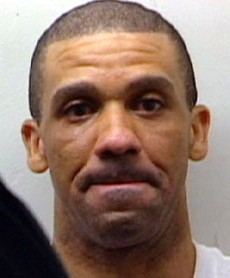
Napoleon Beazley
Homicide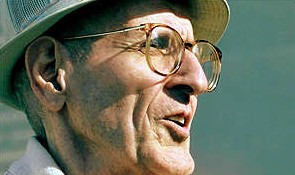 Jack Kevorkian
Homicide · USA · 1990
Jack Kevorkian (born May 26, 1928) was a controversial American pathologist. He…
130 victims
Jack Kevorkian
Homicide · USA · 1990
Jack Kevorkian (born May 26, 1928) was a controversial American pathologist. He…
130 victims
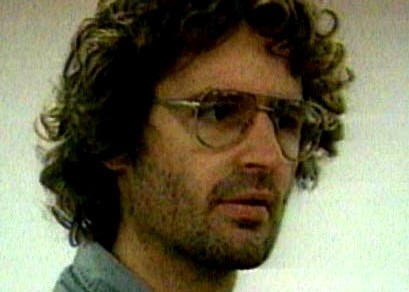 David Koresh
Homicide · USA · 1993
David Koresh (born Vernon Wayne Howell; August 17, 1959 – April 19, 1993) led t…
79 victims
David Koresh
Homicide · USA · 1993
David Koresh (born Vernon Wayne Howell; August 17, 1959 – April 19, 1993) led t…
79 victims
 Todd Hall
Homicide · USA · 1996
Todd Hall was described by neighbors as "mentally slow" and was said to have su…
9 victims
Todd Hall
Homicide · USA · 1996
Todd Hall was described by neighbors as "mentally slow" and was said to have su…
9 victims
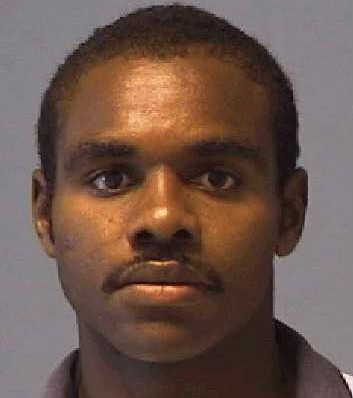 Clinton Bankston
Homicide · USA · 1987
15 August 1987 — Ann Morris (63), her sister Sally Nicholson (59), and Sally’s…
5 victims
Clinton Bankston
Homicide · USA · 1987
15 August 1987 — Ann Morris (63), her sister Sally Nicholson (59), and Sally’s…
5 victims
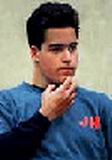 Joshua Jenkins
Homicide · USA · 1996
Joshua Jenkins was a 15-year-old American killer who killed five members of his…
5 victims
Joshua Jenkins
Homicide · USA · 1996
Joshua Jenkins was a 15-year-old American killer who killed five members of his…
5 victims
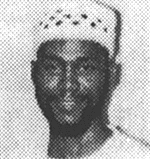 Tyrone Gilliam
Murderer · USA · 1988
Tyrone Gilliam was convicted in the murder of Christine Doerfler. Gilliam was e…
1 victim
Tyrone Gilliam
Murderer · USA · 1988
Tyrone Gilliam was convicted in the murder of Christine Doerfler. Gilliam was e…
1 victim
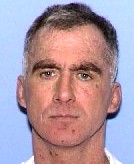 Tracy Lane Beatty
Murderer · USA · 2003
Tracy Lane Beatty was a White male born on 01/23/1961. He was 43 when he was re…
1 victim
Tracy Lane Beatty
Murderer · USA · 2003
Tracy Lane Beatty was a White male born on 01/23/1961. He was 43 when he was re…
1 victim
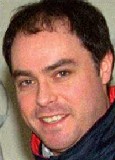 Graham Coutts
Murderer · United Kingdom · 2003
Graham Coutts was the man convicted of murdering school teacher Jane Longhurst…
1 victim
Graham Coutts
Murderer · United Kingdom · 2003
Graham Coutts was the man convicted of murdering school teacher Jane Longhurst…
1 victim
 John Mills
Murderer · USA · 1982
John Mills Jr. was a Florida prison inmate. In 1982, a jury convicted him of fi…
1 victim
John Mills
Murderer · USA · 1982
John Mills Jr. was a Florida prison inmate. In 1982, a jury convicted him of fi…
1 victim
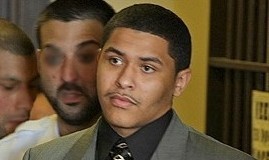 Calvin Carnes
Mass murderer · USA · 2005
Calvin Carnes Jr. was sentenced to four consecutive life terms in state prison…
4 victims
Calvin Carnes
Mass murderer · USA · 2005
Calvin Carnes Jr. was sentenced to four consecutive life terms in state prison…
4 victims
- Gender
- male
- Country
- USA
- Location
- Smith County, Texas, USA
- Date of birth
- August 5, 1976
- Age at first offence
- 18
- Characteristics
- juvenile (17), carjacking, rape
- Victim profile
- John E. Luttig, 63
- Method of murder
- Shooting (.45 caliber pistol)
- Date(s) of murder
- April 19, 1994
- Years active
- 1994
- Date of arrest
- June 5, 1994
- Status
-
Executed
Executed by lethal injection in Texas on May 28, 2002
Case overview
Napoleon Beazley was a 17-year-old offender who was convicted of capital murder arising from a carjacking and shooting of John Luttig in Tyler, Texas, on April 19, 1994. He was sentenced to death. He was executed by lethal injection in Texas on May 28, 2002.
Background
On the day of the murder, Beazley told a friend that he might soon be driving a Mercedes to school. Beazley, who was 17 at the time of the offense, was about three and a half months short of his 18th birthday when John Luttig was murdered.
Beazley borrowed his mother’s car and drove with Cedric Coleman and Donald Coleman to Tyler. Beazley brought a .45-caliber pistol and a sawed-off shotgun.
The offence
Beazley and his group unsuccessfully attempted to carjack a Lexus.
Beazley then spotted a 1987 Mercedes driven by John Luttig. John Luttig and his wife, Bobbie Luttig, were on their way home from Dallas.
Beazley followed the Luttigs to their home and stopped at the end of the driveway. Beazley got out of the car and stripped off his shirt. Armed with the .45-caliber pistol, Beazley ran toward the garage. Donald followed shortly after, carrying Beazley’s sawed-off shotgun.
Beazley fired one round from his pistol, hitting Mr. Luttig in the side of the head. Mr. Luttig was left alive but stunned and in a seated position.
Beazley then ran around the car where Mrs. Luttig was getting out of the vehicle and fired at her at close range. Although he missed, Mrs. Luttig fell to the ground.
Beazley then returned to Mr. Luttig, raised his gun, took careful aim, and fired point blank into Mr. Luttig’s head.
Beazley then rifled Mr. Luttig’s pockets looking for the keys to the Mercedes.
While searching for the keys, Beazley asked Donald if Mrs. Luttig was dead. When Donald said she was still moving, Beazley shouted for him to shoot her, but Donald refused. Beazley moved to shoot her, but Donald quickly recanted his previous statement and said that she was dead.
Mrs. Luttig survived the incident and later testified at Beazley’s trial.
Once Beazley found the keys to the Mercedes, he jumped into the car and ordered Donald to get in. Beazley backed the car out of the garage, but he ran into a retaining wall, damaging the vehicle. Beazley eventually abandoned the Mercedes a short distance away.
Beazley rejoined the group, who had followed him from the crime scene, in his mother’s car. Beazley stated that he would get rid of anyone who said anything about the incident.
Beazley and his cohorts returned to Grapeland.
Investigation and arrest
A few days after the crime, Beazley confided to a friend that he and the Coleman brothers had attempted to steal a car, and that he had shot a man three times in the head and had attempted to kill a woman.
When arrested, Beazley’s father asked if he committed the crime of which he was accused, and Beazley replied he had.
Trial
Charges and conviction
July 7, 1994 — Beazley was charged by an indictment returned in Smith County, Texas, with the capital offense of intentionally murdering John Luttig during a robbery.
A jury found Beazley guilty of capital murder. Following a separate punishment hearing, the jury assessed the death penalty.
Co-defendants
Cedric and Donald Coleman received life sentences and testified against Beazley.
Sentencing
March 17, 1995 — The jury found Beazley guilty of capital murder and following a separate punishment hearing, assessed the death penalty.
Appeals and clemency
Direct review and state habeas corpus
Feb. 26, 1997 — The Texas Court of Criminal Appeals denied relief on 38 points of error, affirmed Beazley’s conviction and sentence, and later denied rehearing in April 1997. Beazley did not seek certiorari review from the U.S. Supreme Court.
June 3, 1997 — Beazley filed an application for state writ of habeas corpus with the state trial court of conviction.
Sept. 5, 1997 — An evidentiary hearing was held by the trial court.
Oct. 31, 1997 — The trial court entered findings of fact and conclusions of law denying habeas relief.
Jan. 21, 1998 — The Court of Criminal Appeals accepted findings and denied relief.
Federal habeas corpus and further appeals
Oct. 1, 1998 — Beazley petitioned for habeas corpus in the U.S. District Court for the Eastern District of Texas.
Sept. 30, 1999 — The U.S. District Court denied relief.
Oct. 26, 1999 — The district court denied reconsideration.
Dec. 28, 1999 — The district court granted permission for Beazley to appeal.
June 1, 2000 — Beazley filed his brief on appeal to the Fifth Circuit.
Feb. 9, 2001 — The Fifth Circuit issued a published opinion affirming the denial of habeas relief.
March 15, 2001 — The Fifth Circuit denied Beazley’s petition for rehearing.
Supreme Court stay and rescheduling
June 13, 2001 — Beazley petitioned for certiorari review from the denial of federal habeas relief.
June 28, 2001 — Beazley applied for a stay of execution from the U.S. Supreme Court.
Aug. 13, 2001 — The United States Supreme Court denied Beazley’s application for stay of execution.
Aug. 15, 2001 — The day of his execution, the Court of Criminal Appeals granted a stay of execution.
Oct. 1, 2001 — The United States Supreme Court denied certiorari review.
Apr. 17, 2002 — The Texas Court of Criminal Appeals vacated the stay of execution.
Apr. 26, 2002 — The District Court of Smith County, Texas, scheduled Beazley’s execution for May 28, 2002.
Clemency and litigation in 2002
May 7, 2002 — Beazley filed a petition for clemency with the Texas Board of Pardons and Paroles.
May 13, 2002 — Beazley filed a supplemental petition for clemency.
May 17, 2002 — Beazley and 3 others filed 1983 suit in the U.S. District Court alleging inadequate representation.
May 17, 2002 — U.S. District Judge Hayden Head dismissed the lawsuit.
May 21, 2002 — The Fifth Circuit issued an opinion affirming the lower court’s judgment, denying injunctive relief.
May 22, 2002 — Beazley petitioned for certiorari review to the United States Supreme Court.
During this period, Beazley’s petition for certiorari review and his application for stay of execution were still pending with the United States Supreme Court, and his petition for clemency was still pending with the Texas Board of Pardons and Paroles.
Execution
Beazley was executed by lethal injection on May 28, 2002. He was pronounced dead at 6:17 p.m.
A warden asked Beazley if he wanted to make a last statement. Beazley turned his head towards Suzanne Luttig, paused, and said “no.” He shook his head, said, “no” again, and then turned his head to face the ceiling.
Prison officials said Beazley did not ask for a last meal.
A one-page typed statement released after the execution included the following language:
“I’m not only saddened, but disappointed that a system that is supposed to protect and uphold what is just and right can be so much like me when I made the same shameful mistake,”
and ended with:
“No one wins tonight. No one gets closure. No one walks away victorious.”
Beazley’s supporters and opponents demonstrated outside the Walls unit.
Other details
Statement of Beazley in court
In an April hearing in Tyler, Beazley said:
“I violated the law. I violated this city, and I violated a family ... I'm sorry. I wish I had a second chance to make up for it, but I don't,”
and a courtroom spectator said:
“You don't have to be sorry, Napoleon.”
Beazley then said:
“But I don't. And if nothing else, I ask for everybody's forgiveness. That's all.”
A televised interview included the comment:
“If I was 15, if I was 20, if I was 25, it doesn't matter. It never should have happened.”
A typed statement he made included:
“I'm sorry. I wish I had a 2nd chance to make up for it, but I don't.”
Prior criminal history and evidence at punishment phase
No evidence of prior criminal convictions was presented to the jury at the punishment phase.
The jury heard evidence that Beazley had been selling drugs since age 13.
Supreme Court and age-at-offense context referenced around the case
The Texas Attorney General Media advisory described two related U.S. Supreme Court holdings: Thompson v. Oklahoma, 487 U.S. 815 (1988), and Stanford v. Kentucky, 492 U.S. 361 (1989). The advisory stated that the Eighth and 14th Amendments prohibited the execution of a defendant convicted of first-degree murder when he was 15 years old, but that constitutional rights were not violated when the sentence was imposed on a defendant who was at least 16 years old at the time of the capital offense.
Other procedural claims reported in the material
After conviction, the Coleman brothers testified against Beazley and later recanted some testimony, with one affidavit stating:
“Dobbs actually threatened me by telling me if I didn't testify the way he wanted that he would make sure my brother got the death penalty,”
and another portion described that this matter was not raised in Beazley’s original state habeas corpus appeal.
Beazley’s lawyer, Walter Long, raised objections including the fairness of the jury and concerns that the victim’s son might have meddled in the case.
Relationship to federal case proceedings
A statement of Michael Luttig was included as an allocution in federal court during sentencing of Cedric and Donald Coleman. The allocution began:
“May it please the Court. It is one of life's ironies that I appear before the Court for the reason that I do.”
The allocution included the line:
“Three young men bent on stealing a Mercedes-Benz killed a federal judge's father on April 19, 1994, in Dallas.”
It also included:
“Words seem trite in describing what follows when your husband is murdered in your presence, when your father is stripped from your life.”
The statement ended with:
“On behalf of my dad, and on behalf of my mother and family, I respectfully request that these who committed this brutal crime receive the full punishment that the law provides.”
Final meal and final words
Final Meal: None. Final Words: None.
Miscellaneous reported biographical details included in the material
The material included that Beazley was the president of his senior class, a 440-relay track runner, and a starting running back for Grapeland High School Sandies. It also included that he was headed for the Marine Corps after high school. It additionally stated that he had been selling drugs and was described as a crack dealer in some portions of the material.
The material also included that he told a person it “was a trip.”
People named in the material
- Napoleon Beazley (defendant)
- John Luttig (victim)
- Bobbie Luttig (victim’s wife; survived and testified)
- Suzanne Luttig (victim’s daughter; was addressed at execution)
- Cedric Coleman (co-defendant; received life sentence)
- Donald Coleman (co-defendant; received life sentence)
- Ireland Beazley (Beazley’s father)
- Rena Beazley (Beazley’s wife, described as secretary to the county judge in one portion)
- Walter Long (defense lawyer)
- Jack Skeen (Smith County District Attorney; also referenced as Jack Skeen Jr. in one portion)
- Ed Marty (assistant district attorney referenced in one portion)
- Cynthia Stevens Kent (trial judge referenced)
- Hayden Head (U.S. District Judge referenced)
- William Steger (Senior U.S. District Judge referenced)
- J. Michael Luttig (victim’s son; referenced in multiple contexts)
- Dennis Murphy (FBI agent referenced)
- Rick Perry (Governor referenced)
- Suzanne Luttig and FBI Agent Dennis Murphy witnessed the execution in one portion of the material
Spotted an error, or have more information about this case?