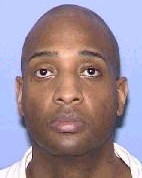
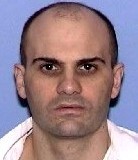
Taichin Preyor
Murderer Robert Martines Perez
Murderer · USA · 1994
Name: Robert Martines Perez · Other name used in proceedings: Robert Martinez P…
15 victims
Robert Martines Perez
Murderer · USA · 1994
Name: Robert Martines Perez · Other name used in proceedings: Robert Martinez P…
15 victims
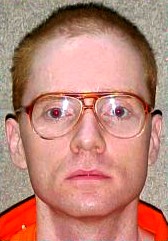 Robert Glen Jones
Murderer · USA · 1996
Defendant: Robert Glenn Jones (ADC#070566) · Co-defendant: Scott Nordstrom (ADC…
7 victims
Robert Glen Jones
Murderer · USA · 1996
Defendant: Robert Glenn Jones (ADC#070566) · Co-defendant: Scott Nordstrom (ADC…
7 victims
 Joshua Wayne Andrews
Murderer · USA · 2000
Joshua Wayne Andrews was a serial killer accused of killing several people in V…
5 victims
Joshua Wayne Andrews
Murderer · USA · 2000
Joshua Wayne Andrews was a serial killer accused of killing several people in V…
5 victims
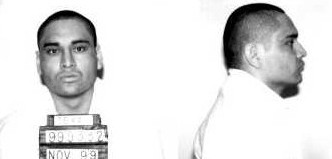 Juan Carlos Alvarez
Murderer · USA · 1998
Juan Carlos Alvarez, born on March 9, 1977, in San Luis, Mexico, was a Hispanic…
5 victims
Juan Carlos Alvarez
Murderer · USA · 1998
Juan Carlos Alvarez, born on March 9, 1977, in San Luis, Mexico, was a Hispanic…
5 victims
 Joshua Rosa
Murderer · USA · 2005
Joshua Rosa (born January 24, 1986) was a convicted murderer in the State of Fl…
1 victim
Joshua Rosa
Murderer · USA · 2005
Joshua Rosa (born January 24, 1986) was a convicted murderer in the State of Fl…
1 victim
 Harrison Graham
Serial killer · USA · 1986
Harrison Graham was a 28-year-old mentally retarded drug abuser who lived in a…
7 victims
Harrison Graham
Serial killer · USA · 1986
Harrison Graham was a 28-year-old mentally retarded drug abuser who lived in a…
7 victims
 Rennie Pratt
Murderer · USA · 2009
Rennie Pratt was convicted of voluntary manslaughter in the shooting death of h…
1 victim
Rennie Pratt
Murderer · USA · 2009
Rennie Pratt was convicted of voluntary manslaughter in the shooting death of h…
1 victim
 Victor Marcus Farr
Murderer · USA · 1990
Victor Marcus Farr (born 07/03/61) was convicted in the Third Judicial Circuit,…
1 victim
Victor Marcus Farr
Murderer · USA · 1990
Victor Marcus Farr (born 07/03/61) was convicted in the Third Judicial Circuit,…
1 victim
 Joanna Dennehy
Murderer · United Kingdom · 2013
Name: Joanna Dennehy · March 2013 — Three murders were carried out in the Unite…
3 victims
Joanna Dennehy
Murderer · United Kingdom · 2013
Name: Joanna Dennehy · March 2013 — Three murders were carried out in the Unite…
3 victims
 Celeste Beard
Murderer · USA · 1999
Celeste Beard Johnson (born February 13, 1963) was a convicted American murdere…
1 victim
Celeste Beard
Murderer · USA · 1999
Celeste Beard Johnson (born February 13, 1963) was a convicted American murdere…
1 victim
- Gender
- male
- Country
- USA
- Location
- Bexar County, Texas, USA
- Date of birth
- September 2, 1970
- Age at first offence
- 34
- Characteristics
- drugs
- Victim profile
- Jami Tackett (female, 24)
- Method of murder
- St abbing with knife
- Date(s) of murder
- February 26, 2004
- Years active
- 2004
- Date of arrest
- Same day
- Status
-
Sentenced to death
Sentenced to death on March 30, 2005
Case record: Taichin Preyor
Status
Taichin Preyor was sentenced to death on March 30, 2005.
Timeline
- February 26, 2004 — Taichin Preyor murdered Jami Tackett in the course of committing or attempting to commit burglary of a habitation; Preyor stabbed Jason Garza, who survived; police arrested Preyor as he was leaving the scene.
- January 14, 2004 — Police went to Preyor's apartment on a “family violence call”; Preyor was pacing, yelling, and screaming; he calmed down when his brother arrived.
- 1999 — Preyor committed a prior drug offense in Syracuse, New York; he possessed nearly four ounces of crack cocaine; he pleaded guilty to possession of a controlled substance in exchange for a one-year sentence; a charge of resisting arrest was dismissed as part of his plea bargain.
- March 15, 2005 — A San Antonio Express-News source date is listed: 3/15/05.
- January 23, 2008 — The Texas Court of Criminal Appeals affirmed Preyor’s capital murder conviction and death sentence; the opinion was delivered on January 23, 2008.
Background
Taichin Preyor, also known as “Box,” was friends with Jami Tackett. The evidence showed that Tackett sold drugs and kept cocaine in a safe in her apartment. Preyor called Tackett earlier in the evening and said he was coming over to her apartment that night.
Tackett and some friends, including Jason Garza, partied at her apartment into the early morning hours. The last guest left at about 4:00 a.m., after which Tackett and Garza locked the front door, turned out the lights, and went to bed.
Preyor was dressed from head to toe in black clothing when he broke through the front door and entered Tackett’s bedroom. Tackett asked: “Box, what the hell are you doing here?” Preyor said: “Fuck this,” then jumped on the bed and began attacking Garza.
Preyor told authorities that he was going to Tackett’s apartment to buy drugs from her. He claimed that when he entered her apartment, Tackett and another man began beating him and he drew his knife in self defense and “poked” her with it. Prosecutors said Preyor was not trying to defend himself because it was clear the door had been knocked down before the murder and a gun had also been found on the bumper of his vehicle. The defense argued it was Garza who broke down the door as he was leaving the apartment.
The offence
The evidence showed that Taichin Preyor murdered Jami Tackett in the course of committing or attempting to commit burglary of a habitation on February 26, 2004. Preyor attacked Garza first and then Tackett.
Garza was stabbed and managed to run away to ask neighbors to call for help, leaving Tackett alone with Preyor. Preyor stabbed Tackett numerous times and slashed her throat, severing her trachea, jugular vein, and carotid artery.
The evidence also showed that Preyor initially tried to leave the scene in his car, which was parked downstairs. He went back into Tackett’s apartment to search for his car keys while Tackett struggled to breathe on her living-room floor. When he went back downstairs, he encountered the police and failed to comply when they ordered him to stop and get on the ground.
Police discovered a loaded shotgun on the bumper of Preyor’s car and a knife and gloves in the grass nearby.
Tackett died before the paramedics arrived.
Investigation and arrest
Police arrested Preyor as he was leaving the scene. Officers struggled to handcuff Preyor, who was covered in blood, and they used pepper spray to subdue him.
In the evidence described for the capital murder, it was also stated that police discovered a loaded shotgun on the bumper of Preyor’s car and a knife and gloves in the grass nearby.
Prior drug offence and related conduct
The State introduced evidence at the punishment phase that Preyor committed a prior drug offense in Syracuse, New York, in 1999.
Syracuse Police Officer Tim Laun testified that he noticed Preyor and another man acting suspiciously at 2:00 a.m. He did a pat-down search of Preyor and discovered that he had a bag containing nearly four ounces of crack cocaine. Laun also testified that this amount of crack cocaine would sell for approximately $10,000.
Preyor fled, and another officer later tackled and handcuffed him.
Preyor pleaded guilty to possession of a controlled substance in exchange for a one-year sentence. A charge of resisting arrest was dismissed as part of his plea bargain.
Preyor told his probation officer that he had used cocaine since adolescence and that he had started using it consistently in 1998, when he had an affair with a woman who was a drug abuser. Preyor also told his probation officer that the crack cocaine was for his own personal use.
However, when he was interviewed by clinical psychologist Dr. Joanne Murphy prior to his capital-murder trial, Preyor acknowledged that he had been selling drugs. After serving time for his drug offense, Preyor moved to San Antonio, where he was joined by his wife and children.
The evidence also showed that Preyor had the dates of his drug offense and the instant capital murder tattooed on his body. He told Dr. Murphy that the tattoos were to remind him of mistakes that he never wanted to repeat.
Family-violence call before the murder
About one month before the instant offense, on January 14, 2004, police went to Preyor’s apartment on a “family violence call.” Preyor was angry that police were there and he was pacing, yelling, and screaming. He calmed down when his brother, a San Antonio police officer, arrived.
Preyor’s wife was “very pregnant” with their fourth child. She did not appear to be injured and stated that she did not need assistance.
Jail conduct while awaiting trial
The evidence also showed that Preyor committed disciplinary infractions while in the Bexar County Jail awaiting trial:
- Possessing ten tablets of Tylenol, instead of the two tablets permitted.
- Disobeying an order from staff.
- Engaging in “loud, boisterous behavior or communication with other inmates” by lifting the lid on his cell door.
Trial
Guilt/innocence points of error
Point of error one: Batson challenge to juror strike
Preyor contended that the trial court erred in overruling his Batson challenge to the State’s peremptory challenge of prospective juror April Keisha Layne.
The opinion described the Batson framework:
- A defendant objecting under Batson must make a prima facie showing of racial discrimination in the State’s exercise of its peremptory strikes.
- The burden shifts to the State to articulate race-neutral explanations for its strikes.
- Once the prosecutor has articulated race-neutral explanations, the burden shifts back to the defendant to show that the explanations were really a pretext for discrimination.
- The trial court must determine whether the defendant carried the burden of proving discrimination.
- The trial court’s determination receives great deference and will not be overturned unless clearly erroneous.
The trial court entertained the State’s explanations for the strike without making a finding that Preyor made a prima facie case.
The opinion included the following exchange: THE COURT: . . . So, you want to tell me why you struck Ms. Layne, who happens to be a black woman? [PROSECUTOR]: Yes. Judge, I'm happy to tell you but I think first there has to be a pattern. There's certainly no pattern that we are striking all Blacks off the panel. I have her rated actually fairly low based on her answers on the questionnaire. I have a concern still with her stepbrother having been accused of a felony. She indicates in her questionnaire that she had gone with him to an attorney to discuss the case with the attorney, but at this point she's not being real forthcoming on what the felony actually was. Her questions in this case, also, when she was responding to the first question. And I asked her if she thought that the capital murder itself, whether that could certainly prove the first special issue to her depending on the facts. She seems to have a real hangup with that. That caused me concern that she couldn't envision that sort of case where that first question could be answered simply by - - you know, by her hearing the evidence in the first part of the case. So, all of those things together have made me believe she is an appropriate strike for the State in this case.
After questioning by defense counsel, the prosecutor also explained: Q. How are her answers different from the other - - With respect to every question that you feel upset about, how does her answer differ from the answers of other jurors which you have found acceptable? A. Most of the other jurors have not had a problem with answering the first special issue yes or not hesitated like she did in answering [the] special issue yes, based on the facts of the offense. Q. What were the specific words that caused you pause when she said yes? A. I believe she hesitated for a couple of seconds and said, you're really going to have to show me something. It's hard to explain exactly the words, but it was clear that she made quite a pause and seemed to indicate that we were going to have to show me something more than the facts itself. Q. Now, she doesn't say that, does she, specifically? A. I don't remember her exact words, but it was clear to me that's what she meant.
Defense counsel stated: “Your Honor, I do not believe that the State has given a racially neutral reason and carried the burden of persuasion on this. I move to go ahead and seat Ms. Layne.”
The trial court responded: “Well, I'll take [the prosecutor] at his word that he didn't factor race into his decision to use a strike on this woman. So, you may tell her that she can go.”
The opinion then stated that the State’s facially race-neutral explanations were supported by the record and that Preyor did not show the State’s explanation was a pretext for discrimination. The trial court did not abuse its discretion in denying the Batson challenge. The appellate court overruled point of error one.
The opinion also described juror Layne’s statements when questioned by the prosecutor:
- “I think it was like a drug case,” and “I can't tell you like details.”
- “It could, but you would need to really listen to the case.”
Point of error two: Admission of State’s Exhibits 125 and 126
Preyor argued that the trial court erroneously admitted State’s Exhibits 125 and 126 in violation of Rule 403 of the Texas Rules of Evidence.
The opinion stated the Rule 403 requirement that a photograph have probative value and that the probative value not be substantially outweighed by unfair prejudice. It also listed factors courts may consider, including number of exhibits, gruesomeness and detail, size, color versus black-and-white, close-up, whether the body depicted is clothed or naked, availability of other means of proof, and unique circumstances.
The opinion described the exhibits:
- The exhibits were color photographs slightly larger than 5" by 7".
- They offered close-up views of open incised wounds to the victim’s neck and near her ear.
- The prosecutor described State’s Exhibit 125 as showing: “injuries to the ear that are not apparent on other photos”
- The prosecutor described State’s Exhibit 126 as: “assists in showing the pathway of the injury.”
The opinion included the trial court’s ruling exchange: THE COURT: Well, it seems that you have others that do the same thing - - 122, 124. I don't see how they are particularly different. No, this is the ear, 126. [PROSECUTOR]: Specifically, Judge, if you would look at where the wounds end near the ear in 125 as opposed to 124 and 122, that's the significance. THE COURT: Pick one. [PROSECUTOR]: Between the three, Your Honor, because 122 also shows chest wounds that are not shown in the others. Your Honor, then between the three, 125 is the one that we would submit. THE COURT: All right. Well, I'm going to overrule your objections to 125 and 126 and receive those into evidence, and 124 and 122 are pretty much the same thing, so those are not coming in. The rest are admitted.
The opinion stated the trial court did not abuse its discretion in admitting the photographs, finding they depicted no more than the gruesomeness of the injuries inflicted, were not cumulative, and that the danger of unfair prejudice did not substantially outweigh probative value. The appellate court overruled point of error two.
Punishment points of error
Point of error three: Sufficiency of evidence for future dangerousness special issue
Preyor argued that the evidence was legally insufficient to support the jury’s affirmative finding on the “future dangerousness” special issue.
The opinion stated the standard of review: evidence was viewed in the light most favorable to the jury’s finding to determine whether any rational trier of fact could have found beyond a reasonable doubt that there was a probability the appellant would commit criminal acts of violence that would constitute a continuing threat to society. It stated that the facts of the offense alone could support an affirmative answer.
Preyor argued that psychological testimony was favorable and indicated he would not be a future danger in prison. The opinion stated that Dr. Murphy acknowledged on cross-examination that she did not consider the circumstances of the instant case and instead relied upon Preyor’s school records and what Preyor and his attorney reported to her.
Preyor argued that jail records and the testimony of jail personnel showed he was “not a problem inmate.” The opinion said the evidence showed Preyor twice resisted arrest and had an angry reaction when police came to his home on a family-violence call. It also said Bexar County Sheriff’s Deputy Mike Alvarado testified that about a week prior to trial a prison guard searched Preyor’s cell for “non-privileged mail” and that the “Special Response Team” (or “SERT team”) was dispatched to assist. Alvarado acknowledged on cross-examination that “there had been sort of an escalation” before the “SERT team” was called and that “there was a lot of tension.”
The opinion emphasized the violent manner of Tackett’s death and said circumstantial evidence indicated premeditation. It also said Preyor resisted police when they tried to arrest him, as he had done at another time in the past. It concluded any rational trier of fact could find beyond a reasonable doubt that Preyor would be a continuing threat. The appellate court overruled point of error three.
Point of error four: Admission of 1999 drug conviction and resisting arrest charge
Preyor challenged admission of his 1999 drug conviction and related resisting arrest charge at the punishment phase. He asserted the conviction and charge were the result of a Fourth Amendment violation because officers did not have reasonable suspicion to stop and search him.
The opinion stated the trial court had wide latitude admitting or excluding evidence of extraneous offenses at punishment in a capital trial, including evidence of adjudicated or unadjudicated extraneous offenses. It also stated the State’s burden to clearly prove the extraneous offense and Preyor’s perpetration.
The opinion said that by introducing the judgment of conviction and presenting testimony of police officers, the State clearly proved Preyor possessed a controlled substance and resisted arrest in New York in 1999. It then said Preyor made an impermissible collateral attack upon that prior conviction. The appellate court overruled point of error four.
Points of error five and six: Jury instruction on mitigating evidence
Preyor argued the trial court erroneously denied his request not to instruct the jury that mitigating evidence reduced the defendant’s moral blameworthiness (point five). He also argued the trial court erroneously denied his request to define mitigating evidence as “any evidence that may serve as a basis for a sentence less than death, regardless of whether the defendant is able to establish a nexus between the evidence and the commission of the crime” (point six).
The opinion stated that under Article 37.071, the trial court instructed the jury that it “shall consider mitigating evidence to be evidence that a juror might regard as reducing the defendant's moral blameworthiness.”
The opinion said Preyor claimed this statutory definition contradicted United States Supreme Court decisions in Smith v. Texas, 543 U.S. 37 (2004), and Tennard v. Dretke, 542 U.S. 274 (2004). Preyor argued the definition leads a reasonable juror to believe they cannot consider evidence as mitigating unless it reduces blame, and that it requires a nexus between evidence and the circumstances of the offense because it requires the evidence to reduce blame.
The opinion said it had decided this claim adversely to Preyor in previous cases, citing Perry and stating the mitigation special issue did not unconstitutionally narrow the jury’s discretion to factors concerning only moral blameworthiness and that Tennard did not hold otherwise under the statutory scheme at issue. It overruled points of error five and six.
Outcome
The appellant was convicted in March 2005 of capital murder. Based on jury answers to the special issues in Texas Code of Criminal Procedure Article 37.071, sections 2(b) and 2(e), the trial judge sentenced the appellant to death.
The opinion described direct appeal as automatic and stated that after reviewing Preyor’s six points of error, the appellate court found them without merit and affirmed the trial court’s judgment and sentence of death.
The opinion was delivered on January 23, 2008, and it was delivered “Do Not Publish.”
Spotted an error, or have more information about this case?