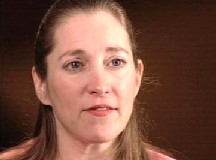
Celeste Beard
Murderer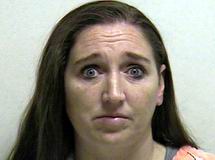 Megan Huntsman
Murderer · USA · 1996
Megan Huntsman was 40 at sentencing. She was a mother of three children who wer…
6 victims
Megan Huntsman
Murderer · USA · 1996
Megan Huntsman was 40 at sentencing. She was a mother of three children who wer…
6 victims
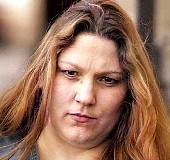 Angela Johnson
Murderer · USA · 1993
Angela Jane Johnson was convicted in federal court of aiding and abetting the m…
5 victims
Angela Johnson
Murderer · USA · 1993
Angela Jane Johnson was convicted in federal court of aiding and abetting the m…
5 victims
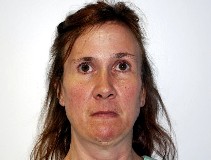 Michele Kalina
Murderer · USA · 1996
Michele Kalina pleaded guilty to murder for one of five infants she initially w…
5 victims
Michele Kalina
Murderer · USA · 1996
Michele Kalina pleaded guilty to murder for one of five infants she initially w…
5 victims
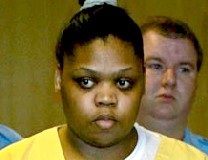 Tiffany Hall
Murderer · USA · 2006
Tiffany Hall was 24 when she was charged in September 2006. She later entered a…
5 victims
Tiffany Hall
Murderer · USA · 2006
Tiffany Hall was 24 when she was charged in September 2006. She later entered a…
5 victims
 Banita Jacks
Murderer · USA · 2007
Banita Jacks was a Washington, DC resident convicted of murdering her four daug…
4 victims
Banita Jacks
Murderer · USA · 2007
Banita Jacks was a Washington, DC resident convicted of murdering her four daug…
4 victims
 Susan Eubanks
Murderer · USA · 1996
Susan Dianne Eubanks, also referred to as Susan Eubanks, was convicted by a jur…
4 victims
Susan Eubanks
Murderer · USA · 1996
Susan Dianne Eubanks, also referred to as Susan Eubanks, was convicted by a jur…
4 victims
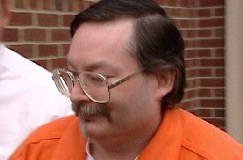 Anthony James Dick
Murderer · USA · 2006
Anthony James Dick was sentenced to death on August 22, 2007 after the shooting…
2 victims
Anthony James Dick
Murderer · USA · 2006
Anthony James Dick was sentenced to death on August 22, 2007 after the shooting…
2 victims
 John Warren Parsons
Murderer · USA · 2005
John Warren Parsons was from Chillicothe, Ohio. He was wanted as an FBI Ten Mos…
1 victim
John Warren Parsons
Murderer · USA · 2005
John Warren Parsons was from Chillicothe, Ohio. He was wanted as an FBI Ten Mos…
1 victim
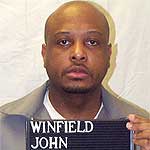 John Winfield
Murderer · USA · 1996
Name: John Winfield · Case name (Missouri Supreme Court): State of Missouri, Re…
2 victims
John Winfield
Murderer · USA · 1996
Name: John Winfield · Case name (Missouri Supreme Court): State of Missouri, Re…
2 victims
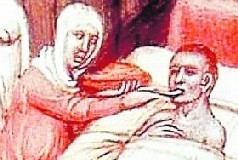 Anna Zwanziger
Murderer · Germany · 1808
Anna Margaretha Zwanziger was executed by a sword in Nuremberg on September 17,…
3 victims
Anna Zwanziger
Murderer · Germany · 1808
Anna Margaretha Zwanziger was executed by a sword in Nuremberg on September 17,…
3 victims
- Gender
- female
- Country
- USA
- Location
- Austin, Texas, USA
- Date of birth
- February 13, 1963
- Age at first offence
- 36
- Characteristics
- to inherit
- Victim profile
- Steven Beard, 75 (her millionaire husband)
- Method of murder
- Shooting (20-gauge shotgun)
- Date(s) of murder
- October 2, 1999
- Years active
- 1999
- Date of arrest
- March 28, 2002
- Status
-
Life imprisonment
Sentenced to life in prison, serving at least 40 years, in 2004
Case record: Celeste Beard
Status and identifiers
Celeste Beard Johnson (born February 13, 1963) was a convicted American murderer serving a life sentence at the Mountain View Unit in Gatesville, Texas. She was identified as Texas Department of Criminal Justice offender #1157250.
Timeline
- February 18, 1995 — Celeste and Steven were married at the Austin Country Club.
- October 2, 1999 — An armed intruder fired a point-blank 20-gauge shotgun shot into Steven Beard’s chest in Steven’s bedroom.
- January 21, 2000 — Steven died in a hospital as a result of the gunshots.
- August 2000 — Celeste was deposed by counsel for Beard’s children in a civil suit filed by Beard’s three children after his death.
- October 2000 — Two months after the August 2000 deposition, the civil case was non-suited and the cause was dismissed.
- January 2000 — Tarlton testified that a cell phone was purchased after appellant’s daughters changed all of the Beard telephone numbers.
- April 2000 — The spreadsheets reflected no activity for a particular phone number until this month.
- May 1999 — Phone billing records for eleven cell phone numbers documented thousands of calls between this month and July 2000.
- July 2000 — Phone billing records for eleven cell phone numbers documented thousands of calls between May 1999 and this month.
- December 10, 1999 — An accountant revealed Celeste spent an additional $249,000 by this date.
- March 31, 2000 — An accountant revealed Celeste spent another $100,000 in the six weeks ending this date.
Background
Celeste Beard hit the jackpot in 1997. That year, the thrice-divorced Austin housekeeper married her 75-year-old millionaire employer, Steven Beard.
Celeste had a Texas mansion, plenty of money, and a stable life for her two daughters. Steven Beard was a wealthy former television executive and self-made multi-millionaire.
Steven worked in radio and advertising in Dallas in the 1950s and 1960s, starting at the bottom and climbing steadily up the business ladder. He switched to television in the 1970s and by 1981 had found financial success as a partner and general manager of KBVO in Austin. In 1985, the station became one of the original affiliates of the fledgling Fox network. It grew in value and stature over the following decade.
On October 3, 1994, a year after Steven’s first wife’s death, Steven Beard sold his share of the station for a small fortune.
According to the prosecution, one reason cited for the murder was that Steven had grown tired of paying for Celeste’s extravagant lifestyle.
Steven and Celeste were married at the Austin Country Club on February 18, 1995.
The offence
Celeste ordered her lover to shoot her husband, Steven Beard. The event took place on October 2, 1999. An armed intruder slipped into Steven’s bedroom and fired a point-blank shot directly into Steven’s chest using a 20-gauge shotgun.
Steven survived the initial shot, but five months later he died from complications related to his injury. Steven died in a hospital on January 21, 2000 as a result of the gunshots.
The jury was instructed and found Celeste guilty of conspiracy to commit murder.
Investigation and evidence
Celeste’s accountant later revealed that Celeste spent $321,000 during October and November 1999, followed by an additional $249,000 by December 10, and another $100,000 in the six weeks ending March 31, 2000.
Prosecutors claimed that Celeste manipulated her friend into perpetrating the shooting in order to inherit Steven’s vast fortune. According to the prosecution, Celeste only married Steven Beard for his money.
A suspect in custody was identified as Celeste’s lesbian best friend, Tracey Tarlton. The former bookstore manager eventually implicated Celeste in the plot to kill her husband.
Defense attorneys alleged that Tarlton was simply a jealous woman with a deadly love interest in Celeste.
At the trial, prosecutors called Celeste’s own daughters. Both girls testified that their mother had sought a hit man to silence Tracey before her arrest.
The jury found Celeste guilty of conspiracy to commit murder.
Telephone records and spreadsheets
The billing records for eleven cell phone numbers, all billed to either Beard or Tarlton, were introduced in evidence as State exhibit 185. These records documented thousands of calls made between May 1999 and July 2000.
Annetta Black, a forensic analyst employed by the State, prepared six spreadsheets summarizing these records. The spreadsheets were introduced in evidence as State exhibits 179 through 184.
Exhibits 179 and 180 showed all of the calls made to or from the billed numbers. Exhibits 181 through 184 showed only calls between phones associated with Tarlton and appellant.
The spreadsheets were introduced pursuant to evidence rule 1006, which provides that the contents of voluminous writings, otherwise admissible, that cannot conveniently be examined in court may be presented in the form of a chart or summary.
Appellant contended that rule 1006 was misused because the spreadsheets did not accurately summarize the actual billing records and contained additional, unsupported material that was no more than the State’s view of the case masquerading as evidence. She further argued that because of the misleading nature of the spreadsheets, their admission violated rule 403.
Appellant relied on Wheatfall v. State, 882 S.W.2d 829, 839 (Tex.Crim.App.1994), where the State introduced a purported summary of the defendant’s violent criminal history without supporting documentation. The court held that rule 1006 does not permit the State to “summarize [its] case on legal paper and submit those documents to the trial court as ‘evidence.’ ”
Appellant asserted that the spreadsheets were inaccurate and misleading in three respects:
- they showed calls made to land line numbers for which the State did not have billing records,
- they showed calls between the cell phones that were not reflected in the billing records,
- and they identified certain phone numbers as belonging to persons who were not named in the billing records.
The court described the spreadsheets as follows. Each spreadsheet had a column for each of the eleven cell phone numbers for which there were billing records. At the top of each column was the telephone number and a name linking the number to either appellant, Tarlton, Beard, Kristina, or Jennifer.
Black testified that although she did not have the land line billing records, each call shown being made to one of the land lines was documented in the cell phone billing records. The court observed that for every call shown as being made to a land line, there was a corresponding call made from a cell phone.
Appellant’s second complaint involved calls made between two of the billed cell phone numbers where the spreadsheets showed a call between two phones, but the billing records for only one of the phones reflected the receipt of the call. Black acknowledged the anomaly in the billing records and could not explain it. Black insisted that there was a billing record for every call shown in the spreadsheets, and appellant made no showing to the contrary.
Appellant’s final complaint concerned the names associated with the various phone numbers. Tarlton identified the three land lines shown in the spreadsheets as her home and work numbers and testified that one of the cell phone numbers billed to her was the phone she regularly used.
Tarlton testified that the other cell phone billed to her was purchased in January 2000 after appellant’s daughters changed all of the Beard telephone numbers. She testified that this phone was kept by appellant and used by her to call Tarlton. The spreadsheets showed no activity for this phone number until January 2000. Other testimony described this as the so-called “secret” cell phone discovered in appellant’s car on the day Beard died and later seen in appellant’s possession.
Jennifer and Kristina identified the two land line numbers shown in the spreadsheets as the Beard home phones. They also testified that, as shown in the spreadsheets, one cell phone number billed to Beard was his car phone, one was appellant’s car phone, two were appellant’s primary cell phone before and after the number was changed, two were Jennifer’s cell phone before and after the number was changed, and two were Kristina’s cell phone before and after the number was changed. They acknowledged that members of the Beard household sometimes used each other’s cell phones.
The last cell phone number billed to Beard, shown in the spreadsheets as being used by appellant, was not identified by any witness. The exhibits reflected no activity for this number until April 2000, well after the critical time period in the cause. The court stated that the phone could not have been used by Beard, who died in January 2000. Neither Jennifer nor Kristina could identify the number, leading to the inference that neither of them used the phone. The court stated that evidence supported this inference because by April 2000 the twins were estranged from appellant and no longer lived or communicated with her.
The court concluded that the identification of the various telephone numbers with a particular person in the spreadsheets was not merely the State’s interpretation. The court stated that there was evidence linking each telephone number to the person identified, distinguishing the case from Wheatfall where there was no testimony to support the purported summaries.
The trial court’s admission of exhibits 179 through 184 was not shown to be an abuse of discretion.
Deposition issue in the civil suit
Appellant urged that the trial court erred by permitting the State to introduce in evidence a videotaped deposition she gave in a civil suit filed by Beard’s three children after his death. The children asserted that appellant was responsible for Beard’s death and sought a temporary injunction to prevent appellant from wasting the assets of Beard’s estate.
Appellant was deposed by counsel for the plaintiffs in August 2000. Two months later, the case was non-suited and the cause was dismissed.
Evidence rule 804 provided exceptions to the hearsay rule when the declarant was unavailable to testify. One exception was for testimony of a witness at another hearing of the same or different proceeding. In a criminal case, the party against whom the testimony is offered had to have had an opportunity and similar motive to develop the testimony by direct, cross, or redirect examination at the prior hearing.
The rule further controlled the use of depositions in criminal cases by chapter 39 of the code of criminal procedure. The text stated that unless requirements of chapter 39 were complied with, a civil deposition was inadmissible in a criminal prosecution, citing State v. Roberts, 909 S.W.2d 110, 114 (Tex.App.-Houston [14th Dist.] 1995), vacated on other grounds.
Appellant argued that the deposition was inadmissible under rule 804(b)(1) because it was not taken in compliance with chapter 39 and because she was not shown to have had the same motive and opportunity to develop the testimony at the deposition.
The court concluded there was no question that the civil deposition was not taken in compliance with chapter 39. The court explained that chapter 39 applied to the use of civil depositions in criminal proceedings only through rule 804(b)(1). Rule 804(b)(1) created an exception to the hearsay rule and had no application if the declarant’s out-of-court statement was not hearsay.
A statement was not hearsay if it was offered against a party and was the party’s own statement. Because appellant’s civil deposition was not hearsay when offered against her, rule 804(b)(1) was inapplicable and noncompliance with the rule, including the incorporated requirements of chapter 39, was irrelevant.
Mental-health and credibility testimony
The text included discussion of mental-health issues relevant to Tracey Tarlton’s credibility as a witness.
In 2003, Tarlton was clinically depressed, suicidal, and delusional. Millholland testified that Tarlton was difficult to work with because she was untruthful at counseling sessions.
Millholland also testified that after appellant and Tarlton were given separate rooms at Timberlawn, Tarlton told her that this problem “would be solved if certain people met with untimely deaths.”
Miller testified that Tarlton was suffering from bipolar disorder and had a delusional belief that Beard “was the bad guy who was pulling Celeste away from her and making trouble in Tracey’s life.”
Brown testified that his review of the medical records led him to conclude that Tarlton had a “pathological obsessive attachment” to appellant. He agreed with Miller’s diagnosis of bipolar psychosis.
The court described that this brief summary demonstrated appellant was given a full opportunity to offer evidence regarding mental-health issues relevant to Tarlton’s credibility.
The trial court had rulings related to cross-examination. The court ruled, “I will allow you to ask if she went into St. David's because of the breakup of her relationship with Zan Ray.” The court also allowed appellant to cross-examine Tarlton regarding her alleged “recruitment” of Ray into a lesbian relationship.
Tarlton denied this but acknowledged that she had a history of entering relationships with married women that ultimately failed.
The court described that appellant was not allowed to cross-examine Tarlton regarding details of her relationship with Ray, and the court refused to admit Ray’s proffered testimony summarized above. The court stated appellant’s brief did not specifically address these rulings and offered no argument that they were an abuse of discretion.
The court also ruled that the credibility of a witness could not be impeached by proof of specific instances of conduct, with an exception not applicable. The text cited Tex.R. Evid. 608(b). It also concluded that details of the Breaux incident were of little or no relevance and that the trial court could reasonably conclude any probative value was outweighed by the danger of undue delay and confusion of issues, citing Tex.R. Evid. 403.
Trial
Celeste Beard was prosecuted for conspiracy to commit murder.
Defense and prosecution positions were presented through allegations about Tracey Tarlton’s role. Defense attorneys alleged Tarlton was a jealous woman with a deadly and deadly love interest in Celeste. Prosecutors claimed Celeste manipulated her friend into perpetrating the shooting to inherit Steven’s fortune.
Celeste’s daughters testified that their mother sought a hit man to silence Tracey before her arrest.
Sentencing
The jury sentenced Celeste to 20 years in prison.
The status information indicated that she was sentenced to life in prison and was serving at least 40 years, in 2004.
Double jeopardy contention and appellate conclusions
Appellant contended that convictions for both capital murder and injury to an elderly person constituted double jeopardy.
The text explained the Fifth Amendment guarantee against double jeopardy and cited cases including Benton v. Maryland and North Carolina v. Pearce. It discussed that multiple punishments could violate the Fifth Amendment only when a defendant was convicted of more offenses than the legislature intended.
Appellant raised the double jeopardy issue in the trial court after the jury’s guilty verdicts were returned but before the punishment phase began. She urged the court to require the State to elect.
The text noted the State’s argument that the objection came too late and was not preserved for appeal. It also discussed that a double jeopardy violation could be raised for the first time on appeal in certain circumstances, citing Gonzalez v. State and Honeycutt v. State.
The court concluded that if there was a double jeopardy violation, it was apparent on the face of the record, because the two convictions were based on the same conduct. The court also concluded the violation was properly before it.
The text discussed that penal code section 22.04 authorizes multiple punishments and quoted: “ A person who is subject to prosecution under both this section and another section of this code may be prosecuted under either or both sections. Section 3.04 [mandatory severance] does not apply to criminal episodes prosecuted under both this section and another section of this code. If a criminal episode is prosecuted under both this section and another section of this code and sentences are assessed for convictions under both sections, the sentences shall run concurrently. ”
It concluded that point of error thirty-six was overruled.
Outcome
The court overruled all of appellant’s points of error and affirmed the judgments of conviction.
Spotted an error, or have more information about this case?