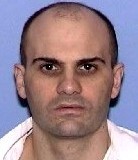
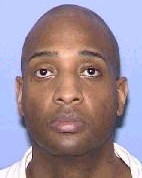
Ronald Prible
Mass murderer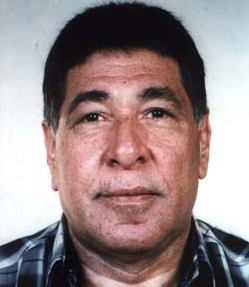 Gameel Al-Batouti
Mass murderer · USA · 1999
Gameel Al-Batouti (also rendered “Gamil ElBatouty” or “El Batouty” in U.S. offi…
216 victims
Gameel Al-Batouti
Mass murderer · USA · 1999
Gameel Al-Batouti (also rendered “Gamil ElBatouty” or “El Batouty” in U.S. offi…
216 victims
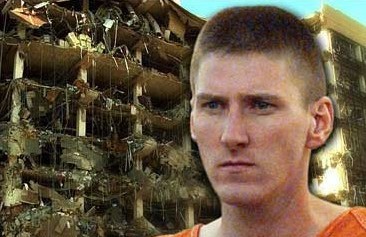 Timothy McVeigh
Mass murderer · USA · 1995
Timothy James McVeigh (April 23, 1968 – June 11, 2001) was a United States Army…
168 victims
Timothy McVeigh
Mass murderer · USA · 1995
Timothy James McVeigh (April 23, 1968 – June 11, 2001) was a United States Army…
168 victims
 Julio Gonzalez
Mass murderer · USA · 1990
Julio Gonzalez was sentenced to 174 twenty-five-year sentences (a total of 4,35…
87 victims
Julio Gonzalez
Mass murderer · USA · 1990
Julio Gonzalez was sentenced to 174 twenty-five-year sentences (a total of 4,35…
87 victims
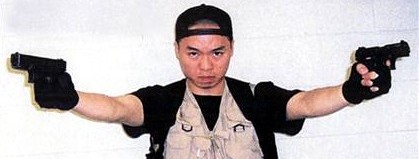 Seung-Hui Cho
Mass murderer · USA · 2007
Seung-Hui Cho was a mass murderer who shot and killed 32 people and wounded man…
32 victims
Seung-Hui Cho
Mass murderer · USA · 2007
Seung-Hui Cho was a mass murderer who shot and killed 32 people and wounded man…
32 victims
 George Jo Hennard
Mass murderer · USA · 1991
George Jo Hennard carried out a mass killing at a Luby’s Cafeteria in Killeen,…
23 victims
George Jo Hennard
Mass murderer · USA · 1991
George Jo Hennard carried out a mass killing at a Luby’s Cafeteria in Killeen,…
23 victims
 Eric Harris
Mass murderer · USA · 1999
Eric Harris committed suicide by gunshot to the roof of the mouth on April 20,…
13 victims
Eric Harris
Mass murderer · USA · 1999
Eric Harris committed suicide by gunshot to the roof of the mouth on April 20,…
13 victims
 Joseph Stanley Faulder
Murderer · USA · 1975
Joseph Stanley Faulder was executed by lethal injection in Texas on June 17, 19…
1 victim
Joseph Stanley Faulder
Murderer · USA · 1975
Joseph Stanley Faulder was executed by lethal injection in Texas on June 17, 19…
1 victim
 William Van Poyck
Murderer · USA · 1987
William Van Poyck (DC #034071; DOB: 07/04/54) was convicted in the Fifteenth Ju…
1 victim
William Van Poyck
Murderer · USA · 1987
William Van Poyck (DC #034071; DOB: 07/04/54) was convicted in the Fifteenth Ju…
1 victim
 Lem Tuggle
Murderer · USA · 1971
Lem Tuggle was executed by lethal injection in Virginia on December 12, 1996. L…
2 victims
Lem Tuggle
Murderer · USA · 1971
Lem Tuggle was executed by lethal injection in Virginia on December 12, 1996. L…
2 victims
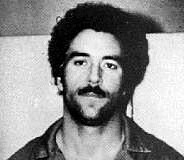 Randall Woodfield
Serial killer · USA · 1979
Randall Woodfield was an American serial killer dubbed The I-5 Killer or The I-…
18 victims
Randall Woodfield
Serial killer · USA · 1979
Randall Woodfield was an American serial killer dubbed The I-5 Killer or The I-…
18 victims
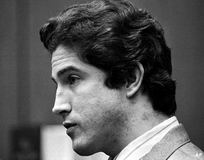 Kenneth Bianchi
Serial killer · USA · 1977
Kenneth Alessio Bianchi (born May 22, 1951) was an American serial killer. He a…
12 victims
Kenneth Bianchi
Serial killer · USA · 1977
Kenneth Alessio Bianchi (born May 22, 1951) was an American serial killer. He a…
12 victims
- Gender
- male
- Country
- USA
- Location
- Harris County, Texas, USA
- Date of birth
- April 18, 1972
- Age at first offence
- 27
- Characteristics
- rape, robbery
- Victim profile
- Esteban "Steve" Herrera, 29; his fiancee, Nilda Tirado, 24, and their daughters Rachel, 7; Valerie, 7, and Jade, 22-month-old
- Method of murder
- Shooting / Fire (smoke inhalation)
- Date(s) of murder
- April 24, 1999
- Years active
- 1999
- Date of arrest
- —
- Status
-
Sentenced to death
Sentenced to death; convicted of capital murder after a jury trial with sentencing on special issues in October 2002, and the conviction was affirmed on direct appeal.
Case details
Ronald Prible, Jr. was born 04/18/1972 and received his case on 11/04/2002 at age 30. His education level was 12.
He was convicted of capital murder for intentionally and knowingly causing the deaths of Esteban Herrera and Nilda Tirado in the same criminal transaction. Pursuant to the jury’s answers to the special issues set forth in Texas Code of Criminal Procedure Article 37.071, Sections 2(b) and 2(e), the trial court sentenced him to death.
Timeline
- 04/23/1999 — Esteban Herrera paged Edward Herrera at 9:00 p.m. and 11:00 p.m.; Edward returned the pages.
- 04/23/1999 — Victor Martinez arrived at Steve Herrera’s house after 10:00 p.m.; Steve and Ronald Prible were drinking beer and playing pool in the garage.
- 04/23/1999 — Around midnight, Nilda Tirado opened the door, called to Steve, and then returned inside while the men continued playing pool.
- 04/23/1999 — Steve lowered the garage door and the three men left in Martinez’s car; they arrived at Rick’s Cabaret around 1:00 a.m. and left sometime after 2:00 a.m.
- 04/24/1999 — In Houston, Ronald Prible shot and killed Esteban Herrera and Nilda Tirado. He started a fire in the residence that caused the death of three children from smoke inhalation.
- 04/24/1999 — Firefighters arrived after neighbors called 911; the firefighters found Nilda Tirado’s body on a couch and also found the bodies of the children in bedrooms.
- 05/1999 — Shortly after the murders, Ronald Prible confessed to committing March and April bank robberies.
- September 1999 — He was convicted in federal court.
- October 2002 — He was convicted of capital murder; the jury answered the special issues and the trial court sentenced him to death.
- 01/26/2005 — Judgment was affirmed after automatic direct appeal.
- Feb. 24, 2009 — The U.S. Supreme Court refused an appeal from a 36-year-old man sentenced to receive lethal injection for the 1999 slayings of a man and his girlfriend at their Houston home.
Background
Ronald Prible was described as a white male with brown hair and brown eyes, 5 ft 10 in tall and 175 pounds. He was a Texas laborer from Harris County, Texas. His prior occupation was laborer.
He had prior prison record: X/FCI, #83774079, Beaumont, Texas, on a 36-month sentence for 1 count of Bank Robbery.
Prior to the murders, in March and April 1999 he committed a series of bank robberies in Houston, Texas. He purportedly planned to use the proceeds of the robberies to go into business with his friend, Esteban (“Steve”) Herrera.
He and Esteban Herrera had an arrangement that did not come to fruition because Steve Herrera and his family were murdered in their home in Houston in the early morning hours of April 24, 1999.
The murders occurred at the home Steve Herrera shared with his girlfriend, Nilda Tirado, and their three children.
The offence
Charged murders and criminal transaction
Ronald Prible was convicted for intentionally and knowingly causing the deaths of Esteban Herrera and Nilda Tirado in the same criminal transaction. The jury found the murders occurred during the same criminal transaction after answering special issues under Texas Code of Criminal Procedure Article 37.071, Sections 2(b) and 2(e).
Bank robberies and alleged plan
In March and April 1999, he committed a series of bank robberies in Houston, Texas. He purportedly planned to use the proceeds to go into business with Esteban (“Steve”) Herrera.
Murders in the Herrera home and fire
On April 24, 1999, in Houston, Ronald Prible shot and killed a 34-year-old Hispanic male (Esteban “Steve” Herrera) and a 23-year-old Hispanic female (Nilda Tirado).
He started a fire in the residence. The fire caused the death of three children from smoke inhalation.
The bodies of the children were found in one bedroom (Rachel Elizabeth Cumpian and Valerie Herrera) and in the master bedroom (Jade Herrera).
Fire evidence and accelerants were found. Investigator Marshall J. Kramer testified that flammable liquids were used to deliberately set the fire in the living room, and described multiple items including:
- a burned red plastic gasoline container
- an aerosol can
- a roll of paper towels soaked in a flammable liquid on the living room floor
- a burned one-gallon metal can on the couch next to Nilda’s body
The metal can contained Kutzit, an extremely flammable liquid used to dissolve tile glue. Other cans of Kutzit were found in lockers inside the garage and in a storage shed behind the house.
Victims and deaths (parents and children)
The victims were described as:
- Esteban Herrera (Hispanic male, 34-year-old in the summary)
- Nilda Tirado (Hispanic female, 23-year-old in the summary)
- three children: Valerie Herrera (7-year-old), Rachel Elizabeth Cumpian (7-year-old), and Jade Herrera (22-month-old in the summary)
Autopsies and medical testimony described the cause of death for the children as inhaling toxic levels of soot and carbon monoxide.
Shooting details
Steve Herrera’s death was caused by a penetrating gunshot wound to the back of his neck which severed the connection between his brain and spinal cord. The stippling around the wound indicated the gun was fired within eighteen inches of his body. There was no exit wound and the bullet was recovered from his body.
Nilda Tirado died from a perforating gunshot wound to her neck that severed her spinal cord. The bullet entered her neck on the back right side and exited the front left side.
Her body suffered severe burns along the entire back side, consistent with a flammable substance being poured on her body and set afire after she had been shot.
Physical evidence and DNA
A spent bullet was found under the carpet where the couch was located. There were no signs of forced entry, and Steve Herrera had a wallet in his back pocket that contained approximately $900.
Sperm cells were found on oral, vaginal, and anal swabs taken during a forensic exam of Nilda Tirado’s body. Steve Herrera’s DNA was consistent with DNA on the vaginal and anal swabs. Ronald Prible’s DNA was consistent with DNA on the oral swab.
Fire evidence was described as part of the scene and aimed at destroying evidence.
Confession and jailhouse testimony
In May 1999, shortly after the murders, Ronald Prible confessed to committing March and April bank robberies and was convicted in federal court in September 1999.
Michael Beckcom, a fellow inmate at the federal prison in Beaumont, testified against him at trial. Beckcom testified that Ronald Prible told him that he committed the murders.
Ronald Prible told Beckcom he killed Steve because he “took $250,000 of [his] hard-earned money.” He said he and Steve argued about the money in the “pool room,” and that he thought Steve was going to kill him, so he shot him in the back of the head.
Beckcom’s testimony included that Ronald Prible said Nilda came into the garage during the argument and ran inside the house to call the police; he shot Nilda in the back of the head and she fell face down onto the couch. He said he set the fire to cover his tracks, and that the children were in bed and died from smoke inhalation.
Beckcom also testified about a brag that Ronald Prible made:
“Anybody that can go into a house and take out a whole family and get out without being seen is a bad mother fucker, and I'm that mother fucker.”
Beckcom testified that Ronald Prible told him the police had DNA evidence. Beckcom further testified that Ronald Prible said Steve and Nilda had an open relationship, and that it was common knowledge that he and Nilda were having an affair.
Beckcom testified that Ronald Prible said police were looking for a “.38 caliber pistol,” but that gun was not the murder weapon, and it was “clean” because he had sold it to “some girl.”
Beckcom testified that Ronald Prible explained that he had DNA evidence against him and made statements tied to the investigation.
Ronald Prible’s statements to police
Ronald Prible gave two written statements to police.
In his first written statement, he said Steve picked him up at 8:00 or 9:00 p.m. on April 23, and they went over to Steve’s house to play pool and drink beer in the garage. Martinez joined them at about 11:00 p.m. They later went to Rick’s Cabaret in Martinez’s car and stayed until 2:00 a.m. Martinez drove them back to Steve’s house, where they again played pool and drank beer, and Martinez left twenty or thirty minutes later.
At some point, Nilda opened the door leading into the garage and gave Steve “a look,” so Ronald Prible “knew it was time to leave.” Steve drove him home in his black Honda Prelude at 4:00 a.m., and he went straight to bed.
In his first statement, Ronald Prible changed his story when a detective asked him what he would do if his semen was found in or on Nilda’s body.
In his second written statement, Ronald Prible added that he had been having an affair with Nilda. He said that he went inside the house at one point during the evening while Steve remained in the garage. He said that he and Nilda went into a bathroom, and he bent her over the sink and began having sex with her.
He said they stopped because they mistakenly thought they heard Steve enter the house. Then Nilda began “sucking [his] dick and jacking [him] off,” and he did not remember “if [he] came or not.” He went back into the garage afterwards and told Steve to take him home.
He said that he and Nilda had only “messed around” and kissed on prior occasions, and that night was the first time they had sex. He said he had never told anyone about their affair because it would ruin Nilda’s reputation.
Firearms evidence
Police searched the home where Ronald Prible lived with his parents and found guns, boxes of ammunition, and receipts for guns and ammunition. Police also found a semiautomatic-pistol magazine that did not fit any of the weapons that were recovered.
Firearms examiner Matthew Clements examined the spent bullet found in the living room and the bullet recovered from Steve’s body and concluded that they were fired from the same weapon.
Clements testified that the magazine recovered from Ronald Prible’s home was identical in design to a magazine for a nine-millimeter Ruger P85 pistol.
Investigation
Investigator Marshall J. Kramer testified regarding the deliberate setting of the fire in the living room.
The evidence described included Kutzit containers found in multiple locations, a gasoline container, an aerosol can, soaked paper towels, a burned one-gallon metal can, and other Kutzit cans in lockers and a storage shed.
Police found a spent bullet under the carpet where the couch was located. There were no signs of forced entry.
Medical testimony included autopsies for Steve Herrera, Nilda Tirado, and the three children, including findings about gunshot injuries and smoke inhalation death causes.
Arrest
No specific arrest date or arrest details were provided in the provided material.
Trial
Conviction and legal issues on direct appeal
The trial court convicted Ronald Prible of capital murder and imposed a death sentence after the jury’s special issues answers.
On direct appeal, the appellant raised eight points of error. The appellate court affirmed the judgment.
Sufficiency of evidence
In his sixth point of error, Ronald Prible argued that the evidence was legally insufficient to support his capital murder conviction.
To convict for capital murder, the jury had to find beyond a reasonable doubt that he murdered Nilda Tirado and Steve Herrera by shooting each of them with a firearm during the same criminal transaction.
The State presented evidence including:
- he was the last person seen with Steve at the house prior to the murders
- he had a motive to kill Steve
- the bullets that killed Nilda and Steve were fired from the same weapon
- his sperm was deposited in Nilda’s mouth at some point prior to her death
- a fire was set to destroy physical evidence, including evidence of his DNA
- he admitted to Beckcom that he committed the murders
The appellate court overruled point of error six.
Admission of evidence regarding children’s deaths
Rule 404(b) challenge and same-transaction contextual evidence
In his first point of error, Ronald Prible argued the trial court improperly admitted evidence of extraneous offences under Rule 404(b).
He argued that although he was charged only with causing the deaths of Steve Herrera and Nilda Tirado, the trial court permitted the State to introduce evidence that their three children also died from smoke inhalation caused by the fire.
The appellate court held the evidence was admissible as same-transaction contextual evidence because it was intertwined with the State’s proof and made the case incomplete or difficult to understand without it.
The court stated the children’s deaths were part of the crime scene and were a direct consequence of setting fire to Nilda, and that the jury was entitled to know the relevant surrounding facts.
Point of error one was overruled.
Rule 403 challenge and photographs
In point of error two, Ronald Prible challenged admission of evidence under Rule 403, including the “facts and circumstances” surrounding the children’s deaths, autopsy photographs depicting the “dissection” of each child’s bodies, and crime scene photographs of the children’s bodies.
The appellate court described Rule 403: Although relevant, evidence may be excluded if its probative value is substantially outweighed by the danger of unfair prejudice, confusion of the issues, or misleading the jury, or by considerations of undue delay, or needless presentation of cumulative evidence.
It then described Rule 403 analysis factors including probative value, potential to impress the jury in an irrational, yet indelible way, time needed, and proponent’s need.
The court held that the evidence had probative value to Beckcom’s credibility, and that there was little likelihood of the evidence encouraging an irrational verdict. It held the relatively strong probative value was not substantially outweighed by unfair prejudice.
Point of error two was overruled.
Due process challenge
In point of error three, Ronald Prible raised a constitutional challenge to admission of evidence that the children died from smoke inhalation.
The appellate court held the admission of this evidence did not deny him a fair and impartial trial, and overruled point of error three.
Crime-scene photographs and Rule 403 findings
The appellate court considered the admission of seven crime-scene photographs depicting children’s bodies and their locations, after exclusion of five other challenged photographs.
State’s exhibits described included:
- Rachel lying face-down on the bedroom floor (State’s Exhibit 47)
- Rachel lying face-up after being rolled over by paramedics (State’s Exhibit 49)
- Valerie’s bed with her body face-down at the top of the bed (State’s Exhibit 50)
- Valerie’s body face-down more clearly depicted (State’s Exhibit 52)
- Valerie face-up after being rolled over by paramedics (State’s Exhibit 55)
- Jade lying face-up on the floor next to the bed (State’s Exhibit 63)
- Jade closer view (State’s Exhibit 65)
The court stated the children wore their bedclothes, their bodies were covered in soot, and soot and mucus appeared around their mouths and noses, while they were not mutilated or charred and appeared to be sleeping with discoloration around noses and mouths.
The appellate court held the danger of unfair prejudice was small and ruled Rule 403 did not prohibit witnesses from testifying that the children died from smoke inhalation. It found the probative value was not substantially outweighed by danger of unfair prejudice and overruled point of error five.
Autopsy photographs and Rule 403 ruling and harmless error analysis
The appellate court determined that the admission of autopsy photographs depicting “dissected body parts” of the children violated Rule 403, and found the trial court abused its discretion by admitting twelve color photographs showing close-ups of internal organs with instruments holding organs open.
It listed each exhibit group for each child:
- Rachel: State’s Exhibits 144 through 146
- Exhibit 144: “neck organs,” thick layer of soot on her tongue and into the opening of her larynx
- Exhibit 145: closer view of carbon material into her larynx
- Exhibit 146: picture of lungs dissected to show amount of carbon material
- Valerie: State’s Exhibits 159 through 162
- Exhibit 159: “neck organs,” thick layer of carbon material from tip of tongue to trachea
- Exhibit 160: closer view of larynx
- Exhibit 161: dissected lungs and amount of carbon material
- Exhibit 162: picture of esophagus showing amount of carbon material entered her stomach
- Jade: State’s Exhibits 167 through 171
- Exhibit 167: dissected lungs and amount of carbon material
- Exhibit 168: closer view of one lung
- Exhibit 169: amount of carbon material on her dissected tongue
- Exhibit 170: amount of carbon material in her larynx
- Exhibit 171: picture of stomach showing carbon material inside it
The appellate court found the autopsy photographs had minimal probative value because:
- the State did not need them to fully explain the crime scene or corroborate Beckcom’s testimony
- sufficient corroboration came from witness testimony, autopsy reports, crime scene photographs, and other autopsy photographs before organs were removed
- the cause of death was not disputed
- the children were not the victims of the charged murder
The appellate court concluded their probative value was substantially outweighed by the danger of unfair prejudice, confusion of issues by focusing the jury on the children’s deaths, and needless presentation of cumulative evidence.
Despite this, the appellate court held the error was harmless under Rule 44.2(b) and overruled point of error four.
Punishment-phase instruction on sympathy
In point of error eight, Ronald Prible asserted the trial court improperly instructed the jury that they could not consider sympathy when answering special issues.
The appellate court held that anti-sympathy charges did not unconstitutionally contradict mitigation instructions and were appropriate because they focus the jury’s attention on factors relating to the moral culpability of the defendant.
It overruled point of error eight and affirmed the trial court’s judgment.
Sentencing
The appellate opinion stated that after the jury’s answers to special issues, the trial court sentenced Ronald Prible to death.
The U.S. Supreme Court refusal described him as a 36-year-old man sentenced to receive lethal injection for the 1999 slayings.
Appeals
Direct appeal
The appellant’s direct appeal to the Court of Criminal Appeals of Texas was automatic.
It was styled: Ronald Jeffrey Prible, Jr., Appellant v. The State of Texas ON DIRECT APPEAL of cause no. 9211260 from the 351st District Court Harris County
The opinion was delivered by Cochran, J., joined by Meyers, Price, Womack, Johnson and Holcomb, JJ. Keller, P.J., Keasler and Hervey, JJ., concurred.
The court delivered its opinion and affirmed the judgment. The opinion was delivered January 26, 2005 and published.
U.S. Supreme Court
The U.S. Supreme Court refused an appeal in a case described as involving 1999 slayings in Houston, and described evidence that Ronald Prible started a fire that left the couple’s three children dead of smoke inhalation. The refusal was dated Feb. 24, 2009.
Other details
Additional witnesses and testimony
- Edward (Steve’s brother) testified that he and Steve sold drugs and that he often supplied Steve with drugs.
- Edward testified about playing pool and drinking beer with appellant in Steve’s garage.
- Edward testified he saw appellant take a large amount of money out of his own wallet and count it.
- Victor Martinez testified about arriving at Steve’s house shortly after 10:00 p.m. on April 23, and about the garage door being raised and the men playing pool and drinking beer.
- Gregory Francisco testified he saw Steve in his driveway with two children at 4:30 or 5:00 p.m. on April 23, and later noticed the garage door and vehicles, and heard loud music and saw smoke the next morning.
- Francisco testified he and his wife rang the doorbell, tried to enter the house through the side door to the garage, found the door hot with smoke, kicked the door open, saw Steve lying face-down in a pool of blood inside the garage, and told his wife to call 911.
- Angela Serna Alvarez and Cynthia Garcia Flores testified about having no knowledge of the alleged affair, and Alvarez and Flores each testified that Nilda had told them she did not like appellant and that he gave her “the creeps.”
- Vincent Flores testified he did not believe Steve and Nilda had an open relationship and said Steve once got angry for “putting a move” on Nilda.
Defense case witnesses
- Sandra Prible, appellant’s mother, testified she met Beckcom while visiting appellant at the federal prison after she sent appellant a copy of the probable-cause affidavit in his capital-murder case.
- J. Brent Liedtke, a former attorney and fellow inmate at the federal prison, testified he saw the probable-cause affidavit and saw appellant show it to other inmates.
- Brian Maurice Fuller testified Beckcom was opportunistic and untruthful.
- Christine Bartolla testified she bought a .38 Special Taurus revolver from appellant in November 1998 and returned the gun to his father in November 2001.
- Christina Gurrusquieta testified she looked out her window on the night of the murder and saw appellant and Steve talking in appellant’s driveway sometime after 1:00 a.m., then Steve left and appellant went inside the house.
Banking amounts described in footnote
Detective Shane McCoy testified that appellant took $9,690 in the first robbery, $12,914 in the second, $9,571 in the third, $3,979 in the fourth, $3,175 in the fifth, and $6,660 in the sixth for a total of $45,929.
The appellate opinion noted it was unclear what exact type of gun was used, and described possible weapons including a Ruger P85 and a .38 caliber pistol, and that the murder weapon was never recovered.
Statement about the relationship and consensual issue
The appellate opinion referenced appellant’s claim that their sexual encounter was consensual and the State’s theory that it was non-consensual, including that Nilda’s friends testified she disliked appellant and that only Nilda’s body was set on fire “presumably to cover up evidence of sexual assault.”
Procedural instructional issue in punishment phase
The appellate opinion recorded the claim that the trial court instructed the jury they could not consider sympathy when answering special issues, and the appeal asserted this violated the Eighth Amendment right against cruel and unusual punishment.
Spotted an error, or have more information about this case?