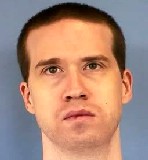
Larry Matthew Puckett
Murderer Brian Kevin Rosenfeld
Murderer · USA · 1985
Brian Kevin Rosenfeld Brian Kevin Rosenfeld was sentenced to three concurrent l…
23 victims
Brian Kevin Rosenfeld
Murderer · USA · 1985
Brian Kevin Rosenfeld Brian Kevin Rosenfeld was sentenced to three concurrent l…
23 victims
 Russell Ellwood
Murderer · USA · 1991
Russell Ellwood was a former taxi driver. Authorities suspected him of killing…
20 victims
Russell Ellwood
Murderer · USA · 1991
Russell Ellwood was a former taxi driver. Authorities suspected him of killing…
20 victims
 Robert Martines Perez
Murderer · USA · 1994
Name: Robert Martines Perez · Other name used in proceedings: Robert Martinez P…
15 victims
Robert Martines Perez
Murderer · USA · 1994
Name: Robert Martines Perez · Other name used in proceedings: Robert Martinez P…
15 victims
 Billy Frank Vickers
Murderer · USA · 1993
Billy Frank Vickers Vickers was executed by lethal injection in Texas on Januar…
14 victims
Billy Frank Vickers
Murderer · USA · 1993
Billy Frank Vickers Vickers was executed by lethal injection in Texas on Januar…
14 victims
 Juan David Rodriguez
Murderer · USA · 1988
Juan David Rodriguez (DOB: 06/26/56) was tried in the Eleventh Judicial Circuit…
1 victim
Juan David Rodriguez
Murderer · USA · 1988
Juan David Rodriguez (DOB: 06/26/56) was tried in the Eleventh Judicial Circuit…
1 victim
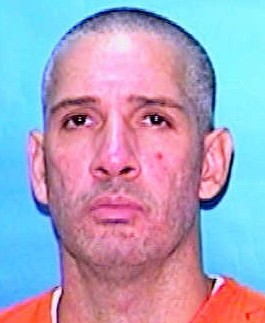 Jesus Delgado
Murderer · USA · 1990
08/29/90 — Date of offense. · 08/30/90 — Marlene McField witnessed the Rodrigue…
2 victims
Jesus Delgado
Murderer · USA · 1990
08/29/90 — Date of offense. · 08/30/90 — Marlene McField witnessed the Rodrigue…
2 victims
 Ria Ramkissoon
Murderer · USA · 2007
Ria Ramkissoon was convicted for starving her one-year-old son to death on the…
1 victim
Ria Ramkissoon
Murderer · USA · 2007
Ria Ramkissoon was convicted for starving her one-year-old son to death on the…
1 victim
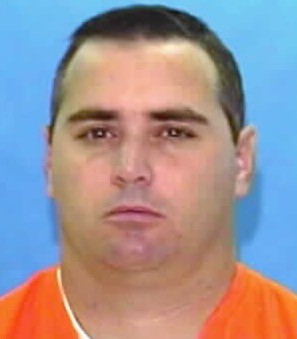 Robert Alan Knight
Murderer · USA · 1993
Robert Alan Knight (DOB: 06/26/68) was convicted in a nonjury trial in the Fift…
1 victim
Robert Alan Knight
Murderer · USA · 1993
Robert Alan Knight (DOB: 06/26/68) was convicted in a nonjury trial in the Fift…
1 victim
 Jason Oric Williams
Spree killer · USA · 1992
Jason Oric Williams was executed by lethal injection in Alabama on May 19, 2011…
4 victims
Jason Oric Williams
Spree killer · USA · 1992
Jason Oric Williams was executed by lethal injection in Alabama on May 19, 2011…
4 victims
 Anatoly Onoprienko
Serial killer · Ukraine · 1989
Anatoly Yuriyovych Onoprienko was born July 25, 1959, and was also known by the…
52 victims
Anatoly Onoprienko
Serial killer · Ukraine · 1989
Anatoly Yuriyovych Onoprienko was born July 25, 1959, and was also known by the…
52 victims
- Gender
- male
- Country
- USA
- Location
- Forrest County, Mississippi, USA
- Date of birth
- January 3, 1977
- Age at first offence
- 18
- Characteristics
- rape
- Victim profile
- Rhonda Hatten Griffis, 28
- Method of murder
- Beating with an axe handle
- Date(s) of murder
- October 14, 1995
- Years active
- 1995
- Date of arrest
- Two days after
- Status
-
Executed
Executed by lethal injection at the Mississippi State Penitentiary on March 20, 2012
Timeline
- October 14, 1995 — Rhonda Hatten Griffis, age 28, was found lying in a large pool of blood next to the couch in the living room of her home on 198 Sunrise Road, Petal, Mississippi, with injuries including gashes on the back of her head, injuries to the head, back, and chest, deep laceration and hesitation marks to the neck, bleeding from her vagina, and defensive wounds on her hands, arms, and elbows; the cause of death was cranial cerebral trauma, secondary to blunt force trauma.
- October 16, 1995 — Larry Matthew Puckett was apprehended near his mother's home in Perry County and made a comment to his mother: “[t]his is a lot of law enforcement for somebody who just committed a burglary.”
- January 1996 term — Larry Matthew Puckett was indicted during the January 1996 term of the Forrest County Grand Jury for the capital murder of Rhonda Hatten Griffis on October 14, 1995, while engaged in the commission of the crime of sexual battery in violation of Miss. Code Ann. § 97-3-19(2)(e)(1994 & Supp.1998).
- July 29-30, 1996 — A jury was empaneled.
- August 2, 1996 — The jury returned a unanimous verdict finding Puckett guilty of capital murder.
- August 5, 1996 — The jury returned a verdict imposing the death sentence; the trial judge sentenced Puckett to death by lethal injection and set an execution date of September 13, 1996.
- August 9, 1996 — The execution was stayed pending appeal.
- March 25, 1999 — The Supreme Court of Mississippi issued an opinion remanding for a limited Batson hearing (Hatten v. State hearing as mandated in Batson v. Kentucky).
- March 20, 2012 — Larry Matthew Puckett was executed by lethal injection at the Mississippi State Penitentiary; authorities said he was pronounced dead at 6:18 p.m.
- March 21, 2012 — An Associated Press report described that Mississippi executed Larry Matthew Puckett for the slaying of his ex-boss’s wife.
Background
Larry Matthew Puckett was executed by lethal injection at the Mississippi State Penitentiary on March 20, 2012. He was convicted of capital murder for the October 14, 1995 murder and sexual battery of Rhonda Hatten Griffis.
Rhonda Hatten Griffis was 28 years old when she died. She was described as an only child and her parents were listed as witnesses for the execution.
The record stated that Puckett had previously worked as a landscaper for Griffis’ husband. While Puckett was employed by David Griffis, employees would gather at the Griffis’ house before leaving for work.
The offence
On October 14, 1995, shortly before 5:00 p.m., Rhonda Hatten Griffis, age 28, was found lying in a large pool of blood next to the couch in the living room of her home on 198 Sunrise Road, Petal, Mississippi. She was found wearing a t-shirt, and the only clothing on the lower part of her body was around her left foot.
The record stated that she had several gashes on the back of her head and other injuries to her head, back, and chest, including a deep laceration and three to four hesitation marks to the neck. She was also bleeding from her vagina. She had several defensive wounds on her hands, arms, and elbows. She died as a result of the injuries; the cause of death was cranial cerebral trauma, secondary to blunt force trauma.
A wooden stick or club covered with blood was recovered outside the residence. The club was identified at trial as State’s Exhibit Number 3.
The record described evidence that Puckett struck Rhonda’s mother, Nancy Hatten, with a club and that Rhonda was bleeding from her vagina. The record included that the case involved a sexual battery charge based on sexual penetration without consent, including penetration of the genital opening by insertion of an object.
Investigation
Rhonda’s mother, Nancy Hatten, lived next door, roughly 150-175 feet from the Griffis’ trailer. On the day of the murder, Nancy Hatten helped Rhonda’s boys, Justin, age 7, and Jeffrey, age 5, put up Halloween decorations in the yard. Rhonda was not feeling well that day, suffering from a headache and bad sinus problems.
Later that afternoon, Nancy Hatten was in her front yard when she heard a “scream and a thud” come from the Griffis’ trailer. She ran home, telephoned the trailer, and the phone rang four or five times with no answer; she hung up and dialed again with still no answer, then immediately went to the trailer.
As Nancy entered the trailer door at the kitchen/dining room area and called for Rhonda, no one answered. Puckett came from the hallway into the kitchen/dining area and raised a club back and started towards Nancy. Nancy backed away as Jeffrey entered the house followed closely by David. Justin remained outside. Nancy took the children, ran to her house, locked the boys in the bathroom, and called 911.
This 911 call was received by the 911 system at 5:01:15 p.m. and answered by the 911 operator at 5:01:20 p.m. At 5:01:41 p.m., Nancy Hatten was placed on hold, as 911 received a call from the Griffis’ trailer. Nancy Hatten identified State’s Exhibit Number 3 as the club Puckett had in his hand in the trailer.
The record stated that David Griffis testified about his interaction with Puckett and the subsequent struggle in the trailer. The record stated that David and Puckett struggled, and David got the club from Puckett. David tried to keep Puckett in the trailer until police arrived. Puckett took off running toward the door. As Puckett ran for the door, David swung the club and hit Puckett on the shoulder and then threw the club at him.
After Puckett exited the trailer, David entered the living room, reached for a pistol usually on a gun cabinet just left of the living room door, but it was not there. David did not see Rhonda’s body lying in the living room at this time. David ran into the bedroom to retrieve a rifle. As he exited the bedroom and re-entered the living room, he saw Rhonda laying on the floor; he saw she was injured and dialed 911 again.
David’s second 911 call was received by the 911 system at 5:05:01 p.m. and answered by the 911 operator at 5:05:07 p.m.; it was terminated at 5:11:45 p.m. The record stated that the time between the end of David’s first 911 call and the beginning of his second 911 call was 18 seconds. Law enforcement and paramedics arrived within minutes.
The record stated that Puckett’s truck, parked outside the home when family members arrived to find him inside, was recovered the following night in the woods of Perry County.
Arrest
Two days after the crime, Puckett was found near his mother’s home in Perry County and was apprehended on October 16, 1995.
At the time of his arrest, Puckett nervously commented to his mother: “[t]his is a lot of law enforcement for somebody who just committed a burglary.”
A duffle bag containing various items including a pair of coveralls was recovered from Puckett at the time of his arrest.
Trial
Indictment, venue, verdict, and sentence
Puckett was indicted during the January 1996 term of the Circuit Court of Forrest County, Mississippi, for the capital murder of Rhonda Hatten Griffis on October 14, 1995, while engaged in the commission of the crime of sexual battery in violation of Miss. Code Ann. § 97-3-19(2)(e)(1994 & Supp. 1998).
Venue was transferred from the Forrest County Circuit Court to the Circuit Court for the First Judicial District of Harrison County, Mississippi.
A jury was empaneled on July 29-30, 1996. On August 2, 1996, the jury returned a unanimous verdict finding Puckett guilty of capital murder.
After the jury heard evidence and arguments in aggravation and mitigation, on August 5, 1996, the jury returned a verdict imposing the death sentence. The trial judge sentenced Puckett to death by lethal injection and set an execution date of September 13, 1996. Puckett’s Motion for Judgment Notwithstanding the Verdict or in the Alternative Motion for New Trial and a supplemental version were denied, and the execution was stayed pending appeal on August 9, 1996.
The record described that Puckett was convicted by jury trial on Aug. 2, 1996, and condemned to death by the jury Aug. 5, 1996, after the venue was changed to Harrison County Circuit Court by a motion filed by Puckett.
Defence testimony and statements
At trial, Puckett did not deny being in the trailer at the time of the murder. He testified that he witnessed David Griffis murder his wife. He stated he originally planned only to burglarize the house to find money to pay his truck note, and that the idea to burglarize popped into his head when he went by the Griffis’ house.
Puckett testified that he parked his truck in a vacant lot beside the Griffis’ trailer and put on his coveralls. He said he saw Rhonda’s car at the trailer but proceeded to the door anyway and knocked. He testified that Rhonda let him in and they began to talk.
Puckett testified that he saw the stick (State’s Exhibit No. 3) lying on the living room floor. He stated that he and Rhonda began kissing and he then began acting out his sexual fantasy of undressing a woman while he remained fully clothed. He testified that Rhonda saw her mother approaching the trailer, grabbed her clothes, and ran into the bedroom telling Puckett to get rid of her mother. Puckett testified that he ran into the dining room area and picked up the stick and decided to scare Mrs. Hatten away with the club.
Puckett further testified that after Mrs. Hatten fled with the children, David accused Rhonda of sleeping with Puckett and began hitting her with the stick that David took from Puckett. Puckett testified that after beating his wife, David struggled to keep Puckett in the trailer, but Puckett was able to escape while David was calling 911. Puckett testified that the incident took four or five minutes. He testified that he hid in the woods for two days because he was afraid of David.
Puckett testified that State’s Exhibit No. 3 was not the same maul handle obtained from former employer Ray Watkins. He testified that he destroyed that maul handle while working for Mark Hicks by making a torch out of it to burn off trash.
The record also included testimony that Puckett had been at the Griffis’ house previously, and that he was wearing army-type coveralls at the time of the incident.
Evidentiary issues described on appeal
The Supreme Court of Mississippi’s opinion discussed multiple issues raised in Puckett’s appeal, including the denial of a mistrial, the striking of venireperson Janet Byrd Sinclair after overhearing improper comments by venireman Richard A. Olson, Batson/Powers concerns regarding peremptory strikes, admission of 21 photographs and a videotape, acceptance of Dr. Michael West as an expert in wound patterns, denial of motions for mistrial based on alleged prosecutorial misconduct, admission of evidence of the “Canebrake” incident and the 911 tape, refusal to reduce the charge from capital murder to simple murder and amendment of Instruction D-13, the sufficiency of evidence for guilt, denial of a motion to exempt phase II from sequestration, validity of a sentencing instruction defining “especially heinous, atrocious or cruel,” and admission and consideration of aggravating circumstances including avoiding detection and lawful arrest of the defendant.
Juror and voir dire issue
Puckett alleged the trial judge erred in refusing to grant a mistrial because of impermissible and prejudicial comments by venireman Richard A. Olson. The opinion stated that Olson admitted discussing delays and his view of the death penalty, and that there was nothing in the record to support that Olson expressed an opinion as to the defendant’s guilt and the appropriate punishment. The trial judge excused Olson from the venire panel and also excused the other venire member who was positively identified as hearing the alleged comments.
Puckett also appealed the striking for cause of venireperson No. 16, Janet Byrd Sinclair, who testified that she could keep a fair and open mind despite having heard Olson’s comments. The opinion stated the issue was statutorily barred under Miss. Code Ann. § 13-5-79 (1972) after the judge determined Sinclair could not try the case impartially.
Batson/Powers and remand
The opinion addressed whether the trial court erred by allowing the State to peremptorily strike every available black juror in violation of Batson v. Kentucky and Powers v. Ohio. The opinion stated that Puckett was a white male and his victim, Rhonda Griffis, was a white female. It stated that out of the entire venire totaling 112, there were only eleven blacks; of those, six were excused for cause, one was excused for medical reasons, and the remaining five were excused for indicating they could not impose the death penalty under any circumstances. It stated that there were only five blacks remaining prior to peremptory challenges. It stated that the State used all 12 of its available peremptory challenges, four against blacks and eight against whites, resulting in a jury of all-white composition with six males and six females.
The opinion stated the trial judge did not make an on-the-record factual determination as required by Hatten v. State regarding each peremptory challenge and remanded the case for a properly conducted Batson hearing.
Photographs and videotape
The opinion described Puckett’s challenge to admission of 21 photographs and a videotape of the defendant. The opinion listed groups of specific State’s Exhibits challenged by the defendant, including 8-1 through 8-9; 9-2 and 9-3; 10-1 through 10-4 and 10-7 through 10-8; 11-1 through 11-9; an aerial photograph State’s Exhibit 16; and a videotape State’s Exhibit 13. The opinion stated that the trial judge reviewed the photographs and excluded cumulative ones and ruled on probative value before admitting those at issue.
Expert testimony
Puckett challenged the trial court’s acceptance of Dr. Michael West as an expert in wound pattern analysis. The opinion stated that Dr. West was accepted as an expert and described his background and experience, including that he served as elected coroner of Forrest County, had training in forensics, had conducted death investigations for 19 years, analyzed wound patterns since 1990 on about 250 occasions, conducted research, delivered presentations, published articles, and had been accepted as an expert in multiple states and testified multiple times. The opinion stated that Dr. West testified that wounds on Puckett were consistent with State’s Exhibit No. 3 and that blows inflicted on the victim were consistent with State’s Exhibit No. 3.
Allegations of prosecutorial misconduct
The opinion described Puckett’s challenges related to prosecutorial misconduct in two instances: comments regarding the presence of four district attorneys during voir dire, and questions during cross-examination that defense counsel alleged exceeded an in-chambers agreement. The opinion included verbatim questions and responses during the cross-examination about why David Griffis fired Matt, and the defense’s objections and request for a mistrial.
The opinion stated that the trial judge instructed the jury to disregard any inferences regarding whether the defendant lied, and noted the presumption that jurors follow court instructions.
Post-Miranda silence issue
Puckett argued it was improper and reversible error to inquire about his post-Miranda silence. The opinion described that law enforcement personnel testified Puckett made voluntary statements after Miranda rights, including his comment to his mother on arrest and statements given to investigators and a deputy sheriff. The opinion described that the prosecution asked Puckett why he never reported the murder, and then asked a series of questions about when he told his story and whether he had told anyone other than his mother and his lawyer “until today,” followed by questions about being told to keep quiet. The opinion found the issue without merit and not plain error, emphasizing that Puckett did not invoke his right to silence and made voluntary statements after Miranda.
Canebrake incident and 911 tape
The opinion addressed Puckett’s argument that evidence of the “Canebrake” incident was inadmissible and his argument that the 911 tape was cumulative and hearsay. The opinion described the “Canebrake” incident as related to why Griffis fired Puckett. It described that a complaint had been made by a married lady resident that Puckett scared her by walking with her in the neighborhood, that Griffis investigated, and that the defendant denied the incident. It described that Griffis fired Puckett after identifying him as the individual complained about.
The opinion also described the trial judge ordering an edited version of a tape taking out reference to the possible rape of the victim and giving a cautionary instruction to not consider what was edited out.
Sentencing
Puckett was convicted of capital murder and sentenced to death by lethal injection. The record described that the trial judge sentenced Puckett to death by lethal injection and set an execution date of September 13, 1996, and that the execution was stayed pending appeal on August 9, 1996.
The opinion included a sentencing instruction defining “especially heinous, atrocious or cruel” (Sentencing Instruction No. S-4). The instruction stated definitions for heinous, atrocious, and cruel, and described circumstances under which the aggravating circumstance could be found.
Appeals
Puckett appealed his conviction and death sentence and raised multiple issues. The Supreme Court of Mississippi addressed each issue in legal analysis.
The Supreme Court of Mississippi considered all issues raised by Puckett and remanded for the limited purpose of conducting a hearing mandated in Batson v. Kentucky and its precedent case Hatten v. State, 628 So. 2d 294, 298 (Miss. 1993). The opinion stated that, with the lone exception of Issue III, all issues were without merit, and that Issue III required remand for a proper Batson hearing.
The opinion included detailed analysis of whether juror comments required a mistrial, whether striking venireperson Sinclair was proper, and whether peremptory strikes violated Batson and Powers.
A separate dissenting view was included in the opinion, stating that the evidence regarding the Canebrake incident was inadmissible and arguing for reversal and remand for a new trial.
Outcome
Puckett’s conviction and death sentence were upheld through appellate review, including the Supreme Court of the United States declining to grant a last-minute request for a stay of execution.
On March 20, 2012, Larry Matthew Puckett was executed by lethal injection at the Mississippi State Penitentiary. He was pronounced dead at 6:18 p.m.
Aftermath
Following his execution, Puckett’s mother of murder victim Rhonda Hatten Griffis, Nancy Hatten, made statements about the execution and her view of responsibility.
The record included the following verbatim quotes from Nancy Hatten after the execution:
- “Today we witnessed the result of a choice made by Matt Puckett,”
- “If he had chosen to live as a law-abiding citizen rather than choosing to murder our daughter - our only child - who was a wife and mother, we would not be here today.”
- “Nothing will ever fill that void,”
- “It will always be in our lives, the void that Matt caused. There will be closure to this on the side of justice, but there will never be closure for us for our daughter as part of our lives.”
- “I know for a fact that he murdered Rhonda,”
- “You might ask, how do you know for a fact? I happened to be there.”
- “He knew he murdered her,”
- “He also knew the serious penalty for murder. He still committed murder, therefore accepting the penalty.”
- “Our daughter was murdered in such a horrendous way, and it is so difficult to comprehend that anyone would ever or could ever do that to her, but we do know she is no longer suffering, that she is at peace and one day we will be with her again,”
After the execution, the record stated that Puckett had not witnessed the execution because his family did not witness it at his request.
The record also described statements attributed to Mississippi Department of Corrections Commissioner Chris Epps, including verbatim quotes about condemned inmates usually confessing near death and about Puckett maintaining innocence:
- “When it's getting close ... they'll go ahead and admit the crime,”
- “He said there was more to the story,”
- “He’s not being talkative, rather quiet, doing a lot of writing,”
- “He’s not going to say anything to you unless you say something to him.”
- “Somber.”
- “I’m going to give him another opportunity,”
The record stated that Puckett requested macadamia nut pancakes with butter and maple syrup, shrimp and grits, an ice cream cake from Dairy Queen, a bag of Werther’s Originals caramel candy and an A&W root beer for his last meal, requested the opportunity to shower before his execution, and did not want a sedative before the injection.
The record described Puckett’s final words as: “No,” which was the final word to leave his mouth spoken into a microphone suspended from the ceiling above the gurney.
The record described execution-room presence and the witness room, including that Lamar County Sheriff Danny Rigel, Forrest County Sheriff Billy McGee, and Sunflower County Sheriff James Haywood were present behind a plate glass window, as were the Hattens and media representatives. It also stated Puckett had been at MSP’s “Unit 17,” where prisoners are executed, for 48 hours before his execution.
Other details
Prior employer and recommendation letter
The record described that before his execution Puckett’s former employer, David Griffis, had written a letter of recommendation for Puckett to become an Eagle Scout. Ray Watkins testified that a maul handle was broken at his work site shortly before Rhonda’s murder, that he had the maul handle for several years, and that he believed it was State’s Exhibit No. 3. Watkins testified that he had seen the handle in Puckett’s truck on several occasions.
The record described that David Griffis fired Puckett after learning that a married female resident of the Canebrake community reported that Puckett scared her by following her while she walked in the neighborhood, and that the woman provided a description and later positively identified Puckett.
A letter described in the opinion was on Southern Landscape stationary and included the following verbatim content: “During the past two years I have had the opportunity to employ Larry Matthew Puckett. Matt is an aggressive employee and a quick learner with a very positive attitude. Along with these valuable skills he also interacts well with his co-workers as well as the customers. Matt is a morally conscious young man who will definitely have a positive influence on everyone he comes in contact with and on everything he tries to accomplish. As Matt's employer and friend I would highly recommend him for an Eagle Scout. If any further recommendations are needed please feel free to contact me at the address or phone number listed on the above letterhead.” /s/ Justin David Griffis, Owner.
Time references and 911 calls
The record included verbatim time references for 911 system events:
- Nancy Hatten’s 911 call received at 5:01:15 p.m. and answered at 5:01:20 p.m.
- Nancy placed on hold at 5:01:41 p.m. as 911 received a call from the Griffis’ trailer.
- David Griffis’s first 911 call received at 5:01:27 p.m. and answered at 5:01:41 p.m.; terminated at 5:04:42 p.m.
- David Griffis’s second 911 call received at 5:05:01 p.m. and answered at 5:05:07 p.m.; terminated at 5:11:45 p.m.
- The time between the end of David’s first 911 call and the beginning of his second 911 call was 18 seconds.
Arrest-related comment and duffle bag
At the time of his arrest, Puckett made the comment to his mother: “[t]his is a lot of law enforcement for somebody who just committed a burglary.” A duffle bag containing various items including a pair of coveralls was recovered from him.
Statement about writing and innocence
The record stated Puckett maintained his innocence until the last moments of life and spent his last hours writing several documents that he asked the MDOC to mail for him before he was moved to the execution chamber.

Spotted an error, or have more information about this case?