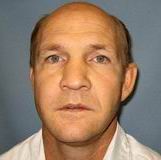
Jason Oric Williams
Spree killer Mark Barton
Spree killer · USA · 1999
Mark Orrin Barton (1955 – July 29, 1999) committed a spree killing in Stockbrid…
12 victims
Mark Barton
Spree killer · USA · 1999
Mark Orrin Barton (1955 – July 29, 1999) committed a spree killing in Stockbrid…
12 victims
 John Allen Muhammad
Spree killer · USA · 2002
John Allen Muhammad carried out the 2002 D.C. sniper attacks with his 17-year-o…
10 victims
John Allen Muhammad
Spree killer · USA · 2002
John Allen Muhammad carried out the 2002 D.C. sniper attacks with his 17-year-o…
10 victims
 Manuel Pardo
Spree killer · USA · 1986
Manuel Pardo, Jr. was a former police officer who was convicted of nine counts…
9 victims
Manuel Pardo
Spree killer · USA · 1986
Manuel Pardo, Jr. was a former police officer who was convicted of nine counts…
9 victims
 Michael Alan Silka
Spree killer · USA · 1984
Michael Alan Silka was killed during a shoot-out with the police on May 19, 198…
9 victims
Michael Alan Silka
Spree killer · USA · 1984
Michael Alan Silka was killed during a shoot-out with the police on May 19, 198…
9 victims
 Johnny Townsend
Murderer · USA · 1983
Johnny Townsend was sentenced to death on March 8, 1985. The case involved aggr…
2 victims
Johnny Townsend
Murderer · USA · 1983
Johnny Townsend was sentenced to death on March 8, 1985. The case involved aggr…
2 victims
 James Kraig Kahler
Mass murderer · USA · 2009
James Kraig Kahler resided in Columbia, Mo., after moving back to Kansas shortl…
4 victims
James Kraig Kahler
Mass murderer · USA · 2009
James Kraig Kahler resided in Columbia, Mo., after moving back to Kansas shortl…
4 victims
 Orlando Ganal
Mass murderer · USA · 1991
February 15, 1991 — Orlando Ganal Sr. injured his back while working at his job…
4 victims
Orlando Ganal
Mass murderer · USA · 1991
February 15, 1991 — Orlando Ganal Sr. injured his back while working at his job…
4 victims
 Ron Shamburger
Murderer · USA · 1994
Ron Scott Shamburger was executed by lethal injection in Texas on September 18,…
1 victim
Ron Shamburger
Murderer · USA · 1994
Ron Scott Shamburger was executed by lethal injection in Texas on September 18,…
1 victim
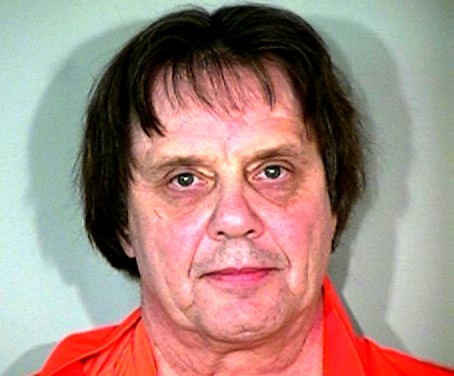 David Gulbrandson
Murderer · USA · 1991
David Gulbrandson and the 45-year-old female victim operated a photography busi…
1 victim
David Gulbrandson
Murderer · USA · 1991
David Gulbrandson and the 45-year-old female victim operated a photography busi…
1 victim
- Gender
- male
- Country
- USA
- Location
- Bentley County, Alabama, USA
- Date of birth
- April 18, 1968
- Age at first offence
- 24
- Characteristics
- shooting rampage, drugs, alcohol, rape?, rape, rapist
- Victim profile
- Gerald Paravicini, 46 / Freddie Barber, 50; Linda Barber, 45, and their son Bryan Barber, 22
- Method of murder
- Shooting (.22 rifle)
- Date(s) of murder
- February 15, 1992
- Years active
- 1992
- Date of arrest
- —
- Status
-
Executed
Executed by lethal injection in Alabama on May 19, 2011
Case details
Jason Oric Williams was executed by lethal injection in Alabama on May 19, 2011.
Timeline
- Feb. 15, 1992 — Williams went to the Paravicini home in Irvington and shot Gerald Paravicini; he then beat Paravicini's wife with a .22-caliber rifle and shot her 16-year-old son in the face; he later walked about 200 yards to the Barber home and shot Linda Barber and Freddie Barber; he then shot the Barbers’ 22-year-old son Bryan as he slept; his younger brother Brad was shot in the hand before he ran away; Williams stole the family van, cash, and credit cards and fled the scene.
- Feb. 16, 1992 — Williams reached the Mississippi-Louisiana border, called his ex-wife Sandra Ellzey, and was advised to surrender; after being apprehended, he told law enforcement that he had thrown the rifle off an unknown bridge into the water.
- Apr. 12, 1992 — Williams was indicted on two counts of capital murder.
- Nov. 10, 1992 — Trial occurred; Williams testified that he did not remember all the events of Feb. 14 and 15, 1992, and described drug use and hallucination.
- Nov. 11, 1992 — The jury returned guilty verdicts for capital murder and for attempted murder.
- Dec. 1, 1992 — The trial court sentenced Williams to death.
- May 19, 2011 — Williams was executed by lethal injection in Alabama.
Background
Williams was adopted by his aunt and uncle at infancy, and they did not disclose that they were not his biological parents. He grew up in poverty, performed poorly academically, and felt he was snubbed by his family and peers.
When Williams turned seventeen years old, he attempted to obtain identification documents so that he could work, and during that process learned that he was adopted. He began experimenting with alcohol and drugs such as LSD, crack, marijuana, ecstasy, and prescription medications.
Williams married Sandra Ellzey in 1990; they remained married for about ten months and divorced in 1991. Williams slapped Ellzey in the face, pulled her hair, and broke her glasses on a few occasions. After their divorce, he continued to live with Ellzey.
In January 1992, Ellzey discovered needles for drug use in her home and learned that Williams had been taking her tranquilizers. Ellzey asked Williams to leave, and when Ellzey forced Williams to move out, Gerald and Clair (“Clair”) Paravicini allowed Williams to move into their home with them and Clair’s minor son, Jeffery Carr.
Williams resided in the Paravicini home for approximately two weeks.
The offence
Paravicini home
After a night of bar hopping and ingesting crack cocaine, LSD, and alcohol, Williams returned to the Paravicini trailer in Irvington where he had been temporarily living with the family. After talking to his estranged wife on the phone, Williams grabbed a .22-caliber rifle and shot Gerald Paravicini. Williams then beat Paravicini’s wife with the gun and shot her 16-year-old son in the face.
Barber home
Williams then walked to a neighbor’s house about 200 yards away and gunned down Linda Barber, who was getting ready for work at the U.S. Postal Service, and Freddie Barber, who was drinking coffee in the kitchen. Williams then went into a bedroom and shot Bryan Barber as he slept. A younger brother, 16-year-old Brad, was shot in the hand before he ran away.
Items taken and escape
Williams stole the family van, cash, and credit cards and fled the scene.
Investigation and arrest
Williams was apprehended in Mississippi. He told law enforcement that he had thrown the rifle over a bridge and that he did not remember the shootings. He also told law enforcement officers that he had thrown the rifle off an unknown bridge into the water. He disposed of Freddie Barber’s wallet, after taking all the money it contained. He spent money stolen from the Barbers and Clair Paravicini on crack cocaine after leaving the crime scene.
Trial
Charges and verdicts
Williams was indicted on two counts of capital murder on April 12, 1992.
The jury returned guilty verdicts on:
- capital murder for the deaths of Gerald Paravicini, Freddie Barber, Linda Barber, and Bryan Barber; and
- attempted murder convictions involving Jeffery Carr and Brad Barber.
The jury recommended, by a 10–2 vote, that a death sentence be imposed for the murder convictions.
Defence and expert testimony
At trial, Williams presented a defence of not guilty by reason of a mental disease or defect, arguing that his mental defect resulted from ingesting illegal drugs in the hours before the killings combined with a preexisting mental disorder described as borderline personality disorder.
Dr. Claude L. Brown, a psychiatrist, met with Williams in August 1992 and testified for the defense. Dr. Brown diagnosed Williams with borderline personality disorder (“BPD”) and opined that Williams was psychotic at the time of the killings and suffering from a mental disease or defect that rendered him unable to appreciate the nature and quality or wrongfulness of his acts. Dr. Brown also opined that LSD causes frightening distortions and detachment from reality (psychosis), and that using alcohol and cocaine with LSD exaggerates these responses. Dr. Brown further opined that Williams’ BPD dated to childhood and was unrelated to drug use before the murders, and that BPD in and of itself probably did not trigger the conduct and that, had Williams been sober, the murders probably would not have occurred.
Dr. Harry McClaren, a psychologist, testified for the State. Dr. McClaren also diagnosed Williams with BPD, as well as with anti-social personality disorder and substance abuse. He testified that Williams was very intoxicated at the time of the killings, that psychosis resulting from LSD can last from eight to twelve hours, and that Williams’ amnesia was probably chemically induced. Dr. McClaren opined that, because Williams deliberately shot each victim twice in or near the head, Williams was able to appreciate the wrongfulness of his acts. He also opined that Williams knew the wrongfulness of his acts, and that without intoxication Williams probably would not have killed Gerald Paravicini or Linda and Freddie Barber’s son Bryan.
Williams’s testimony
Williams testified that he did not remember all the events of Feb. 14 and 15, 1992. He testified that he had a few beers with Ellzey and then drank a “pretty good bit” of beer after she dropped him off at another club. At the club, he purchased three hits of LSD for seven dollars ($7) each from someone he did not know and remembered taking two of them. He testified that he did not remember killing anyone and recalled going into the bathroom and beginning to feel scared. He testified that he saw the walls move and that he saw a larger-than-life apparition walking towards him that made him fear for his life.
Regarding the day of the killings, Williams testified that he began flipping out even before he called Ellzey and tried to disguise his drug use from her. He testified that he did not remember anything that occurred between the time that he dialed Ellzey and when he found himself driving a van in Mississippi a day later. He also testified he did not mention seeing the apparition to Mississippi or Alabama law enforcement on Feb. 16.
Sentencing
On December 1, 1992, the trial court sentenced Williams to death.
Williams made no special request for a final meal. He ate chicken wings and sandwiches from vending machines. Ten family members of the four victims witnessed the execution.
Appeals and habeas
Direct appeal to the Alabama Supreme Court
The Alabama Supreme Court affirmed Williams’s convictions and death sentence.
In the appeal, Williams challenged prosecutorial misconduct related to alleged abuse of the grand jury process. The Supreme Court concluded the district attorney did not call Ellzey before the May grand jury for the sole or dominant purpose of obtaining discovery and impeachment evidence for use during Williams’s capital murder trial, found no abuse of the grand jury process, and found no plain error. The Court also affirmed the judgment of the Court of Criminal Appeals affirming the convictions and sentence.
Federal habeas proceedings
Williams later filed a petition for writ of habeas corpus, and the United States District Court for the Southern District of Alabama denied the petition.
The United States Court of Appeals affirmed denial of the petition. The Court held that:
- defense counsel’s decision to present the affirmative defense of insanity, exclusive of voluntary intoxication, did not constitute ineffective assistance;
- alleged failure to further investigate voluntary intoxication defense or present expert psychopharmacologist did not deprive Williams of effective assistance;
- the state habeas court adjudicated the claim on the merits regarding jury instructions unconstitutionally shifting the burden of proof, requiring deference by the federal habeas court; and
- the jury instructions did not improperly shift the burden of proof.
Outcome
Williams was executed by lethal injection in Alabama on May 19, 2011.
Williams’s last words were: "I hope that the families of the victims forgive me for what I've done."
Other details
Williams’s DOC# was Z544, and he was at Holman Correctional Facility. The Department of Corrections spokesman Brian Corbett said Williams was pronounced dead at 6:19 p.m. local time at Holman Correctional Facility in Atmore, Alabama.
The Department of Corrections used pentobarbital in its lethal injection protocol. Defense lawyers challenged the use of pentobarbital, arguing it was not proven to cease consciousness or otherwise stop the ability to feel pain, and argued it violated the constitutional ban against cruel and unusual punishment. The U.S. Supreme Court denied a request for a stay of execution minutes before it began.
Williams’s belongings listed after execution included a Sanyo black-and-white TV, assorted pictures and letters, cosmetics, a brown leather Bible, a shaving mirror, and 18 postage stamps. Williams willed all of his possessions to Ellen Leeabel of Warrior, Alabama; it was unclear how they knew each other.
During a 1992 sentencing hearing, Williams’s mother Patricia Neal asked a jury not to recommend the death penalty, saying: "I just blame me because I was not a mother to my son like I should have been," and "Please don't kill my son."
Spotted an error, or have more information about this case?