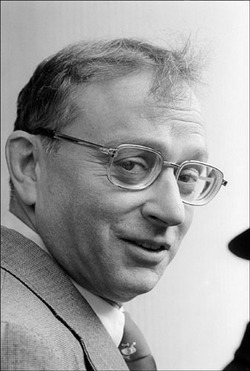
Dennis Sweeney
Homicide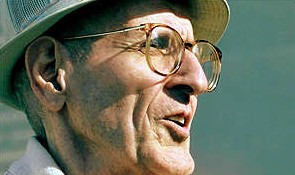 Jack Kevorkian
Homicide · USA · 1990
Jack Kevorkian (born May 26, 1928) was a controversial American pathologist. He…
130 victims
Jack Kevorkian
Homicide · USA · 1990
Jack Kevorkian (born May 26, 1928) was a controversial American pathologist. He…
130 victims
 Edward Charles Allaway
Homicide · USA · 1976
Edward Charles Allaway Edward Charles Allaway was found not guilty by reason of…
7 victims
Edward Charles Allaway
Homicide · USA · 1976
Edward Charles Allaway Edward Charles Allaway was found not guilty by reason of…
7 victims
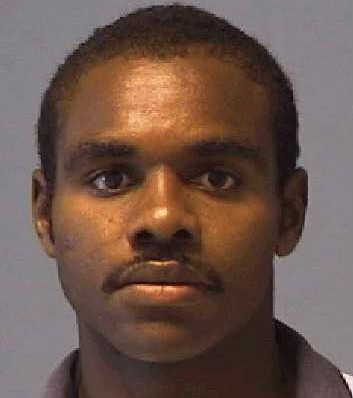 Clinton Bankston
Homicide · USA · 1987
15 August 1987 — Ann Morris (63), her sister Sally Nicholson (59), and Sally’s…
5 victims
Clinton Bankston
Homicide · USA · 1987
15 August 1987 — Ann Morris (63), her sister Sally Nicholson (59), and Sally’s…
5 victims
 Kim Dae-Han
Mass murderer · South Korea · 2003
Name: Kim Dae-Han · Age: 56 · Occupation/background: He was an unemployed forme…
198 victims
Kim Dae-Han
Mass murderer · South Korea · 2003
Name: Kim Dae-Han · Age: 56 · Occupation/background: He was an unemployed forme…
198 victims
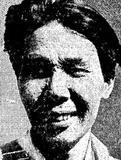 Leung Ying
Mass murderer · USA · 1928
Leung Ying (also known as Loy Yeung, Wong Gay, and Lim Onn) pleaded guilty to k…
11 victims
Leung Ying
Mass murderer · USA · 1928
Leung Ying (also known as Loy Yeung, Wong Gay, and Lim Onn) pleaded guilty to k…
11 victims
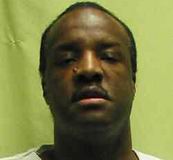 Donald Lavell Craig
Murderer · USA · 1995
Donald Lavell Craig was tried and convicted in Ohio for the rape and aggravated…
2 victims
Donald Lavell Craig
Murderer · USA · 1995
Donald Lavell Craig was tried and convicted in Ohio for the rape and aggravated…
2 victims
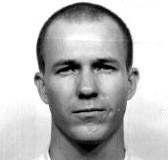 Johnny Dean Pyles
Murderer · USA · 1982
Johnny Dean Pyles (death row inmate; offender number “#724”) was executed by le…
1 victim
Johnny Dean Pyles
Murderer · USA · 1982
Johnny Dean Pyles (death row inmate; offender number “#724”) was executed by le…
1 victim
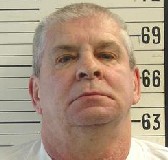 John Patrick Henretta
Murderer · USA · 1988
John Patrick Henretta was sentenced to death in Tennessee on April 6, 2002. · N…
2 victims
John Patrick Henretta
Murderer · USA · 1988
John Patrick Henretta was sentenced to death in Tennessee on April 6, 2002. · N…
2 victims
 Altemio Sanchez
Serial killer · USA · 1990
Altemio Sanchez was an American serial killer who murdered at least three women…
3 victims
Altemio Sanchez
Serial killer · USA · 1990
Altemio Sanchez was an American serial killer who murdered at least three women…
3 victims
- Gender
- male
- Country
- USA
- Location
- New York City, New York, USA
- Date of birth
- 1943
- Age at first offence
- 37
- Characteristics
- mentally ill, motive unclear
- Victim profile
- Allard Kenneth Lowenstein, 51
- Method of murder
- Shooting
- Date(s) of murder
- March 14, 1980
- Years active
- 1980
- Date of arrest
- Same day (surrenders)
- Status
-
Released
Found not guilty by reason of insanity and committed to full-time psychiatric treatment for schizophrenia in February, 1981; released from any level of custody in 2000
Case summary
Dennis Sweeney (born in 1943) was an anti-Vietnam War protestor and civil rights activist in the 1960s. He worked with SNCC in their voter registration drives in Mississippi.
During his time at Stanford University, he was the protegé of Allard Lowenstein, a political organizer who would later serve one term as a congressman from New York.
As described in the David Harris 1982 autobiographical book Dreams Die Hard, Sweeney succumbed to mental illness and became paranoid and delusional, believing that Lowenstein was the central figure in an elaborate plot against him.
Sweeney shot and killed Lowenstein in his New York City law office on March 14, 1980, after which he turned himself in to the police.
After being declared criminally insane in February, 1981, he was convicted and served eight years in the Mid-Hudson Psychiatric Center, New York's maximum security psychiatric hospital. He was moved to a lower-security psychiatric hospital, and eventually started being released for furloughs for increasing amounts of time. His diagnosis was that of paranoid schizophrenia.
Sweeney was ultimately released from any level of custody in 2000 over the objections of Lowenstein's family (who had previously opposed prosecutorial plans to seek a sentence of death for Sweeney), prosecutors and New York mental health professionals. At the time of his release, he had been off medication for six years and had been regularly given access to the community outside the hospital, being required to spend only one night every two weeks in the hospital.
Justice Brenda Soloff of the Supreme Court of the State of New York ruled that he was not a threat and ordered him released.
Timeline
- March 14, 1980 — Dennis Sweeney shot and killed Allard Lowenstein in his New York City law office; Sweeney turned himself in to the police.
- February, 1981 — Sweeney was found not guilty by reason of insanity and committed to full-time psychiatric treatment for schizophrenia.
- 2000 — Sweeney was released from any level of custody.
The offence
Dennis Sweeney shot and killed Allard Lowenstein in his New York City law office on March 14, 1980. Sweeney waited for the police to arrive and pleaded not responsible for the murder by reason of insanity.
A former Congressman and political organizer, Allard Lowenstein was murdered on March 14, 1980, at age 51.
Investigation and arrest
After the shooting, Sweeney turned himself in to the police.
Trial
Sweeney pleaded not responsible for the murder by reason of insanity.
The state did not dispute Sweeney’s insanity, and he was committed to the custody of the New York State mental health system.
Sentencing and custody history
Sweeney was committed to full-time psychiatric treatment for schizophrenia in February, 1981.
He served eight years in the Mid-Hudson Psychiatric Center, New York's maximum security psychiatric hospital. He was moved to a lower-security psychiatric hospital, and conditions were gradually relaxed. He was transferred to the Middletown Psychiatric Center, which was not a high-security hospital.
The record described increasing furloughs and that by 1992 he was on 16-hour-a-day furloughs. For the last five years before release, Sweeney reported to the hospital for only one night every two weeks, from midnight to 6 a.m., while still considered a full-time patient.
According to the court’s later release decision, the evidence supported release and Sweeney did not take psychiatric medication but did undergo regular therapy.
Appeals
Justice Brenda Soloff ordered Sweeney’s release.
Outcome
Sweeney was released from any level of custody in 2000.
Lowenstein’s family expressed disappointment with the court’s decision. Lowenstein’s family had opposed prosecutorial plans to seek a sentence of death for Sweeney.
Court ruling and quoted remarks
Justice Brenda Soloff wrote in her decision released late yesterday afternoon:
“In discussing whether or not Dennis Sweeney currently has a mental illness requiring inpatient care and treatment, we are in large part dealing with a question which has already been answered in the negative,” Justice Soloff wrote in her decision, which was released late yesterday afternoon. “Indeed, every issue raised comes up against that same initial stumbling block: for some six years, without medication, Dennis Sweeney has been building an ever more complex, satisfying and successful life in the community, permitted by mental health officials.”
Justice Soloff also wrote:
“My own observation of Mr. Sweeney showed me a very different person from the nearly affectless person of 14 years ago,” Judge Soloff wrote. “This Mr. Sweeney was engaged, responsive and, especially given the circumstances of having to listen to days of testimony about himself and to testify and be cross-examined, remarkably poised.”
Members of Lowenstein’s family declined an interview but released a statement through their lawyer, Thomas Engel:
“We are obviously disappointed with the court's decision in light of the strong case presented by the district attorney and the state commissioner of mental health,” the family said. “Whatever the eventual outcome of these proceedings, nothing can or will change what happened 20 years ago.”
Other details
At the time of the killing, Sweeney’s illness was diagnosed as paranoid schizophrenia.
The record described that Sweeney met Lowenstein in 1961 as a freshman at Stanford, where Lowenstein was a dean. Lowenstein’s work on civil rights and the antiwar movement had been cited as an inspiration, and Sweeney traveled to the South to take part in civil rights campaigns. Due to Sweeney’s illness, in later years he believed that Lowenstein was part of a Jewish cabal that had tormented him by sending messages through his dental work. Sweeney sought psychiatric treatment, but his illness worsened; he removed his bridgework with a hacksaw and eventually shot Lowenstein.
Sweeney remained in custody at the Mid-Hudson Psychiatric Center for eight years. As conditions were relaxed, he was transferred to the Middletown Psychiatric Center. The record stated that he worked in the community and was released on furloughs for increasing amounts of time.
Since 1992, Sweeney held a series of jobs in the area. He was described as having been a cabinetmaker and a woodworker, managed a woodworking store, and worked as an employment specialist.
The record described conditions of release included continued therapy and a prohibition on contacting certain people, including members of Lowenstein’s family. Prosecutors and mental health officials objected because it would make it harder to return Sweeney to custody in the future if needed.
Richard P. Miraglia, director of the Office of Mental Health's Bureau of Forensic Services, said that the average patient spent about six years in a maximum security facility. Miraglia said that in a comparison of sentences between inmates and psychiatric patients, “for the more serious offenses, it is comparable.”
The record included a discussion of a study by Dr. Stuart M. Kirschner of John Jay College for the Manhattan district attorney’s office: of 96,000 indicted felons between 1988 and 1997 in Manhattan, only 96 used a psychiatric defense; of those, only 41 succeeded.
Allard Kenneth Lowenstein (January 16, 1929 – March 14, 1980) was described as a liberal Democratic politician and a one-term congressman representing the 5th District in Nassau County, New York from 1969 until 1971. His work on civil rights and the antiwar movement had been cited as an inspiration by public figures including Congressmen John Kerry and Donald W. Riegle, Jr., Barney Frank, California gubernatorial candidate Phil Angelides, columnist William F. Buckley, Jr., actor Warren Beatty, White House Counsel under President Obama Gregory Craig, and songwriter Harry Chapin.
Lowenstein was described as a graduate of Horace Mann School in New York City and the University of North Carolina. As an undergraduate, Lowenstein was president of the National Student Association. Lowenstein received a J.D. from Yale Law School in 1954. After completing his law degree, Lowenstein became a college professor and administrator, holding posts at Stanford University, North Carolina State University, and City College of New York.
Lowenstein was described as having worked in 1949 as a special assistant on the staff of Senator Frank Porter Graham and as a foreign policy assistant on Senator Hubert H. Humphrey’s staff in 1959. In 1959, Lowenstein made a clandestine tour of South-West Africa (now Namibia) and collected testimony against the South African controlled government (South-West Africa was a United Nations Trust Territory). After his return, he spent a year promoting his findings to various student organizations, then wrote a book, A Brutal Mandate, with an introduction by Eleanor Roosevelt, with whom he had worked in 1957 at the American Association for the United Nations.
Lowenstein was described as being a delegate to the Democratic national convention in 1960. Along with Curtis Gans in 1967, and later that fall joined by Wisconsin’s Midge Miller, Lowenstein started the Dump Johnson movement and approached Robert F. Kennedy about challenging President Johnson in the 1968 Democratic primaries. When Kennedy declined, Lowenstein threw his support behind Eugene McCarthy, to whom he remained loyal even after Kennedy’s late entry into the race after Johnson bowed out.
Lowenstein was described as being elected to Congress in 1968, but being defeated in a modified district in 1970 by New York State Senator Norman F. Lent by 9,300 votes. The record described that Long Island’s generally liberal Five Towns had been removed from the district and the far more conservative Massapequa had been added, and that Lowenstein captured 46% of the vote in the new district. The record described the 1970 election as a referendum on President Richard Nixon’s conduct of the Vietnam War.
In 1971, Lowenstein became head of the Americans for Democratic Action and spearheaded the Dump Nixon movement, earning himself a place on Nixon’s Enemies List. In 1972, he ran unsuccessfully for Congress in Brooklyn against Congressman John J. Rooney; Rooney narrowly won the primary, but Lowenstein continued in the race on the Liberal Party line, finishing with 28% of the vote. After an abortive 1974 U.S. Senate bid, Lowenstein unsuccessfully challenged incumbent Republican Congressman John Wydler in 1974 and 1976.
The record described Lowenstein as a vocal critic of the unwillingness of Los Angeles and Federal authorities to reopen the investigation into the June 6, 1968 assassination of Senator Robert F. Kennedy.
Lowenstein’s one hour appearance on the PBS television show Firing Line in 1975, where he was interviewed by conservative William F. Buckley Jr., was described as one of the first times the American public were shown that many elements of ballistic and forensic evidence were radically at odds with eyewitness testimony and the assumption that Sirhan Sirhan alone had shot Senator Kennedy.
The record described that President Carter appointed Lowenstein as United States Representative to the United Nations Commission on Human Rights and thus head the United States delegation to the thirty-third regular annual session of the United Nations Commission on Human Rights in Geneva, Switzerland, in 1977. Lowenstein served with the rank of ambassador from August 1977 to June 1978 in the capacity of alternate United States Representative for Special Political Affairs to the United Nations. In 1978 he resigned to run for Congress again, narrowly losing the Democratic primary.
Lowenstein was described as being married to Jennifer Lowenstein (née Lyman, now Littlefield) from 1966 to 1977. The record said they had three children: Frank Graham, Thomas Kennedy, and Katharine Eleanor.
A veteran of the United States Army, Lowenstein was described as being buried in Arlington National Cemetery.
The record described that the Allard K. Lowenstein Civil Rights Scholarship was set up in his name by Hofstra University in 2007, and that Yale Law School has several programs named in honor of Lowenstein. The record also described that the Allard K. Lowenstein International Human Rights Project was founded in 1981 shortly after Lowenstein’s death to honor his contributions to the field of human rights and provide law students with a vehicle to continue his work. It described the Lowenstein Human Rights Clinic as an outgrowth of the Project and a clinical course in which law students participate in legal and advocacy research and writing projects for academic credit. Lowenstein’s papers were described as held as a special collection of the Long Beach (New York) Public Library.
Spotted an error, or have more information about this case?