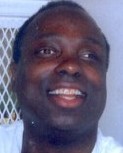
Rodney Rachal
Murderer Brian Kevin Rosenfeld
Murderer · USA · 1985
Brian Kevin Rosenfeld Brian Kevin Rosenfeld was sentenced to three concurrent l…
23 victims
Brian Kevin Rosenfeld
Murderer · USA · 1985
Brian Kevin Rosenfeld Brian Kevin Rosenfeld was sentenced to three concurrent l…
23 victims
 Yahweh ben Yahweh
Murderer · USA · 1980
Yahweh ben Yahweh was born and legally named Hulon Mitchell Jr. (October 27, 19…
23 victims
Yahweh ben Yahweh
Murderer · USA · 1980
Yahweh ben Yahweh was born and legally named Hulon Mitchell Jr. (October 27, 19…
23 victims
 Russell Ellwood
Murderer · USA · 1991
Russell Ellwood was a former taxi driver. Authorities suspected him of killing…
20 victims
Russell Ellwood
Murderer · USA · 1991
Russell Ellwood was a former taxi driver. Authorities suspected him of killing…
20 victims
 Robert Martines Perez
Murderer · USA · 1994
Name: Robert Martines Perez · Other name used in proceedings: Robert Martinez P…
15 victims
Robert Martines Perez
Murderer · USA · 1994
Name: Robert Martines Perez · Other name used in proceedings: Robert Martinez P…
15 victims
 Antonyo Gipson
Murderer · USA · 2006
Defendant: Antonyo Gipson (23), of the 1100 block of North Kedvale Avenue · All…
3 victims
Antonyo Gipson
Murderer · USA · 2006
Defendant: Antonyo Gipson (23), of the 1100 block of North Kedvale Avenue · All…
3 victims
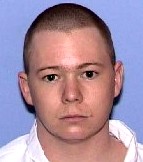 Chris Wayne Shuffield
Murderer · USA · 2001
Chris Wayne Shuffield was born on 03/26/1980. He received his sentence on Febru…
1 victim
Chris Wayne Shuffield
Murderer · USA · 2001
Chris Wayne Shuffield was born on 03/26/1980. He received his sentence on Febru…
1 victim
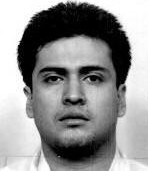 Carlos de Luna
Murderer · USA · 1983
Carlos de Luna was executed by lethal injection in Texas on December 7, 1989. H…
1 victim
Carlos de Luna
Murderer · USA · 1983
Carlos de Luna was executed by lethal injection in Texas on December 7, 1989. H…
1 victim
 Barry Lee Loukaitis
Homicide · USA · 1996
Barry Lee Loukaitis Barry Loukaitis was a convicted American murderer. He was b…
3 victims
Barry Lee Loukaitis
Homicide · USA · 1996
Barry Lee Loukaitis Barry Loukaitis was a convicted American murderer. He was b…
3 victims
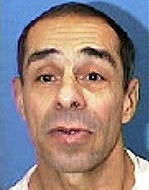 Bruce Charles Jacobs
Murderer · USA · 1986
Bruce Charles Jacobs was convicted of capital murder for killing Conrad Harris.…
1 victim
Bruce Charles Jacobs
Murderer · USA · 1986
Bruce Charles Jacobs was convicted of capital murder for killing Conrad Harris.…
1 victim
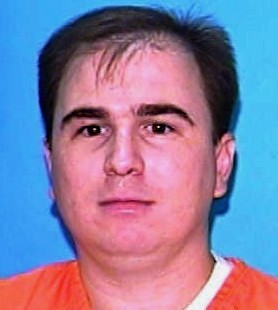 Eric Scott Branch
Murderer · 1993
Eric Scott Branch · 01/11/93 — Eric Scott Branch attacked Susan Morris in the u…
1 victim
Eric Scott Branch
Murderer · 1993
Eric Scott Branch · 01/11/93 — Eric Scott Branch attacked Susan Morris in the u…
1 victim
- Gender
- male
- Country
- USA
- Location
- Harris County, Texas, USA
- Date of birth
- April 29, 1970
- Age at first offence
- 20
- Characteristics
- robbery
- Victim profile
- Charles Washington
- Method of murder
- Shooting (.357 caliber handgun)
- Date(s) of murder
- October 25, 1990
- Years active
- 1990
- Date of arrest
- —
- Status
-
Sentenced to death
Sentenced to death on March 9, 1993
Parties and procedural posture
Rodney Charles Rachal was the petitioner-appellant in the United States Court of Appeals for the Fifth Circuit. Nathaniel Quarterman, Director, Texas Department of Criminal Justice, Correctional Institutions Division, was the respondent-appellee.
Rachal requested a certificate of appealability (COA) in this capital case to appeal the district court’s dismissal of his federal habeas petition under 28 U.S.C. § 2254. The Fifth Circuit denied Rachal’s request for a COA.
Timeline
- October 1990 — Rachal and several friends formed a plan to commit robbery.
- 1990 — Rachal shot and killed a man named Charles Wilson.
- 1992 (October) — A jury convicted Rachal of capital murder.
- 1993 (March 9) — Rachal was sentenced to death.
- 1996 — The Texas Court of Criminal Appeals affirmed the conviction and sentence in Rachal v. State, 917 S.W.2d 799 (Tex. Crim. App. 1996).
- 1996 — The Supreme Court denied review in Rachal v. Texas, 519 U.S. 1043 (1996).
- March 1997 — Rachal filed his initial state habeas petition.
- October 2004 — The lower state habeas court issued findings of fact and conclusions of law.
- March 2005 — The Texas Court of Criminal Appeals adopted the lower court’s findings and conclusions and denied habeas relief.
- 2005 — The district court dismissed Rachal’s federal habeas petition and sua sponte denied a COA on all issues.
- February 14, 2008 — Appeal in the Fifth Circuit in case No. 07-70016, with the COA request denied.
Background
Rachal requested a certificate of appealability (COA) to appeal the district court’s dismissal of his federal habeas petition under 28 U.S.C. § 2254.
Rachal asserted 22 grounds for relief in his federal habeas petition. The district court held that most of the claims were procedurally barred because Rachal did not raise them in state court. In the alternative, the district court held that none of Rachal’s claims warranted relief on the merits. The district court dismissed the federal habeas petition and sua sponte denied a COA on all issues.
Rachal applied to the Fifth Circuit for a COA on six issues: two requests for a stay and abeyance to exhaust state court remedies, two claims of ineffective assistance of counsel, a Penry objection, and an evidentiary objection related to the punishment phase.
In the discussion of standards, the Fifth Circuit noted that Rachal’s § 2254 petition was subject to the Antiterrorism and Effective Death Penalty Act of 1996 (AEDPA). Under AEDPA, Rachal had to obtain a COA before appealing the denial of habeas relief. The court explained that a COA would issue only if the petitioner made a substantial showing of the denial of a constitutional right, and it applied the standard that reasonable jurists could debate whether the petition should have been resolved differently.
The offence
In October 1990, Rachal and several friends formed a plan to commit robbery. The group traveled to an apartment complex known for a high rate of pedestrian traffic. Rachal and two others laid in ambush while two female members of the group, dressed seductively, lured three men to where the others were waiting.
Rachal confronted the victims with a .357 caliber handgun, ordered them to lie down, and began searching them. Two bystanders noticed the robbery in progress and attempted to run away. Rachal ordered his accomplices to stop them, and shots were fired at the fleeing men.
Without provocation, one of Rachal’s accomplices then shot one of the prostrate victims in the back, killing him. Rachal, also without provocation, shot the other two robbery victims in the head, killing one of them.
As Rachal left the scene, he encountered another bystander, who became his fourth victim. Rachal robbed the man and ordered him to kneel. Fearing execution, the man pleaded for his life instead. Rachal shot him in the lower chest and abdomen, and the man survived.
Investigation and arrest
Rachal was arrested a few days later in possession of a .357 caliber handgun. He provided the police with a detailed written confession, which was admitted at trial.
Trial
A jury convicted Rachal of capital murder in October 1992.
At the punishment phase, the defense called several witnesses, including family members who testified to Rachal’s difficult childhood, and law enforcement and prison employees who testified to Rachal’s good behavior.
The court submitted two special issues to the jury. The issues asked whether Rachal committed the crime deliberately and whether he would pose a continuing threat to society. The jury answered both special issues in the affirmative.
Rachal was sentenced to death.
Sentencing
Rachal was sentenced to death, consistent with the jury’s affirmative answers to the two special issues about deliberateness and continuing threat.
Appeals
Rachal appealed his conviction and sentence. The Texas Court of Criminal Appeals affirmed the conviction and sentence in Rachal v. State, 917 S.W.2d 799 (Tex. Crim. App. 1996). The Supreme Court denied review in Rachal v. Texas, 519 U.S. 1043 (1996).
Rachal filed his initial state habeas petition in March 1997. The lower state habeas court issued findings of fact and conclusions of law in October 2004. After reviewing the record, the Texas Court of Criminal Appeals adopted the lower court’s findings and conclusions and denied habeas relief in March 2005.
Rachal then filed a federal habeas action. In that action, he asserted 22 grounds for relief.
In the federal proceedings, the district court dismissed the habeas petition and sua sponte denied a COA on all issues. Rachal then sought a COA from the Fifth Circuit on six issues.
Outcome
The court held that Rachal did not show that reasonable jurists would disagree with the district court’s resolution of his claims, and it did not conclude that the district court abused its discretion in denying a stay and abeyance.
COA issues addressed by the court
Unexhausted claims
The court treated most of Rachal’s claims as procedurally barred due to failure to exhaust state remedies.
One unexhausted claim concerned ineffective assistance of trial counsel for not discovering and presenting more mitigating evidence at the punishment phase. Rachal argued his attorney should have presented more evidence regarding Rachal’s difficult upbringing, troubled family, and medical difficulties. The Fifth Circuit agreed with the district court that this evidence was largely cumulative of testimony provided by the six defense witnesses called at the punishment phase. The court further found that Rachal did not raise the claim on direct appeal or in his state habeas proceedings and had not shown cause to excuse the failure to do so. The court denied COA.
Another unexhausted claim challenged the Texas “special issues” jury instructions as providing an inadequate vehicle for considering all relevant mitigating evidence at the punishment phase, described as a Penry-related claim. The court found that Penry v. Lynaugh was decided before Rachal’s trial in 1992, and that the Texas legislature amended section 37.071 of the Texas Code of Criminal Procedure in 1991 to conform with Penry’s requirements. The court found that if Rachal believed the jury instructions were inconsistent with Penry or Texas law, he could have raised the claim on direct appeal and in state habeas proceedings, but he did neither and made no showing of cause. The court denied COA.
The court also addressed Rachal’s asserted reasons for procedural default. Rachal argued that his AIDS-related illness prevented him from assisting his attorney with writing the state habeas brief. The court held that this did not constitute grounds for relief, and to the extent it was offered as cause for failure to exhaust substantive claims, Rachal had not exhausted this excuse in state court. The court cited Edwards v. Carpenter, 529 U.S. 446, 453 (2000).
The court also stated that ineffectiveness of state habeas counsel was not a ground for excusing procedural default, citing 28 U.S.C. § 2254(i) and Jones v. Johnson, 171 F.3d 270, 277 (5th Cir. 1999).
Requests for stay and abeyance
The court discussed that in some circumstances a federal court may retain jurisdiction over meritorious claims and stay proceedings pending complete exhaustion of state remedies on other claims, citing Rhines v. Weber, 544 U.S. 269, 275 (2005).
First, Rachal sought a stay and abeyance to challenge the Texas lethal injection protocol. The Fifth Circuit stated that claims challenging the method of execution could not be raised in a habeas proceeding because they do not concern the fact or duration of a sentence, citing Hill v. McDonough, 126 S. Ct. 2096, 2102 (2006). It noted that the district court had dismissed this habeas challenge without prejudice so that Rachal could advance arguments in federal court under 42 U.S.C. § 1983 or in state court if he wished. The Fifth Circuit agreed this decision was not incorrect.
Second, Rachal sought a stay and abeyance so he could exhaust ineffective assistance of counsel claims in state court. The Fifth Circuit stated it could not address this because Rachal never requested the stay and abeyance from the district court, citing Johnson v. Puckett, 176 F.3d 809, 814 (5th Cir. 1999). The court said the decision neither erred nor abused discretion.
Claims not entirely defaulted
The court addressed two issues that were not entirely barred.
- Single attorney for the defense Rachal argued that the trial court violated his right to effective legal assistance by appointing only one attorney for his defense. The court noted that Rachal raised this claim in state habeas review, but the state court held it was procedurally barred under Texas law for failure to raise it on direct appeal, citing Ex parte Gardner, 959 S.W.2d 189, 199 (Tex. Crim. App. 1996). The district court had also applied procedural bar reasoning. The Fifth Circuit stated that even if Gardner was an adequate and independent state ground, it was not clear that the Gardner rule was firmly established early enough to result in a federal procedural bar. It therefore proceeded to the alternative merits analysis.
The Fifth Circuit stated the district court held in the alternative that appointing only one lawyer did not violate Rachal’s constitutional rights. The Fifth Circuit noted that Rachal cited sources including changes in Texas law after 2001, federal law governing capital trials, and American Bar Association standards, but he did not cite authority showing clearly established federal law as determined by the Supreme Court of the United States required the appointment of a second attorney in this capital murder trial. The Fifth Circuit stated that courts recognized there was no constitutional right per se to appointment of co-counsel in a capital case, citing Sosa v. Dretke and Riley v. Taylor.
The Fifth Circuit applied Strickland v. Washington, 466 U.S. 668, 687-88 (1984) and explained that under the prejudice prong, Rachal could not establish denial of effective assistance unless the deficient performance affected the outcome of either phase. It noted that Rachal conceded the guilt phase was a “forgone conclusion” due to his own confession and the evidence against him, and he did not contend additional counsel would have altered the jury’s guilty verdict. For the punishment phase, the court stated Rachal did not make a timely effort to show more mitigating evidence was available and would have affected his sentence, and his claims on this point were procedurally barred as previously explained. The Fifth Circuit therefore denied COA.
- Admission of evidence of another unindicted homicide The final issue addressed was the trial court’s decision at the penalty phase to admit evidence that Rachal committed another, unindicted homicide. The Fifth Circuit stated Rachal exhausted this claim insofar as he argued that admission violated due process rights.
The court stated that it would not grant habeas relief based on a state court evidentiary ruling unless it violated a specific constitutional right or was so egregious that it rendered the trial fundamentally unfair, citing Brown v. Dretke.
The district court had denied relief, noting Fifth Circuit precedent that admission of unadjudicated offenses at the punishment phase did not violate due process rights, citing Beazley v. Johnson. The district court also concluded evidence of the unindicted homicide was relevant to future dangerousness, citing Williams v. Lynaugh.
The Fifth Circuit set out the facts. In May 1990, months before the murder in this case, Rachal shot and killed Charles Wilson. The killing was presented to a grand jury, which refused to indict Rachal, returning a “no-bill.” At the punishment phase of the trial after Rachal had been convicted of murder, the prosecution presented testimony from a police officer concerning the facts of the Wilson killing.
After the police officer testified, Rachal called the prosecutor who had presented the Wilson case to the grand jury. The prosecutor testified that, in his view, the facts of the Wilson homicide were consistent with self-defense, and that the “evidence was such that a fair jury would probably have concluded that it was self-defense.”
In closing argument, the state pointed out that just months after killing Wilson, arguably in self-defense, Rachal deliberately committed armed robbery and killed another man.
Rachal argued the trial court erred in admitting evidence of this unindicted homicide at the penalty phase because it was “legally justified conduct.” The Fifth Circuit noted the district court concluded Rachal overstated the meaning of a no-bill when claiming the Wilson killing was “justified” or “lawful.” It referenced the state appeals court’s statement on direct review that the grand jury’s no-bill did not mean the killing was justified, lawful, or in self-defense, and explained that a no-bill was merely a finding that the specific evidence brought before that grand jury did not convince it to formally charge the accused with the alleged offense.
The Fifth Circuit concluded Rachal had not shown why the Wilson killing should have been treated differently from other unadjudicated conduct admissible at the penalty phase, citing Harris v. Johnson. The court also stated that even if the Wilson killing was justifiable self-defense, it remained relevant to future dangerousness. It quoted reasoning from the state court observation that Rachal knowingly and willingly placed himself in, and sought after, circumstances facilitating homicide soon after Wilson’s killing, demonstrating callousness and lack of reflection about taking human life and tending to increase the probability that he was a future danger. It further cited Jurek v. Texas.
The Fifth Circuit stated the jury was presented with the entire truth about the Wilson homicide, including the prosecutor’s opinion that it may have been self-defense and its proximity to the robbery and murder Rachal deliberately committed shortly thereafter. It concluded admission of this evidence was not so egregious as to violate the Constitution. It therefore denied COA.
Other details
The Fifth Circuit’s opinion stated that, pursuant to 5TH CIR. R. 47.5, the opinion should not be published and was not precedent except under limited circumstances.
The court noted a “miscarriage of justice” exception could be used to overcome procedural default by showing actual (as opposed to legal) innocence, citing Calderon v. Thompson. It stated the exception was not implicated because Rachal did not argue he did not commit the crime.
The court discussed that Rachal’s counsel on appeal was not the same attorney who represented him at trial.
The court rejected Rachal’s reliance on Selvage v. Collins, explaining that Selvage excused failure to raise a Penry claim in state court only when the alleged error occurred prior to Penry v. Lynaugh being decided, and that the authority relied upon was well-established at the time of trial.
The court also discussed Rachal’s failure to raise his AIDS argument in state court, stating it could itself be excused upon proper cause and prejudice, but that Rachal made no showing he could not have raised the AIDS argument before the state court prior to seeking federal habeas relief.
In its discussion of Rhines, the court noted a procedural ruling like Rhines should be reviewable for abuse of discretion and did not require a COA, citing Dunn v. Cockrell, while referencing Neville v. Dretke.
The court noted that in the district court, Rachal filed a Motion to Stay and Abey Proceedings seeking to return to state court to exhaust two specific issues: a challenge to the lethal injection protocol and a claim concerning changes in Texas law allowing imposition of a life sentence without parole. Before the Fifth Circuit, Rachal renewed only the first request.
Rachal referred to his argument about appointing only one defense attorney as “court-induced ineffective assistance of counsel.”
The Fifth Circuit addressed exhaustion related to constitutional theories for the punishment-phase evidentiary claim. It stated that in the state habeas petition, Rachal argued only that admission of the testimony deprived him of “due process and due course of law.” Later, in his federal habeas petition, he made a brief argument that the testimony violated his “6th, 8th, 13th and 14th amendment rights under the Constitution.” The Fifth Circuit agreed with the court below that the federal claim was unexhausted insofar as it relied on legal theories distinct from those stated in state court and stated it considered only Rachal’s due process arguments on this point, citing Finley v. Johnson.
Spotted an error, or have more information about this case?