
Barry Lee Loukaitis
Homicide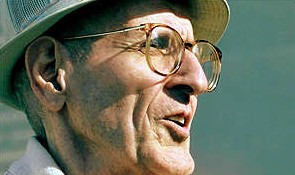 Jack Kevorkian
Homicide · USA · 1990
Jack Kevorkian (born May 26, 1928) was a controversial American pathologist. He…
130 victims
Jack Kevorkian
Homicide · USA · 1990
Jack Kevorkian (born May 26, 1928) was a controversial American pathologist. He…
130 victims
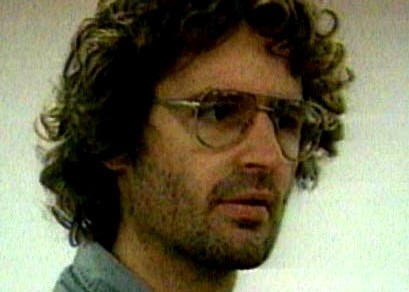 David Koresh
Homicide · USA · 1993
David Koresh (born Vernon Wayne Howell; August 17, 1959 – April 19, 1993) led t…
79 victims
David Koresh
Homicide · USA · 1993
David Koresh (born Vernon Wayne Howell; August 17, 1959 – April 19, 1993) led t…
79 victims
 Todd Hall
Homicide · USA · 1996
Todd Hall was described by neighbors as "mentally slow" and was said to have su…
9 victims
Todd Hall
Homicide · USA · 1996
Todd Hall was described by neighbors as "mentally slow" and was said to have su…
9 victims
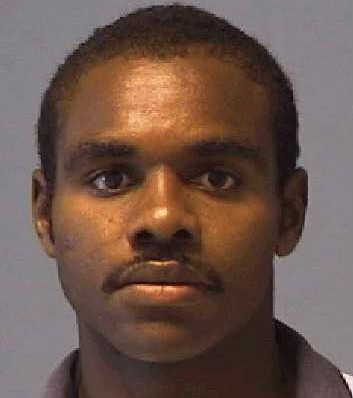 Clinton Bankston
Homicide · USA · 1987
15 August 1987 — Ann Morris (63), her sister Sally Nicholson (59), and Sally’s…
5 victims
Clinton Bankston
Homicide · USA · 1987
15 August 1987 — Ann Morris (63), her sister Sally Nicholson (59), and Sally’s…
5 victims
 Joshua Jenkins
Homicide · USA · 1996
Joshua Jenkins was a 15-year-old American killer who killed five members of his…
5 victims
Joshua Jenkins
Homicide · USA · 1996
Joshua Jenkins was a 15-year-old American killer who killed five members of his…
5 victims
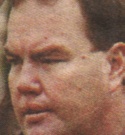 Matthew Grant Webster
Murderer · Australia · 1989
Matthew Grant Webster was described as the man who raped and murdered Newcastle…
1 victim
Matthew Grant Webster
Murderer · Australia · 1989
Matthew Grant Webster was described as the man who raped and murdered Newcastle…
1 victim
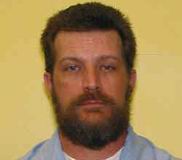 Robert Cordell
Murderer · USA · 2002
Robert Cordell was an Ohio man who pleaded guilty and was sentenced to 81 years…
3 victims
Robert Cordell
Murderer · USA · 2002
Robert Cordell was an Ohio man who pleaded guilty and was sentenced to 81 years…
3 victims
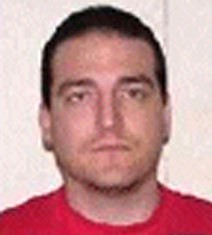 Vincent Stopher
Murderer · USA · 1997
Name: Vincent Stopher · Date of birth: 7-11-72 · Place: Jefferson County · Marc…
1 victim
Vincent Stopher
Murderer · USA · 1997
Name: Vincent Stopher · Date of birth: 7-11-72 · Place: Jefferson County · Marc…
1 victim
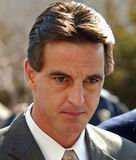 Daniel Pelosi
Murderer · USA · 2001
Daniel Pelosi (born 2 August 1963 in Center Moriches, New York) was convicted o…
1 victim
Daniel Pelosi
Murderer · USA · 2001
Daniel Pelosi (born 2 August 1963 in Center Moriches, New York) was convicted o…
1 victim
- Gender
- male
- Country
- USA
- Location
- Moses Lake, Washington, USA
- Date of birth
- February 26, 1981
- Age at first offence
- 15
- Characteristics
- juvenile (14), school shooting, rape, arsonist, escape attempt
- Victim profile
- Leona Caires (his algebra teacher) and Arnold Fritz, Jr. and Manuel Vela, both 14 (students)
- Method of murder
- Shooting
- Date(s) of murder
- February 2, 1996
- Years active
- 1996
- Date of arrest
- Same day
- Status
-
Life imprisonment
Sentenced to serve two life sentences and an additional 205 years without the possibility of parole on October 10, 1997
Case identification
Barry Lee Loukaitis
Background
Barry Loukaitis was a convicted American murderer. He was born February 26, 1981. He spent the early part of his life in Iowa and Minnesota and moved to Washington in fifth grade. His parents owned and operated a sandwich and ice-cream shop in Moses Lake. Barry Loukaitis was born to Terry Loukaitis and Joann Phillips.
His parents separated in 1995 after his mother discovered her husband was having an affair. Jo Ann Phillips became increasingly distant and often spoke of suicide, frequently implying that Barry would also have to kill himself. She informed Barry in January of 1996 that the date of a double-suicide would be Valentine’s Day. Barry convinced his mother out of doing so by having her write down her feelings. It was widely believed that Loukaitis suffered severe bullying at the school, and those who knew him claimed he complained of being beaten by other students, teased and harassed, and having his head stuffed in toilets. On one occasion he was held down by one student while another student urinated on him. Loukaitis claimed that he only intended on killing Manuel Vela and that the other deaths were accidental. He claimed that he wanted to enact revenge on Vela for calling him a "fag" a few days before the shooting.
Loukaitis suffered from clinical depression. The narrative also states that clinical depression was present in the last three generations of the Loukaitis family and last four generations of the Phillips family. Loukaitis had hyperactivity and was taking Ritalin at the time of the shooting.
The narrative also describes family history of depressive illness and Barry’s deteriorating mental health.
The offence
On February 2, 1996, Barry Loukaitis was 14 when he dressed up like a wild west style gunslinger and dressed as a wild west-style gunslinger and was wearing a black duster and a long black trench coat. He carried concealed pistols, a high powered rifle, and carried almost 80 rounds of ammunition. He strapped additional ammunition to his chest and waist with belts and packed a speed loader for a revolver. He wore a long black trench coat with the inside pocket removed so that he could carry the rifle unseen.
At Frontier Junior High School in Moses Lake, Washington, United States, classes began two hours late due to intense cold weather and all classes were shortened to make up for the delay. Loukaitis did not attend morning classes. Instead, he armed himself with his father’s 30/30 lever-action rifle, a .22 revolver, and a .25 semiautomatic pistol. All three guns were loaded. He walked to school instead of taking the bus and walked the distance between his house and the middle school.
Outside fifth period algebra class, he cocked the lever-action rifle and stepped into the room. The narrative states he shot Manuel Vela almost point blank, and then shot Arnold Fritz and Natalie Hintz as they tried to drop to the floor beside their desks. The narrative also states that when the teacher, Leona Caires, exclaimed, "No, no," Loukaitis turned and shot her in the back as she tried to hide behind her desk; she died almost instantly. The narrative states that Loukaitis shot a girl in the arm. It also states that as his classmates began to panic, Loukaitis reportedly said, "This sure beats algebra, doesn't it?", described as a quote from the Stephen King novel Rage, and later in the appeal decision it records that he said, "This sure beats the hell out of algebra, doesn't it?"
The narrative states he killed two students: Manuel Vela and Arnold Fritz. It also states he severely wounded Natalie Hintz, including gunshot wounds to the right arm and abdomen, and that she underwent extensive surgery and survived while almost losing her arm and remaining impaired. The narrative also states the school physical education teacher Jonathon Lane heard the gunshots and ran into the classroom. It describes that Loukaitis held classmates hostage and organized the class, read off the class roll, and told students to arrange themselves in seats at the back of the room. He was irritated by police interruptions, yelled he would start killing people if the officers did not shut up, threw the telephone to the floor when police called, and said he needed a hostage because of snipers. The narrative states he pulled out a black plastic bag, fixed it over the end of the rifle muzzle with rubber bands, and told Mr. Lane to put it in his mouth. Mr. Lane resisted, grabbed the gun barrel, pinned Loukaitis against the wall, yelled for the students to run, then helped with evacuation. Loukaitis allowed Lane to help Ms. Hintz out the door and later let out a diabetic girl having blood sugar problems. When a student called out that Mr. Fritz was in bad shape, Loukaitis said something like, "Just let him die," but then allowed Mr. Lane and two other students to drag Mr. Fritz out of the room. Police had been summoned and were attempting to talk with Loukaitis through the door. After police pushed through students and tackled Loukaitis, officers handcuffed him, removed his guns and ammunition, read him his rights, and took him to the station.
A later search of the scene discovered earplugs Loukaitis had worn during the shootings. After a taped interview and giving a taped interview to police, Loukaitis went to his cell, curled up on his bunk, and fell asleep with a blanket over his head.
The narrative states a total of 3 people died, and it describes that Loukaitis blamed mood swings.
Investigation and arrest
After the physical education teacher Jonathon Lane entered the classroom, Loukaitis was disarmed and tackled, and Lane kept him subdued until police arrived. Police disarmed and handcuffed Loukaitis, led him to a patrol car, and read him his Miranda rights.
At the police station, Loukaitis was strip-searched and led to an interview room. The interview, conducted by Sergeant Dave Ruffin, began almost immediately and ran for about 25 minutes. Ruffin asked basic information about Loukaitis’s identity and background and discussed parents being notified. Loukaitis signed a form indicating he understood and waived each right and understood that his statements could be used in either juvenile or adult court. Just before he signed, Loukaitis asked if his parents could be in the interview room, saying, "I at least wanna talk to em." The officer said, "I'll see if I can get your parents here{.}"
During the interview, after assuring the officer he was not tricked, Loukaitis answered questions about the shootings. Halfway through the interview, Ruffin asked if he wanted to call his parents. Loukaitis responded that he might do that later. Ruffin asked if he wanted a lawyer. Loukaitis indicated he did not see the point in calling one and said he did not like lawyers much. Loukaitis later indicated he wanted to let his parents know what was happening but did not want them there.
In a later summary of the interview, it states that just before he signed the waiver he asked to talk to his parents; the officer said they would see if they could do that but should finish paperwork first. It states he was read Miranda rights, waived them, and did not request an attorney or assert his right to remain silent.
Trial
Charges and plea
On February 5, 1996, the State filed information charging Loukaitis with 3 counts of first degree aggravated murder in juvenile court. Defense motions to seal the record were denied. The State moved to decline juvenile court jurisdiction.
After continuances, the declination hearing was held in September 1996 and juvenile court jurisdiction was declined. The information filed September 27 in adult court added 1 count of first degree assault to the charges. On October 31, the State filed an amended information containing 22 counts including 16 counts of kidnapping and 1 count of attempted murder. Two more amendments followed, one in August 1997 and another during trial in September 1997.
Loukaitis pleaded insanity and claimed that "mood swings" were the cause of his violent actions. He pleaded not guilty by reason of insanity.
Evidence and witness testimony
During trial, it was described that jurors heard testimony from psychiatrist Joan Petrich. She testified that Loukaitis had been experiencing delusional and messianic thoughts before the shooting. The narrative quotes her testimony:
"He felt like he was God and would laugh to himself. He felt he was superior to other people, and then those feelings were later replaced by hate, disdain, and not measuring up."
Prosecutors argued Loukaitis carefully planned the shooting and got ideas from the Pearl Jam song "Jeremy" and other materials. It states prosecutors Donna Wise and John Knodell argued that Loukaitis had carefully planned the shooting, getting ideas from the Pearl Jam song Jeremy. It states the music video from Jeremy shows a troubled youth committing suicide in front of his teacher and classmates. It also states the prosecution said he got ideas from the Stephen King novel Rage and the films Natural Born Killers and The Basketball Diaries. Loukaitis also stated he tried to model his life after the novel’s protagonist Charlie Decker, who kills two teachers and takes his algebra class hostage.
During the appeal decision’s description of evidentiary issues, it recorded that Rage is a novel about a high school boy who takes an algebra class hostage and kills two teachers. It recorded that at one point during his siege Loukaitis said, "This sure beats the hell out of algebra, doesn't it?" and that a defense witness noted the protagonist in Rage made a remarkably similar statement. It also recorded that Loukaitis told a witness it would be fun to go on a killing spree and try to get away with it, like the characters did in Natural Born Killers.
The appeal decision also recorded that the trial court permitted evidence including prior threats and lay opinion testimony about demeanor. It recounted that a man who worked in Moses Lake testified he saw Loukaitis walking toward school that day with a "determined" look. It also recounted that one of the officers who arrested Loukaitis described him as "{v}ery sarcastic, calm, cold-blooded." It noted that defense counsel objected to both statements.
It further recorded that in a tape-recorded confession to police the day of the attack, the boy said that after he shot Vela, the "reflex took over."
Declination and jurisdiction
It was described that in June 1996, the Spokane Court of Appeals was to decide whether Loukaitis should be tried as an adult or juvenile. On July 2, three members of the Spokane Court of Appeals convinced Judge Evan Sperline to allow court-appointed psychiatrist Joan Petrich to present testimony based on Loukaitis’s mental health. The trial was later moved to Seattle due to media publicity.
Sentencing
On September 24, 1997, Loukaitis was convicted of two counts of first-degree murder, one count of second-degree murder, one count of first-degree attempted murder, and 16 counts of aggravated kidnapping. In the appellate decision, the jury was found guilty of 2 counts of first degree aggravated murder (Manuel Vela and Arnold Fritz), 1 count of second degree murder (Leona Caires), 1 count of first degree assault (Natalie Hintz), 16 counts of first degree kidnapping, and 1 count of second degree assault (Jonathon Lane). All counts included a firearm enhancement. The narrative states he was sentenced to serve two mandatory life terms without parole plus 205 years.
The sentencing described that he received life imprisonment without parole for the two aggravated first degree murder counts and maximum terms for the other counts, ranging from 224 months on the second degree murder count to 120 months on the second degree assault count. It states these terms included five years for the firearm enhancement for each count except the second degree assault, which included three years for the firearm enhancement. Each term was set to run consecutively.
Appeals
The Washington State Court of Appeals denied Loukaitis’s request for a new trial in 1999.
The appeal decision titled "IN THE COURT OF APPEALS OF THE STATE OF WASHINGTON" includes No. 17007-1-III, State of Washington, Respondent, v. Barry D. Loukaitis, Appellant. The appeal was filed November 16, 1999, appeal from Superior Court of Grant County. The decision states that Loukaitis was convicted in a jury trial of aggravated murder, assault and kidnapping, and he was sentenced to life without parole. On appeal he challenged the juvenile court’s decision to decline jurisdiction and contended he was entitled to reversal due to the prosecutor’s conflicts of interest, the admission of his post-arrest statements, and the admission of other prejudicial evidence. He also assigned error to the trial court’s orders amending the information and to his sentence. The opinion states: "We affirm." It recorded "Affirmed." It also described prosecutorial conflict of interest, declination of juvenile jurisdiction, admission of pretrial statements, admission of other evidence, amendments to the information, sufficiency of the evidence, and sentencing arguments under the Eighth Amendment. It discussed the firearm enhancements and concluded the firearm enhancements were correctly applied and that the cumulative error argument failed.
Outcome
Loukaitis was convicted by a jury on September 24, 1997, and was sentenced to serve two life sentences and an additional 205 years without the possibility of parole on October 10, 1997.
Other details
People named in the case
- Barry Lee Loukaitis
- Manuel Vela (born March 2, 1981)
- Arnold Fritz (born 1981)
- Leona Caires (b. 1947)
- Natalie Hintz (13-year-old)
- Jonathon Lane (gym coach / physical education teacher)
- Alice Fritz (mother of victim Arnold Fritz)
- Walter Darden (fellow-student)
- Terry Loukaitis (father)
- Joann Phillips (mother)
- Garth Dano (attorney)
- Douglas Earl (headed The Defenders)
- Michael Frost (private attorney)
- Donna Wise (prosecutor)
- John Knodell (prosecutor)
- Joan Petrich (court-appointed psychiatrist)
- Judge Evan Sperline
- Judge Michael Cooper
- Sergeant Dave Ruffin (interviewing officer)
- Dr. Julia Moore (chief expert witness for the defense)
- Richard Bachman (nom de plume of Stephen King, referenced in relation to Rage)
- Stephen King (referenced in relation to Rage)
- Eddie Vedder (referenced in relation to the song Jeremy)
- Ronald K. Fitten (writer name appears in the narrative around the Seattle Times)
Victims and injuries as described
The narrative states 3 people died: Manuel Vela, Arnold Fritz, and Leona Caires. It also states that Natalie Hintz was wounded and survived after extensive surgery and remained impaired. It also states that the incident involved a hostage situation for a short amount of time and then a siege that lasted about 10 minutes before Jon Lane subdued Loukaitis.
Quotations included in the record as described
- "This sure beats algebra, doesn't it?"
- "This sure beats the hell out of algebra, doesn't it?"
- "Either verdict would have been a tragedy," said Alice Fritz, mother of victim Arnold Fritz. "There's no happy ending here.''
- "I guess he finally got sick of it," said fellow-student Walter Darden.
- "No, no," was spoken by Leona Caires when she exclaimed.
- "Just let him die," was said something like when Fritz was in bad shape.
- "I know my rights, man."
- "I at least wanna talk to em."
- "He felt like God and would laugh to himself. He felt he was superior to other people, and then those feelings were later replaced by hate, disdain, and not measuring up."
- He felt he was superior to other kids . . . and then (his feelings of superiority) were replaced" by hate, disdain and a sense of not measuring up... "He was under the influence of his psychosis and it was distorting his thinking, twisting his thinking," and was unable to determine right from wrong at the time of the killings.
- "reflex took over" (as recorded in a tape-recorded confession)
- "{v}ery sarcastic, calm, cold-blooded."
- "determined"
- "There is no happy ending here," Fritz' mother, Alice Fritz, said.
- "We still hope that somehow Barry can get some help."
- "He was a very angry, hateful person," Knodell told jurors.
- "The real question in this case is whether Barry Loukaitis walked into the classroom the day of the shootings with murder in his heart or sickness in his mind," Frost told jurors.
- "The evidence is overwhelming in this case he went there with sickness in his mind."
Dates mentioned
- February 2, 1996 (shooting date and initial filing)
- January of 1996 (mother told Barry about Valentine’s Day double-suicide date)
- July 2, 1996 (Spokane Court of Appeals decision described)
- September 24, 1997 (conviction date)
- October 10, 1997 (sentencing date)
- 1999 (request for new trial denied; appeal discussed)
Prison location mentioned
The narrative states Loukaitis was imprisoned at the Clallam Bay Corrections Center in Washington State.
Spotted an error, or have more information about this case?